The Oyster Gourmet
Inside Grand Central Market on Broadway, The Oyster Gourmet operates at the intersection of market-stall accessibility and specialist seafood focus. The format is immediate and unfussy: raw bar counter, walk-up ordering, oysters as the anchor. In a city where premium seafood sits behind reservation walls, this stall makes a focused, single-subject case for what the bivalve can do at close range.
Pearl is the En Primeur Club membership app — saves, bookings, and concierge access live there. Same editors, same standards.
- Address
- Grand Central Market, 317 S Broadway, Los Angeles, CA 90013
- Phone
- +1 310 570 0682
- Website
- theoystergourmet.com
- Directions
- Get directions
 Saves & bookings on Pearl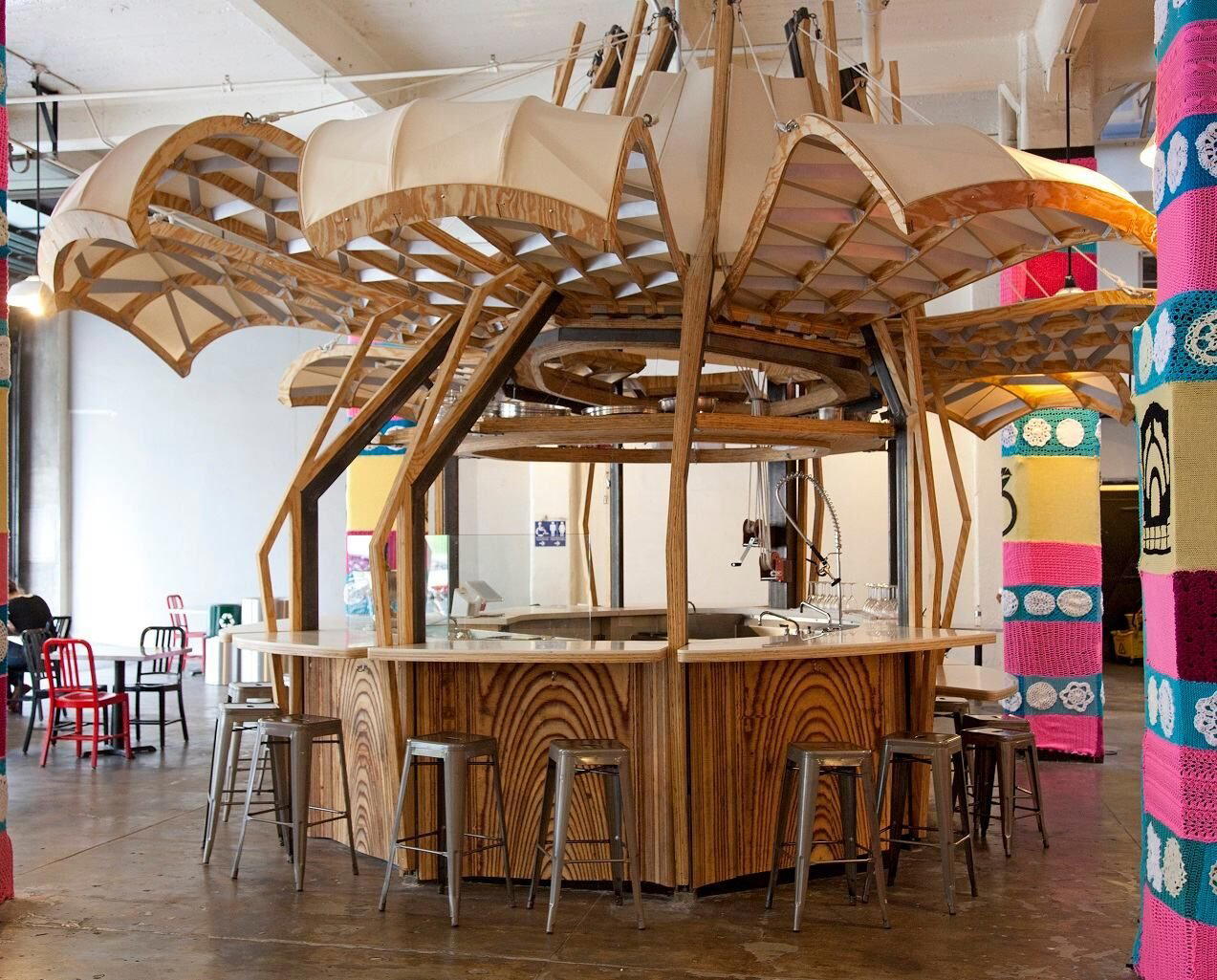
Broadway Noise, Bivalve Focus
Grand Central Market has operated on South Broadway since 1917, and the building still carries the compressed energy of a place where the city's appetite runs wide. Produce vendors, taco counters, juice stalls, and coffee bars compete for attention across a ground floor that moves from open to close without much pause. Inside that context, a specialist oyster counter is an editorial choice. Where most stalls at the market broaden their menus toward maximum foot traffic, The Oyster Gourmet narrows to a single subject and holds the line there.
That discipline is itself a kind of menu architecture. When a venue commits to shellfish as its organizing principle rather than a supporting line, the selection, sourcing, and service format all carry more weight. Every decision about what arrives in front of the customer is a decision about oysters specifically, not about a broader kitchen program trying to accommodate as many preferences as possible. In Los Angeles, where the dominant mode for serious seafood is the full-service dining room, a format this focused and this accessible occupies its own tier.
How the Menu Communicates
The menu at a dedicated oyster counter tells its story through provenance and rotation rather than through technique or composed plating. The structure is horizontal rather than vertical: you are choosing between coasts, between growing regions, between salinity profiles and shell sizes, not ascending through courses toward a climax. That structure rewards a different kind of attention from the diner. At a tasting-menu counter like Hayato or Somni, the kitchen controls the sequence and the pacing entirely. Here, the selection itself is the curriculum.
The raw bar format also compresses the distance between production and consumption in a way that cooked seafood cannot replicate. Oysters arrive at the counter from their growing beds with minimal intervention between harvest and service. That proximity means the menu is, in practice, a live document, one that reflects what is in season and what is available from specific farms on a given week rather than a fixed list designed for consistency across months. The variability is not a weakness in the format; it is the point.
In terms of price positioning, a walk-up oyster counter inside a public market occupies a different bracket from the reservation-required seafood programs at venues like Providence, where contemporary seafood tasting menus run into the multi-hundred-dollar range per person. The Oyster Gourmet's format competes instead with the city's other market-stall operators, while the specificity of its focus separates it from generalist seafood counters. Holbox, also inside Grand Central Market, approaches Mexican seafood with comparable seriousness at the $$ price point, providing useful context for what focused, accessible seafood can look like in the same physical space.
Grand Central Market and the Case for Counter Dining
The broader American market-hall revival of the past decade has produced a split between two models. The first is the developer-led food hall, designed from scratch, brand-forward, and architecturally unified. The second is the functioning public market, where the building precedes the concept and vendors arrive into a context shaped by the neighbourhood rather than by a curatorial vision. Grand Central Market belongs firmly to the second category, with a tenant mix that reflects downtown Los Angeles rather than a particular demographic aspiration.
That context matters for what The Oyster Gourmet can be. In a developer-led food hall, a specialist oyster counter would risk reading as a boutique affectation. Inside a building that has sold food to working Angelenos for over a century, the same counter reads as substance. The format strips away the apparatus of fine dining, the reservation, the dining room, the wine program, the composed course sequence, and asks whether the product itself can hold the attention. For oysters handled well, the answer tends to be yes.
Across American cities, particularly credentialed seafood programs sit inside full-service restaurants with deep wine lists and formal service structures. Le Bernardin in New York City and The French Laundry in Napa operate at the opposite end of the format spectrum from a market counter, where the surrounding architecture and service ritual are themselves part of the product. The restaurant makes no claim on that territory. Its argument is that the shellfish, sourced and served with care, does not require the surrounding apparatus to make its case.
Placing It in the Los Angeles Seafood Scene
Los Angeles approaches seafood from several directions simultaneously. There is the contemporary fine dining track, anchored by venues like Providence. There is the Japanese-inflected raw preparation tradition, expressed through omakase programs at counters like Hayato. There is the Mexican coastal tradition, which treats seafood with a directness and confidence that formal dining rooms often undervalue. And there is the casual market format, where the emphasis falls on sourcing and throughput rather than on service and setting.
The restaurant sits in the last of those categories while drawing its identity from the specificity more typical of the second. A walk-up format with a narrow focus is a structural choice that signals what the operator believes: that provenance and product quality are sufficient to sustain a destination proposition without requiring a formal dining frame. Whether that proposition holds on a given visit depends almost entirely on what is on rotation that day and how it has been handled from farm to counter.
Kato and Osteria Mozza represent the formal dining end of that spectrum; the restaurant occupies the opposite corner with a different set of priorities.
Credentials Lens
Comparable venues nearby, for context on price, style, and recognition.
| Venue | Cuisine | Price | Notes |
|---|---|---|---|
| The Oyster GourmetThis venue — the venue you are viewing | Fresh Oyster Bar & Wine | $$ | Not listed |
| Chainsaw | Venezuelan-leaning bakery cafe | $$ | Melrose Hill |
| Tentenyu | Kyoto-Style Chicken Ramen | $$ | Sawtelle Japantown |
| Dong Il Jang | Traditional Korean BBQ | $$ | Koreatown |
| Berlin Currywurst | German Currywurst | $$ | Downtown |
| Water Grill | Classic Seafood House | $$$$ | Financial District |
Continue exploring
More in Los Angeles
Restaurants in Los Angeles
Browse all →
Bars in Los Angeles
Browse all →

Hotels in Los Angeles
Browse all →

Wineries in Los Angeles
Browse all →
At a Glance
- Intimate
- Elegant
- Sophisticated
- Cozy
- Casual Hangout
- Date Night
- Solo
- After Work
- Chefs Counter
- Open Kitchen
- Extensive Wine List
- Sommelier Led
- Sustainable Seafood
Current opening hours
- Monday
- 11 AM–7 PM
- Tuesday
- 11 AM–7 PM
- Wednesday
- 11 AM–7 PM
- Thursday
- 11 AM–7 PM
- Friday
- 11 AM–8 PM
- Saturday
- 11 AM–8 PM
- Sunday
- 11 AM–8 PM
Hours can change for holidays and private events. Last verified .
Calm, sophisticated oasis within the bustling Grand Central Market; intimate 14-seat circular counter with natural fiber construction creates an upscale, almost out-of-place elegance amid the market's energy.