The Market Cafe at Bonton Farms
Our verdict
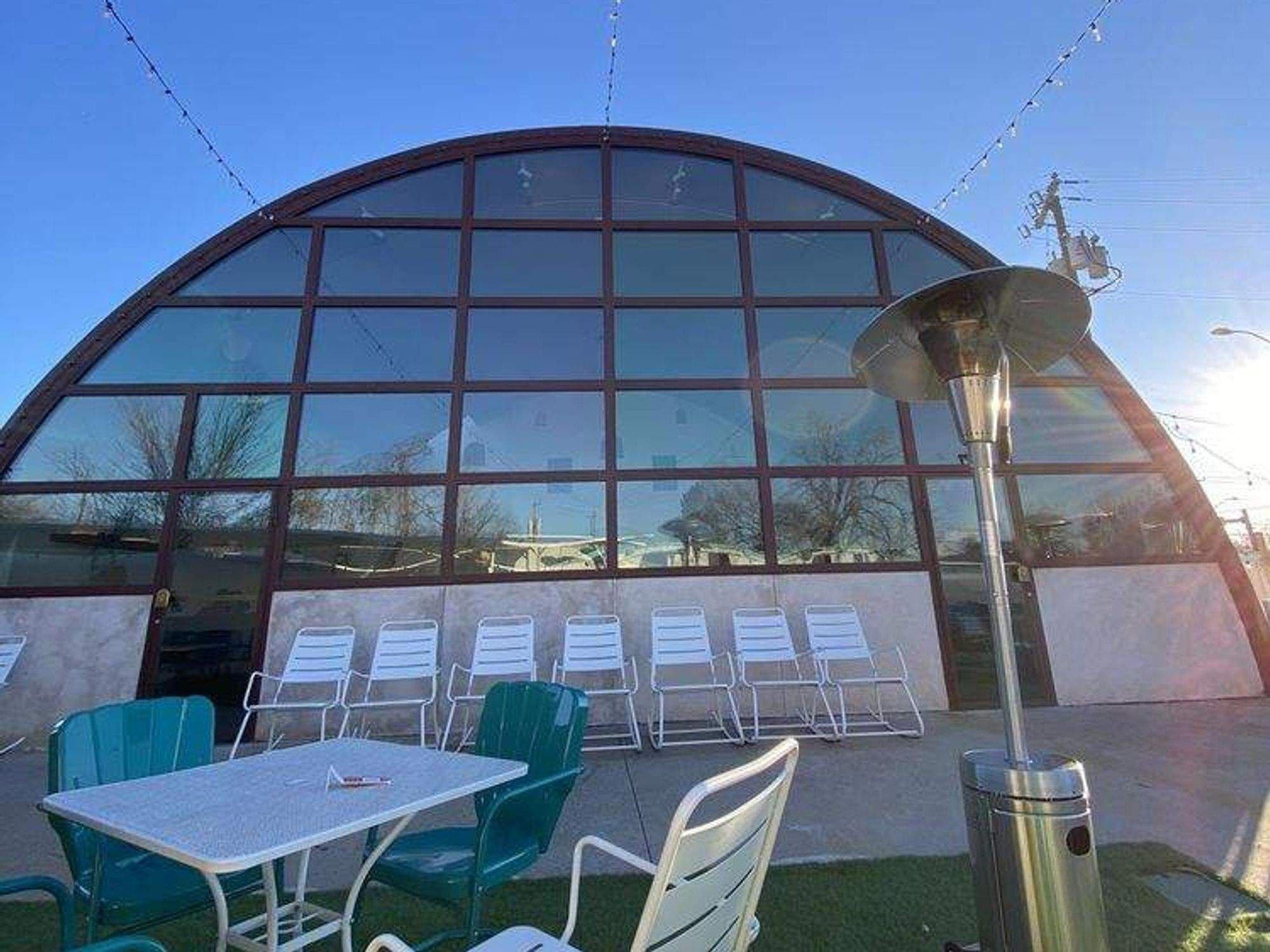
Positioned in Dallas's South Dallas neighborhood, The Market Cafe at Bonton Farms operates within one of the city's most consequential food-access projects, where agricultural production and community dining intersect at 6911 Bexar St. It sits in a different tier from the city's fine-dining circuit, defined less by tasting menus than by the sourcing relationships and neighborhood context that shape every plate.

Pearl is the En Primeur Club membership app, where members save venues, book tables and use the concierge.

Where the Meal Begins Before You Sit Down
South Dallas's Bonton neighborhood sits several miles and several economic brackets removed from the Uptown and Knox-Henderson corridors where most of Dallas's reviewed dining scene concentrates. Arriving at 6911 Bexar St, the surroundings make the editorial point before the food does: this is a working farm, not a restaurant with a decorative herb garden. The fields and livestock operations of Bonton Farms are the supply chain, and The Market Cafe is the downstream expression of that production. In American dining, that farm-to-table claim is frequently metaphorical; here, the distance between source and plate is measured in footsteps across the property.
That physical context shapes the meal's opening register in ways that no amount of interior design can replicate. The sensory cues at the start, soil, open air, the presence of active agriculture, calibrate expectations differently than a candlelit dining room or a chef's counter. You are not entering a restaurant that sources from farms. You are entering a farm that operates a restaurant.
The Meal as Narrative: How the Sequence Unfolds
Across American dining, the most considered tasting experiences share a structural logic: early courses establish provenance and restraint, middle courses carry the protein and technique weight, and the close either returns to simplicity or lands a punctuation-mark dessert. The Market Cafe's positioning within a working urban farm suggests a version of that arc shaped entirely by what the land produces at a given time. The menu's opening beats are likely to read as produce-forward, not as a stylistic choice but as an operational fact. What the farm yields in a given week is what arrives first.
This places The Market Cafe in a distinct category within Dallas dining. The city's high-end circuit, anchored by Southwestern-American flagships charging at the leading price tier and precision-driven Japanese counters like Tatsu Dallas, runs on imported luxury product and chef-driven technique as the primary signal of value. The Bonton Farms model inverts that hierarchy: the sourcing is the prestige, and the technique serves the ingredient rather than the other way around. Whether the kitchen executes that philosophy at a level that rewards the detour from the city's denser dining districts is the central question any serious visitor should carry through the meal.
Dallas has enough strong neighborhood-level dining, from the Italian-focused mid-tier anchored by places like Mamani to the barbecue circuit that includes 3Eleven Kitchen and Cocktails in different registers, that a visitor with limited meals needs a reason to commit to a specific address. The Market Cafe's reason is structural, not decorative: it operates within a food-justice and agricultural-access framework that gives its menu a context no amount of sourcing language on a standard restaurant menu can manufacture.
Placing This in the Broader Farm-Restaurant Conversation
The farm-restaurant model has a well-documented upper tier in American dining. Blue Hill at Stone Barns in Tarrytown operates at the apex of that category, where the agricultural mission and the fine-dining ambition are equally weighted and priced accordingly. Single Thread Farm in Healdsburg represents the precision-agriculture-meets-Japanese-kaiseki approach to the same underlying question of land-to-plate sequencing. Both carry significant awards weight and price against the national fine-dining tier, a competitive set that also includes The French Laundry in Napa, Alinea in Chicago, and Le Bernardin in New York City.
The Market Cafe at Bonton Farms occupies a fundamentally different position. Its mission is community-oriented and its neighborhood is food-insecure, which means it operates with different success metrics than a tasting-menu destination. Comparable community-anchored dining models exist across American cities, but the Bonton Farms version carries a specificity, an actual operational farm in an urban Dallas neighborhood with documented food-access history, that separates it from restaurants that use community language as positioning. This is closer in spirit to the civic-restaurant models at places like Emeril's in New Orleans, where the address carries neighborhood meaning, than to the precision-agriculture fine-dining circuit.
For context within Dallas specifically, the comparison set matters. If you are choosing between The Market Cafe and 12 Cuts Brazilian Steakhouse or a reservation-driven format like 360 Brunch House, you are choosing between entirely different dining logics. The Market Cafe is not competing on the same axes as those venues. It is making a different kind of argument about what a meal can be.
What the Address Tells You About the Close of the Meal
In farm-restaurant formats, the meal's closing gesture is often the most revealing. At the destination tier, dessert courses tend to be technically elaborate, a final demonstration of kitchen ambition. At community-rooted operations, the close tends to land more directly: a return to the familiar, something that fits the context of where you are and who the food is for. At Bonton Farms, the surrounding neighborhood, its demographics, its history, its present agricultural project, suggest that the close of the meal should feel grounded rather than theatrical.
That is not a criticism. Some of the most considered meals in American dining, including experiences at Lazy Bear in San Francisco and Providence in Los Angeles, derive their emotional weight from a sense of place that the final courses reinforce rather than deconstruct. The Market Cafe's version of that closing argument is shaped by what Bonton Farms is: a working agricultural operation in a historically underserved Dallas neighborhood. That context does not diminish the meal. It is the meal.
Planning a Visit
Given the farm's community programming and the cafe's connection to operational agricultural schedules, availability and format may vary by season and day of week.
| Venue | Category | Price Tier | Booking Model | Primary Differentiator |
|---|---|---|---|---|
| The Market Cafe at Bonton Farms | Farm cafe / community dining | Not published | Unconfirmed | On-site urban farm, food-access mission |
| Blue Hill at Stone Barns | Farm-to-table fine dining | $$$$+ | Advance reservation required | Agricultural research integration, national awards |
| Single Thread Farm | Farm-driven tasting menu | $$$$+ | Advance reservation required | Japanese-inflected kaiseki format |
| Fearing's (Dallas) | Southwestern fine dining | $$$$ | Standard reservation | Established Southwestern technique, Dallas landmark |
| Cattleack Barbeque (Dallas) | Barbecue | $$ | Walk-in, limited hours | Competition-circuit credibility, smoke-program depth |
For broader context on where this fits within the city's dining circuit, see our full Dallas restaurants guide. Other farm-and-mission-driven dining comparisons at the national level include Addison in San Diego, The Inn at Little Washington, and Atomix in New York City, each representing a different point on the spectrum between agricultural mission and culinary ambition. At the international level, 8 1/2 Otto e Mezzo Bombana in Hong Kong illustrates how far that farm-to-table argument travels when extracted entirely from its source context.
Frequently asked questions
Where exactly is The Market Cafe at Bonton Farms?
The Market Cafe at Bonton Farms is located at 6911 Bexar St, Dallas, TX 75215, Dallas.
How does The Market Cafe at Bonton Farms differ from typical Dallas farm-to-table restaurants?
Most farm-to-table concepts in Dallas operate in higher-income corridors like Uptown or Knox-Henderson and source produce from rural suppliers. Bonton Farms sits inside the Bonton neighborhood of South Dallas at 6911 Bexar St, a community historically underserved by grocery infrastructure, meaning the cafe functions within an urban farm designed in part to address that gap rather than as a standalone dining destination. That structural position places it in a different category from purely hospitality-driven farm-restaurant formats.
What's the must-try dish at The Market Cafe at Bonton Farms?
What the format signals, however, is that produce originates steps from the kitchen at Bonton Farms' South Dallas operation on Bexar Street, so farm-grown vegetables and locally sourced proteins define what reaches the plate. Contact the cafe directly for current offerings before visiting.
What do critics highlight about The Market Cafe at Bonton Farms?
EP Club holds no documented critical citations for The Market Cafe at Bonton Farms at time of publication. Within the broader farm-restaurant conversation in American dining, operations embedded in under-resourced urban neighborhoods draw attention for addressing food access rather than purely destination dining, and Bonton Farms' South Dallas presence fits that structural model. Named editorial coverage, if available, would appear in the Dallas food press.
A Tight Comparison
Comparable venues nearby, for context on price, style, and recognition.
| Venue | Cuisine | Price | Notes |
|---|---|---|---|
| The Market Cafe at Bonton FarmsThis venue (the venue you are viewing) | Farm-to-Table American Cafe | $10–20 | Not listed |
| Chet's | Irish-American Gastropub | $30–50 | West End, Irish-American Gastropub |
| Maple Landing | Texas BBQ & Gourmet Burgers | $20–30 | Stemmons Corridor, Texas BBQ & Gourmet Burgers |
| City Cafe | American Comfort Food | $20–30 | Devonshire, American Comfort Food |
| The Rustic | American Grill with Southwestern Flair | $20–30 | Uptown, American Grill with Southwestern Flair |
| Kona Grill | American Grill with Sushi | $30–50 | Vickery Meadows, American Grill with Sushi |