The Lodge at Glendorn



Star Wine List · Relais Chateaux Award · Forbes 4-Star
A 1927 estate retreat on 1,500 acres bordering the Allegheny National Forest, The Lodge at Glendorn pairs serious outdoor programming with fine dining served across the property — not just in the main lodge. Rates from $705 per night. Recognised by Star Wine List (2026) and rated 4.8/5 by EP Club inspectors, it sits at the quieter, more private end of the American wilderness-resort category.

Pearl is the En Primeur Club membership app — saves, bookings, and concierge access live there. Same editors, same standards.
- Address
- 1000 Glendorn Drive, Bradford, PA 16701, United States
- Phone
- (814) 362-6511
- Website
- glendorn.com
- Directions
- Get directions
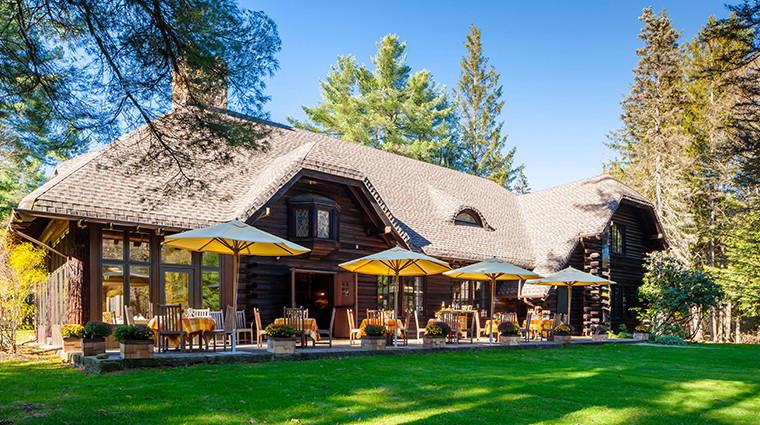
Northern Pennsylvania's Argument for Wilderness Over Glamour
Two hours south of Buffalo, in a corner of Pennsylvania most travellers bypass entirely, a particular kind of American resort tradition survives largely intact. Wilderness retreats built for wealthy industrialists in the early twentieth century — self-contained estates with their own lakes, forests, and social rituals — have mostly been subdivided or converted beyond recognition. The Lodge at Glendorn, operating on 1,500 acres adjacent to the Allegheny National Forest since its origins as a 1927 family retreat, belongs to the category of properties that retained both the land and the ethos.
The Dining Programme: Fine Food in a Forest Setting
The most telling thing about Glendorn's dining approach is where it happens. Gourmet meals are not confined to the main lodge dining room, they extend across the estate, with elaborate summer dinners served lakeside and provisions dispatched for private picnics across the property. This distributed model reflects a broader approach in high-end wilderness resorts, where the dining programme is deployed as a counterpoint to the rugged setting rather than a retreat from it. Properties at this tier, comparable in philosophy to SingleThread Farm Inn in Healdsburg or Bernardus Lodge and Spa in Carmel Valley, treat food service as inseparable from the landscape experience rather than as a separate, interior amenity.
The Star Wine List recognition in 2026 points to a cellar programme taken seriously for a property of this type and location. Rural Pennsylvania is not a natural wine destination, which makes the investment in a curated list a distinguishing feature rather than a baseline expectation. For reference, the wine programmes at properties like Auberge du Soleil in Napa benefit from proximity to the source; Glendorn earns the same recognition from a position of deliberate curation in a wine-neutral region.
Outdoor Programming: Four Seasons, One Estate
American resort properties in the wilderness category broadly divide between those built around a single activity, skiing, fishing, golf, and those designed for year-round habitation with varied programming. Glendorn belongs firmly to the second group. Summer draws the lake-based activities: kayaking, paddleboarding, swimming, fly-fishing, with tennis, basketball, and shuffleboard rounding out the dry-land options. Autumn shifts the emphasis to the forest itself, with Jeep tours of the estate under seasonal foliage and an apple cider press demonstration that speaks to the property's agricultural heritage. Winter activates a different layer entirely: cross-country and downhill skiing, snowshoeing, ice fishing on Skipper Lake (small enough to freeze for skating and curling), sledding, skeet shooting, and snowmobiling. This breadth of programming across seasons places Glendorn closer in character to Alpine Falls Ranch in Superior or Canyon Ranch Tucson than to single-discipline retreat properties.
The Forest Hideout represents the most private configuration the property offers, reached by Jeep, defined by seclusion, and available for guests seeking separation from the main estate. This tiered-access model, where a more private experience exists within the broader resort, is a structural feature of mature wilderness properties and signals the depth of the land holding.
Accommodation: Cabins, Suites, and the Logic of Choosing
Glendorn's room inventory divides between the Big House and a collection of cabins distributed across the estate. The connecting thread through all accommodation categories is the materiality: California redwood and knotted pine define the interior character, with working fireplaces serving as the focal point rather than a decorative addition. At properties like Troutbeck in Amenia or Little Palm Island Resort and Spa in Little Torch Key, the accommodation itself communicates the property's identity before any activity begins. Glendorn operates on the same principle, with material choices that read as authentic to the building's era rather than applied as a rustic aesthetic overlay.
Pet-friendly cabins and turndown service with fresh cookies represent the domesticity end of the comfort spectrum. The Loft cabin, with jetted tubs and a billiard table, occupies the more retreat-focused end. Families travelling with children have a specific option in Roost Cabin, which includes a built-in bunkroom and is accessed via an arched-stone footbridge, a detail that functions both practically and as a piece of estate storytelling. Golf access is handled through a temporary membership arrangement at the nearby Pennhills Club, avoiding the infrastructure investment of an on-site course while extending the activity range for interested guests.
Spa and Wellness in Context
The spa sits within the broader American wellness-resort continuum, with a relaxation room, private rain showers, and a treatment menu that EP Club inspectors flag as a consistent draw regardless of season. Within the category of properties that combine active outdoor programming with serious spa facilities, the pattern at Glendorn mirrors what works at Kona Village, A Rosewood Resort in Kailua Kona, the spa functions as counterpoint to physical exertion rather than as the primary offering, which keeps it from competing with the outdoor programming that defines the property's character.
Getting There and Planning Your Stay
Glendorn sits at GPS coordinates 41.9164, -78.7280, approximately 100 kilometres from Buffalo Niagara International Airport via I-90 towards Erie, then Route 219 south through Salamanca to Bradford. The Bradford Regional Airport is 15 kilometres from the property for those with access to charter or private aviation. Erie, Pennsylvania, serves as the nearest Amtrak-connected city at approximately 160 kilometres. Rates begin at $705 per night, positioning the property at the accessible end of comparable American wilderness estates, below the entry point of Amangiri and in line with the broader category of privately held, full-programme rural retreats. For travellers based in Pittsburgh, the property offers a viable long-weekend escape without the complexity of air travel; for those considering comparable urban-escape options closer to the city, Kimpton Hotel Monaco Pittsburgh and The Maverick by Kasa serve the in-city end of the Pennsylvania market. Further context on regional dining and hotel options is available in our full Pittsburgh restaurants guide.
For those comparing Glendorn against the eastern seaboard's leading urban properties before making a longer trip to Pennsylvania, the reference points shift considerably: Raffles Boston, The Fifth Avenue Hotel in New York City, Aman New York, and Chicago Athletic Association represent the urban end of the same luxury tier. Glendorn's argument is not that it competes with those properties on their own terms, but that it occupies a category those properties cannot. The 1,500-acre estate, three lakes, and adjacency to the Allegheny National Forest are not amenities that can be replicated in an urban context. For comparison of other landscape-driven properties internationally, Ambiente in Sedona, Amangani in Jackson Hole, Hotel Bel-Air in Los Angeles, Four Seasons at The Surf Club in Surfside, 1 Hotel San Francisco, Aman Venice, and Badrutt's Palace Hotel in St. Moritz provide useful calibration for what landscape-integrated luxury looks like across different geographies.
Price and Positioning
Comparable venues nearby, for context on price, style, and recognition.
| Venue | Price | Awards | Notes |
|---|---|---|---|
| The Lodge at GlendornThis venue — the venue you are viewing | $1,000–1,500 | Star Wine List · Relais Chateaux Award | Not listed |
| The Rex | $200–300 | Michelin Selected | Promised Land, Modern boutique micro-hotel blending luxury with outdoor adventure and eco-conscious design. |
| The Inn at Leola Village | Not listed | Star Wine List · Forbes 4-Star | Leola, Restored historic Amish farmhouses blending rustic elegance with modern luxury |
| The Grand Lodge at Nemacolin | Not listed | Michelin Selected · Star Wine List | Laurel Highlands, Timeless Tudor style combining woodsy charm with luxury all-suite accommodations |
| The Swiftwater | $200–300 | Michelin Selected | Swiftwater, Contemporary luxury mountain retreat with sleek modern design and high-end finishes |
| Graduate by Hilton State College | $100–200 | Michelin Selected | Downtown State College, Collegiate boutique hotel designed as a love letter to Penn State University and the local community, blending campus nostalgia with modern sophistication. |
Recognition history
Dated appearances from independent guides and award organizations, with the underlying list record or original source where available.
Star Wine List
Star Wine List
Relais Chateaux Award
Relais Chateaux
Forbes 4-Star
Forbes
Full recognition history (4 entries)
Relais Chateaux Award
Relais Chateaux
Continue exploring
More in Bradford
Bars in Bradford
Browse all →
Details
- Rustic
- Scenic
- Cozy
- Romantic
- Elegant
- Romantic Getaway
- Anniversary
- Honeymoon
- Group Retreat
- Weekend Escape
- Panoramic View
- Private Dining
- Historic Building
- Pool
- Spa
- Wi Fi
- Fitness Center
- Restaurant
- Concierge
- Room Service
- Mountain
- Garden
Cozy and peaceful with fireplaces, soft lighting in historic cabins, serene forest surroundings, and elegant dining ambiance.