The International

Operating from Morley Street since 1976, The International is Bradford's most enduring South Asian restaurant, family-run across decades and loyal to the Punjabi desi cooking that made the city's reputation. Freshly cooked dishes, generous portions, and bring-your-own-bottle pricing make it the reference point against which newer arrivals are measured. Bradford's curry mile has many contenders; The International has simply outlasted most of them.
Pearl is the En Primeur Club membership app — saves, bookings, and concierge access live there. Same editors, same standards.
- Address
- 40-42 Mannville Terrace, Morley St, Bradford BD7 1BA, United Kingdom
- Phone
- +44 1274 721449
- Directions
- Get directions
 Saves & bookings on Pearl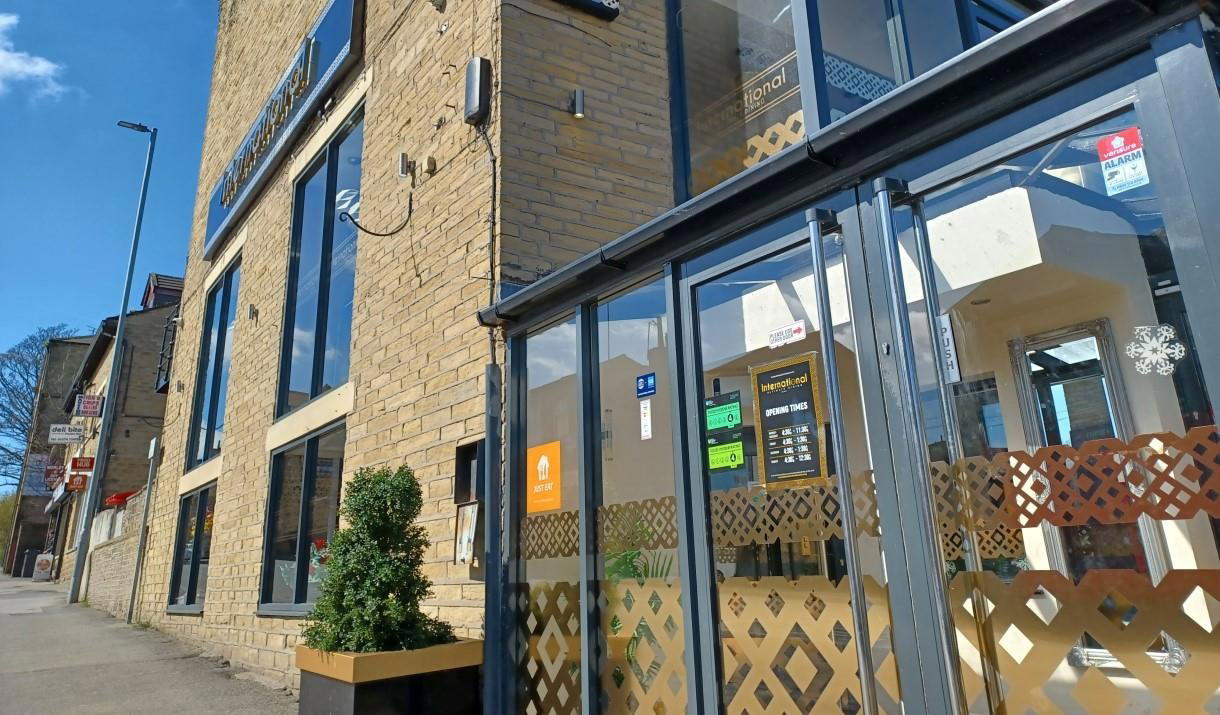
Bradford's Longest-Running Room
Mannville Terrace sits a short walk from Bradford city centre, and arriving at The International in the early evening, the room is already moving at pace. Tables fill with extended families, regulars who clearly know the waiting staff by name, and visitors who have made the trip specifically for this address. The setting is modern without being designed to impress: clean lines, unpretentious surroundings, a lively noise level that signals confidence rather than theatre. This is a restaurant that has been feeding Bradford since 1976, family-run throughout, and it shows in the texture of the service and the consistency of what comes out of the kitchen.
Bradford's reputation as one of England's most serious cities for South Asian cooking is not incidental. Large-scale migration from the Mirpur and Punjab regions of Pakistan during the 1960s and 70s brought with it domestic cooking traditions rooted in specific regional techniques and ingredient relationships. The city's curry corridor developed from that community's kitchen culture, not from a commercial interpretation of it. The International belongs to that founding generation, which places it in a different category from restaurants that arrived later to capitalise on Bradford's name.
What the Kitchen Cooks and Why It Holds
The menu at The International is built around freshly cooked food rather than batch-prepared bases, which is where many high-volume curry houses lose ground over time. That distinction matters when you consider how South Asian cooking at this level actually works: the layering of aromatics in a tarka, the reduction of a karahi sauce, the long cooking required for nihari, these are processes that cannot be rushed without consequences on the plate. The kitchen here takes them seriously.
The Punjabi desi section of the menu is where the cooking sits closest to its source. Lamb on the bone, paya (lamb's trotters), maghaz (brains), and nihari (baby lamb cooked overnight) represent a direct line to domestic Punjabi cooking in a way that tikka masala or generic korma do not. These dishes require specific cuts, specific techniques, and a willingness to cook for the customer who actually wants them rather than the customer assumed to want something easier. That the menu carries them at all, and that they appear alongside more familiar options like karahis, biryanis, shami kebabs, and samosas, reflects a kitchen that is cooking for its community as much as for passing trade.
Spice calibration is handled with care. Each dish on the menu carries a spice-level indicator, and the kitchen takes individual adjustment requests seriously. For a room operating at volume, that kind of attention to preference is not guaranteed; here it appears to be standard practice. Vegetarian options are extensive enough to constitute a full meal, and the portion logic follows: several appetisers or side dishes can be combined into a satisfying spread without any friction from the floor staff. Chapatis, rotis, rice, and naan (notably described by regulars as exceptionally light) accompany all main dishes as standard choices rather than add-ons.
There is no dessert menu. The restaurant is unlicensed but operates a bring-your-own-bottle policy, which at the restaurant's price point makes the meal considerably better value than dining at a licensed room. Mocktails and lassi are available for those who prefer something from the house. The sister restaurant on Sticker Lane, with seating for 300, operates on a larger scale, but the Mannville Terrace original remains the address most associated with the restaurant's reputation.
The Bradford Comparison
To understand what the restaurant represents, it helps to place Bradford in a broader culinary context. The city's South Asian restaurant tradition predates the mainstream British enthusiasm for Indian food by decades. By the time restaurants like Opheem in Birmingham were redefining what contemporary South Asian cooking could look like at the fine-dining tier, Bradford already had a multi-generational infrastructure of family-run rooms cooking from tradition rather than from trend. The restaurant sits at the older, less fashionable end of that spectrum, and that is not a criticism. The cooking at addresses like The Ledbury in London, Moor Hall in Aughton, or L'Enclume in Cartmel operates on entirely different terms: tasting menus, ingredient provenance documentation, formal service. The restaurant's terms are different but no less disciplined: loyal sourcing, consistent technique, pricing that keeps the room accessible to the community it serves.
For those interested in how Bradford's food culture compares to nearby high-end destinations, The Lodge at Glendorn offers a different register entirely. Across the Atlantic, Le Bernardin in New York City and Emeril's in New Orleans represent the American fine-dining axis that operates in a parallel universe of formal citation and destination dining. Closer to home, Waterside Inn in Bray, Gidleigh Park in Chagford, and Le Manoir aux Quat' Saisons in Great Milton sit at the formal country-house end of the British dining spectrum. Midsummer House in Cambridge, Hand and Flowers in Marlow, and hide and fox in Saltwood occupy the serious regional restaurant tier.
Planning Your Visit
The restaurant is located at 40-42 Mannville Terrace, Morley Street, Bradford BD7 1BA. Given the restaurant's standing and the size of its regular clientele, arriving without a booking on a weekend evening carries some risk; checking ahead is advisable. The bring-your-own-bottle arrangement means that collecting wine or beer before arriving is worth building into your timing. Portions are generous, so ordering incrementally rather than all at once gives you a more accurate read on how much the table needs. If there are leftovers, taking them home is entirely accepted practice, which at these price levels makes the value calculation even more favourable.
Quick Comparison
Comparable venues nearby, for context on price, style, and recognition.
| Venue | Cuisine | Price | Notes |
|---|---|---|---|
| The InternationalThis venue — the venue you are viewing | Authentic Bradford Curry House | $ | Not listed |
| MealPro. Co - Healthy Meal Prep Company | Healthy Halal Meal Prep | $$ | Legrams |
| International Restaurant | Authentic Indian & Pakistani Curry | $$ | Morley Street, Bradford City Centre |
| Sushi Home Town | Japanese-Nepali Fusion Sushi | $$ | Darley Street |
| Bundobust Manchester Piccadilly | Gujarati Vegetarian Street Food | $$ | Piccadilly |
| Simla Restaurant | Modern Indian | $$ | Quayside |
Recognition history
Dated appearances from independent guides and award organizations, with the underlying list record or original source where available.
The Good Food Guide GFG Good
The Good Food Guide
At a Glance
- Lively
- Modern
- Family
- Group Dining
- Casual Hangout
- Standalone
- Byob
Current opening hours
- Monday
- 4:30–11:30 PM
- Tuesday
- 4:30–11:30 PM
- Wednesday
- 4:30–11:30 PM
- Thursday
- 4:30–11:30 PM
- Friday
- 4:30 PM–12:30 AM
- Saturday
- 12 PM–1:30 AM
- Sunday
- 12–11 PM
Hours can change for holidays and private events. Last verified .