The Henry
The Henry on Robertson Boulevard sits in the middle of West Hollywood's all-day dining conversation, occupying a space where California-sourced ingredients meet a menu broad enough for weekday lunch crowds and weekend brunch devotees alike. Its location on one of WeHo's more pedestrian-friendly stretches makes it a consistent neighborhood anchor rather than a destination-only proposition.
Pearl is the En Primeur Club membership app — saves, bookings, and concierge access live there. Same editors, same standards.
- Address
- 120 N Robertson Blvd, Los Angeles, CA 90048
- Phone
- (424) 204-1595
- Website
- thehenryrestaurant.com
- Directions
- Get directions
 Saves & bookings on Pearl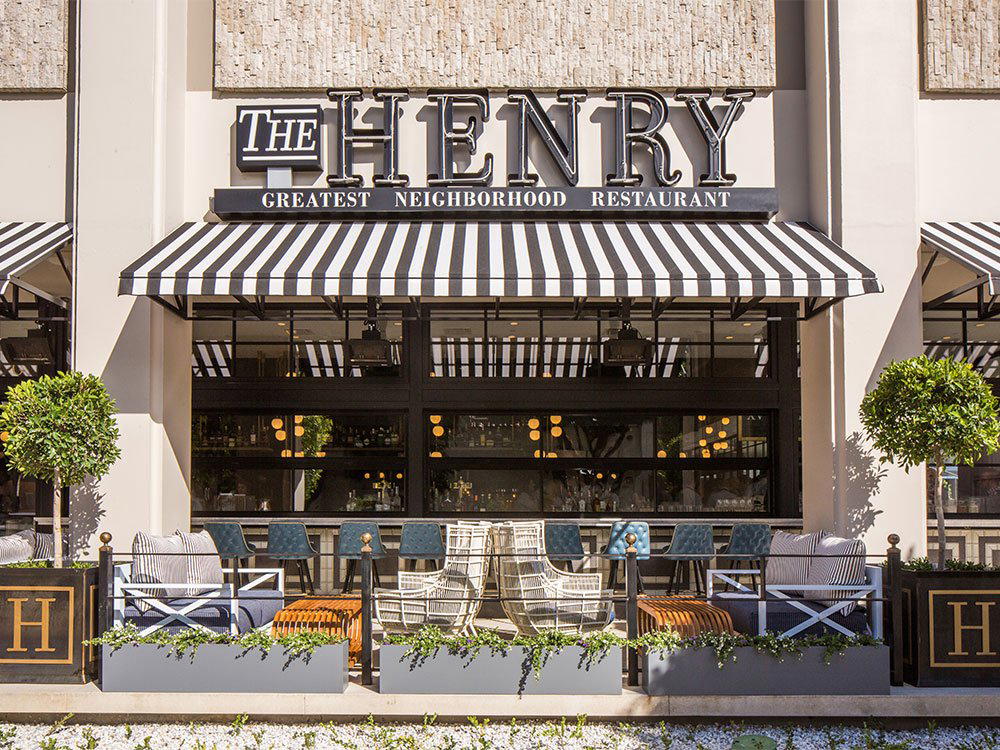
Robertson Boulevard and the All-Day California Table
North Robertson Boulevard operates differently from the louder dining corridors further east on Sunset or west into Beverly Hills. The stretch between Melrose and Santa Monica Boulevard has long attracted a quieter, more local-use crowd: boutique shoppers, design-industry regulars, and the kind of mid-morning coffee-seeker who wants a proper table rather than a takeaway cup. The Henry at 120 N Robertson Blvd sits within that rhythm, offering an all-day format that reads less like a trend adoption and more like a practical response to how this particular block actually gets used.
West Hollywood's dining scene has split, over the past decade, between high-concept destination restaurants and accessible neighborhood formats. The destination tier is well-documented: Merois brought a rooftop fine-dining reference point to the area, and the broader Los Angeles market includes serious tasting-menu operations like Providence. The Henry operates in a different register entirely, one where the priority is repeatability — somewhere a resident returns to on a Tuesday morning as naturally as a Saturday afternoon.
Sourcing as Structure: The California Ingredient Argument
The broader California all-day dining category is increasingly defined by where ingredients come from, not just how they are prepared. This shift is visible across the state's more thoughtful mid-market restaurants: menus that anchor dishes to specific growing regions, proteins that rotate with seasonal availability, and produce sourced close enough that the supply chain is a differentiator rather than an afterthought. Properties like SingleThread Farm in Healdsburg have taken this to its logical extreme, where the farm itself is the restaurant's identity. Blue Hill at Stone Barns in Tarrytown has made a similar argument on the East Coast, embedding sourcing so deeply into the format that the menu is almost incidental.
The Henry does not operate at that level of conceptual intensity, nor does it claim to. What it represents, instead, is the middle tier of this sourcing conversation: a neighborhood restaurant in one of the country's most ingredient-rich states, drawing on California's agricultural infrastructure to support a menu that stays accessible in format and price point. Southern California in particular sits at a geographic intersection of Pacific seafood, Central Valley produce, and desert-grown citrus and herbs that few other American cities can replicate on the same scale. A restaurant operating on Robertson Boulevard has access to that supply chain as a baseline condition, not a marketing proposition.
This matters because ingredient sourcing at the mid-market level is where the argument becomes most interesting. Anyone can point to a single-source relationship at a Michelin-chasing table; the more instructive question is whether a restaurant handling volume across breakfast, lunch, and dinner service can maintain ingredient discipline at scale. That is the operational challenge that defines this category across Los Angeles, and it is what separates casual California dining from California cuisine done with genuine attention.
The West Hollywood Brunch Circuit: Where The Henry Fits
Brunch in West Hollywood is not a weekend novelty; it is a sustained commercial format that runs from mid-morning through mid-afternoon and generates significant foot traffic across the neighborhood's restaurant corridor. The competition at this tier is horizontal rather than vertical — the comparison set is not fine-dining but other well-executed all-day formats, each competing on consistency, setting, and menu range rather than Michelin stars or tasting-menu prestige.
Within that horizontal set, location and atmosphere carry more weight than in the destination tier. The Robertson Boulevard address positions The Henry within walking distance of the West Hollywood design district and a short drive from the Sunset Strip, which means the clientele skews toward creative-industry regulars and neighborhood residents rather than destination tourists. This is a meaningful distinction: repeat customers exert more pressure on consistency than one-time visitors, and a restaurant serving the same neighborhood daily has less room for variable performance than a destination that rotates its audience.
For a fuller picture of where The Henry sits within the broader West Hollywood dining options, our full West Hollywood restaurants guide maps the neighborhood across categories and price points. Those exploring the area beyond food can find related resources in our West Hollywood hotels guide, our West Hollywood bars guide, and our West Hollywood experiences guide.
California Dining in National Context
It is worth placing the all-day California format against what is happening in other American dining cities to understand what makes the category distinctive. In New York, the benchmark for ingredient-driven cooking tends toward the formal end: Le Bernardin and Atomix represent the apex of sourcing-as-craft within tightly structured tasting formats. In Chicago, Alinea subordinates sourcing to technique. In San Francisco, Lazy Bear operates a communal-table model where the ingredient story is central to the experience. New Orleans exports like Emeril's anchor in regional tradition rather than California-style seasonal flexibility.
What California does differently, and what Los Angeles executes with particular ease, is distribute that ingredient awareness across formats and price points. The sourcing conversation in California is not confined to the tasting-menu tier. It runs from The French Laundry in Napa and Addison in San Diego down through mid-market neighborhood restaurants in a way that reflects the state's agricultural abundance as a structural fact. A restaurant like The Henry operates within that inherited infrastructure, whether or not sourcing is front-and-center in the menu language. There is also an international dimension worth noting: the global all-day format has its own sophisticated practitioners, and venues like 8½ Otto e Mezzo Bombana in Hong Kong show how ingredient-driven Italian cooking travels across contexts. Similarly, The Inn at Little Washington demonstrates that farm-to-table sourcing can anchor a destination format outside the obvious California geography.
Planning a Visit
The Henry is located at 120 N Robertson Blvd in West Hollywood, positioned between Melrose Avenue and Santa Monica Boulevard on a block that is navigable on foot from nearby boutiques and galleries. Street parking on Robertson can be tight during weekend brunch hours, and the public lots off nearby side streets tend to be a more reliable option. Given the all-day format, mid-week mornings and early lunches represent the lowest-traffic windows; weekend brunch draws consistent crowds along this stretch of the neighborhood. For those pairing the visit with broader exploration, our West Hollywood wineries guide covers bottle-shop and wine-bar options in the area.
How The Henry West Hollywood compares with similar nearby venues.
| Venue | Cuisine | Price |
|---|---|---|
| Petrossian Paris Boutique & Café | Caviar-French | Not listed |
| Amour | French Contemporary | $$$$ |
Continue exploring
More in West Hollywood
Restaurants in West Hollywood
Browse all →
Bars in West Hollywood
Browse all →
Hotels in West Hollywood
Browse all →
Wineries in West Hollywood
Browse all →
At a Glance
- Trendy
- Elegant
- Lively
- Brunch
- Date Night
- Group Dining
- Terrace
- Craft Cocktails
Current opening hours
- Monday
- 11 AM–10 PM
- Tuesday
- 11 AM–10 PM
- Wednesday
- 11 AM–10 PM
- Thursday
- 11 AM–10 PM
- Friday
- 11 AM–11 PM
- Saturday
- 9 AM–11 PM
- Sunday
- 9 AM–10 PM
Hours can change for holidays and private events. Last verified .
Spacious, airy indoor/outdoor seating with high ceilings keeping noise minimal, charming and energetic atmosphere.
Know Before You Go
- Getting there
- 120 N Robertson Blvd, Los Angeles, CA 90048