The Conservatory at One Sansome
Set inside One Sansome Street's striking atrium in San Francisco's Financial District, The Conservatory is a glass-enclosed dining space that brings a different register to downtown lunch and event dining. Its address places it within the city's most concentrated corridor of white-tablecloth ambition, where questions of sourcing, seasonality, and sustainability carry real weight with the clientele it serves.
Pearl is the En Primeur Club membership app — saves, bookings, and concierge access live there. Same editors, same standards.
- Address
- One Sansome St, San Francisco, CA 94104
- Phone
- (415) 937-0123
- Website
- conservatorysf.com
- Directions
- Get directions
 Saves & bookings on Pearl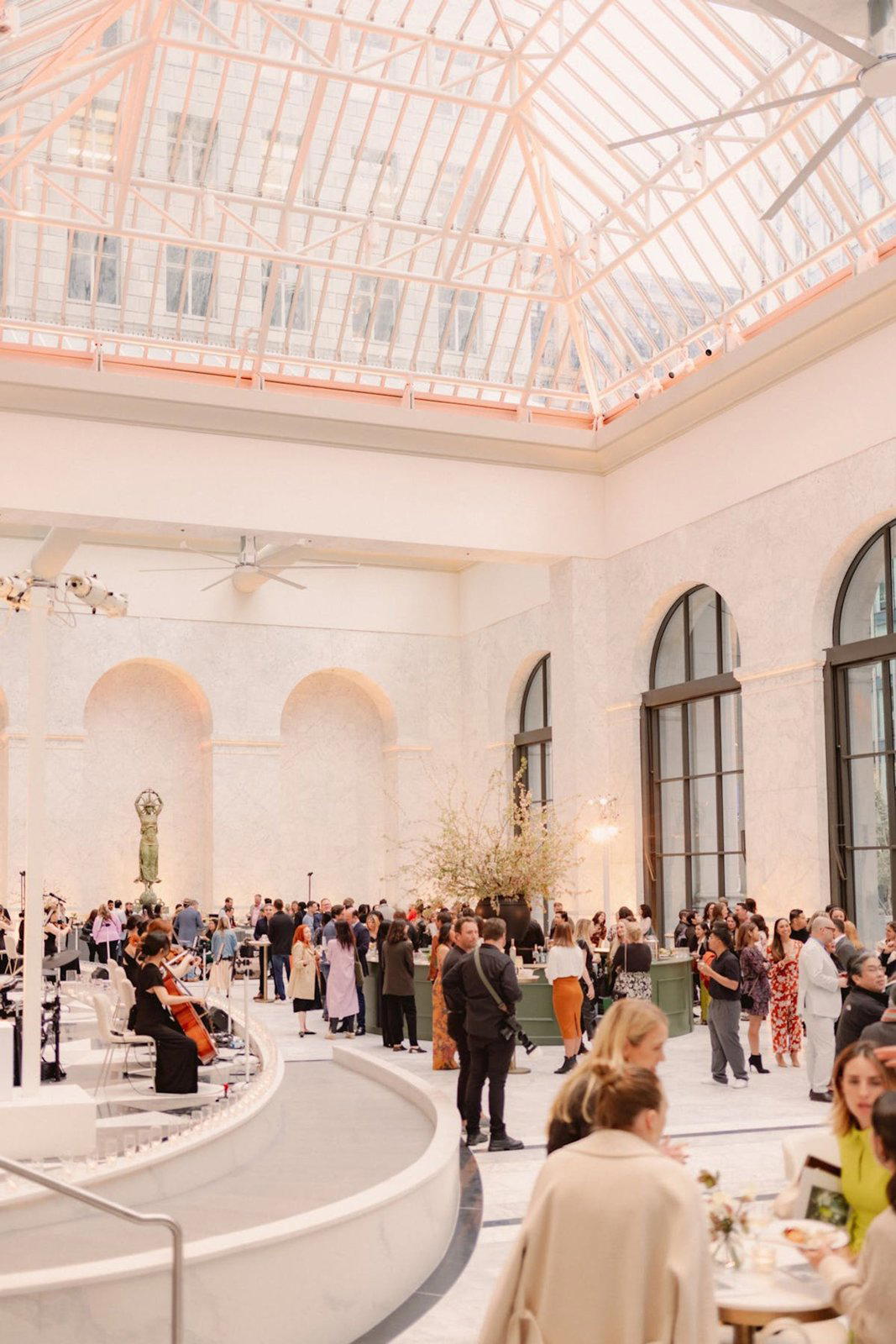
Glass, Light, and the Financial District's Dining Ambitions
San Francisco's Financial District has always maintained a split personality at the table. The lunch crowd, lawyers, bankers, tech executives on downtown days, demands speed and substance in equal measure, while evening and event dining in the same postcode tilts toward occasion and ceremony. One Sansome Street sits at the corner of Sansome and Market, and the building's glass atrium has long been one of the more architecturally arresting interior spaces in downtown San Francisco. The Conservatory occupies that atrium, trading on the drama of natural light filtered through an overhead glass canopy, a setting that places the outdoors inside without the pretense of a garden restaurant.
That physical fact matters more than it might seem. In a city where the dining conversation is increasingly shaped by sustainability credentials, ethical sourcing, and the relationship between kitchen and land, a glass-enclosed space carries a kind of symbolic weight. It signals an orientation toward the natural world even when the address is resolutely urban. Whether that signal is substantiated at the plate is the question that separates a handsome room from a serious restaurant, and it is the question worth asking here.
Where One Sansome Sits in San Francisco's Sourcing Conversation
California's farm-to-table lineage is long enough now to have produced two distinct generations of practice. The first generation made provenance a selling point, menu language that named every farm and county of origin, sometimes to the point of self-parody. The second generation, which includes the kitchens at Saison and Lazy Bear, treats sourcing as infrastructure rather than marketing: the provenance is real, the relationships with producers are deep, and the menus are built around what those relationships make available rather than around a narrative designed for the table.
The Conservatory operates in a different tier, its Financial District address and event-driven model place it closer to the corporate dining and private event circuit than to the tasting-menu progression of Benu or Atelier Crenn. That does not make sustainability commitments less meaningful in this context; it makes them more consequential. High-volume corporate dining generates more aggregate food waste and procurement pressure than a twelve-course counter serving forty covers per night. A downtown event space that sources thoughtfully and manages waste seriously is doing the work at a scale where it registers.
Northern California's supply infrastructure makes serious sourcing possible even at volume. The Bay Area sits within reach of particularly productive and ecologically diverse agricultural land in the country, the Central Valley, the Sonoma Coast, the Delta, and the regional wholesale and direct-farm networks that developed over the past two decades mean that a kitchen committed to seasonal, lower-impact procurement has real options. This is the context in which to read whatever sourcing commitments The Conservatory brings to its programming.
The Atrium Setting and What It Demands
Glass atria in urban office buildings carry specific dining challenges. Acoustic management is especially persistent: hard surfaces, high ceilings, and reflective glass create reverberation that can make a moderately full room feel cacophonous. Thermal comfort is a second variable, glass amplifies solar gain in summer and loses heat in winter, and the quality of the engineering behind the glazing determines whether a space feels pleasant or punishing depending on the season. The leading atrium dining rooms in North America, and there are counterparts in Chicago at Alinea's neighbourhood or in New York at venues near Le Bernardin, solve these problems through intelligent interior design, not cosmetic landscaping.
One Sansome's atrium has been a functioning event and dining space long enough that these mechanical realities have presumably been addressed. The glass canopy creates the kind of diffused northern-California light that makes food photography feel effortless and that flatters a room at midday in a way that artificial lighting rarely replicates. For an evening event, the equation shifts: the room relies on the quality of its supplemental lighting design, and the canopy becomes a dark reflective surface rather than a source of natural drama.
Sustainability as Operating Principle, Not Menu Language
The stronger sustainability argument for a venue like The Conservatory is not about individual ingredient sourcing, though that matters, but about operational practice: waste diversion, energy use, procurement volume, and the downstream effects of feeding hundreds of covers per week in a city that has set particularly ambitious municipal waste-reduction targets in the United States. San Francisco has operated a mandatory composting program since 2009, and the city's commercial kitchen operators are held to standards that exceed most American cities by some margin.
In this environment, sustainability is less a differentiator than a baseline, and the question is which operators treat that baseline as a ceiling and which treat it as a floor. The venues that have built lasting reputations in Northern California, from Single Thread Farm in Healdsburg to Quince in San Francisco's Jackson Square, have done so by treating environmental practice as embedded in the kitchen's operating logic, not as a communications strategy. The Conservatory's setting and clientele give it both the incentive and the audience to operate at that level.
The Downtown San Francisco Dining Context
The Financial District's dining scene has contracted and reshaped since 2020, with remote-work patterns reducing the reliable midday volume that once sustained a particular tier of white-tablecloth lunch. Restaurants that depended on the five-day office week have either closed or pivoted toward private events, evening trade, and destination dining from outside the immediate neighbourhood. This structural shift has, counterintuitively, created space for venues with strong physical assets, a notable room, a distinctive address, to position more deliberately as event and occasion destinations rather than competing for daily covers against casual competitors.
One Sansome's atrium is a physical asset of the first order. For visitors orienting themselves across San Francisco's wider dining geography, the city's most critically recognized restaurants, Benu, Atelier Crenn, Lazy Bear, cluster in SoMa and the Mission rather than downtown, while the Financial District's contribution to the city's dining character has historically been more about setting and occasion than about culinary ambition at the highest tier.
For comparison points outside San Francisco, the sustained sourcing commitments at The French Laundry in Napa and the farm-integrated model at Single Thread represent the upper tier of what California's agricultural infrastructure makes possible at the fine-dining level. Further afield, Providence in Los Angeles demonstrates how a commitment to sustainable seafood sourcing can become central to a restaurant's identity rather than incidental to it, a model with clear relevance to any serious kitchen operating on the Pacific Coast. Internationally, the produce-driven precision of Atomix in New York and the kitchen discipline at 8½ Otto e Mezzo Bombana in Hong Kong illustrate how sustainability-oriented practice has become a shared concern across the global fine-dining tier, not a California-specific preoccupation.
The Conservatory at One Sansome is an event-focused restaurant in San Francisco's Financial District at One Sansome St, San Francisco, CA 94104. It is priced at about $392 per person.
Price and Recognition
Comparable venues nearby, for context on price, style, and recognition.
| Venue | Cuisine | Price | Notes |
|---|---|---|---|
| The Conservatory at One SansomeThis venue — the venue you are viewing | Not listed | $$$$ | Not listed |
| Arquet | Not listed | $$$$ | Financial District/South Beach, Wood-Fired California |
| Cockscomb | Not listed | $$$ | South of Market, Modern American Offal & Meat |
| Range | Not listed | $$$ | Mission, Modern California-Inspired American |
| Spire Restaurant & Bar | SoMa, Contemporary American Small Plates | $$$ | Not listed |
| Charmaine's | Not listed | $$$ | Tenderloin, Modern Californian Small Plates |
Continue exploring
More in San Francisco
Restaurants in San Francisco
Browse all →
Bars in San Francisco
Browse all →
Hotels in San Francisco
Browse all →
At a Glance
- Elegant
- Modern
- Sophisticated
- Wedding
- Celebration
- Private Event
- Business Dinner
- Historic Building
- Design Destination
- Craft Cocktails
Current opening hours
- Monday
- 8 AM–6 PM
- Tuesday
- 8 AM–6 PM
- Wednesday
- 8 AM–6 PM
- Thursday
- 8 AM–6 PM
- Friday
- 8 AM–6 PM
- Saturday
- Closed
- Sunday
- Closed
Hours can change for holidays and private events. Last verified .
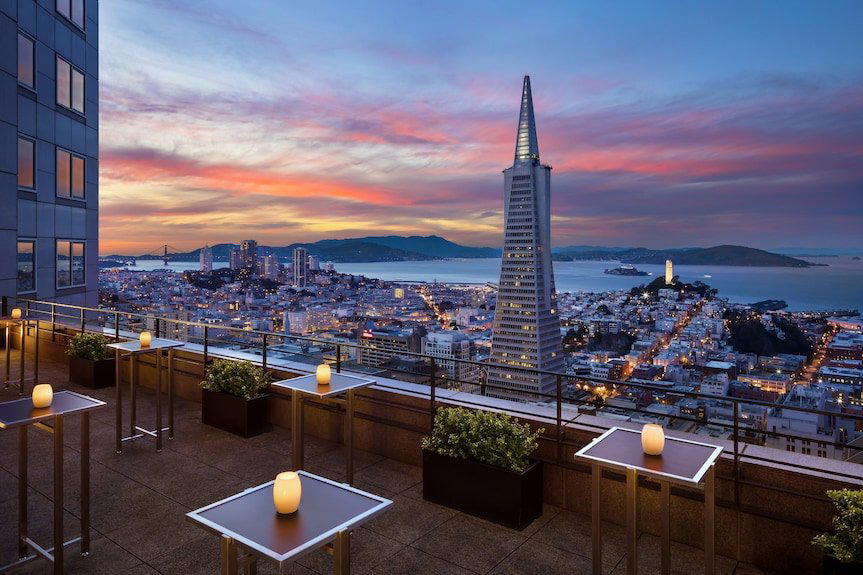
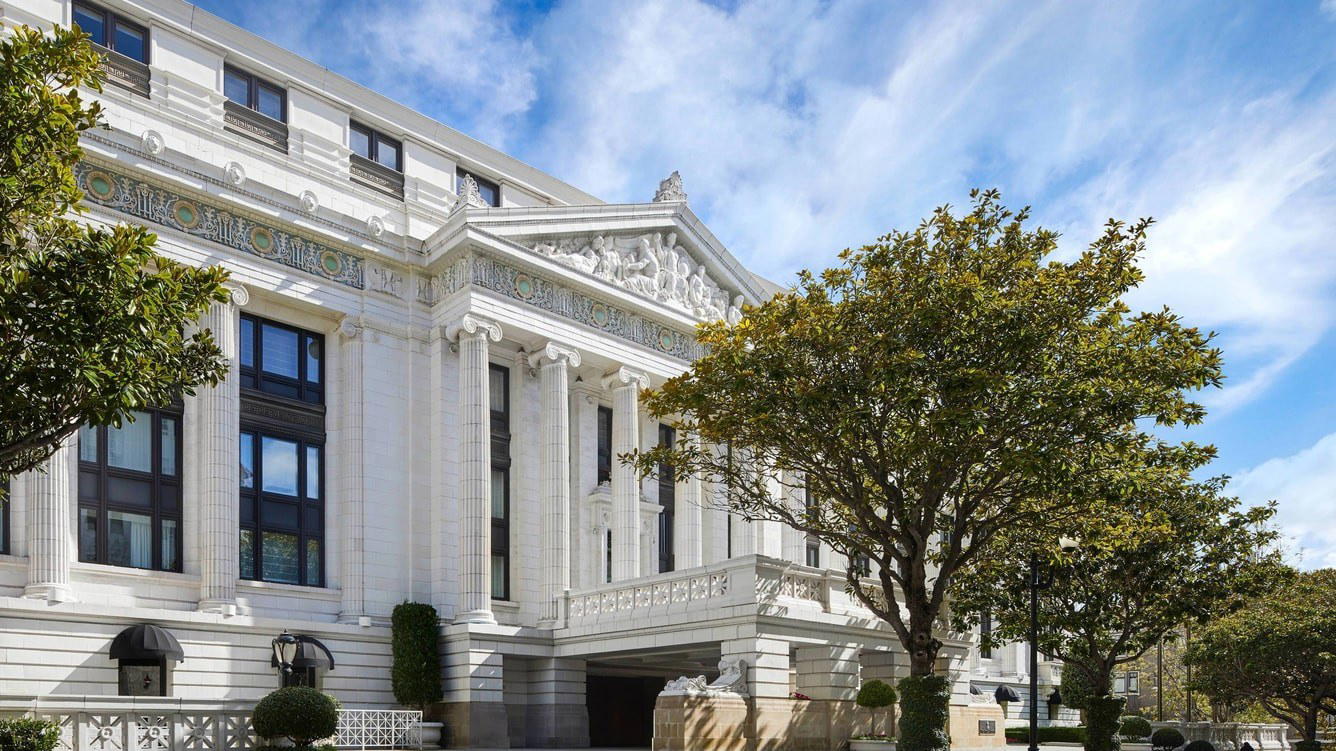
Light-flooded with natural light from the glass atrium, elegant marble finishes, and customizable architectural lighting creating a luxurious and chic atmosphere.