
Tabelog 100 #28
Our verdict
Thai Mimotto places Thai cooking inside Tokyo’s counter-dining culture: compact, reservation-only, and shaped around an evening course rather than casual lunch trade. Its repeated selection for Tabelog’s Asian and Ethnic Tokyo 100 in 2022, 2023, and 2024 gives it a clear credential in a city where Thai restaurants range from quick noodle rooms to tightly edited tasting formats.

Pearl is the En Primeur Club membership app, where members save venues, book tables and use the concierge.
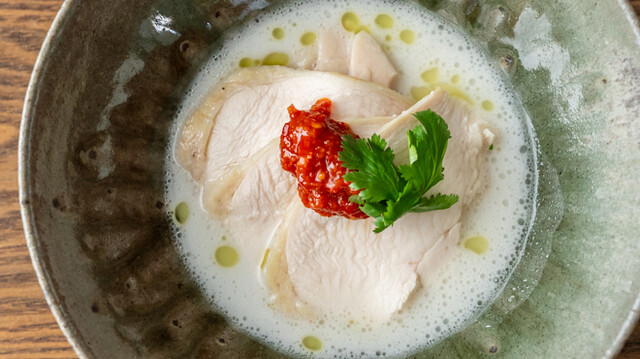
The approach to Tokyo’s quieter restaurant streets reframes Thai food in the city. Away from department-store basement curries and station-side noodle counters, the mood is smaller and controlled: a focused room, narrow service window, and evening meal. Thai Mimotto belongs to the Tokyo bracket where Southeast Asian cooking is paced and concentrated with the discipline diners often associate with the city’s most compact dinner formats.
That matters because Tokyo’s Thai scene has long run on two tracks. Daytime Thai usually means speed, value, and familiar signatures: gapao, green curry, tom yam, office-worker rice plates, and table-turning menus. Ambitious dinner moves differently, giving Thai cooking room for regional sequencing, fermented ingredients, heat that builds across courses, and drinks chosen as carefully as the food. Thai Mimotto is not competing with lunch-set value. It sits in the evening-course tier, where the question is how tightly the kitchen can organize a Thai meal within Tokyo’s compact dining grammar.
Thai cooking translated into Tokyo's counter grammar
Tokyo often absorbs foreign cuisines through its own service architecture. Italian can become compact pasta built around Japanese produce; French can become a restrained dégustation; pizza can become obsessive oven craft, as in specialist rooms such as Savoy Pizza. Thai cooking, handled well, resists excessive polishing. Its force comes from sourness, salt, herbs, chili, fish sauce, shrimp paste, and texture, not visual restraint alone. The interesting restaurants keep Thai grammar assertive while using Japanese pacing to sharpen the meal.
Thai Mimotto’s 2024 Tabelog Hyakumeiten recognition places it within a narrower group in the city’s dining scene. Tabelog’s recognition framework rewards restaurants that have built a visible reputation with diners, so the listing signals consistency as much as discovery. Its Tabelog score of 3.73 puts it above the casual discovery tier, while its dinner budget of JPY 15,000 - JPY 19,999 makes clear that this is not positioned as a quick everyday Thai stop.
The focused format is the editorial point. In a compact Tokyo room, Thai food is read differently. Large-format Thai dining can lean on shared plates and table energy; a more concentrated dinner must manage rhythm, portion, and progression. That exposes the kitchen’s choices. Fermented shrimp paste and fish sauce, central to much Thai cooking, can function as structural ingredients rather than background seasonings. Diners who understand that will get more from the meal than those expecting softened Thai flavors.
For readers mapping Tokyo by category, this differs from choosing tonkatsu at Tonki or yakitori at Toriyaki Sasaya. Those genres have long-established Tokyo expectations. Thai dining at this level is more specialized, with value in seeing how a cuisine built for balance, heat, and aroma behaves inside a precise Tokyo room.
The absent lunch tells you how to read dinner
The lunch-versus-dinner divide is revealing because the provided listing gives a dinner budget but no lunch budget. Many Tokyo restaurants keep two personalities: an accessible daytime menu and a more expensive, deliberate evening service. That split can help, but it can blur a kitchen’s strongest argument. Thai Mimotto reads as an evening restaurant first, creating a clearer contract with the diner.
Practically, the lack of a listed lunch budget removes the easy value benchmark. There is no quick midday comparison with casual Thai canteens elsewhere in Tokyo. The better comparison is with small, high-touch dining rooms across the city, where limited pacing, focused menus, and carefully chosen drinks justify a narrower audience. Within that bracket, beverages are not incidental. Tokyo’s stronger non-Japanese restaurants increasingly treat drinks as part of the translation process, especially with chili, acidity, herbs, and fermented sauces.
This is useful for travelers. A visitor filling a Tokyo itinerary with sushi, tempura, yakitori, and kaiseki may assume Thai food is the casual night off. In Tokyo, that misses the point. The meal belongs to the same planning category as other focused dinners: it rewards diners who want a concentrated meal and are comfortable with close-range sound, scent, and pacing. Anyone building a broader city plan can place it alongside Japanese specialists in, then balance the trip with, Our full Tokyo experiences guide.
The room also sets behavioral expectations. Small Tokyo restaurants are unforgiving when perfume, loud conversation, or late arrival disrupts the meal. This is not formality for its own sake; it is how these restaurants function. Thai food may carry heat and intensity, but this setting asks for the attention one would bring to any compact, carefully paced Tokyo dinner.
Where it fits in a serious Tokyo eating week
Thai Mimotto is strongest as a deliberate contrast within a Tokyo itinerary. After nights built around charcoal, rice, broth, or raw fish, Thai cooking changes the register: acidity becomes central, fermentation becomes more audible in the meal’s structure, and herbs play a different role from garnish. That matters in a city where ambitious dining can reward narrow repetition. The choice is not between Japanese and non-Japanese food; it is between another familiar format and a dinner using Tokyo discipline to frame Thai cuisine.
For a broader eating week, it pairs conceptually with restaurants that show Tokyo’s range across formats rather than price alone. Tonkatsu at Tonki, yakitori at Toriyaki Sasaya, pizza at Savoy Pizza, and refined dining rooms such as gentille or リナシメント all speak to a city where specialization is the baseline. The same point holds across other unnamed Tokyo dining rooms: serious diners here parse category, pacing, and craft with unusual precision.
Internationally, the same logic explains why focused venues appeal to diners who want clarity rather than breadth. The stronger meal often knows its lane. In Tokyo, Thai Mimotto’s lane is clear: Thai cooking in a focused dinner setting, with 2024 Tabelog Hyakumeiten recognition, a 3.73 score, and a JPY 15,000 - JPY 19,999 dinner budget that justify attention without turning it into a casual alternative to Japanese dinner.
Frequently asked questions
What are the operating hours at Thai Mimotto?
Thai Mimotto is presented as a dinner-focused restaurant; confirm current operating hours directly before visiting.
Is Thai Mimotto expensive?
Pricing at Thai Mimotto is listed as JPY 15,000 - JPY 19,999 for dinner.
Where exactly is Thai Mimotto?
Tokyo.
What's Thai Mimotto best at?
Thai Mimotto is strongest as a focused Thai dinner restaurant in Tokyo, with 2024 Tabelog Hyakumeiten recognition and a Tabelog score of 3.73. The format suits diners who want a deliberate Thai meal rather than a broad casual setup, at JPY 15,000 - JPY 19,999.
What if I have allergies at Thai Mimotto?
Thai cooking may involve ingredients such as fish sauce, shrimp paste, herbs, and chili. Diners with allergies should contact Thai Mimotto in advance and confirm what can be accommodated before booking.
Accolades, Compared
Comparable venues for context, by category and price tier.
| Venue | Cuisine | Price | Awards | Notes |
|---|---|---|---|---|
| Thai MimottoThis venue (the venue you are viewing) | Thai Seasonal Course Dining | $100–150 | Tabelog 100 #28 | Not listed |
| ソムタムダー | Authentic Isan (Northeastern Thai) Cuisine | $20–30 | Not listed | Shibuya |
| 泉州屋台 | Thai Street Food | $10–20 | Not listed | Shibakoen |
| Iruka Tokyo Roppongi | Modern Ramen | $20–30 | Michelin Bib Gourmand · Tabelog 100 #94 | Roppongi |
| Imakatsu (六本木 イマカツ) | Premium Tonkatsu | $20–30 | Not listed | Roppongi |
| Bar ODIN | Cocktail & Whisky Bar | $50–100 | Tabelog 100 #83 | Shibuya |
Recognition history
Dated appearances from independent guides and award organizations, with the underlying list record or original source where available.
Tabelog 100 #28 · No. 28
Tabelog · Tabelog 100 - Asian cuisine / Ethnic cuisine - TOKYO - 2024
Continue exploring
More in Tokyo
Restaurants in Tokyo
All restaurants in Tokyo →


Bars in Tokyo
All bars in Tokyo →



Details
- Intimate
- Sophisticated
- Quiet
- Cozy
- Date Night
- Special Occasion
- Business Dinner
- Private Event
- Standalone
- Beer Program
- Local Sourcing
- Tasting Menu
- Set Menu
- Beer
Current opening hours
- Monday
- Closed
- Tuesday
- 5:30–10 PM
- Wednesday
- 5:30–10 PM
- Thursday
- 5:30–10 PM
- Friday
- 5:30–10 PM
- Saturday
- 5:30–10 PM
- Sunday
- Closed
Hours can change for holidays and private events. Hours as of .
Intimate and focused, with a refined, quietly distinctive atmosphere shaped by a small-course restaurant format and seasonal Thai-Japanese concept.