
Tabelog 100 #7
Our verdict
Teppanyaki Yamaoka places Hiroshima’s steak-and-seafood teppanyaki tradition in a compact Hatchobori room, with counter seating giving the format its usual theatre without turning dinner into spectacle. Selection for Tabelog 100 Steak / Teppanyaki WEST in 2024 and 2025 puts it in a serious regional bracket, while the pricing keeps it below Japan’s trophy teppanyaki tier.

Pearl is the En Primeur Club membership app — saves, bookings, and concierge access live there. Same editors, same standards.
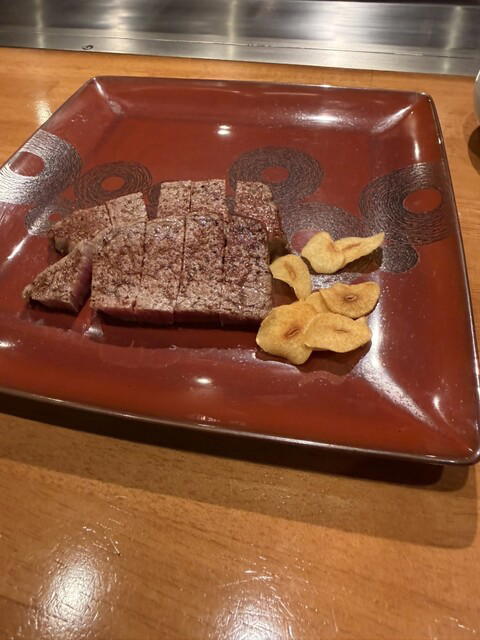
The menu
What to order
- Seafood omakase course
- Black Wagyu teppanyaki
Teppanyaki works because the format is honest about proximity. The grill is not hidden in a back kitchen; heat, timing, knife work, and service rhythm sit in front of the diner. In Hiroshima, where open cooking is a familiar part of eating out, that directness feels natural. Teppanyaki Yamaoka fits that grammar through its listed focus on teppanyaki, steak, seafood, and disciplined public cooking.
Its 2025 Tabelog Hyakumeiten recognition matters because it gives the restaurant a clear external trust signal. Hiroshima has a broad food culture, and a local restaurant appearing in that selection signals a kitchen being noticed beyond a simple neighbourhood recommendation.
Teppanyaki as Hiroshima counter culture, not hotel theatre
Teppanyaki is often misread abroad as performance dining. In Japan, the stronger version is quieter: a cook managing surface temperature, fat, doneness, pacing, and portioning within arm’s reach. The appeal is technical transparency. Every delay and cut is visible, making the format more unforgiving than a closed kitchen.
Hiroshima gives that format a useful setting. The city’s dining identity is comfortable with heat, immediacy, and watching food come together in front of the diner. Teppanyaki moves that grammar into a higher-spend register, replacing speed with steak, seafood, and slower pacing. The shift is less about formality than control.
That is where Teppanyaki Yamaoka earns attention. Its categories are teppanyaki, steak, and seafood, the right triangle for understanding the restaurant rather than treating it as a generic steak showcase. Teppanyaki gives seafood and beef the same close-heat treatment. The point is not a long menu narrative; it is the format’s ability to make ingredient handling legible.
Compared with Hiroshima restaurants in other premium lanes, the distinction is clear. Other Hiroshima dining rooms may sit in more authored or more everyday conversations. Teppanyaki occupies the middle ground: more formal than a casual quick meal, less abstract than highly conceptual dining, and dependent on live execution rather than plating distance.
A focused format with regional recognition
Scale changes teppanyaki, but the broader point is focus. In a serious teppanyaki setting, the grill becomes the centre of attention, and the diner tracks each movement because the cooking is part of the meal’s structure. Teppanyaki Yamaoka reads as a specialist address rather than a generic steak stop.
The price band places it in a useful Hiroshima tier. At JPY 8,000 to JPY 9,999, it asks for a deliberate dinner decision but avoids the very highest luxury pricing associated with Japan’s most expensive beef rooms. For travellers building a Hiroshima itinerary, this is a serious teppanyaki option, not an expense-account monument. For a city often approached through oysters, okonomiyaki, and sake-adjacent drinking, the category adds another way to read local dining at night.
The Tabelog Hyakumeiten recognition in 2025 gives the room a practical trust signal. It does not make the restaurant a Michelin-style destination, and should not be read that way. It does mark visibility inside a steak-and-teppanyaki field where technique is visible and comparison is direct. A score of 3.55 on Tabelog further places it in the Japanese user-review ecosystem, where numbers cluster lower than many international diners expect.
Within Hiroshima, that middle-premium space faces competition from different genres rather than direct clones. NICON plays in another contemporary lane, while Soraya operates at a different spend. Other unnamed specialty addresses show how varied the city’s serious food map becomes once the usual okonomiyaki shorthand is left behind.
How to place it in a Hiroshima eating plan
A teppanyaki dinner is a poor choice for a rushed night. The format rewards attention: the diner is close enough to read the cooking sequence, and the meal makes more sense as the evening’s main event than as a stop between bars. Focused grill dining makes advance planning sensible, especially for travellers with fixed Hiroshima dates.
The Hiroshima location helps. This is a dinner to build around one serious plan followed by drinks elsewhere, or a night focused on food rather than sightseeing logistics. The restaurant belongs in the city’s practical dining map rather than as a remote detour. The appeal is the directness of the grill and the way the meal keeps attention on cooking.
For a wider Hiroshima plan, use the category rather than the venue name as the organizing idea. Pair a teppanyaki night with a contrasting dinner, a bakery or sweets stop, and a bar itinerary, and the city becomes more legible than through a single famous dish. See Our full Hiroshima restaurants guide, Our full Hiroshima bars guide, Our full Hiroshima hotels guide, Our full Hiroshima wineries guide, and Our full Hiroshima experiences guide for the broader map.
Travellers comparing Japanese grill formats beyond Hiroshima can also look sideways rather than upward: different cities and dining rooms show how beef, seafood, and open-heat cooking can follow very different traditions. Outside Japan, Japanese-inspired formats also change when translated abroad, but Teppanyaki Yamaoka is best understood first as a Hiroshima teppanyaki, steak, and seafood address.
Frequently asked questions
How do I find Teppanyaki Yamaoka?
Teppanyaki Yamaoka is located in Hiroshima.
What does dinner at Teppanyaki Yamaoka typically cost?
Pricing at Teppanyaki Yamaoka is listed as JPY 8,000 - JPY 9,999.
Do they take walk-ins at Teppanyaki Yamaoka?
Teppanyaki Yamaoka is in Hiroshima and works in a teppanyaki format, so planning ahead makes more sense than treating it as a casual spare-seat stop.
What's the standout thing about Teppanyaki Yamaoka?
Its strongest credential is the 2025 Tabelog Hyakumeiten recognition, alongside a Tabelog score of 3.55 and a focus on teppanyaki, steak, and seafood.
What if I have allergies at Teppanyaki Yamaoka?
The restaurant lists teppanyaki, steak, and seafood, so allergy concerns should be raised before booking rather than at the table. The published contact number is +81-82-228-4129.
Is Teppanyaki Yamaoka suitable for children?
The teppanyaki format suggests a focused dinner setting. Families with children who can manage that style of meal should fit better than very young diners.
Price and Recognition
Side-by-side context: comparable cuisine and price.
| Venue | Cuisine | Price | Awards | Notes |
|---|---|---|---|---|
| Teppanyaki YamaokaThis venue (the venue you are viewing) | Teppanyaki Steak & Seafood | $50–100 | Tabelog 100 #7 | Not listed |
| シェモモ | Hidden Gem French Bistro | $30–50 | Not listed | Naka, Low-profile address French Bistro |
| TRATTORIA-PIZZERIA polipo | Neapolitan trattoria & pizzeria | $30–50 | Tabelog 100 #53 | Naka, Neapolitan trattoria & pizzeria |
| Kushi Dokoro Dochu | Yakitori & Kushiyaki Counter | $30–50 | Tabelog 100 #54 | Naka, Yakitori & Kushiyaki Counter |
| Chinese Sai Kichijitsu | Seasonal Chinese Chef’s Counter | $50–100 | Tabelog 100 #66 | Higashi, Seasonal Chinese Chef’s Counter |
| タムスープ | Casual French Bistro | $20–30 | Not listed | Naka, Casual French Bistro |
Recognition history
Dated appearances from independent guides and award organizations, with the underlying list record or original source where available.
Tabelog 100 #7 · No. 7
Tabelog · Tabelog 100 - Steak / Teppanyaki - WEST - 2025
Continue exploring
More in Hiroshima
Restaurants in Hiroshima
All restaurants in Hiroshima →
Bars in Hiroshima
All bars in Hiroshima →
Details
- Elegant
- Intimate
- Sophisticated
- Lively
- Business Dinner
- Date Night
- Celebration
- Special Occasion
- Chefs Counter
- Open Kitchen
- Standalone
- Omakase
- Set Menu
- Counter Dining
- Wine
Compact, counter-focused, and lively, with an upscale teppanyaki atmosphere suited to a small, intimate dinner rather than a quiet or expansive dining room.