In a city where Ottoman-era stone towers still cast shadows over the Osum River, Temi Albanian Food grounds itself in the produce and preparation traditions that define southern Albanian cooking. The kitchen draws on the agricultural abundance of the Berat region, where olive groves, mountain herbs, and valley-grown vegetables have shaped local cuisine for centuries. For visitors exploring Berat's UNESCO-listed old town, Temi offers a direct line into that culinary heritage.
 Discover on Pearl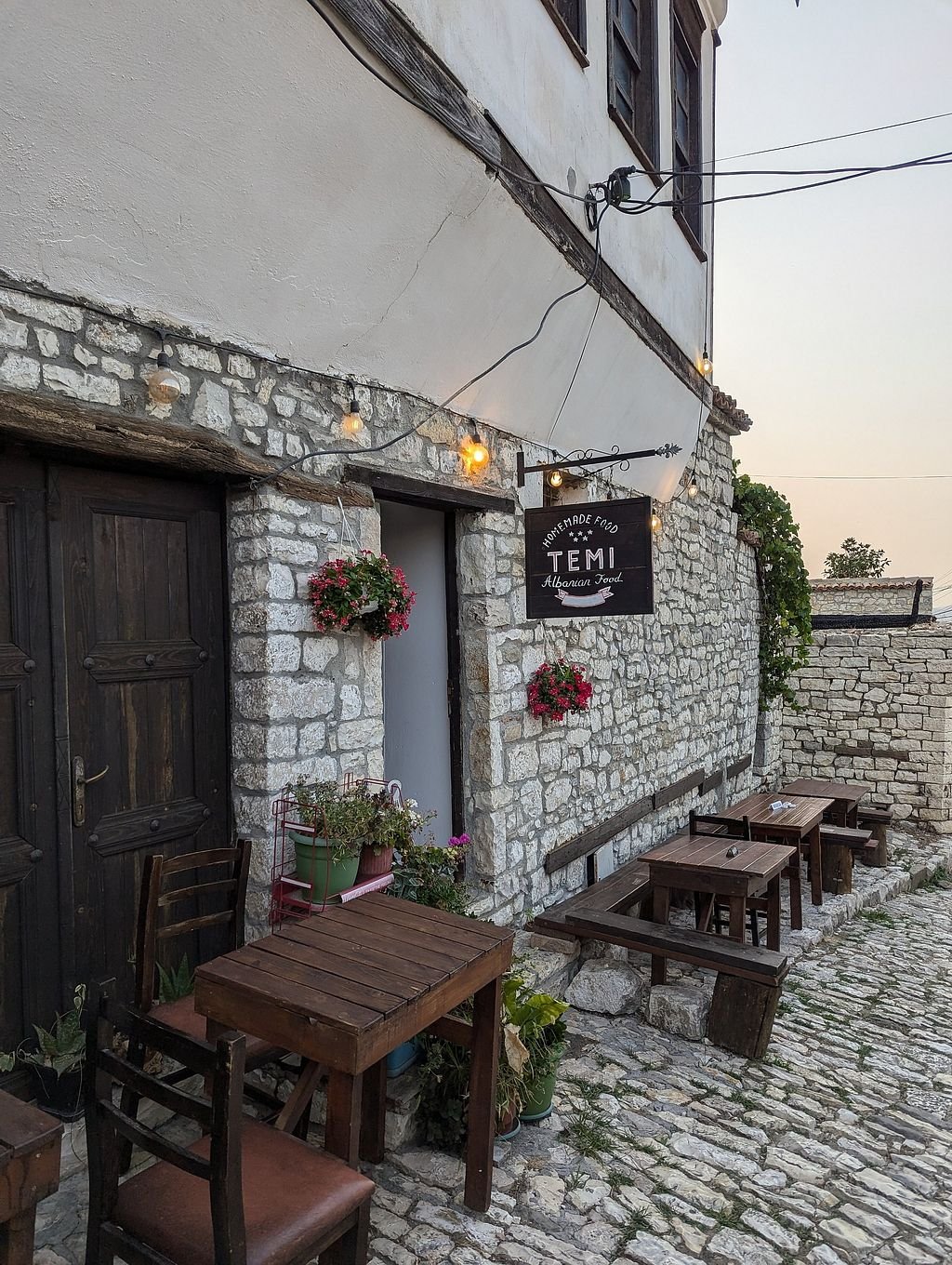
Eating in Berat: What the Region Puts on the Table
Albanian cooking is one of the Balkans' least-documented cuisines in the international press, and Berat sits at the centre of a particularly ingredient-rich corner of it. The city occupies a valley where the Osum River meets the foothills of the Tomorr massif, and the surrounding land produces some of Albania's most referenced agricultural output: olive oil from groves that have been cultivated since antiquity, wild mountain herbs gathered from higher elevations, and slow-reared livestock that reflects a pastoral tradition still functioning in the villages above the city. Any kitchen in Berat working honestly with local supply is drawing from that depth. Temi Albanian Food operates in that tradition, placing the region's produce at the centre of its offer rather than using it as garnish around a more globally recognisable format.
This matters because sourcing defines the flavour register of southern Albanian food in ways that are not easily replicated elsewhere. The lamb raised on Tomorr's scrubby highland pastures has a different fat profile and flavour intensity than intensively farmed equivalents. The wild greens, including varieties of chicory, nettles, and mountain sorrel used in byrek fillings and side preparations, carry bitterness and earthiness that farmed greens rarely match. For context, the comparison with Zaloshnja, another Berat address working within Albanian culinary tradition, illustrates how differently two kitchens can interpret the same regional larder. Temi's position in that peer set becomes clearer when you consider how it approaches familiar southern Albanian categories: slow-cooked meats, fermented dairy, roasted peppers, and the herb-laced preparations that distinguish this part of the country from the coast-facing cooking of the northwest.
The shortlist, unlocked.
Hard-to-book tables, cellar releases, and concierge-planned trips.
Get Exclusive Access →The Sourcing Logic Behind Southern Albanian Cooking
Southern Albania's culinary tradition is largely a product of its agricultural geography. The Berat region has historically supported mixed farming at a scale that kept local cooking diverse: not just grain and legumes, but olive cultivation, viticulture in the surrounding hills, and transhumance-based livestock rearing that moved herds between valley floors and mountain pastures seasonally. That pattern produced a cuisine built on preservation and patience. Fermented sheep's milk cheeses, slow-braised meats cooked in clay pots, dried and reconstituted peppers, and olive-oil-preserved vegetables are all structural parts of this culinary inheritance, not occasional heritage gestures.
What this means practically is that a kitchen genuinely sourcing from within Berat's agricultural radius will be working with ingredients that arrive with significant flavour already in place. The cooking tradition that grew around this supply is correspondingly restrained in its approach to spicing: cumin, dried oregano, and occasionally paprika appear, but the technique tends toward extraction rather than addition, letting stock reductions, long braises, and wood-fire roasting do the work. Venues across Albania that lean into this tradition, from Arti Zanave in Shkoder in the north to Mapo Restaurant in Gjirokastra in the south, each show a regional inflection of these same principles, but Berat's olive oil and highland meat supply give local kitchens a distinct material advantage in certain preparations.
The Setting and What It Signals
Berat itself is one of Albania's two UNESCO-listed historic towns, the other being Gjirokastra, and the density of Ottoman-period architecture in the upper Mangalem and Gorica quarters gives the city an unusually coherent historical character. Restaurants operating here do so inside a built environment that attracts visitors specifically for its authenticity, which raises the baseline expectation for what a locally-rooted dining experience should deliver. Temi Albanian Food sits within that context. The address in the 5001 postal area places it within the broader city proper, and walking the stone-paved lanes of the old town before or after a meal is as much part of the experience as the food itself.
Travellers comparing Berat's dining to what they might encounter at globally-recognised addresses, say Le Bernardin in New York City or Alain Ducasse at Louis XV in Monte Carlo, are measuring against a different register entirely. The value of eating at a place like Temi is not in technical precision or formal service structure but in the directness of the supply chain and the way that the food maps onto a specific geography. That directness is increasingly hard to find as restaurant culture globalises, which is precisely why Berat's smaller, locally-anchored kitchens represent something that venues like Alinea in Chicago or Amber in Hong Kong have no interest in replicating and could not do so even if they tried.
Berat in the Broader Albanian Dining Picture
Albania's restaurant scene has developed unevenly across its cities. Tirana has the most developed range, with places like Capital Restaurant Piceri representing the capital's broader offer, while secondary cities like Berat, Gjirokastra, and Lezha (where Pizzeria Da Fabio takes a different, Italian-influenced approach) have maintained more locally-specific identities. Berat's relative distance from coastal tourism pressures has helped preserve the integrity of its food culture. The Albanian farmhouse tradition, represented nationally by reference points like Mullixhiu, finds a regional expression in Berat that is less self-consciously curated and more directly functional. You can find similar terroir-driven informality further south along the Ionian coast at venues like Taverna E Miqësisë in Rrethi I Vlores, though the specific ingredients and preparations shift with each region's agricultural character.
For a fuller picture of where Temi sits within the city's dining options, our full Berat restaurants guide covers the range of kitchens currently operating across the old town and surrounding quarters.
Planning Your Visit
Berat is accessible by bus from Tirana in approximately two hours, making it a manageable day trip, though the city rewards an overnight stay given the quality of light in the old town at dusk and dawn. Temi Albanian Food is located in the Berat 5001 postal area. Booking details, current hours, and phone contacts are not confirmed in available data at time of publication, so arriving in person or asking your accommodation to make enquiries locally is the most reliable approach. Meal timing in Albanian restaurants generally skews later than northern European norms, with lunch service running into mid-afternoon and dinner starting from around 7pm, though this varies by season and visitor traffic.
Frequently Asked Questions
What's the leading thing to order at Temi Albanian Food?
Southern Albanian kitchens built around regional sourcing tend to perform most distinctively in slow-cooked meat preparations and dishes that showcase local olive oil and wild greens. In Berat specifically, lamb from highland pastures and byrek made with mountain herb fillings are the preparations most closely tied to local supply. Given that Temi's identity is rooted in Albanian food tradition, those categories are the most logical starting points. Specific dish availability will depend on season and market supply, so asking what has come in locally that week is a reliable way to steer toward what the kitchen is doing well on the day.
Is Temi Albanian Food reservation-only?
Contact details and booking policy for Temi Albanian Food are not confirmed in available data at time of publication. In Berat, a city that sees concentrated tourist visits during spring and summer around its UNESCO old town, smaller Albanian restaurants can fill quickly during peak periods, particularly on weekends. If you are visiting between May and September, arriving early in a service or asking your hotel to make local enquiries in advance is a sensible precaution. Outside peak season, walk-in availability is generally less constrained across the city.
How does Temi Albanian Food reflect Berat's regional food traditions compared to restaurants elsewhere in Albania?
Berat occupies a distinct agricultural zone within Albania, with olive cultivation, highland livestock grazing, and valley-grown produce giving local kitchens access to a specific larder that differs meaningfully from the coastal ingredients dominant in Vlora or the dairy-forward traditions of the northern highlands around Shkoder. A restaurant grounded in Albanian food in Berat is therefore drawing from a regional subset of the national cuisine rather than a generic Albanian template. This gives venues like Temi a geographic specificity that connects directly to the same heritage identity that earned Berat its UNESCO listing, making the food and the city's history part of the same visit rather than separate itinerary items.
Comparable Spots, Quickly
A fast peer set for context, pulled from similar venues in our database.
| Venue | Cuisine | Price | Awards | Notes |
|---|---|---|---|---|
| Temi Albanian Food | This venue | |||
| Mullixhiu | Albanian Farmhouse | Albanian Farmhouse | ||
| Zaloshnja | ||||
| Capital Restaurant Piceri | ||||
| Chakra Restorant | ||||
| Mapo Restaurant |
Need a table?
Our members enjoy priority alerts and concierge-led booking support for the world's most difficult tables.
Get Exclusive AccessThe shortlist, unlocked.
Hard-to-book tables, cellar releases, and concierge-planned trips.
Get Exclusive Access →