Tamboerswinkel
Tamboerswinkel occupies a quiet stretch of De Lorentz Street in Gardens, Cape Town, operating within a city scene that increasingly prizes local ingredient sourcing alongside techniques drawn from European and Asian fine-dining traditions. The address places it close to the cultural and culinary corridor linking the City Bowl to the Southern Suburbs, giving it a neighbourhood character distinct from the waterfront dining circuit.
Pearl is the En Primeur Club membership app — saves, bookings, and concierge access live there. Same editors, same standards.
- Address
- 3 De Lorentz St, Gardens, Cape Town, 8001, South Africa
- Phone
- +27 66 294 1485
- Website
- bit.ly
- Directions
- Get directions
 Saves & bookings on Pearl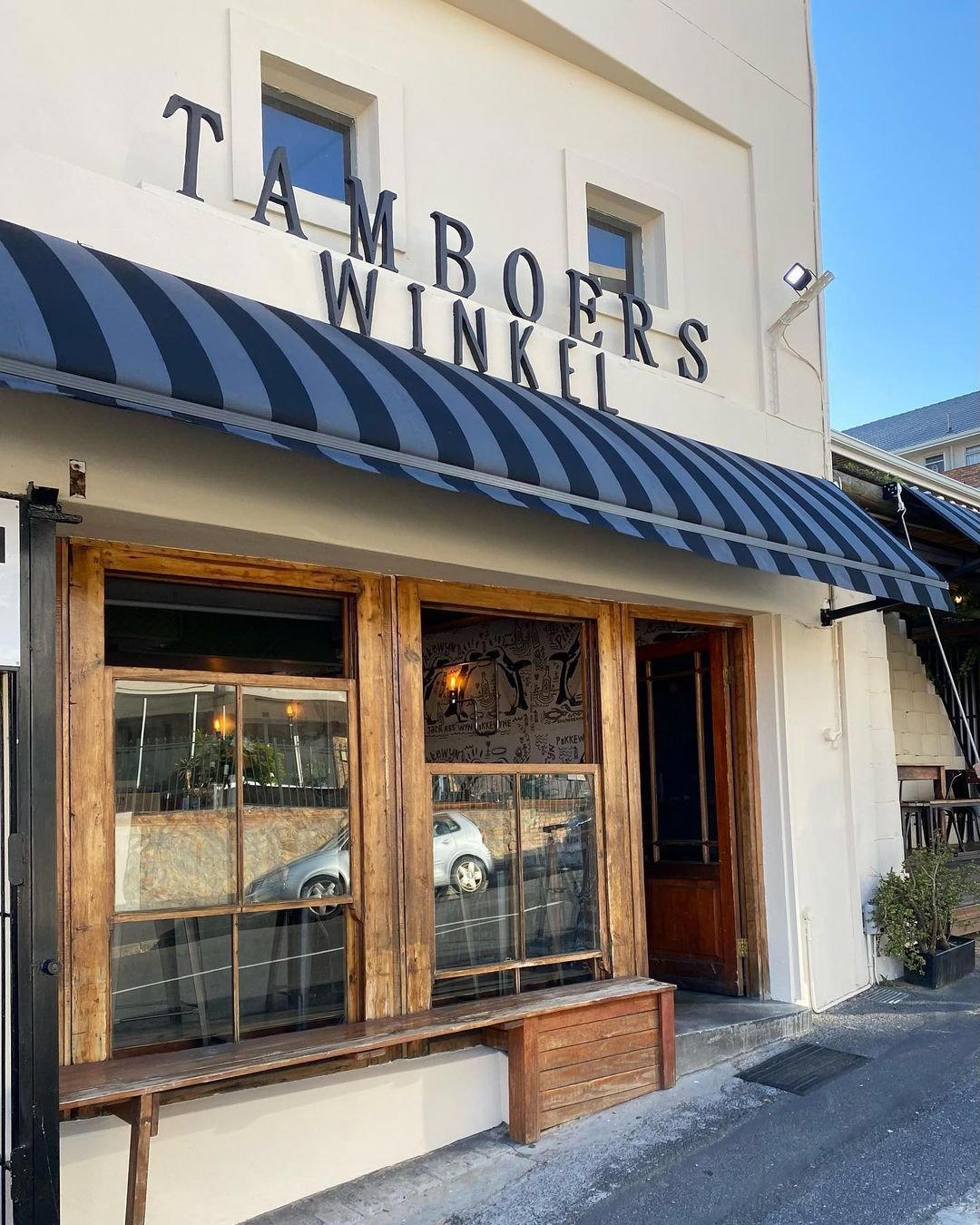
Gardens, Cape Town: The Neighbourhood Behind the Address
The Gardens suburb sits just above Cape Town's central business district, separated from the waterfront dining circuit by topography and temperament. Streets like De Lorentz run quiet, shaded by mature trees, and the dining culture here tends toward the considered rather than the conspicuous. It is the kind of address where a restaurant earns its place through what ends up on the plate rather than through location alone. In a city where the dominant fine-dining corridor runs between the V&A Waterfront, Constantia, and the Southern Suburbs wine estates, Gardens operates as a counterpoint, drawing a local crowd that has already made its peace with the obvious options and is looking for something more specific.
Cape Town's broader restaurant scene has spent the past decade developing real international credibility. Venues like Fyn, which maps Japanese technique onto South African produce, and La Colombe, long regarded as one of the country's reference points for French-inflected fine dining, have established that the city can compete across multiple culinary registers. The Test Kitchen and Salsify at the Roundhouse round out a tier of restaurants that take local ingredients seriously as the primary subject of their menus, not as a marketing footnote. Tamboerswinkel sits within this broader shift, at an address that keeps it grounded in the rhythms of a residential neighbourhood rather than a tourist destination.
The Intersection of Indigenous Produce and Imported Method
The interesting tension in contemporary South African cooking is not between fine dining and casual, it is between technique acquired abroad and ingredients that simply do not exist anywhere else. The Western Cape's fynbos biome, its coastal waters, its stone-fruit farms, and its wine country all produce materials that reward precise handling. The chefs who have returned from stages in Europe or Asia carry knife skills, fermentation knowledge, and sauce architecture that translates well to these products, provided the instinct is to serve the ingredient rather than impose a foreign framework onto it.
This is the approach that defines one coherent end of Cape Town dining. You see it at Wolfgat in Paternoster, where the strandveld pantry, sea plants, coastal herbs, local bivalves, is handled with a technique that is disciplined without being cold. You see a version of it further afield at Le Quartier Français in Franschhoek, where the Winelands setting shapes ingredient access. The editorial question for any Gardens address operating in this register is how it positions itself relative to that tradition: whether it draws on the same forager-to-table sourcing that has become Cape Town's most distinctive export to the global dining conversation, or whether it pursues a different relationship between place and plate.
For context on how South African fine dining looks when deployed in a wine-estate setting, Delheim Wine Estate in Stellenbosch provides a useful reference point, where the pairing of Western Cape terroir with considered cooking has a long operational history. The same conversation about local produce and external technique plays out differently at an urban address like De Lorentz Street, where the supply chain runs through city markets and direct producer relationships rather than an estate's own gardens.
Cape Town in a Wider South African Context
South Africa's restaurant geography is more distributed than its international profile suggests. Johannesburg has its own serious dining tier, represented by venues like Sympathy's Restaurant and Foundry in Sandton, while Pretoria's Capito and the safari lodge dining at Silvan Safari Lodge and Londolozi Game Reserve represent entirely different expressions of South African hospitality. Cape Town's advantage is geographic: the proximity of the Winelands, the cold Benguela Current fisheries, and the fynbos biome within a single day's drive gives its kitchens a raw material advantage that inland cities simply cannot replicate.
That advantage shows up most clearly in the city's mid-range and upper-mid-range restaurants, where ingredient quality carries the meal further than technique alone. At the luxury end, properties like Ellerman House in Bantry Bay anchor a different tier, one where the dining experience is inseparable from the accommodation context. For comparison at the global level, the precision protein cookery at Le Bernardin in New York City or the collaborative tasting format at Lazy Bear in San Francisco represent the international comparable set that Cape Town's more ambitious kitchens measure themselves against, even if the ingredient vocabulary is entirely different.
The Saldanha Bay outpost of Wolfgat extends the coastal-forager model beyond Paternoster, demonstrating how far that sourcing philosophy has spread along the Western Cape coastline. An urban address in Gardens draws from a different supply, but the underlying commitment to place-specific ingredients, when present, produces a similar legibility: you know from the plate where the kitchen is located in the world.
Planning a Visit
Tamboerswinkel is located at 3 De Lorentz Street in the Gardens neighbourhood, a short distance from the Company's Garden. The address is walkable from the upper end of Long Street and accessible from the City Bowl without requiring a car, which is a practical advantage in a city where parking around more suburban dining destinations can add friction to an evening.
Peers Worth Knowing
Comparable venues nearby, for context on price, style, and recognition.
| Venue | Cuisine | Price | Notes |
|---|---|---|---|
| TamboerswinkelThis venue — the venue you are viewing | South African Cafe | $$ | Not listed |
| Manna Epicure | French-South African Fusion Bistro | $$ | Higgovale |
| Love Thy Neighbour | Authentic Greek Meze | $$ | Bo-Kaap |
| Lievita | Authentic Neapolitan Pizza & Pasta | $$ | Schotschekloof |
| The Kitchen | Cape Malay | $$ | City Bowl |
| The Company's Garden Restaurant | South African Cafe | $$ | City Bowl |
Continue exploring
More in Cape Town
Restaurants in Cape Town
Browse all →
Bars in Cape Town
Browse all →
Hotels in Cape Town
Browse all →
At a Glance
- Cozy
- Trendy
- Brunch
- Casual Hangout
- Standalone
- Extensive Wine List
Current opening hours
- Monday
- 6 AM–9 PM
- Tuesday
- 6 AM–9 PM
- Wednesday
- 6 AM–9 PM
- Thursday
- 6 AM–9 PM
- Friday
- 6 AM–9 PM
- Saturday
- 6 AM–9 PM
- Sunday
- 6 AM–3 PM
Hours can change for holidays and private events. Last verified .
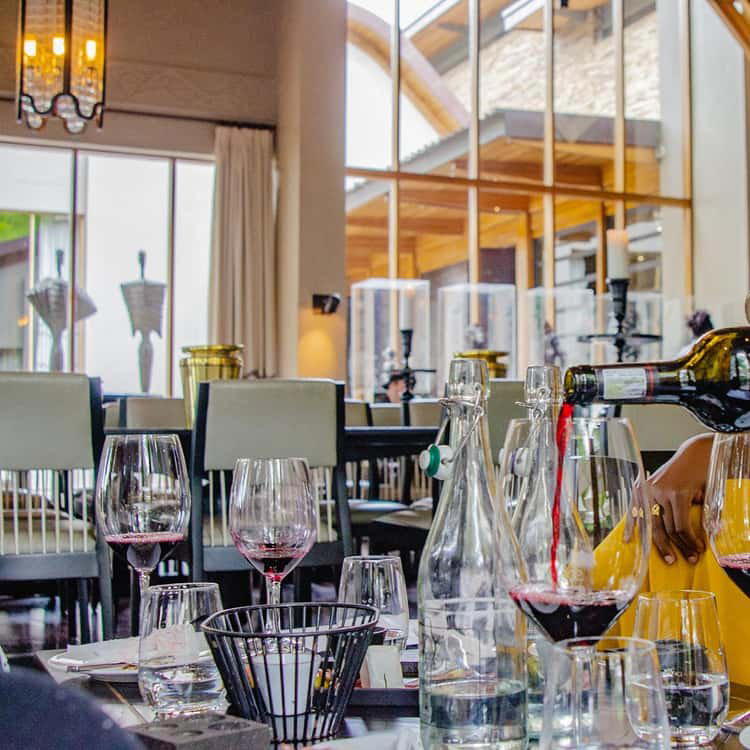
Cozy and hip with decor blending grandma’s kitchen charm and trendy Restoration Hardware style, featuring pine shelves, antique knick-knacks, and tin cups for cutlery.