
Michelin Plate
Our verdict
Takeda belongs to Osaka’s quieter dining register: small-scale, craft-aware, and better read through sourcing and seasonal restraint than through spectacle. Its indigo-dyed noren points to Tokushima craft, a useful clue for a restaurant whose appeal sits in regional material culture as much as in the plate.

Pearl is the En Primeur Club membership app — saves, bookings, and concierge access live there. Same editors, same standards.
- Address
- 2F, 2-1-6 Tsuriganecho, Chuo-ku, Osaka, Osaka, 540-0035, JPN
- Phone
- +81 80-3164-3589
- Website
- guide.michelin.com
- Directions
- Get directions
The menu
What to order
- Soba-gome jiru (buckwheat porridge)
- Nyumen with Handa somen
- Seasonal omakase course
The first signal at Takeda is cloth and colour, not a menu board or trophy wall: an indigo-dyed visual identity that sets the room's tone before the meal begins. In Osaka, where dining often announces itself through steam, neon, counter chatter, and the theatre of busy counters, that blue reference suggests a different tempo. It points to a room built around attention rather than volume, placing the meal inside a habit of reading mood and material before any course arrives.
Osaka’s restaurant culture is often flattened into casual staples, late-night appetite, and crowded food streets. That version is real, but incomplete. The city also has a disciplined middle register where sourcing, presentation, and carefully chosen details carry the meal without grand claims. Takeda fits that register. Public details are spare, so visible choices matter more: an Osaka setting, an indigo-dyed counter-dining identity, and a restaurant presence that rewards readers who care where ingredients and materials come from, not just what category a restaurant fits.
Indigo at the door, sourcing as the point of view
Ingredient-led dining does not always announce sourcing through supplier lists. Often it works through restraint: seasonality, regional cues, and the way a room frames attention. The indigo reference pulls Takeda away from generic minimalism and toward a more tactile sense of craft. It is not loose decoration; in this context, the visual language becomes a statement about origin, patience, and the value of details that can be read before the meal begins.
This is where Takeda sits apart from Osaka’s louder food categories. A counter such as Kushikatsu Gojoya belongs to a lineage of quick sequencing, heat, and rhythm. ORIGIN, by contrast, signals another formal register in the city. Takeda is harder to reduce to a single public label, and that ambiguity is useful. It asks to be read through craft codes rather than a checklist of cuisine type, chef biography, or award shorthand.
The sourcing angle in Osaka is broader than luxury. The city’s strength has always been market intelligence: cooks who know when to buy, how little to interfere, and how texture can carry meaning. That sensibility links street-level appetite with composed dining. A casual counter, pastry work at Acidracines Patisserie, and a quiet Osaka dining room with an indigo-dyed identity are not the same experience, but they share a city logic: precision matters when the format looks simple.
Osaka's quieter counterculture
The current Osaka dining map rewards contrast. Visitors can move from bakeries and casual counters to polished dining rooms and regional formats within a compact urban field. That density is why single-venue judgment can mislead. Takeda belongs to the city’s quieter counterculture: places that do not depend on spectacle, a named tasting format, or published chef mythology to justify attention.
For travellers building a serious Osaka itinerary, sequencing matters. A day built around snacks and late-night drinks tells one story. A day combining a craft-led meal with patisserie, coffee, and a focused dinner tells another. The EP Club Osaka map helps with that calibration: see Our full Osaka restaurants guide for dining context, Our full Osaka bars guide for after-dinner planning, and Our full Osaka hotels guide if the meal is part of a longer stay.
Osaka is a useful base for this kind of eating because it avoids the false split between business city and leisure city. Its dining rooms serve regulars as much as destination diners, and the pleasure often lies in noticing calibrated detail rather than chasing a headline. Takeda’s position suits a restaurant whose appeal is not built on isolation. It belongs to the working fabric of the city, where attention and appetite can sit side by side.
The comparison set shows how broad Osaka’s restaurant language has become. Gojoya and Kushikatsu Gojoya point to the city’s comfort with focused counter formats, while Nishideria and ORIGIN show how different registers can coexist within the same dining map. Takeda occupies a more inward lane, where the indigo-dyed identity carries cultural information and the meal is better approached as a study in place, craft, and restraint.
How to place it in a Japan itinerary
Takeda suits travellers who understand that Japan’s dining hierarchy is not only about price, awards, or famous names. The stronger question is what kind of attention a meal asks for. In Osaka, the answer can be speed and appetite, but it can also be quiet focus. Takeda belongs to that Osaka version of concentration: less about status performance than about reading a room, its materials, and the way it asks diners to slow down.
A traveller comparing regional dining styles can use Takeda as an Osaka reference point without forcing it into a hard ranking. The point is not to turn every stop into a league table, but to see how dining culture changes when signals shift from product to place, from format to craft, from appetite to atmosphere. In that sense, Takeda is most useful when placed beside other Osaka dining rather than treated as an isolated trophy booking.
For a wider route, Osaka connects naturally to food experiences beyond restaurants. Our full Osaka experiences guide is useful for cultural planning around meals, while Our full Osaka wineries guide helps readers track beverage-led detours in and around the city. Cross-country food itineraries can widen the lens, but Takeda works best as a local pause: a reminder that a meal can be memorable because of proportion, restraint, and the clarity of its indigo-dyed visual cue.
International comparisons are less direct, but useful only in broad terms. Japanese food culture is often translated abroad through beverage bars, casual forms, and simplified icons. Takeda sits at the opposite end of that conversation: local, quiet, and anchored by cultural signals that do not need heavy explanation when read carefully. Its recognition as a MICHELIN Plate venue confirms that it belongs on a serious Osaka list without turning the experience into a trophy hunt.
Frequently asked questions
What kind of recognition has Takeda received?
Takeda is listed in the Michelin Guide with a MICHELIN Plate distinction.
Where is Takeda in Osaka?
Takeda is located in Osaka.
Should I book Takeda in advance?
Advance planning makes sense for Takeda in Osaka, especially if you want a specific date or time. Direct arrangements with the restaurant are the practical route.
What is Takeda known for?
Takeda is associated with an indigo-dyed visual identity and a quiet, detail-led dining presence in Osaka. It is also listed in the Michelin Guide with a MICHELIN Plate distinction.
Can Takeda accommodate dietary restrictions?
Ask the restaurant directly before booking so any restrictions can be discussed in context. Takeda is in Osaka, and advance coordination is the sensible step.
Is Takeda child-friendly?
Check with the restaurant before bringing children, since policies can vary by room and service style. Takeda is in Osaka.
Side-by-Side Snapshot
Side-by-side context: comparable cuisine and price.
| Venue | Cuisine | Price | Awards | Notes |
|---|---|---|---|---|
| Takeda | Premium Japanese Omakase Kaiseki | $200–300 | Michelin Plate | Not listed |
| Kushikatsu Gojoya | Creative Fusion Kushikatsu | $30–50 | Michelin Bib Gourmand | Kushiage |
| ORIGIN | Seafood | Not listed | Tabelog 100 #15 | French |
| Acidracines Patisserie | Not listed | $30–50 | Tabelog 100 #18 | JPY 1,000 - JPY 1,999 JPY 1,000 - JPY 1,999 |
| Nishideria | Naniwa Italian | $150–200 | Michelin Plate | Not listed |
Recognition history
Dated appearances from independent guides and award organizations, with the underlying list record or original source where available.
Michelin Plate
Michelin
Continue exploring
More in Osaka
Restaurants in Osaka
Browse all →


Bars in Osaka
Browse all →
Hotels in Osaka
Browse all →



Wineries in Osaka
Browse all →
Details
- Intimate
- Quiet
- Elegant
- Classic
- Date Night
- Special Occasion
- Business Dinner
- Solo
- Chefs Counter
- Standalone
- Design Destination
- Sake Program
- Local Sourcing
- Tasting Menu
- Omakase
- Counter Dining
- Set Menu
- Sake
- Beer
- Tea
- Pescatarian Friendly
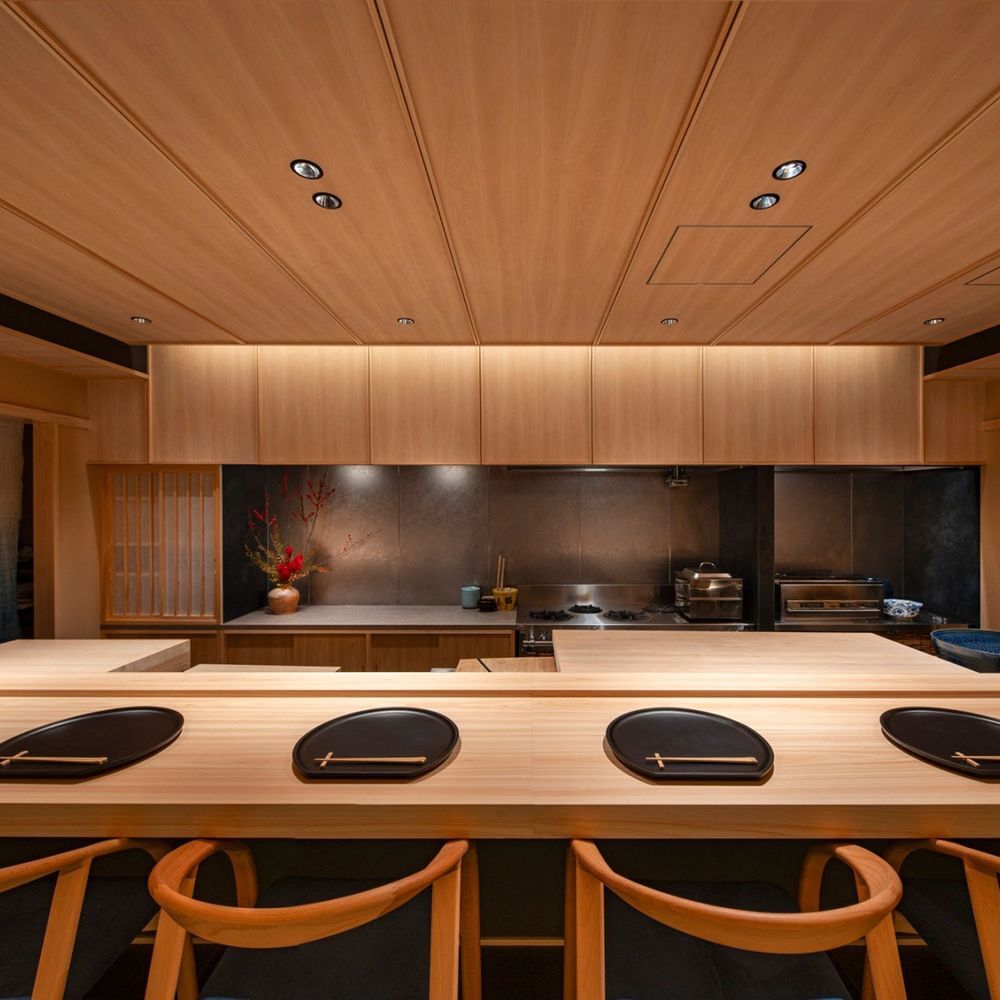
A small, refined counter-style space with a calm, adult atmosphere, subdued lighting, and a quiet, focused dining room that emphasizes close interaction with the chef and the seasonality of ingredients.