Taj Fisherman's Cove in Chennai delivers Contemporary Coastal Seafood and multi-cuisine dining on Covelong Beach. Must-try plates include the Fresh Coromandel Seafood Platter, Grilled Tiger Prawns with lemon and curry leaf, and the Chef’s Seasonal Coastal Catch. The restaurant pairs beachfront alfresco tables and a private Watch Tower for bespoke meals, offering warm service and sunset views of the Bay of Bengal. Expect grilled coastal flavors, coconut and tamarind accents, and a relaxed resort rhythm across 48 acres of tropical gardens. Ideal for seafood lovers seeking a refined yet accessible beachside meal close to Mahabalipuram and Chennai’s city center.
 Discover on Pearl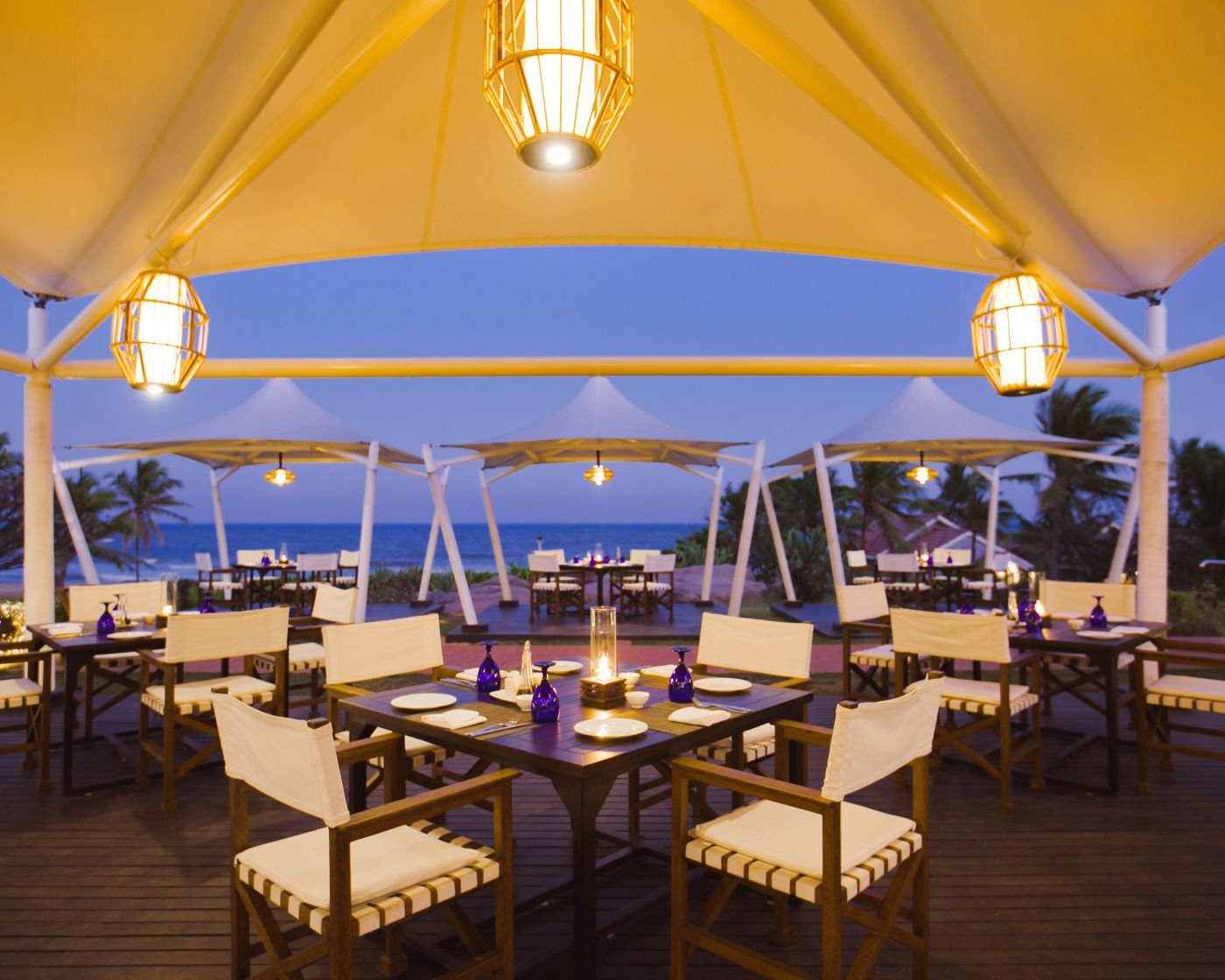
Where the Coromandel Coast Sets the Terms
The stretch of shoreline south of Chennai has a particular quality that the city's urban dining scene cannot replicate. Covelong Beach, roughly 40 kilometres from the centre of Tamil Nadu's capital, sits within the Kancheepuram District where the Bay of Bengal runs close and flat to a low-slung coastline. The air carries salt and the particular humidity of the southeastern coast, and the light in the hours before sunset moves across the water at an angle that makes the place feel removed from the metropolitan density behind it. Taj Fisherman's Cove occupies this position on the Coromandel Coast, and that address is not incidental to the experience: the location is the experience.
Luxury hotel dining in India has generally split along two axes. One axis runs through the palace-conversion properties of Rajasthan and Hyderabad, where the architecture and dynastic history do most of the atmospheric work — Adaa at Falaknuma Palace in Hyderabad is the clearest example of that model, where a Nizam-era setting shapes every element of the guest's frame of reference. The other axis runs through properties whose primary asset is natural geography: a beach, a hillside, a river bend. Taj Fisherman's Cove belongs firmly to the second category. The Covelong shoreline does what no amount of interior design can manufacture.
The shortlist, unlocked.
Hard-to-book tables, cellar releases, and concierge-planned trips.
Get Exclusive Access →Chennai's Dining Geography and Where This Fits
Chennai's most discussed restaurant tables are concentrated in the city's central and southern districts. Avartana operates within the ITC Grand Chola and has built a reputation for progressive South Indian technique at a counter format — it represents the direction the city's premium dining conversation has been moving. Kappa Chakka Kandhari approaches the same regional tradition from a different angle, grounding itself in Kerala culinary reference. Southern Spice covers the classical Tamil Nadu repertoire in a more established hotel format. Each of these operates within the city's traffic and density. Taj Fisherman's Cove operates outside it, in a setting that requires a drive south along the East Coast Road , a journey that functions as a deliberate decompression before arrival.
That distance from the city is a genuine editorial distinction. The East Coast Road corridor has become one of the more considered leisure drives out of Chennai, with the coastline opening up past the urban sprawl. Properties along this stretch compete on the quality of their beach access and their distance from the city's noise rather than on proximity to other dining destinations. For a full breakdown of how the city's hospitality and dining options are distributed, see our full Chennai hotels guide and our full Chennai restaurants guide.
The Coromandel Coastal Tradition at the Table
South Indian coastal cooking is one of the more precise regional traditions in the subcontinent. The Coromandel Coast's culinary identity draws on Tamil Brahmin and Chettinad influences inland, but at the shoreline itself the defining ingredient is fish , the daily catch from the Bay of Bengal, which runs to varieties including seer fish, pomfret, and prawns that appear in preparations ranging from tamarind-based curries to simpler coastal grills. This is a tradition that shares structural DNA with the seafood cooking of Kerala further south, but uses a distinct spice vocabulary: dried red chillies, curry leaf, and mustard seed feature more prominently than the coconut-forward preparations associated with Malabar cuisine.
Hotel dining on the Indian coast has historically struggled to present this tradition with the same conviction as smaller standalone restaurants. The format tension , between kitchen scale, international guest expectations, and the precision that coastal Tamil cooking demands , has often pushed large properties toward a diluted version of the regional repertoire. The better hotel kitchens have addressed this by narrowing their focus: defining clearly which coastal dishes they do well and building the menu around those rather than attempting comprehensive coverage. Across India's premium dining scene, this restraint has generally produced stronger results than the alternative, and it is visible in properties from Bomras in Anjuna to The Table in Mumbai.
The Taj Hotels Framework and What It Means Here
The Taj group's footprint across India gives its properties a particular kind of institutional credibility within the country's premium hospitality market. This is not simply a branding observation: the group's longstanding presence in locations from Mumbai's waterfront to the hill stations of the south means that the Taj name carries specific service and infrastructure expectations that independent properties cannot easily match. At Covelong Beach, that framework manifests in the beach resort format , where room access, food and beverage programming, and event hosting operate as a coordinated system rather than isolated functions.
For comparative reference within India's premium coastal and heritage hotel dining, the range is considerable. Naar in Kasauli represents the mountain-property variant of destination dining in India, where geography rather than city proximity drives the experience. Farmlore in Bangalore has taken a farm-to-table approach that positions it differently within the luxury dining conversation. Dum Pukht in New Delhi anchors the historical Mughal end of the hotel restaurant spectrum. Taj Fisherman's Cove sits within its own distinct niche: the premium beach resort property where the dining proposition is inseparable from the coastal setting.
Internationally, the closest structural comparisons are beach resort properties where location and marine ingredients create a self-contained dining logic , the approach that distinguishes, say, Le Bernardin in New York City in its unwavering focus on one ingredient category, fish, as the organising principle of the entire program. At a very different price point and context, Taj Fisherman's Cove operates with a similar logic: the Bay of Bengal is present in the view, the air, and the kitchen's sourcing.
Planning the Visit
The property sits at Covelong Beach in Kancheepuram District, roughly a 45-minute drive south of central Chennai along the East Coast Road, with traffic on the ECR moving considerably more freely on weekdays than on weekend afternoons when the road handles high leisure volumes from the city. For guests visiting specifically for a meal rather than an overnight stay, the drive timing matters: arriving at or just before sunset makes the most of the coastal light and the transition from water activity to dinner. Booking ahead is advisable for weekend visits, particularly during the cooler months of November through February when Chennai's climate is at its most hospitable for outdoor coastal dining and the property draws higher guest volumes. For a broader orientation to what the city offers beyond this address, our full Chennai bars guide, our full Chennai wineries guide, and our full Chennai experiences guide cover the wider scene. Regional comparisons across India's dining cities, from Chandni in Udaipur to Baan Thai in Kolkata and Atomix in New York City, are covered across the EP Club India and international restaurant guides.
Covelong Beach, Kancheepuram District, Chennai, Tamil Nadu, 603112
+91 44 6741 3333
The Minimal Set
A quick look at comparable venues, using the data we have on file.
| Venue | Notes | Price |
|---|---|---|
| Taj Fisherman's Cove | This venue | |
| Avartana | South Indian | |
| Kappa Chakka Kandhari | ||
| Southern Spice |
Need a table?
Our members enjoy priority alerts and concierge-led booking support for the world's most difficult tables.
Get Exclusive AccessThe shortlist, unlocked.
Hard-to-book tables, cellar releases, and concierge-planned trips.
Get Exclusive Access →