Southern Spice at Taj Coromandel occupies a specific position in Chennai's formal dining scene: a hotel restaurant dedicated to the breadth of South Indian regional cooking at a time when most peers have narrowed their focus. The room sits within one of Nungambakkam's established luxury addresses, and the kitchen draws on traditions spanning Tamil Nadu, Kerala, Karnataka, and Andhra Pradesh.
 Discover on Pearl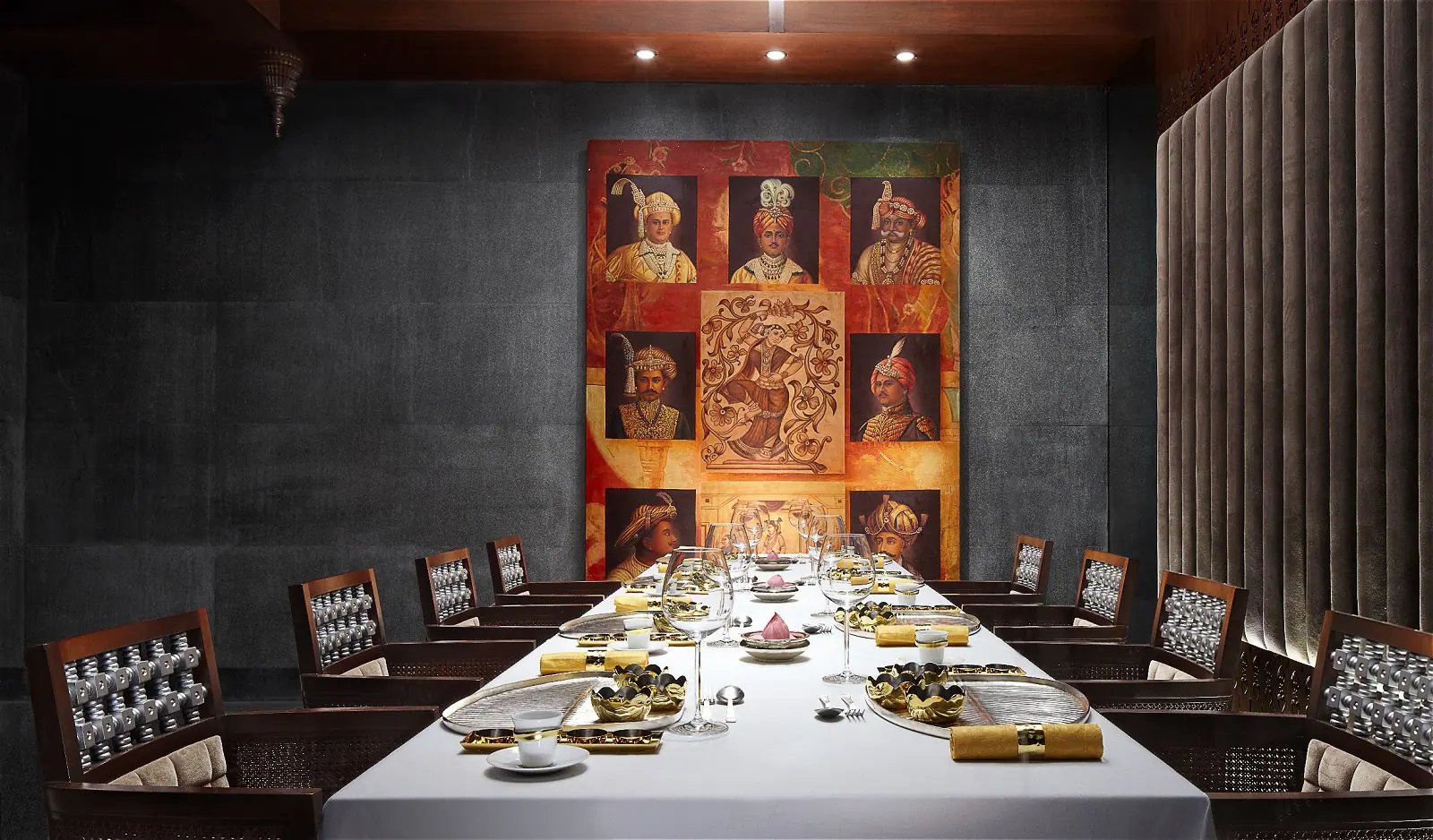
A Room That Sets Expectations Before the Menu Arrives
The approach to Southern Spice tells you something about how formal South Indian dining has been framed within the hotel circuit. The restaurant occupies space inside the Taj Coromandel on Uthamar Gandhi Road in Nungambakkam, one of Chennai's established luxury corridors, where the building's own presence — mid-century in spirit, repeatedly refined — establishes a register before you reach the dining room. Inside, the design language draws on classical South Indian motifs: bronzework, carved detailing, textiles that reference temple craft traditions rather than generic "Indian restaurant" shorthand. This is not decoration for its own sake. It sets the terms of the meal that follows, signalling that the cooking here is framed as heritage material rather than contemporary experiment.
That framing matters because it shapes the entire ritual of the meal. South Indian regional cooking, when treated with this level of institutional seriousness, operates on its own logic of sequence, temperature, and proportion , one that has little in common with the tasting-menu conventions imported from European fine dining. Arriving with that understanding changes how the meal lands.
The shortlist, unlocked.
Hard-to-book tables, cellar releases, and concierge-planned trips.
Get Exclusive Access →The Geography of a South Indian Table
South Indian cuisine is not a single tradition. The cooking of Tamil Nadu, with its tamarind-forward gravies and rice-centred service, sits alongside the coconut-oil-driven curries of Kerala, the groundnut and jaggery notes of Karnataka, and the fierce, dry-heat preparations that define much of Andhra Pradesh and Telangana. At restaurants that take regional breadth seriously, this becomes one of the more instructive meals you can eat in India , less a single cuisine and more a comparative study in how geography, soil, and trade routes shaped entirely different flavour architectures within a shared subcontinental framework.
Southern Spice positions itself within this broader regional scope, which places it in a different category from Chennai restaurants that concentrate on a single state's cuisine. For comparison, Avartana approaches South Indian cooking through a contemporary fine-dining lens , tasting menus, modernist technique, seasonal editing. Kappa Chakka Kandhari focuses tightly on Kerala's culinary vocabulary. Southern Spice, by contrast, holds the wider regional frame inside a formal hotel setting, which appeals to a different kind of diner: one seeking breadth and authenticity within an established service environment rather than innovation or regional specificity alone.
That positioning connects Southern Spice to a tradition of hotel-anchored regional dining that has produced some of India's most carefully maintained cooking programs. Dum Pukht in New Delhi is the clearest reference point at the upper end of this model: a Taj ITC property restaurant where a single regional tradition , Awadhi dum cooking , has been preserved and presented with institutional backing for decades. Southern Spice operates in the same structural tier, applying similar logic to the South Indian regional canon.
The Ritual of the Meal
South Indian dining, at its most considered, is one of the world's more codified meal structures. The sequencing of a traditional spread , rice at the centre, accompaniments arranged by temperature and intensity, the order in which items are introduced , follows conventions that developed over centuries in both domestic and temple-kitchen traditions. A banana-leaf service, where it appears, carries its own grammar: where the rice is placed, how the leaf is oriented, the sequence in which the kitchen sends each preparation.
Restaurants operating at the formal hotel level translate this ritual into a setting designed for international travellers and urban business diners, which requires calibration. The challenge is maintaining the internal logic of the meal , its pacing, its proportions, its regional authenticity , while delivering it within a service structure built for comfort and accessibility. When that calibration works, the result is one of the more coherent dining experiences available in a city like Chennai, where the gap between street-level authenticity and formal presentation can be wide. Within Chennai's broader restaurant scene, this middle register , rigorous about the food, accessible in its setting , remains relatively underserved.
The Taj Coromandel address itself is worth understanding in context. The hotel has operated on Uthamar Gandhi Road for decades and sits within walking distance of the commercial and cultural institutions of Nungambakkam. It is not an outlying resort property; it is an urban hotel embedded in the city's professional geography. Southern Spice benefits from that positioning: its clientele includes both hotel guests arriving from other cities and Chennai residents who use it as a formal dining address. For visitors staying elsewhere in the city, Nungambakkam is accessible from most central neighbourhoods, and the Taj Coromandel is a well-marked landmark along Anna Salai. Booking ahead is advisable for dinner, particularly on weekends, when the hotel's in-house dining options draw from both the resident and local diner pool simultaneously.
Where Southern Spice Sits in the Wider Dining Picture
India's hotel-anchored restaurant tier has seen pressure from both directions over the past decade. From above, standalone fine-dining concepts with strong chef identities , like Farmlore in Bangalore , have captured the narrative around serious Indian cooking. From below, the expansion of casual regional specialists has made authentic cooking more accessible without the formality. The hotel dining room that earns its place in this environment does so by doing something neither end of the spectrum can replicate: consistent, well-resourced regional cooking delivered with professional service infrastructure and a level of accessibility that specialist restaurants often sacrifice in pursuit of concept.
Across India's premium dining circuit, this category produces reliable reference-point meals. Adaa at Falaknuma Palace in Hyderabad demonstrates how heritage-hotel settings can amplify regional cooking. The Table in Mumbai shows a different model: hotel-adjacent precision applied to pan-international cooking. Southern Spice's specifically South Indian brief, maintained within the Taj Coromandel framework, gives it a defined position in that tier.
For visitors structuring a Chennai itinerary around food, Southern Spice functions as a formal anchor , the meal where the regional tradition is presented in full, with context and space. Casual and street-level eating fills around it; a visit to the coast via Taj Fisherman's Cove offers a different spatial register entirely. EP Club's full Chennai restaurants guide, along with resources covering hotels, bars, experiences, and wineries, provides the surrounding context for building that itinerary with precision.
Planning Your Visit
Southern Spice is located within the Taj Coromandel at Uthamar Gandhi Road, Nungambakkam, Chennai. The hotel is a known address for taxi and auto-rickshaw drivers across the city, making arrival direct from any central neighbourhood. For dinner reservations, particularly Thursday through Sunday, contacting the Taj Coromandel directly through the hotel's main line or concierge is the most reliable route. Lunch tends to have more flexibility; dinner on weekends merits planning at least a few days in advance. Dress expectations align with the hotel's formal register: smart-casual at minimum, though the room's character rewards dressing to the occasion.
Taj Coromandel, Uthamar Gandhi Rd, Anna Salai, Nungambakkam, Chennai, Tamil Nadu 600034, India
+91 78248 62308
What It’s Closest To
A fast peer set for context, pulled from similar venues in our database.
| Venue | Cuisine | Awards | Notes |
|---|---|---|---|
| Southern Spice | This venue | ||
| Avartana | South Indian | South Indian | |
| Kappa Chakka Kandhari | |||
| Taj Fisherman's Cove |
Need a table?
Our members enjoy priority alerts and concierge-led booking support for the world's most difficult tables.
Get Exclusive AccessThe shortlist, unlocked.
Hard-to-book tables, cellar releases, and concierge-planned trips.
Get Exclusive Access →