
Our verdict
Taim has appeared on Opinionated About Dining's Cheap Eats in North America list three consecutive years (2023–2025), reaching #256 in 2025. Chef Einat Admony's Spring Street counter brings Israeli-rooted Middle Eastern cooking to SoHo at a price point that sits well below the neighbourhood average, making it one of the more critically tracked casual addresses in Lower Manhattan.

Pearl is the En Primeur Club membership app, where members save venues, book tables and use the concierge.
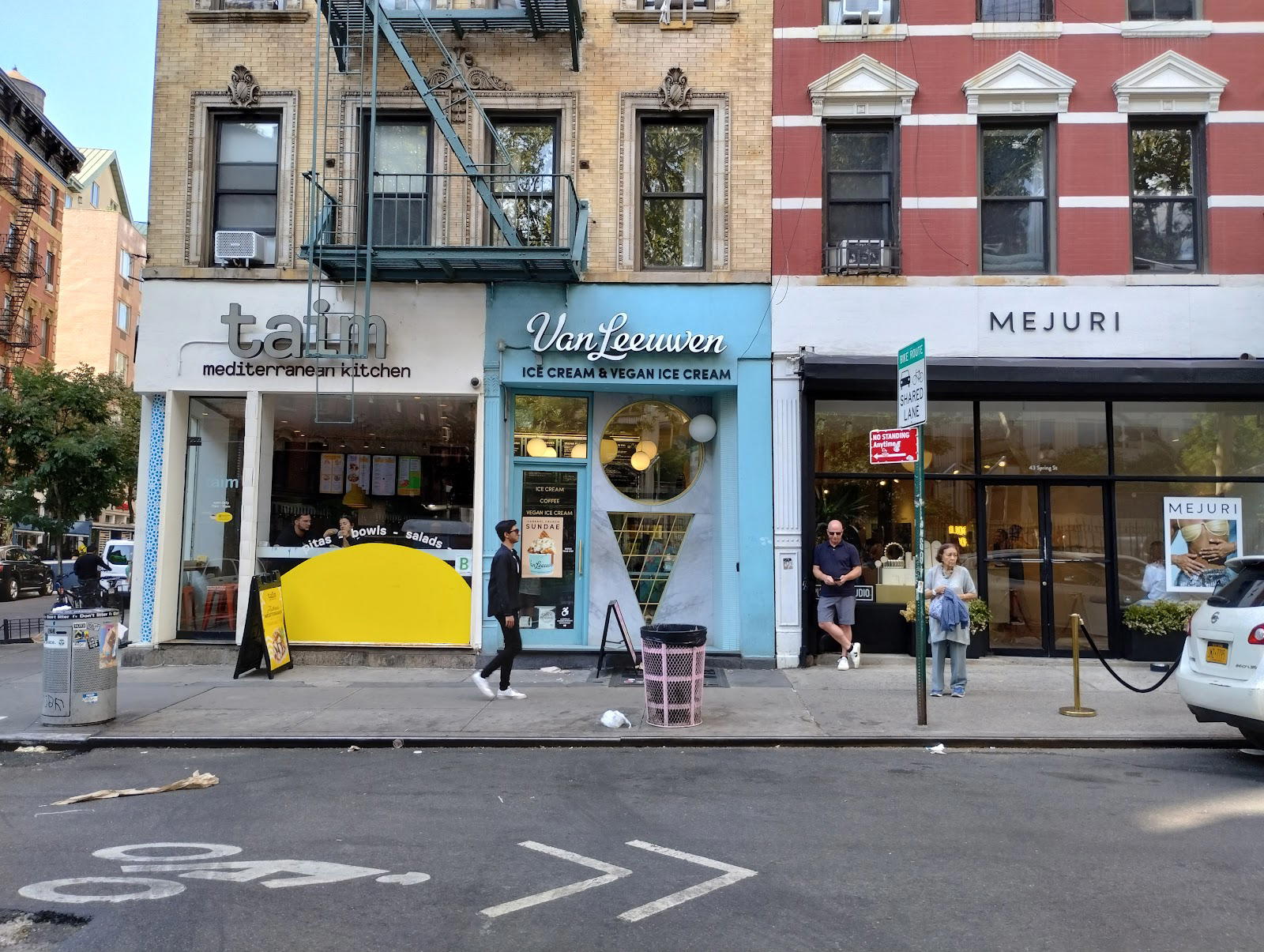
The menu
What to order
- Falafel Sandwich
- Mixed Falafel Platter
- Hummus
New York's Fast-Casual Middle Eastern Moment, Grounded in Israeli Pantry Traditions
When Einat Admony opened the original Taim in the West Village in 2005, the dominant story of New York's fast-casual scene was still sandwiches, pizza slices, and burgers. Israeli street food, falafel built on chickpeas soaked and ground fresh, tahini sourced for mineral depth rather than shelf-life convenience, sabich assembled in the tradition of Iraqi-Jewish immigrants to Tel Aviv, occupied a narrow lane in the American dining imagination. Two decades later, that lane has widened considerably, and Taim's Spring Street location at 45 Spring St, New York, NY 10012 sits at the intersection of a matured market and a neighbourhood, SoHo, that now takes affordable, ingredient-driven eating as seriously as its higher-tariff neighbours do.
The Middle Eastern fast-casual category in New York has expanded and stratified in the years since Taim's founding. Sit-down rooms serving regional Arab cooking, like Al Badawi and Ayat, occupy a different register than counter-service spots, and the full-service Israeli and Levantine category has grown its own critical infrastructure. Taim's consistent place in Opinionated About Dining's Cheap Eats in North America rankings, Recommended in 2023, #353 in 2024, rising to #256 in 2025, marks it as one of the few counters in its price tier that the critical community has tracked upward over multiple cycles rather than flagged once and moved on.
Where the Ingredients Come From and Why That's the Actual Story
The editorial case for Taim across those three OAD Cheap Eats cycles is not really about novelty. It is about sourcing discipline applied to a format that the market rarely rewards for it. The falafel tradition Admony draws on demands that chickpeas not be cooked before grinding, a detail that separates structurally coherent, herb-flecked rounds from the dense, flour-heavy versions that fill most takeaway windows. The sabich tradition, built around fried eggplant, hard-boiled egg, amba (a pickled mango condiment rooted in Iraqi-Jewish pantry culture), and tahini, is similarly unforgiving of shortcut ingredients: eggplant that hasn't been properly salted and drained, or amba sourced for price rather than fermentation quality, flattens a dish that should carry acidity, fat, and heat in distinct layers.
None of that sourcing granularity is visible on a fast-casual menu board. What registers for the returning customer is that the product holds its structural integrity, and what registers for a critic building the OAD Cheap Eats list is that Taim consistently delivers that result at scale, in a city where scale is the enemy of precision. Against the long-running Greenwich Village presence of Mamoun's, which anchors its reputation in volume and price, Taim operates from a different premise: fewer concessions to throughput speed, more attention to what the raw ingredients are actually doing.
The broader Israeli-pantry influence that shapes Taim's sourcing logic connects to a global conversation about what Middle Eastern cooking looks like when ingredient quality is the primary organising principle. Bait Maryam in Dubai and Baron in Doha work through similar questions in the Gulf context, where the reference pantry overlaps but the supply chain and customer expectations diverge significantly. New York's version of that conversation is grounded in immigrant communities that maintained specific regional sourcing standards, the Iraqi-Jewish amba tradition being one example, and fast-casual operators who chose to honour those standards rather than simplify around them.
SoHo's Affordable Counter Scene, Placed in Context
SoHo's dining profile skews toward the mid-to-upper price bracket. The Spring Street Taim location occupies a useful position in that context: a critically recognised counter at a price point accessible to the neighbourhood's lunch crowd, art workers, and visitors navigating Lower Manhattan between the blocks that otherwise require a full dinner reservation and a credit card decision. The Spring Street address also places it within reasonable walking distance of the NoLita and Little Italy pockets where casual eating has maintained density despite the broader SoHo retail shift toward higher-ticket spending.
The Middle Eastern dining map in New York has enough range now that a useful itinerary can be built entirely within the category. Kubeh addresses the Sephardic and Mizrahi tradition through a specific dumpling format; Astoria Seafood, while Greek-rooted, occupies an adjacent pantry territory in terms of olive oil sourcing and brined-vegetable thinking. Each fills a distinct slot in a category that, unlike New York's French or Japanese fine-dining tier, has developed its critical identity at the affordable end of the price range rather than from the leading down.
For context on how New York's broader restaurant scene organises itself across price tiers, the distance between a Taim lunch and a dinner at Per Se, Le Bernardin, Eleven Madison Park, Masa, or Atomix is not just financial, it reflects entirely different critical vocabularies, booking logics, and dining cadences. Those $$$$ rooms, covered elsewhere in our guides alongside Alinea in Chicago, Lazy Bear in San Francisco, The French Laundry in Napa, Single Thread Farm in Healdsburg, Providence in Los Angeles, and Emeril's in New Orleans, operate on pre-paid tasting formats that make the fast-casual category look structurally unrelated. The OAD Cheap Eats infrastructure exists precisely because the critics behind it recognise that ingredient discipline and cooking coherence appear across price tiers, and the fast-casual tier deserves its own tracking system.
Planning Your Visit
Taim's Spring Street location runs as a counter-service operation. Reservations: Walk-in only; no booking required or available. Dress: No code. Budget: Cheap Eats tier; expect pricing well below the SoHo neighbourhood average for a full meal. Timing: Lunch hours tend to draw SoHo office and retail traffic; midday queues are possible on weekdays. Getting there: Spring Street station (C, E lines) is the closest subway stop, one block east.
For broader planning across the city, see our full New York City restaurants guide, alongside our guides to New York City hotels, bars, wineries, and experiences.
Frequently asked questions
What should I eat at Taim?
Taim's menu is built around Israeli street food formats, falafel, sabich, and tahini-forward plates, rooted in the same pantry traditions that shaped Einat Admony's approach from the original 2005 West Village opening. The falafel and sabich formats are the structural anchors of Israeli fast-casual cooking and the most direct expression of the sourcing logic the counter is known for.
What's the ideal way to book Taim?
Taim operates as a walk-in counter; there is no reservation system. In a New York City Middle Eastern fast-casual market where the OAD-recognised addresses at this price point require no advance booking by definition, that is the standard format. For SoHo specifically, arriving outside peak lunch hours (roughly 12:00–1:30 pm on weekdays) reduces wait time. The Spring Street location's OAD ranking improvement from #353 in 2024 to #256 in 2025 suggests growing critical and customer attention, which is worth factoring into timing decisions.
The Quick Read
Comparable options at a glance, pulled from our tracked venues.
| Venue | Cuisine | Price | Awards | Notes |
|---|---|---|---|---|
| TaimThis venue (the venue you are viewing) | Israeli Street Food | $10–20 | Not listed | Not listed |
| Le Bernardin | French Seafood Fine Dining | $300–500 | 3 Michelin Stars · World's 50 Best #13 | French, Seafood |
| Atomix | Modern Korean Tasting Menu | $300–500 | 2 Michelin Stars · World's 50 Best #7 | Modern Korean, Korean |
| Masa | Seasonal Hokkaido Tempura Omakase | $150–200 | Tabelog 100 #34 | Sushi, Japanese |
| Per Se | French Fine Dining Tasting Menu | $300–500 | 3 Michelin Stars · World's 50 Best #40 | French, Contemporary |
| Eleven Madison Park | Contemporary Plant-Based Fine Dining | $300–500 | 3 Michelin Stars · World's 50 Best #4 | French, Vegan |
Recognition history
Dated appearances from independent guides and award organizations, with the underlying list record or original source where available.
Opinionated About Dining Cheap Eats in North America Ranked #256
Opinionated About Dining
Full recognition history (3 entries)
Opinionated About Dining Cheap Eats in North America Ranked #353
Opinionated About Dining
Opinionated About Dining Cheap Eats in North America in Recommended
Opinionated About Dining
Continue exploring
More in New York City
More from Chef Einat Admony
Browse all →
Restaurants in New York City
All restaurants in New York City →


Bars in New York City
All bars in New York City →








Details
- Trendy
- Casual
- Casual Hangout
- Local Sourcing
- A La Carte
- Small Plates
- Vegetarian Friendly
- Vegan Options
- Gluten Free Options
- Halal
Current opening hours
- Monday
- 11 AM–10 PM
- Tuesday
- 11 AM–10 PM
- Wednesday
- 11 AM–10 PM
- Thursday
- 11 AM–10 PM
- Friday
- 11 AM–10 PM
- Saturday
- 11 AM–10 PM
- Sunday
- 11 AM–10 PM
Hours can change for holidays and private events. Hours as of .
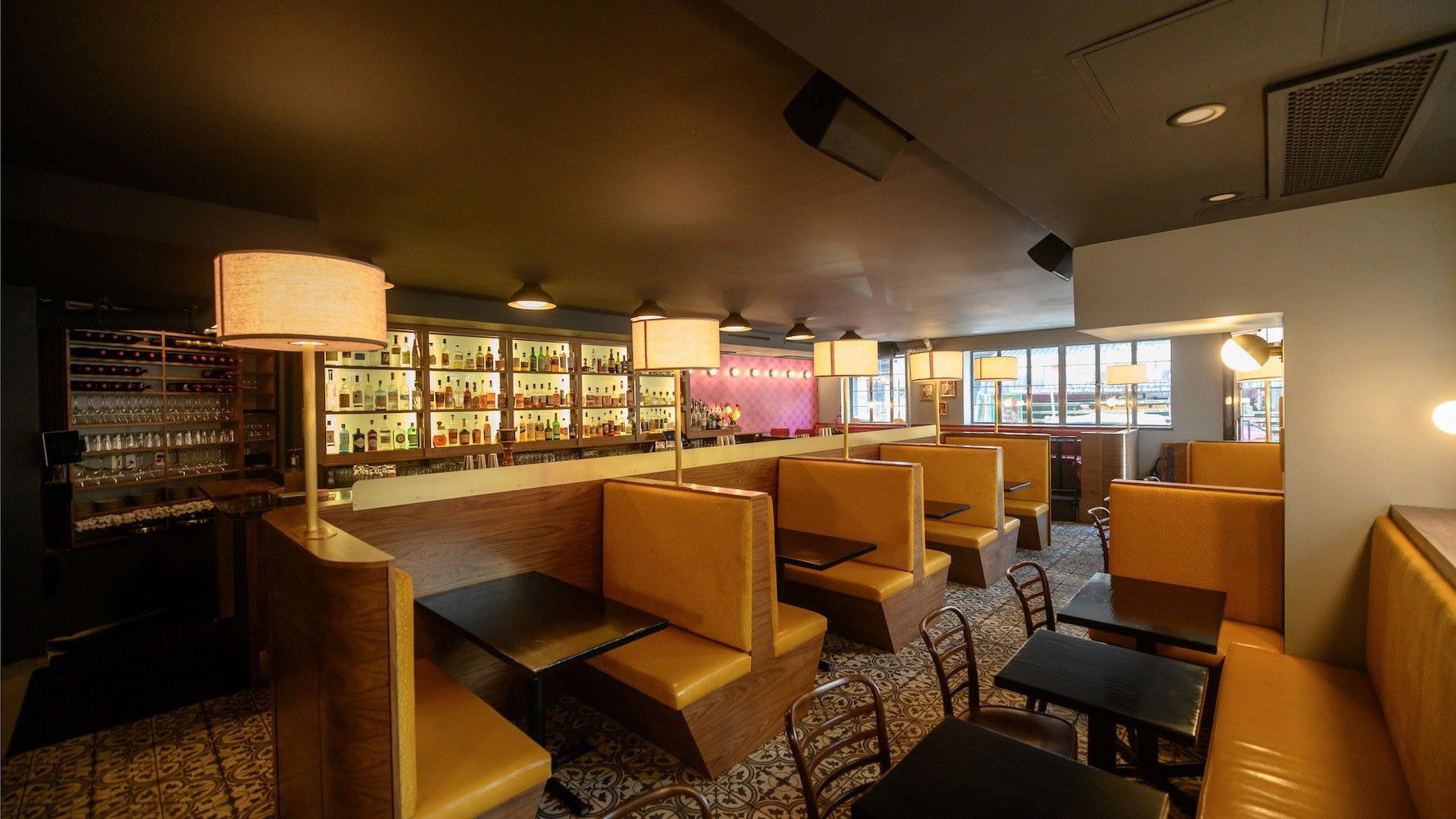
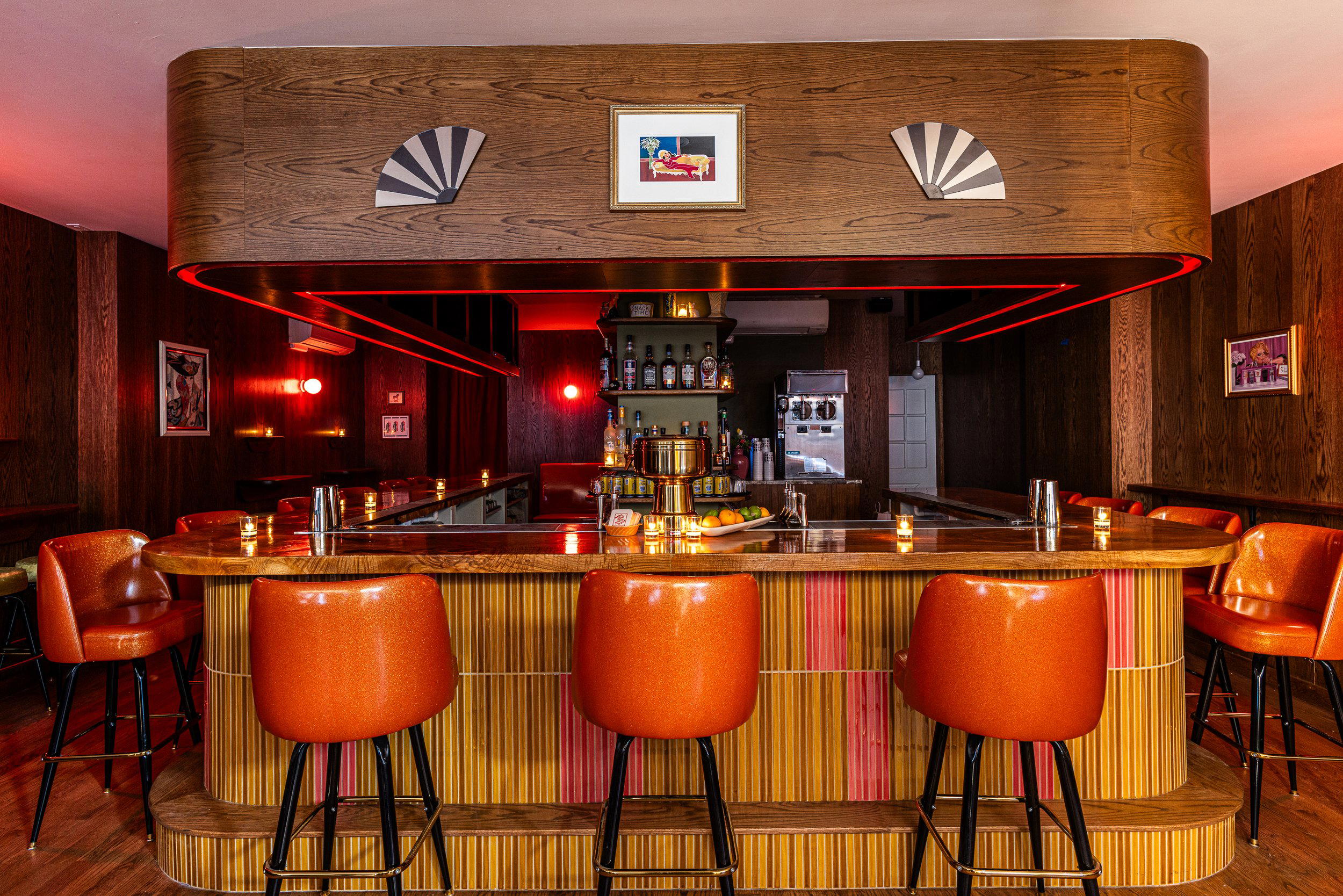
Casual counter-service spot with limited bar stools, bright and functional atmosphere focused on quick, fresh meals.