
Tabelog 100 #5
Our verdict
Tsukiji’s everyday dining culture is the point here: early service, cafeteria practicality, counter seating, and a market-adjacent rhythm rather than ceremony. Tadokoro Foods Eat-in belongs to Tokyo’s small-format shokudo tier, with Tabelog 100 Diner 2026 recognition giving a modest, utilitarian room a clearer place in the city’s serious breakfast conversation.

Pearl is the En Primeur Club membership app, where members save venues, book tables and use the concierge.
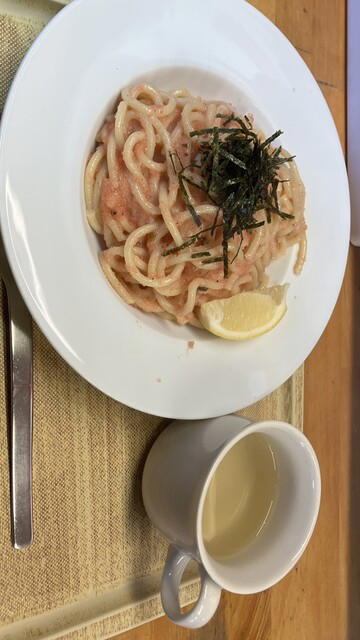
The menu
What to order
- Mentaiko spaghetti
- Spicy mentaiko cod roe pasta
- Rice bowls with mentaiko and salmon roe
- Ochazuke with fish roe
Tokyo can feel like a working city before it becomes a visitor circuit: shutters lift, hand trucks move, and counters fill with people moving through the day. In that setting, Tadokoro Foods Eat-in appeals through scale, speed, and everyday logic Tokyo does especially well: a straightforward room, modest price point, and a meal that makes efficiency part of the pleasure.
That matters in a city where restaurant ambition is often measured by scarcity, ceremony, and price. Tokyo has another grammar: older food culture built around turnover, provisioning, minimal waste, and simple formats for people who need to eat well without losing half a day. Tadokoro Foods Eat-in sits in that tradition, closer to a cafeteria and Japanese cuisine counter than the reservation-led dining rooms that dominate international Tokyo itineraries.
Tokyo's everyday economy rewards small rooms and disciplined turnover
Working food districts expose weak restaurants quickly. Rent is high, foot traffic mixed, and repeat custom depends on value rather than mood lighting. Tokyo’s strongest small eateries tend to share practical advantages: clear purpose, focused service, clear value, and dishes suited to everyday diners as much as visitors. Tadokoro Foods Eat-in fits that register, keeping the experience closer to a working canteen than a linger-all-afternoon café.
The Tabelog Hyakumeiten 2026 recognition is the useful signal. It does not turn a modest everyday restaurant into luxury dining, and should not be read that way. It places the restaurant inside a wider conversation about everyday Japanese meals, where consistency, local relevance, and repeat appeal matter more than theatrical tasting-menu architecture. A Tabelog score of 3.57 adds a grounded marker: this is a recognized diner in a competitive Tokyo category, not an anonymous stop between errands and sightseeing.
Sustainability in this tier rarely announces itself through manifestos. It appears in operating habits: practical service, focused formats, and restaurant models that reduce friction between buying, cooking, and eating. Tokyo’s strongest casual rooms do not perform environmental virtue; they often inherit it from limited scope, efficient turnover, and using the day’s trade sensibly. That lens is sharper than asking a diner to behave like a fine-dining restaurant with a farm list.
For travelers mapping the wider city, this venue clarifies Tokyo’s range. A low-cost diner and a specialist counter operate in different registers, but both depend on disciplined formats. The same city can support polished dining rooms, everyday counters, and cafeteria-style rooms without forcing them into one ranking logic.
The value is in the category, not in luxury cues
Tokyo’s serious dining scene often divides too neatly into high-end counters and casual convenience. The more useful middle ground is category discipline. A Tokyo diner should be judged by pace, value, practical comfort, and whether the format makes sense for everyday eating. Tadokoro Foods Eat-in has practical signals that matter here: it is categorized around cafeteria, pasta, and Japanese cuisine, with pricing listed at - JPY 999.
Those details set it apart from Tokyo’s high-cost destination meals. Seiju, Sushi Iwa, Chosei An, Torimeshi Torito Bunten, and Kitsuneya belong to separate decision trees across Japanese dining formats; one does not replace another. The point is that Tokyo’s low-price diner culture counterweights the city’s reservation economy. A traveler can spend heavily at night and still learn more about Tokyo’s daily food habits over a compact meal in a room built for turnover.
The environmental angle is most credible when modest. Small venues do not solve urban food waste alone, but they often avoid excess built into sprawling, all-day hospitality formats. In Tokyo, food retail, commuter rhythms, and eat-in counters can create a tighter loop. The diner format needs fewer decorative gestures and more functional ones: straightforward service, food that fits the day, and a room that needs no special occasion to justify itself.
International comparisons mislead unless they focus on format rather than cuisine. The useful thread between this Tokyo restaurant and other Japanese-influenced dining abroad is not menu similarity. It is the growing appetite for Japanese food culture outside the old luxury-versus-cheap-eats binary. In Japan, that binary was always too blunt.
How to place it within a Tokyo eating day
Tadokoro Foods Eat-in makes most sense as part of a simple Tokyo meal plan, not the anchor for an elaborate cross-town schedule. The city rewards decisive movement, and casual restaurants reward decisive timing. This is a practical stop for readers who care how Tokyo eats when the city is working, not only how it performs when visitors arrive for dinner.
Its advantage is editorial rather than decorative: it shows how a low-cost, award-recognized diner can carry as much local information as a formal counter if the reader watches format. The cafeteria, pasta, and Japanese-cuisine categories, modest price band, and Tabelog Hyakumeiten 2026 recognition all point to a restaurant built for everyday use. In a city crowded with prestige signals, that restraint is part of the argument.
For a broader itinerary, compare the practicality here with sharper formats across other Tokyo dining rooms. Regional detours can show the same spectrum across Japan, from casual everyday counters to more formal specialist restaurants, but Tadokoro Foods Eat-in is best understood first as part of Tokyo’s own low-cost dining culture.
Use the wider city guides to build around that contrast: Our full Tokyo restaurants guide for dining, Our full Tokyo hotels guide for where to stay, Our full Tokyo bars guide for after dinner, Our full Tokyo wineries guide for wine-focused stops, and Our full Tokyo experiences guide for cultural planning. Tokyo works well as a living food city, not a prelude to somewhere else.
Frequently asked questions
Would Tadokoro Foods Eat-in be comfortable with kids?
Tadokoro Foods Eat-in is a low-priced Tokyo eat-in restaurant, so it is best approached as a straightforward casual stop rather than a formal destination. Check the venue's official channels for the latest details.
What's the vibe at Tadokoro Foods Eat-in?
It reads as a Tokyo diner in the cafeteria, pasta, and Japanese-cuisine orbit, with pricing listed at - JPY 999. The 2026 Tabelog Hyakumeiten recognition gives it local credibility without pushing it into formal dining territory.
What's the pricing like at Tadokoro Foods Eat-in?
Pricing at Tadokoro Foods Eat-in is listed as - JPY 999.
What are the opening hours for Tadokoro Foods Eat-in?
Current opening hours for Tadokoro Foods Eat-in should be confirmed through the venue's official channels before visiting.
Cuisine and Credentials
Comparable venues at a glance for context.
| Venue | Cuisine | Price | Awards | Notes |
|---|---|---|---|---|
| Tadokoro Foods Eat-inThis venue (the venue you are viewing) | Fish roe pasta & rice bowls eat-in counter | $10–20 | Tabelog 100 #5 | Not listed |
| Nanba Sennichimae Kamatake Udon Yaesu kitaguchi ten | Osaka-style Sanuki udon & curry udon | $10–20 | Tabelog 100 #96 | Chiyoda |
| Torimeshi Torito Toyosu shijou | Chicken-focused Japanese casual dining | $1–10 | Tabelog 100 #6 | Kōtō |
| Kitchen Nankai Chiyoda kanda jinbou ten | Japanese Yoshoku | $1–10 | Tabelog 100 #88 | Chiyoda |
| Momotaro | Traditional Japanese wagashi (confectionery) shop | Not listed | Tabelog 100 #86 | Taitō |
| Meguro Hiiragi Himonya kouen doori ten | Taiyaki & Japanese Wagashi Shop | $1–10 | Tabelog 100 #23 | Meguro |
Recognition history
Dated appearances from independent guides and award organizations, with the underlying list record or original source where available.
Tabelog 100 #5 · No. 5
Tabelog · Tabelog 100 - Diner - 2026
Continue exploring
More in Tokyo
Restaurants in Tokyo
All restaurants in Tokyo →




Details
- Cozy
- Classic
- Solo
- Family
- Casual Hangout
- Chefs Counter
- Standalone
- A La Carte
- Counter Dining
Current opening hours
- Monday
- 6:30 AM–1:30 PM
- Tuesday
- 6:30 AM–1:30 PM
- Wednesday
- Closed
- Thursday
- 6:30 AM–1:30 PM
- Friday
- 6:30 AM–1:30 PM
- Saturday
- 6:30 AM–1:30 PM
- Sunday
- Closed
Hours can change for holidays and private events. Hours as of .
Small, no-frills eat-in counter attached to a traditional fish roe shop, with a warm family-run feel and a casual, bustling Tsukiji market atmosphere suited to quick, satisfying meals rather than lingering.