
Tabelog 100 #96
Our verdict
Inside Tokyo Station’s Yaesu side, Nanba Sennichimae Kamatake Udon Yaesu kitaguchi ten brings Osaka-style udon into a station-dining setting with serious credentials. Its Tabelog 100 Udon EAST 2024 selection, counter seating, and no-reservations format place it in the practical, repeat-use tier of Tokyo eating: fast, focused, and built around noodles rather than ceremony.

Pearl is the En Primeur Club membership app, where members save venues, book tables and use the concierge.
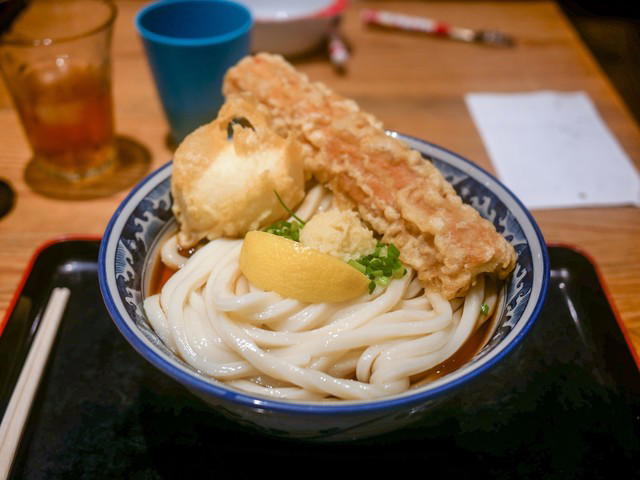
The menu
What to order
- Osaka-style Sanuki udon
- Curry udon
- Oden
- Tempura sides
Tokyo has its own rhythm: rolling suitcases, office workers moving between appointments, families scanning options before the next part of the day. In that setting, udon has a different job from formal counters or destination dining rooms. It has to be immediate, legible, and satisfying without asking the diner to surrender an evening. Nanba Sennichimae Kamatake Udon Yaesu kitaguchi ten fits that practical Tokyo logic, but with enough noodle credibility to pull it out of the anonymous quick-meal category.
Tokyo has many quick meals, from curry shops to cafés to standing noodle counters, but a serious udon room speaks to a particular Japanese dining habit: regulars return not because the format is grand, but because the bowl is dependable. The wheat noodles matter, the broth matters, and the order has to work at lunch, after work, or between commitments. This is where the regular’s perspective is useful. The decision is not about occasion dining. It is about knowing where a bowl will land reliably in a city that can make even simple meals feel overproduced.
Udon discipline inside a Tokyo quick-meal setting
Udon in Tokyo often competes with other fast, comforting formats for the quick-noodle slot, while a good udon shop gives weight to wheat noodles, broth, and toppings that make a bowl feel complete rather than decorative. Nanba Sennichimae Kamatake Udon Yaesu kitaguchi ten sits in that everyday Tokyo economy. The category is udon and curry udon, which is enough to frame the visit clearly: this is a place to think first about noodles, temperature, texture, and whether the day calls for a lighter bowl or a fuller curry-udon meal.
The kitchen’s details matter here because they clarify the difference between a generic commuter bowl and a specialist bowl. Even without leaning on chef mythology or decorative language, udon asks for attention to the fundamentals: the noodle, the broth, the timing, and the way the bowl comes together quickly without feeling careless. Those are not luxury signals. They are process signals, and in udon they count for more than a long narrative or a heavily staged dining-room experience.
Recognition matters in this category because the price point and format can otherwise flatten distinctions. Selection for Tabelog Hyakumeiten in 2024 places the restaurant within a curated field of udon specialists rather than general Tokyo dining. Its Tabelog score of 3.72 also sits in a range where repeat local use and category-specific approval carry more weight than international name recognition. The listed budget, at - JPY 999 for both lunch and dinner, reinforces the appeal: this is recognized everyday eating rather than a special-occasion splurge.
What regulars understand before they sit down
The unwritten order is to treat the place as a noodle specialist first and a convenient Tokyo stop second. That means thinking about udon for texture and directness, curry udon for a fuller meal, and the comfort of a format that does not need much explanation. Tokyo has sharper cocktail programs elsewhere, and broader dining-room theatre across the city; here the appeal is narrower and more durable. The best way to approach it is not to ask for spectacle, but to ask whether the bowl does its job well.
The room’s practical format also explains the likely clientele mix. Solo diners, commuters, friends, and families can all make sense of a quick udon meal when the food is clear and the price is modest. That breadth is part of the everyday-food equation. The stronger versions of this genre can absorb different diners without diluting the reason they came: a direct bowl of noodles, served in a format that does not punish spontaneity or require a complicated plan.
For travellers mapping Tokyo through food, the comparison is less with formal Japanese dining than with other low-friction city meals. Curry specialists, compact cafés, and practical formats like Kajitsuen Liber Tokyo ten all sit in the same everyday universe: meals that can be folded into a day rather than built around one. The difference is that udon, at this level, rewards repetition. A regular learns whether the day calls for a straightforward bowl or a warming curry version, then stops thinking about it.
How it fits into a Tokyo eating itinerary
The restaurant works cleanly as a Tokyo anchor rather than a cross-city pilgrimage. It is particularly useful when a day’s eating plan includes heavier or more formal meals elsewhere: more elaborate dining rooms, seafood-focused rooms, or late meals in other parts of the city. In that company, udon is not filler. It is the meal that keeps the day calibrated, leaving enough room and attention for whatever comes next while still feeling like a proper stop in its own right.
There is also a useful distinction between Tokyo’s polished destination dining and its high-function everyday rooms. La Rochelle Minami Aoyama belongs to a different dining bracket; DEPOT and CARA AURELIA Daimaru toukyou ten serve other city needs; Takajo Kotobuki occupies another lane altogether. Nanba Sennichimae Kamatake Udon Yaesu kitaguchi ten is stronger when judged inside its own category: an udon and curry-udon format with 2024 Tabelog Hyakumeiten recognition, a 3.72 Tabelog score, and enough range to cover lunch, a quick dinner, and an informal stop.
Readers building a broader Tokyo plan can use Our full Tokyo restaurants guide alongside Our full Tokyo hotels guide, Our full Tokyo bars guide, Our full Tokyo wineries guide, and Our full Tokyo experiences guide. For a wider Japan and Japanese-food comparison set, keep the frame broad rather than forcing exact equivalences: other cities offer their own cafés, curry specialists, noodle counters, bars, and casual everyday rooms, but Nanba Sennichimae Kamatake Udon Yaesu kitaguchi ten is best understood through Tokyo’s own demand for fast, reliable, category-specific eating.
Frequently asked questions
Is Nanba Sennichimae Kamatake Udon Yaesu kitaguchi ten suitable for children?
Nanba Sennichimae Kamatake Udon Yaesu kitaguchi ten is an udon and curry-udon venue in Tokyo. For family-specific details, check directly with the restaurant before visiting.
Is Nanba Sennichimae Kamatake Udon Yaesu kitaguchi ten better for a quiet night or a lively one?
It is best understood as a practical Tokyo udon stop rather than a formal quiet-night destination. Its appeal is direct, everyday noodle dining, with udon and curry udon as the core categories.
What's the pricing like at Nanba Sennichimae Kamatake Udon Yaesu kitaguchi ten?
Pricing at Nanba Sennichimae Kamatake Udon Yaesu kitaguchi ten is listed as - JPY 999 - JPY 999, with the budget shown as Dinner: - JPY 999; Lunch: - JPY 999.
What is Nanba Sennichimae Kamatake Udon Yaesu kitaguchi ten known for?
Nanba Sennichimae Kamatake Udon Yaesu kitaguchi ten is known for udon and curry udon in Tokyo, and was listed in Tabelog Hyakumeiten in 2024 with a Tabelog score of 3.72.
A Credentials Check
Comparable venues to calibrate price, style, and recognition.
| Venue | Cuisine | Price | Awards | Notes |
|---|---|---|---|---|
| Nanba Sennichimae Kamatake Udon Yaesu kitaguchi tenThis venue (the venue you are viewing) | Osaka-style Sanuki udon & curry udon | $10–20 | Tabelog 100 #96 | Not listed |
| Torimeshi Torito Bunten | Traditional Japanese Oyakodon & Chicken Rice Bowls | $10–20 | Tabelog 100 #87 | Chūō |
| Taniya | Sanuki udon noodle shop | $10–20 | Tabelog 100 #69 | Chūō |
| Tenchaya Nanakura | Inaniwa udon & creative lunch sets | $10–20 | Tabelog 100 #95 | Minato |
| Rice Curry Manten | Japanese Curry House | $1–10 | Tabelog 100 #22 | Chiyoda |
| MENSHO | Modern Japanese ramen | Not listed | Tabelog 100 #80 | Bunkyō |
Recognition history
Dated appearances from independent guides and award organizations, with the underlying list record or original source where available.
Tabelog 100 #96 · No. 96
Tabelog · Tabelog 100 - Udon - EAST - 2024
Continue exploring
More in Tokyo
Restaurants in Tokyo
All restaurants in Tokyo →


Bars in Tokyo
All bars in Tokyo →







Details
- Casual
- Lively
- Solo
- Casual Hangout
- After Work
- Family
- Group Dining
- Standalone
- A La Carte
- Counter Dining
Current opening hours
- Monday
- 11 AM–11 PM
- Tuesday
- 11 AM–11 PM
- Wednesday
- 11 AM–11 PM
- Thursday
- 11 AM–11 PM
- Friday
- 11 AM–11 PM
- Saturday
- 11 AM–11 PM
- Sunday
- 11 AM–11 PM
Hours can change for holidays and private events. Hours as of .
Bright, functional station-front udon-ya with counter and table seating, quick turnover, and a bustling atmosphere typical of Tokyo Station food streets rather than a quiet sit-down restaurant.