Taberna Ole
Taberna Ole brings a Spanish-accented dining sensibility to Fort Myers's South Cleveland Avenue corridor, operating within a city dining scene that increasingly rewards specialists over generalists. The address places it among a cluster of independently owned restaurants that define the area's mid-tier dining identity, distinct from the waterfront establishments that dominate Fort Myers tourism coverage.
Pearl is the En Primeur Club membership app — saves, bookings, and concierge access live there. Same editors, same standards.
- Address
- 12377 S Cleveland Ave Ste 3B, Fort Myers, FL 33907
- Phone
- +12399310050
- Website
- tabernaole.com
- Directions
- Get directions
 Saves & bookings on Pearl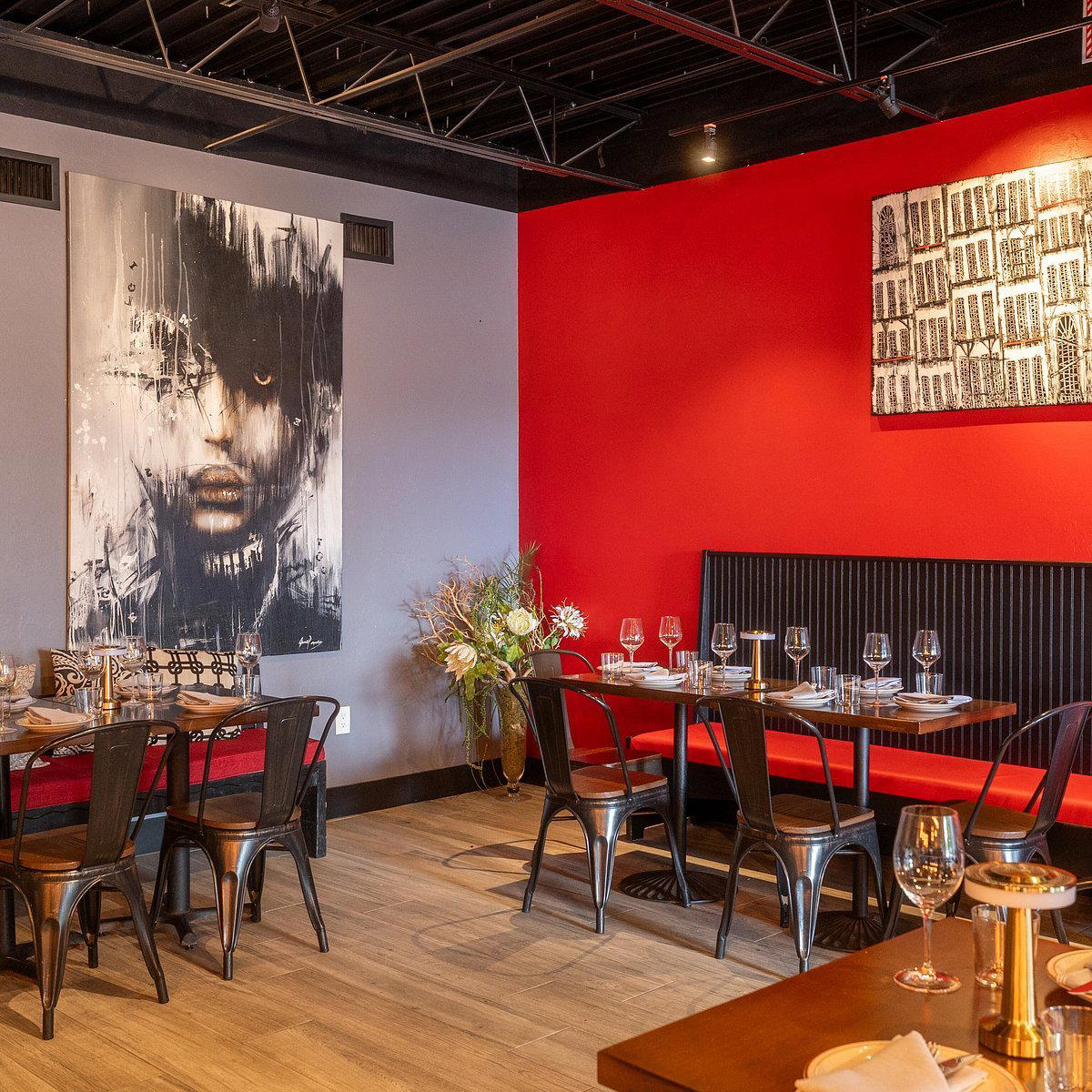
Where Fort Myers Eats When It Wants Something Different
South Cleveland Avenue is not the address Fort Myers visitors tend to photograph. There are no marina views here, no waterfront decks catching the Gulf breeze. What the corridor offers instead is a quieter, more workaday version of the city's dining life: strip-mall frontages, reliable parking, and the kind of neighborhood regularity that keeps independently owned restaurants alive year after year. Taberna Ole, at 12377 S Cleveland Ave Ste 3B, is a restaurant in Fort Myers serving Modern Northern Spanish Tapas. The setting signals nothing theatrical. The proposition is in the food.
Spanish-inflected dining in Southwest Florida occupies a particular position in the regional scene. It sits between the dominant seafood tradition of the Gulf Coast and the Italian-American current that runs through much of the area's casual-to-mid-range dining, represented locally by venues like Casa D'Italia. A taberna format, at its most faithful, operates as a gathering space organized around small plates and wine rather than the set-sequence formality of a tasting room. That distinction shapes what a meal here is likely to feel like: cumulative, sociable, built through shared ordering rather than a single hero dish.
The Arc of the Meal
In Spanish dining tradition, the meal rarely announces itself as a progression in the way a modernist tasting menu does at, say, Alinea in Chicago or Lazy Bear in San Francisco. There is no printed narrative arc, no printed chapter headings between courses. The sequencing is instead conversational: something cold to start, something cured or pickled, then heat and weight arriving in waves as the table's appetite develops. At the American end of that tradition, the kitchen tends to edit the canon toward approachability, preserving the format's social logic while calibrating intensity for a dining room that may not have grown up on salt cod or morcilla.
That calibration is where Fort Myers taberna-style dining does its most interesting work. The city's dining audience is mixed in a way that coastal Florida reliably produces: permanent residents alongside seasonal arrivals, a demographic wide enough that the kitchen must pitch its flavors across different reference points. The restaurants that manage this without dissolving into blandness tend to be the ones that hold a structural commitment to the format even as they adapt individual dishes. The taberna model, with its small-plate architecture and wine-forward service logic, is durable enough to absorb that kind of local editing.
A meal at this scale and in this format typically moves through three informal registers. An opening scatter of cold preparations, olives, cured items, and something acidic establishes the table's tempo. A second wave brings the dishes with the kitchen labor: anything braised, anything requiring time in oil at temperature, the kind of preparations that reward a kitchen operating with practiced repetition. A closing pass, often cheese or something sweet but not quite dessert in the American sense, extends the meal without forcing it into a formal conclusion. That arc is not distinctive to any one venue; it is the grammar of the format, and reading it correctly is what separates a taberna from a tapas bar operating the same small-plate mechanics under a different name.
Fort Myers in the Wider Dining Frame
It is worth placing Fort Myers's independent dining scene against the national reference points that shape how premium travelers calibrate their expectations. Restaurants like Le Bernardin in New York City, The French Laundry in Napa, or Single Thread Farm in Healdsburg define one end of the American fine-dining axis: high formality, extended sequences, kitchen teams built around a single creative vision. Blue Hill at Stone Barns in Tarrytown, Addison in San Diego, and The Inn at Little Washington represent the genre at its most committed regionally. Fort Myers is not competing in that category, and its better independent restaurants are not trying to. The city's dining identity is built on consistency, informality, and the kind of ownership proximity that makes a neighborhood restaurant feel accountable to its regulars in a way a hotel dining room rarely does.
Within that local frame, the Spanish-format restaurant occupies a specific niche. It is neither the casual American bar food that anchors venues like Burntwood Tavern nor the upscale-casual positioning of places like BLANC or 41 Bistro. The format asks more of the diner in terms of participation, ordering decisions, and pacing, and it rewards those willing to slow down into the rhythm the kitchen is built around. For context on what the full Fort Myers independent dining scene looks like across formats, EP Club's full Fort Myers restaurants guide maps the range.
Internationally, the taberna format has produced particularly decorated dining in the world, from the refined Spanish tasting formats at 8 1/2 Otto e Mezzo Bombana in Hong Kong operating at the European fine-dining register, to American chefs like those behind Providence in Los Angeles and Emeril's in New Orleans borrowing its structural logic. The American adaptation of Iberian formats has been running long enough that it no longer reads as novel; what matters now is execution depth and format fidelity. Atomix in New York City demonstrates what happens when a non-European small-plate format is taken to its logical extreme with full tasting-menu architecture. The Fort Myers version operates at a different register, but the same underlying question applies: does the kitchen have a coherent point of view about the sequence, or is the small-plate format simply an organizational convenience?
Planning a Visit
Taberna Ole is located in a suite-format strip development on South Cleveland Avenue, a corridor that runs parallel to US-41 through the commercial heart of Fort Myers. The address is accessible by car and sits within the broader dining cluster that makes the area a practical choice for diners not committed to a waterfront table. Fort Myers's dining scene runs year-round, but the November through April seasonal window brings a larger and more engaged dining audience as snowbird arrivals increase covers across the city's independent restaurants. Visiting outside peak season typically means shorter waits and more conversational service. Current booking details and any dietary accommodation policies are best confirmed directly with the venue. For a wider picture of what Fort Myers's dining scene currently looks like across price points and formats, Blu Sushi represents the city's Japanese-format option.
Where the Accolades Land
Comparable venues nearby, for context on price, style, and recognition.
| Venue | Cuisine | Price | Notes |
|---|---|---|---|
| Taberna OleThis venue — the venue you are viewing | Modern Northern Spanish Tapas | $$$ | Not listed |
| Harold's | Modern Farm-to-Table American | $$$ | Plymouth & Regal Plaza |
| Tap 42 - Fort Myers | Asian Fusion Craft Kitchen | $$ | Bell Tower |
| BLANC | French-Asian Fusion Fine Dining | $$$ | Cypress Lake |
| 41 Bistro | Contemporary Italian Bistro | $$ | Bell Tower Shops |
| Casa D'Italia | Traditional Italian Trattoria | $$$ | Not listed |
Continue exploring
More in Fort Myers
Restaurants in Fort Myers
Browse all →
Bars in Fort Myers
Browse all →
At a Glance
- Rustic
- Cozy
- Sophisticated
- Date Night
- Casual Hangout
- Open Kitchen
- Extensive Wine List
Current opening hours
- Monday
- 12–8:30 PM
- Tuesday
- 12–8:30 PM
- Wednesday
- 12–8:30 PM
- Thursday
- 12–8:30 PM
- Friday
- 12–10 PM
- Saturday
- 3–10 PM
- Sunday
- 4–8 PM
Hours can change for holidays and private events. Last verified .
Sophisticated setting blending traditional Spanish tavern charm with modern European elegance.