T’Klooster

T'Klooster in Wijk bij Duurstede runs its kitchen on the daily output of a local vegetable garden and food forest, with chefs Rik Veen and Roy Schipper building each dish around what arrives that morning. The result is a colour-forward, plant-leaning menu that sits outside the fine-dining formality of the Dutch restaurant mainstream, plant-based options available on request.
 Discover on Pearl
Pearl is the En Primeur Club membership app — saves, bookings, and concierge access live there. Same editors, same standards.
- Address
- Markt 15 , , 3961 BC Wijk bij Duurstede, Netherlands
- Website
- restauranthetklooster.nl
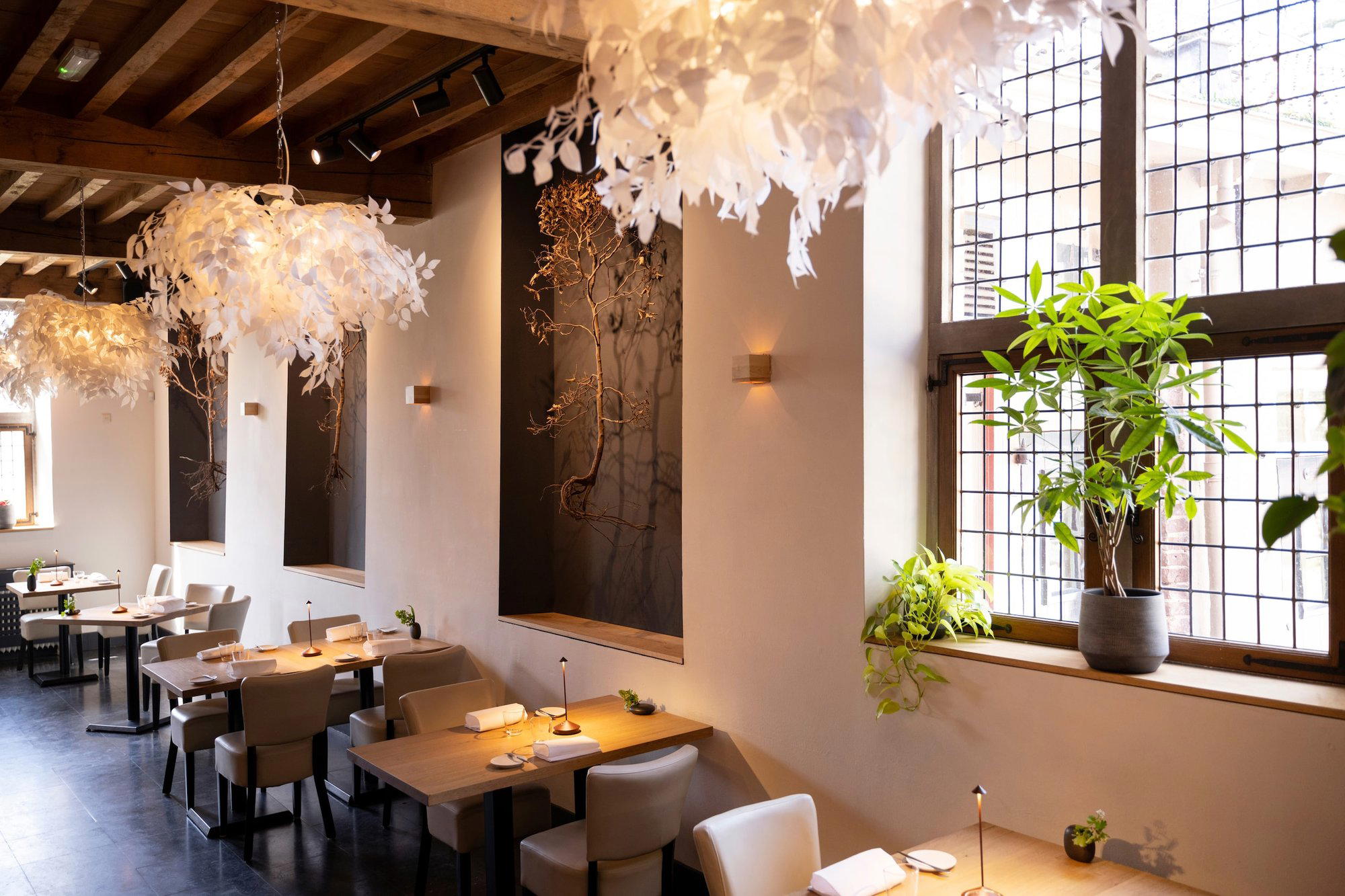
Where the Market Square Meets the Food Forest
Wijk bij Duurstede is a compact fortified town on the Rhine in Utrecht province, the kind of place where a Saturday market occupies the cobbled square and the church tower is still the tallest thing for miles. Markt 15 puts T'Klooster at the centre of that civic life, in a setting that carries the weight of old stone and slow time. Arriving here, the built environment does most of the atmospheric work before you've crossed the threshold: medieval streetscapes, a square that hasn't been redesigned for cars, the low hum of a town that operates at its own pace.
That physical context matters for understanding what T'Klooster is doing. The Netherlands has a well-documented split between its high-end creative restaurants, places such as De Nieuwe Winkel in Nijmegen or De Librije in Zwolle operating at the €€€€ tier with tasting menus and full brigade kitchens, and a quieter cohort of daily kitchens that tie their output directly to local agricultural supply. T'Klooster belongs to the second group. Its frame is the growing number of Dutch kitchens where the harvest schedule, not the chef's tasting menu architecture, determines what goes on the plate each day.
The Supply Chain as the Menu
The sourcing model at T'Klooster is specific and worth understanding on its own terms. The kitchen draws directly from the Wijkse vegetable garden and an adjacent food forest, two forms of cultivation that operate on fundamentally different timelines. A vegetable garden produces in predictable cycles tied to season and weather. A food forest, a multi-layered perennial system of trees, shrubs, and ground-cover plants, produces more irregularly, with yields that shift not just by season but by the age of the planting and the conditions of any given week.
Cooking against that kind of supply requires a different discipline than building a fixed menu. Chefs Rik Veen and Roy Schipper describe their approach as working with respect for natural ingredients, which in practice means that the dishes arriving at the table reflect what the garden and forest offered that day, not a static recipe. This is a meaningfully different claim from the seasonal-menu model operated by most farm-to-table restaurants, which typically negotiate supply a week or a month in advance. The daily-supply constraint here is real, and it shapes the menu at a granular level.
The visual character of the food follows from this: dishes described as colourful in T'Klooster's own kitchen notes, which is a reasonable outcome when you're working with the full range of what a productive vegetable garden and food forest produce across the growing year. Roots, leaves, flowers, fruits, fungi, and the occasional foraged element all land on the plate with their pigment intact, treated with what the chefs call pure creations, constructions that let the ingredient speak without heavy modification.
Plant-based preparation is available on request, which places T'Klooster in a cohort of Dutch kitchens that have moved beyond the binary of vegetarian-menu and meat-menu into something more fluid: a kitchen primarily oriented toward plant material where animal products, if present, are the supporting element rather than the anchor. For context on what that looks like at higher price points in the Netherlands, De Nieuwe Winkel has made organic plant-forward cooking the centrepiece of a tasting menu format. T'Klooster operates with a different price register and a more casual format, but the philosophical alignment is evident.
Wijk bij Duurstede's Dining Context
The town is small enough that its restaurant scene is not a scene in the metropolitan sense. What it has is a handful of kitchens operating with distinct identities, of which T'Klooster is notable for its sourcing specificity, and Lutum represents the creative fine-dining tier. The gap between those two formats says something useful about where Wijk bij Duurstede sits as a food destination: it is not a town of gastronomic density, but it has developed pockets of genuine quality tied to its agricultural surroundings and its proximity to the river corridor.
For visitors building a wider itinerary, the Utrecht province setting puts several serious kitchens within reasonable distance. Aan de Poel in Amstelveen, De Bokkedoorns in Overveen, and Ciel Bleu in Amsterdam all operate at the upper register of Dutch fine dining. Internationally, food forests and hyper-local daily sourcing have become a reference point for kitchens as far apart as Brut172 in Reijmerstok and De Lindehof in Nuenen, though the formats and price points differ considerably.
The broader Dutch interest in vegetable-first cooking connects to a longer national tradition of agricultural productivity, particularly in the greenhouse and market-garden sectors, that has gradually found its way from farm economics into kitchen philosophy. What distinguishes T'Klooster is the directness of the link: the Wijkse food forest and vegetable garden are not distant suppliers operating at arm's length but the immediate source that defines each day's menu.
Planning a Visit
T'Klooster sits at Markt 15 in Wijk bij Duurstede's town centre, accessible from Utrecht by regional bus or a direct drive of roughly 20 kilometres southeast. The town is compact and the market square direct to find on foot from any parking area. Given that the kitchen operates on a daily-supply basis, what's on the menu will genuinely vary; arriving with a fixed expectation of a particular dish is less useful than arriving curious about what the garden and forest produced that week. Plant-based options are available on request, so flagging dietary preferences at booking is sensible. For a broader picture of eating and drinking in the area, our full Wijk bij Duurstede restaurants guide covers the current options.
Comparison Snapshot
Comparable venues nearby, for context on price, style, and recognition.
| Venue | Cuisine | Price | Awards | Notes |
|---|---|---|---|---|
| T’KloosterThis venue — the venue you are viewing | Modern French Fine Dining with Local Ingredients | $$$$ | 1 recognition | |
| Lutum | Modern Dutch Contemporary | $$$$ | Michelin 1 Star | Wijk bij Duurstede |
| De Havixhorst | French with Local Dutch Influences | $$$$ | 1 recognition | De Schiphorst |
| Hoeve de Boogaard | French-Dutch Farmhouse | $$$$ | , | Geijsteren |
| Het Poolhouse | Modern French-inspired poolside dining | $$$$ | , | Leuvenum |
| Restaurant Vesters | French-inspired Fine Dining | $$$ | 1 recognition | Nijmegen |
Continue exploring
More in Wijk bij Duurstede
Restaurants in Wijk bij Duurstede
Browse all →
Bars in Wijk bij Duurstede
Browse all →
Hotels in Wijk bij Duurstede
Browse all →

Wineries in Wijk bij Duurstede
Browse all →
At a Glance
- Cozy
- Elegant
- Intimate
- Sophisticated
- Date Night
- Special Occasion
- Historic Building
- Open Kitchen
- Extensive Wine List
- Local Sourcing
- Farm To Table
- Garden
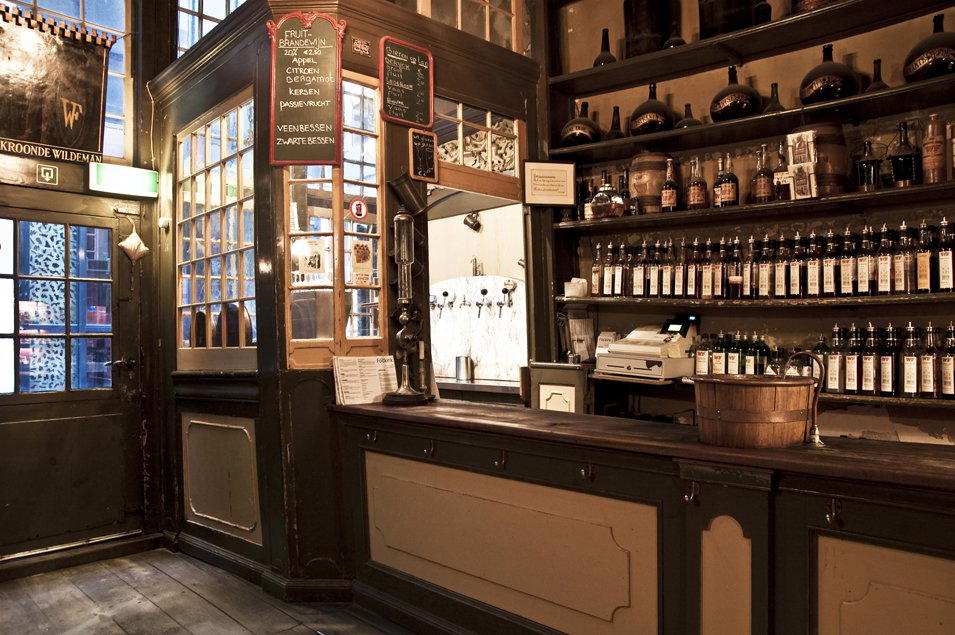
Comfortable, sfeervolle (cozy atmosphere) with relaxed, unpretentious yet elegant lighting in a historic setting.