
Tabelog 100 #46
Our verdict
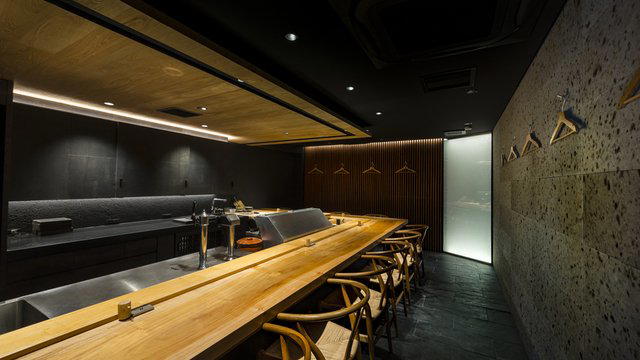
Sushi Soejima places Hakata sushi in a quieter, more concentrated register: an eight-seat counter in Minoshima with seafood-led cooking, counter service, and Tabelog Sushi WEST 100 selection in 2025 and 2022. The appeal is not spectacle; it is scale, focus, and the way Fukuoka’s access to fish turns a compact room into a serious dinner address.

Pearl is the En Primeur Club membership app, where members save venues, book tables and use the concierge.
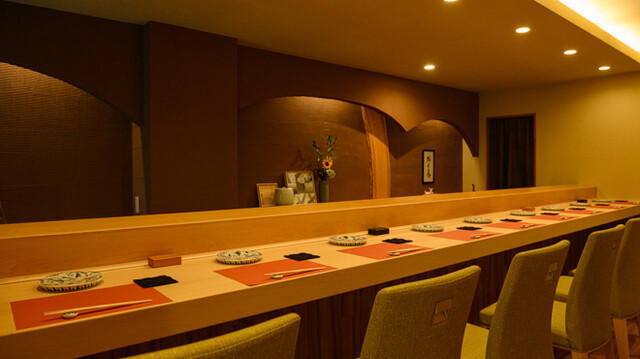
Fukuoka is not only postcard dining. Away from the city’s busiest restaurant corridors, its serious counter culture often feels more residential and workaday, which suits a meal built on concentration. At this scale, sushi is less about decoration than rhythm: low conversation, visible handwork, and a sequence shaped across the narrow line between chef and guest.
Sushi Soejima belongs to the Fukuoka category where a focused room changes dinner’s terms. Its 2025 Tabelog Hyakumeiten recognition and listed score of 3.83 place it among venues with category credibility, while its stated categories are Sushi and Seafood. In Fukuoka, where fish is not a luxury premise by itself, that distinction matters. Competition is strong at street level, from everyday counters to seafood cooking, so a serious sushi counter must justify itself through pacing, temperature, and sequence rather than scarcity alone.
Fukuoka sushi in a room built for concentration
Fukuoka’s food identity is often reduced to quick, casual, and late-night formats, but its sushi culture also rests on a dining public that understands seafood without needing ceremony. Here, being “particular about fish” is not decorative language. It names the central test: whether abundance can feel edited rather than merely plentiful.
The counter format sharpens that test. Large dining rooms can hide uneven pacing behind hospitality; focused counters cannot. Every gesture is exposed, and the sequence has to build momentum without becoming theatrical. Sushi Soejima’s listed dinner budget is JPY 20,000 - JPY 29,999. That tier is where Fukuoka becomes interesting for visitors: the meal carries weight, but the room can stay intimate rather than grand.
Compared with other Fukuoka names, the contrast is useful without needing direct equivalence. Udon Taira, Hagakure Udon, and Toritori Kenkyu Dan sit elsewhere in the city’s dining map, while Sushi Soejima asks not simply where to eat well in Fukuoka, but where to spend an evening inside the city’s more exacting seafood grammar. For readers mapping the wider scene, Our full Fukuoka restaurants guide gives that broader spread, from counters and everyday rooms to hotel dining.
What the recognition says about the counter
Tabelog’s Hyakumeiten lists are useful because they reward category depth. A 2025 listing does not make a counter interchangeable with every other highly regarded room, and should not be read that way. It signals sustained attention from a Japanese dining platform whose users often judge within specific genres. For visitors, the practical meaning is stronger than the badge: this is a Fukuoka sushi counter with enough regional credibility to sit within a serious local seafood conversation.
The category frame also points to Japanese dining habits rather than tourist shorthand. Sushi and seafood are the public labels, but the value of the meal depends on how simply those words are handled: rice, fish, seasoning, temperature, and timing. The axis is local in spirit: seafood and rice presented without needing to borrow all prestige codes from elsewhere.
The setting reinforces that seriousness. Compact sushi counters depend on attention, courtesy, and a shared sense of pace. Details such as aroma, noise, and timing matter because the room places diners close to the work. It is better understood as a focused meal than as a flexible, come-and-go stop on a crowded night out.
Where it fits in a Fukuoka dining itinerary
Decision to eat here should be made against the rest of the trip. Fukuoka rewards variety: one meal on a casual staple, another in a different everyday register, another in a bar or hotel dining room, without repeating the same mood. Sushi Soejima is the concentrated seafood night, better for diners wanting counter proximity and a composed meal than for groups seeking a loud, flexible dinner.
Fukuoka also changes the mood around the meal. The city can swing from casual everyday food to more deliberate counters within a short itinerary, and Sushi Soejima belongs on the quieter, more attentive side of that range. Pair it with a drink elsewhere rather than turning the evening into a multi-stop food crawl; small sushi counters reward attention, not excess scheduling.
For a broader Fukuoka plan, separate the city by category rather than forcing every meal into one list. Dining research can start with other Fukuoka dining rooms, from casual counters and everyday rooms to seafood-focused restaurants and hotel dining. Sleep, drinking, wine, and cultural planning sit separately in Our full Fukuoka hotels guide, Our full Fukuoka bars guide, Our full Fukuoka wineries guide, and Our full Fukuoka experiences guide.
Travelers building a Japan-wide food itinerary can use other city pages as contrast rather than direct comparison: other sushi counters, grilled meat rooms, cafes, curry specialists, and casual Japanese formats show how local habits shift from city to city. Outside Japan, Japanese-inspired bars and casual rice-focused formats show how the same broad ideas change when removed from their home context.
The editorial case is simple: in a city already strong on seafood, this counter is for diners who want less noise around the meal and more pressure on detail. Recognition gives it a credible place in Fukuoka’s sushi conversation; scale gives it tension; the city setting gives it regional logic.
Frequently asked questions
Where do I go for Sushi Soejima?
Fukuoka.
What price level is Sushi Soejima?
Pricing at Sushi Soejima is listed as JPY 20,000 - JPY 29,999.
When is Sushi Soejima open?
Specific opening hours are not included in the public record provided here. Check the venue's official channels for the latest details.
What do critics highlight about Sushi Soejima?
The public recognition provided is the 2025 Tabelog Hyakumeiten listing, alongside a listed score of 3.83. With dinner priced at JPY 20,000 - JPY 29,999 and categories listed as Sushi and Seafood, Sushi Soejima reads as a focused Fukuoka counter rather than an expansive izakaya-style room.
Is Sushi Soejima allergy-friendly?
The public record provided does not publish an allergy protocol. For a sushi and seafood counter in Fukuoka, guests with fish, shellfish, soy, or rice-vinegar concerns should confirm specifics before booking. Check the venue's official channels for the latest details.
Does Sushi Soejima work for a family meal?
The public record provided does not specify a family or children policy. Because Sushi Soejima is a focused sushi and seafood venue in Fukuoka, it is best suited to diners who can sit through a composed meal. Check the venue's official channels for the latest details.
How It Stacks Up
Side-by-side context: comparable cuisine and price.
| Venue | Cuisine | Price | Awards | Notes |
|---|---|---|---|---|
| Sushi SoejimaThis venue (the venue you are viewing) | Seasonal Kyushu Sushi Omakase | $150–200 | Tabelog 100 #46 | Not listed |
| Sushi Dokoro Ishibashi | Seasonal Kyushu Omakase Sushi | $150–200 | Tabelog 100 #97 | Chūō |
| Narayamachi Ao | Modern Japanese Omakase with French Infusion | $300–500 | Tabelog Silver #7 | Hakata |
| Kiyoki | Japanese small plates and steak | $50–100 | Tabelog 100 #84 | Chūō |
| 明珠ひら緒 | Japanese Fine Dining | $200–300 | Not listed | Chūō |
| torila | Yakitori | Not listed | Tabelog Bronze #471 | Chūō |
Recognition history
Dated appearances from independent guides and award organizations, with the underlying list record or original source where available.
Tabelog 100 #46 · No. 46
Tabelog · Tabelog 100 - Sushi - WEST - 2025
Continue exploring
More in Fukuoka
Restaurants in Fukuoka
All restaurants in Fukuoka →
Details
- Cozy
- Elegant
- Quiet
- Intimate
- Sophisticated
- Special Occasion
- Date Night
- Business Dinner
- Solo
- Family
- Chefs Counter
- Standalone
- Design Destination
- Sake Program
- Local Sourcing
- Sustainable Seafood
- Omakase
- Tasting Menu
- Counter Dining
- Set Menu
- Sake
- Shochu
- Wine
- Pescatarian Friendly
Current opening hours
- Monday
- Closed
- Tuesday
- 5:30–11 PM
- Wednesday
- 5:30–11 PM
- Thursday
- 5:30–11 PM
- Friday
- 5:30–11 PM
- Saturday
- 5:30–11 PM
- Sunday
- 5:30–11 PM
Hours can change for holidays and private events. Hours as of .
A quiet, chic counter-only hideaway run by a friendly husband-and-wife team, with a stylish yet relaxed adult atmosphere designed for unhurried, special-occasion dinners.