.png)
Stresa on Augsburger Strasse holds consecutive Michelin Plate recognition for 2024 and 2025 and a Google rating of 4.7 across 781 reviews, placing it among Dresden's most consistently regarded classic-cuisine addresses. The cooking sits in a European tradition that prizes technique and familiarity over novelty, drawing a loyal clientele who return for the reliability of the kitchen rather than seasonal reinvention. Priced at the €€€ tier, it occupies serious dining territory without the avant-garde register of the city's modern-cuisine rooms.
 Discover on Pearl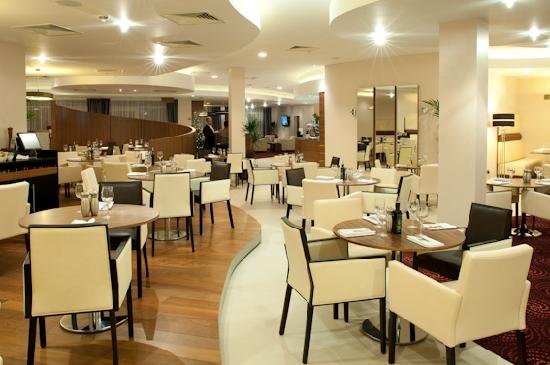
The Draw of the Dining Room
There is a particular kind of restaurant that earns its reputation not through novelty or critical provocation, but through the slower accumulation of trust. In Dresden's Striesen neighbourhood, along the residential stretch of Augsburger Strasse, Stresa operates in that register. The area sits east of the Altstadt and carries little of the tourist circuit's energy; dining here tends to be a deliberate choice rather than a walk-in impulse. That self-selection matters, because the room skews toward people who know where they are going and have been before.
Classic cuisine, as a category, is often misread as conservative. What it actually describes is a tradition of precision: sauces built from long reductions, proteins handled with attention to resting and temperature, a relationship between the kitchen and the plate that prioritises execution over concept. Stresa sits within that tradition, and its 4.7 rating across 781 Google reviews suggests the kitchen is meeting the expectations of repeat visitors as much as first-timers. A score sustained at that volume is harder to dismiss than a smaller sample. For context, elements (Modern Cuisine) and Genuss-Atelier (Modern Cuisine) occupy Dresden's more experimental end of the €€€ tier, while Stresa anchors the classical pole.
The shortlist, unlocked.
Hard-to-book tables, cellar releases, and concierge-planned trips.
Get Exclusive Access →Consecutive Michelin Plates and What They Signal
The Michelin Plate — awarded in 2024 and again in 2025 — is not a star, and conflating the two does a disservice to how the Guide actually operates. The Plate designation means the inspectors found good cooking: technically sound, worth seeking out, not yet at the level of distinction that triggers star consideration, but meaningfully above the crowd. Consecutive awards across two years signal consistency rather than a single strong performance. In a city where the fine-dining conversation is still developing relative to Munich or Berlin, that kind of sustained recognition carries weight.
Dresden's Michelin-recognised addresses are spread across cuisines and price points. Heiderand (Modern Cuisine) and Bülow Palais (German Fine) sit within the same broader range of recognised kitchens, each addressing different registers of the city's appetite. Stresa's positioning is the most classically European of the group, which means it draws comparisons less with Dresden's contemporary rooms and more with traditional kitchens operating in similar frameworks elsewhere in Germany and beyond. KOMU in Munich and Maison Rostang in Paris offer useful reference points for understanding what classic-cuisine commitment looks like at higher recognition levels , they frame what Stresa is building toward.
The Regulars' Calculus
Restaurants with loyal returning clientele develop a kind of institutional knowledge that newcomers rarely access on a first visit. The unwritten menu at Stresa , what the kitchen does particularly well on a given evening, which preparations benefit from the longer-standing relationships between kitchen and supplier , is the kind of information that accrues through repetition. A 4.7 rating at 781 reviews suggests that the regulars are making their satisfaction audible, which itself signals something about the ratio of returning guests to one-time visitors.
What keeps regulars returning to a classic-cuisine room is rarely surprise. It is the opposite: the confidence that a dish they have ordered before will arrive in the same condition, with the same care, because the kitchen's standards are stable rather than experimental. Classic cuisine in this sense functions closer to a contract than a performance. The kitchen's role is to uphold a set of techniques and a standard of produce; the diner's role is to bring the context and expectation that makes the execution feel earned. That dynamic plays out differently from the tasting-menu formats at places like JAN in Munich or CODA Dessert Dining in Berlin, where the kitchen controls the arc of the meal entirely. At Stresa, at the €€€ price point, the diner retains more agency over the structure of the evening.
The regulars' perspective also indexes to value. The €€€ tier in Dresden occupies a meaningful but not extravagant spend. Compared to the higher-end outlays required at starred rooms , Schwarzwaldstube in Baiersbronn, Aqua in Wolfsburg, or Vendôme in Bergisch Gladbach , Stresa positions as serious dining without requiring the occasion-level commitment of a destination meal. That affordability within its quality tier is part of what makes repeat visits viable rather than exceptional.
Dresden's Dining Geography
Augsburger Strasse 85 places Stresa in Striesen, a neighbourhood with a more residential and local character than the hotel-dense centre. Dresden's fine-dining offer has historically clustered in the Altstadt and its immediate surrounds, meaning Stresa operates slightly outside the default tourist circuit. For visitors, that is useful information: reaching it requires intention, and a reservation is the practical starting point for planning the evening. Feine Kost represents another address in the city's broader classic and seasonal kitchen tradition, and the two share a commitment to European fundamentals over trend-chasing.
For readers building a fuller picture of eating and drinking across the city, our full Dresden restaurants guide maps the range from casual to formal. Those extending a visit further can reference our Dresden hotels guide, bars guide, wineries guide, and experiences guide for a broader itinerary frame. ES:SENZ in Grassau is also worth noting for readers interested in how German regional kitchens at higher recognition levels approach classic frameworks.
Planning a Visit
Stresa sits at the €€€ price point, which in Dresden's context places it firmly in the serious-dinner category without reaching the leading of the city's spend range. The address , Augsburger Strasse 85, 01277 Dresden , is in the Striesen district, east of the city centre; allowing time for the journey from central Dresden is advisable. Given the volume of reviews and the regulars-heavy clientele implied by that volume, booking ahead is the sensible approach rather than an optional step. Specific hours, phone contact, and online booking details are not confirmed in our records, so direct contact with the restaurant is recommended for reservation logistics.
The shortlist, unlocked.
Hard-to-book tables, cellar releases, and concierge-planned trips.
Get Exclusive Access →Frequently Asked Questions
Standing Among Peers
Comparable options at a glance, pulled from our tracked venues.
| Venue | Awards | Cuisine | Notes |
|---|---|---|---|
| Stresa | Michelin Plate (2025); Michelin Plate (2024) | Classic Cuisine | This venue |
| elements | Michelin 1 Star | Modern Cuisine | Modern Cuisine, €€€€ |
| Genuss-Atelier | Michelin 1 Star | Modern Cuisine | Modern Cuisine, €€€ |
| Caroussel Nouvelle | Contemporary | Contemporary, €€€ | |
| Schmidt's | Farm to table | Farm to table, €€ | |
| Bülow Palais | German Fine | German Fine |
Need a table?
Our members enjoy priority alerts and concierge-led booking support for the world's most difficult tables.
Get Exclusive AccessThe shortlist, unlocked.
Hard-to-book tables, cellar releases, and concierge-planned trips.
Get Exclusive Access →