.png)
In the historic centre of Padua, Stefano Mocellin al Padovanino brings a Michelin Plate-recognised creative menu to the €€€ tier without the spectacle overhead of destination dining. The kitchen draws on northern Italian traditions from both Milan and Venice, reinterpreted through open-fire cooking that runs as a consistent thread across most dishes. For the price point, the depth of culinary reference is considerable.
 Discover on Pearl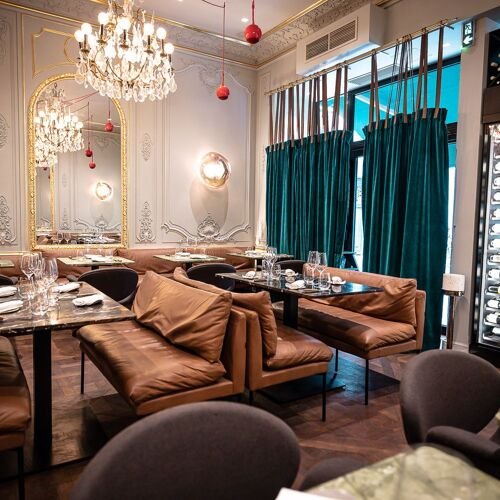
Via Santa Chiara and What It Signals
The address alone sets a frame. Via Santa Chiara sits inside Padua's historic centre, a part of the city where stone porticoes shade pedestrians, and where the gap between tourist-facing mediocrity and genuinely local restaurants is wider than it looks from the outside. The restaurants that survive here on a repeat-local basis do so because the cooking earns it. Stefano Mocellin al Padovanino is one of them, holding a Michelin Plate in both 2024 and 2025 — a designation that signals consistent kitchen quality without the ceremony price markup of a starred address.
At the €€€ price range, the restaurant sits above Padua's casual contemporary tier, where places like Ai Porteghi Bistrot and Belle Parti offer solid cooking at lower spend. It matches the price bracket of Exforo and Tola Rasa, the other creative and modern-leaning rooms in the city at this level. What distinguishes the Padovanino from that peer set is the coherence of its culinary geography: the menu reads as a considered argument about northern Italy's culinary corridors, not a collage of contemporary technique.
The Culinary Logic: Milan, Venice, and the Grill
Northern Italian cooking, at its more serious end, rarely announces its regional debts loudly. The better kitchens in the Veneto and Lombardy tend to let technique carry the signal. Here, the cross-regional structure is deliberate and visible. Milan contributes the cassoeula, a pork-and-cabbage dish that belongs to Lombard winter cooking the way ribollita belongs to Tuscany. The version served at Padovanino lightens the preparation by incorporating duck alongside pork, which shifts the fat profile and opens the texture without abandoning the dish's identity. That kind of modification — restrained, purposeful, not seeking applause , is what separates a kitchen working with tradition from one merely referencing it.
From Venice, the saor tradition arrives: the sweet-sour agrodolce technique, historically applied to sardines, that has fed the lagoon for centuries. The kitchen uses sardines as a filling for plin pasta, the small pinched pasta form associated with Piedmont but here adapted to carry a distinctly Venetian flavour logic. The decision to move a Piedmontese pasta format across to house a Venetian filling is the kind of quiet creative intervention that repays attention. It is also, in the context of Italian fine dining, more honest than most fusion propositions: the components share a northern latitude and a working-class culinary heritage, which means the combination has internal logic rather than novelty as its justification.
Running through all of this is open-fire cooking. The barbecue grill is not a gesture here or an occasional technique for proteins. It functions as the kitchen's primary method, shaping the flavour of dishes across the menu. In the wider context of Italian creative cooking, where many Michelin Plate and starred restaurants at comparable price points rely on precision cold-side work and intricate plating, a wood or charcoal fire emphasis is a genuinely distinct position. For a reference point on what creative Italian cooking looks like at higher spend and higher acclaim, Osteria Francescana in Modena and Enoteca Pinchiorri in Florence represent the starred ceiling of the tradition. At the northern alpine edge, Atelier Moessmer Norbert Niederkofler in Brunico shows how regional Italian identity can anchor a high-concept kitchen. The Padovanino operates at a different scale and price point, but the insistence on a defining technique places it in an identifiable creative position relative to those peers.
Value at the €€€ Tier
The value case for this restaurant is clearer than it might appear from a price bracket alone. In Italian dining, the €€€ tier in a mid-sized city like Padua represents a specific trade-off: you are paying above the casual bistro rate for ingredient sourcing, kitchen ambition, and formal recognition, but you are not yet in the territory where the cost of service staff, tableware, and wine programme inflation become the dominant drivers of the bill. A Michelin Plate at this price point signals that external critical review has validated the kitchen's quality without the markup that typically follows a star.
Compare that positioning to equivalent creative restaurants in larger cities. Enrico Bartolini in Milan and similar Milanese addresses in the creative category operate at materially higher price points for Michelin-recognised cooking. In Munich, JAN occupies a comparable creative niche with its own pricing structure shaped by a more expensive city. In Paris, Alléno Paris au Pavillon Ledoyen shows what the creative category looks like at its most resource-intensive end. The Padovanino sits far below those price levels while sharing the critical recognition category , a meaningful gap for a traveller calibrating spend against cooking quality.
Padua itself reinforces this dynamic. The city draws far fewer international dining tourists than Venice, which lies roughly 40 kilometres east, or Verona to the west. That lower visitor pressure means restaurants here price for a local and regional clientele rather than for the captive audience economics that inflate menus in the lagoon. For Enotavola Pino and other local specialists, the same dynamic applies: Padua's dining scene is priced against what residents will sustain, not against what tourists will absorb.
Planning Your Visit
The restaurant is located at Via Santa Chiara, 1 in central Padua, within walking distance of the Scrovegni Chapel and the Palazzo della Ragione, which makes it a natural anchor for a day that combines the city's cultural draw with serious eating. Given the Michelin Plate recognition and the small scale typical of this style of creative Italian restaurant, booking ahead is the sensible approach. Specific table availability, hours, and reservation methods are not confirmed in our records, so contact the restaurant directly to check current practice. Padua is approximately 35 minutes from Venice by regional train, which makes a meal here a workable extension to a Venice visit for travellers already in the Veneto.
For a full picture of the city's dining options, the EP Club Padua restaurants guide covers the broader range. Travellers looking beyond food will find the Padua hotels guide, bars guide, wineries guide, and experiences guide useful for building out a longer stay. For seafood at a lower price point in Padua, Enotavola Pino is the city's specialist. For a longer drive into recognised Italian fine dining, Dal Pescatore in Runate and Quattro Passi in Marina del Cantone represent different points on the Italian creative spectrum.
Frequently Asked Questions
Reputation First
A compact peer snapshot based on similar venues we track.
| Venue | Awards | Cuisine | Notes |
|---|---|---|---|
| Stefano Mocellin al Padovanino | Situated in the historic centre of Padova, this restaurant is home to owner-chef… | Creative | This venue |
| Ai Porteghi Bistrot | Contemporary | Contemporary, €€ | |
| Belle Parti | Classic Cuisine | Classic Cuisine, €€ | |
| Enotavola Pino | Seafood | Seafood, €€ | |
| Exforo | Contemporary | Contemporary, €€€ | |
| Tola Rasa | Modern Cuisine | Modern Cuisine, €€€ |
Need a table?
Our members enjoy priority alerts and concierge-led booking support for the world's most difficult tables.
Get Exclusive Access