
Séquence holds consecutive Michelin Plate recognition for 2024 and 2025, placing it among Caen's small tier of modern cuisine addresses that operate above the bistro register. Located on Rue du 11 Novembre, the restaurant draws a loyal local following, reflected in. The menu architecture, rather than a single signature dish, is the central argument here.
Pearl is the En Primeur Club membership app — saves, bookings, and concierge access live there. Same editors, same standards.
- Address
- 6 Rue du 11 Novembre, 14000 Caen, France
- Phone
- +33 2 31 99 33 42
- Directions
- Get directions
 Saves & bookings on Pearl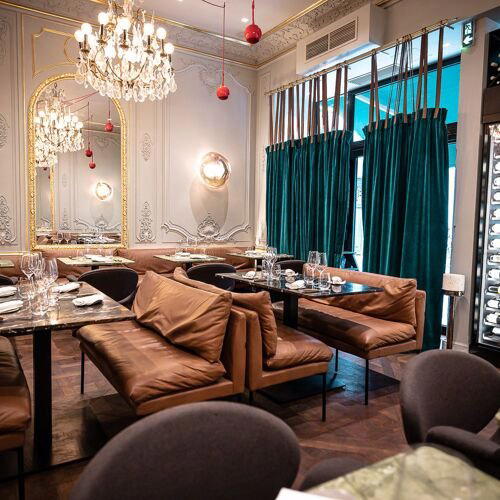
Where Caen's Modern Table Earns Its Attention
Rue du 11 Novembre is not one of Caen's more obvious dining addresses. The street sits away from the tourist circuits around the Abbaye aux Hommes and the reconstructed centre, which means the crowd at Séquence arrives with purpose rather than chance. That self-selecting quality matters: a room that fills on reputation rather than foot traffic tends to set a different tone, and the.
Normandy's better modern kitchens occupy a narrow band of the French dining spectrum: serious enough to draw the Michelin inspector, grounded enough to stay connected to regional produce, and small enough to keep cooking at the level the room implies. Séquence has held the Michelin Plate in both 2024 and 2025, a consecutive recognition that signals a kitchen performing reliably rather than episodically. In a city where the highest Michelin honours are held by Ivan Vautier, the Plate tier represents the floor of serious modern cuisine rather than its ceiling, and competing effectively at that level requires a defined point of view.
The Menu as Architecture
The editorial angle at Séquence is structural. How a menu is organised tells you what a kitchen believes about sequencing, balance, and the role of the diner in the experience. At this price point in the French provinces, the prevailing format is a multi-course set menu with limited variation, which shifts the decision-making from the diner to the kitchen and places the burden of coherence on the progression of courses rather than individual standalone dishes.
That structure has antecedents across contemporary French fine dining. At the three-star tier, kitchens such as Mirazur in Menton or Troisgros in Ouches have made sequencing the primary argument of the meal: each plate functions as a movement in a longer composition. The ambition at Séquence operates at a different scale, but the underlying logic, that the menu is the message rather than any individual dish, applies across the category. Normandy's larder, dairy-rich and coastal, gives a kitchen operating in this format strong raw material: the region's butter, cream, apple, seafood, and beef traditions can carry a seasonal menu without recourse to imported luxury.
Within Caen specifically, the €€€ positioning places Séquence in the same price tier as Le Dauphin and Ivan Vautier, and above the €€ addresses such as Augia, Magma, and Simplexité. That split is not purely financial. The €€€ bracket in provincial France implies a certain formality of service rhythm, a longer evening, and a kitchen that has committed to the composed-course format over à la carte flexibility. Séquence's consecutive Plate recognition confirms it is performing at the level its price signals.
Caen's Modern Cuisine Tier in Context
Caen is not a city that features regularly in the national conversation about French dining, which is partly a function of geography and partly a matter of critical attention drifting toward Paris and the Riviera. Yet Normandy has produced a serious regional tradition, from the farmhouse-sourced classicism that shaped early Bocuse-era French cooking to the technically precise contemporary tables now appearing in regional capitals. Paul Bocuse's Auberge du Pont de Collonges and Bras in Laguiole helped establish the argument that French regionalism, rather than Parisian centralism, was where cooking's identity resided. Caen's current modern table operates downstream of that argument, applying its logic at a more accessible register.
The comparison to international modern cuisine formats is also relevant here. Kitchens such as Frantzén in Stockholm have made the case that progressive tasting menus anchored in regional produce can generate a competitive gravity entirely separate from classical French tradition. FZN by Björn Frantzén in Dubai extends that logic across geographies. The underlying model, seasonal produce, composed courses, a kitchen in dialogue with its landscape, is the common grammar of contemporary fine dining. Séquence reads within that grammar, applying it to a Normandy context.
Planning a Visit
Séquence is located at 6 Rue du 11 Novembre, 14000 Caen. The €€€ price point places it at the upper end of provincial modern dining in Normandy, where a full tasting menu in this tier typically runs around €85 per person before wine. Booking ahead is advisable, particularly for weekend services.
What Regulars Order at Séquence
The question of what regulars return for at a €€€ modern table with a composed-course format is, in practice, a question about the menu structure rather than any individual plate. At this tier in French provincial dining, the kitchen controls the sequence, so the diner's loyalty is to the overall programme rather than a single dish. The Michelin Plate recognition in both 2024 and 2025 confirms the kitchen is maintaining that programme at a consistent level across seasons. Normandy's seasonal calendar, with spring lamb and asparagus giving way to summer seafood and autumn game, gives a kitchen in this format a natural rotation that rewards return visits. the safest read of Séquence's consistency is structural: the menu architecture is the product, and regulars are returning for a kitchen that has learned how to build and sustain a coherent tasting sequence in a city where that discipline is not universal.
Peers Worth Knowing
Comparable venues nearby, for context on price, style, and recognition.
| Venue | Cuisine | Price | Notes |
|---|---|---|---|
| SéquenceThis venue — the venue you are viewing | Modern French Tasting Menu | $$$$ | Not listed |
| Le Dauphin | Normandy French Gastronomic | $$$ | city center |
| Stéphane Carbone | Modern French Fine Dining | $$$ | near port de plaisance |
| Augia | Modern French Bistronomie | $$$$ | Vaugueux |
| Simplexité | Dining | Not listed | Caen |
| Magma | Modern French Gastronomic | $$$ | Saint-Manvieu |
Recognition history
Dated appearances from independent guides and award organizations, with the underlying list record or original source where available.
Michelin Plate
Michelin
Michelin Plate
Michelin
Michelin Plate
Michelin
Continue exploring
More in Caen
Restaurants in Caen
Browse all →
Bars in Caen
Browse all →
Hotels in Caen
Browse all →
Wineries in Caen
Browse all →
At a Glance
- Elegant
- Intimate
- Modern
- Sophisticated
- Date Night
- Special Occasion
- Celebration
- Open Kitchen
- Private Dining
- Sommelier Led
- Farm To Table
- Local Sourcing
Current opening hours
- Monday
- Closed
- Tuesday
- 12–2 PM
- Wednesday
- 12–2 PM
- Thursday
- 12–2 PM, 7–11:30 PM
- Friday
- 12–2 PM, 7–11:30 PM
- Saturday
- 7–11:30 PM
- Sunday
- Closed
Hours can change for holidays and private events. Last verified .
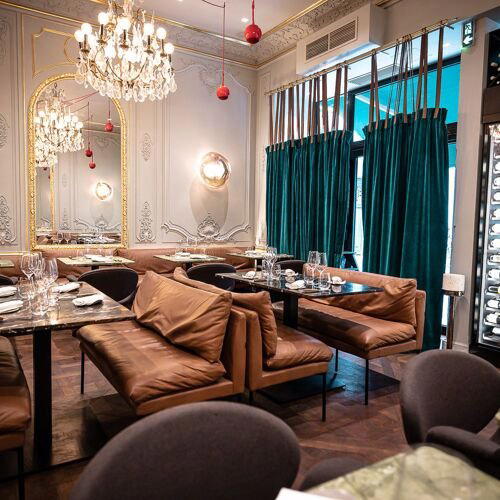
Contemporary and chic without being pretentious; intimate atmosphere with an open kitchen allowing diners to witness plate assembly; tables are well-spaced for privacy; warm and welcoming despite refined setting.