
Tabelog 100 #68
Our verdict
spice tree places Zushi inside Japan’s serious curry conversation rather than treating the beach town as a side trip from Kamakura. Its Tabelog Curry EAST 100 selection in 2024, compact house-restaurant format, and low-key counter-and-table setup make it a focused stop for diners who care about spice work, sourcing discipline, and small-room Japanese curry culture.

Pearl is the En Primeur Club membership app, where members save venues, book tables and use the concierge.
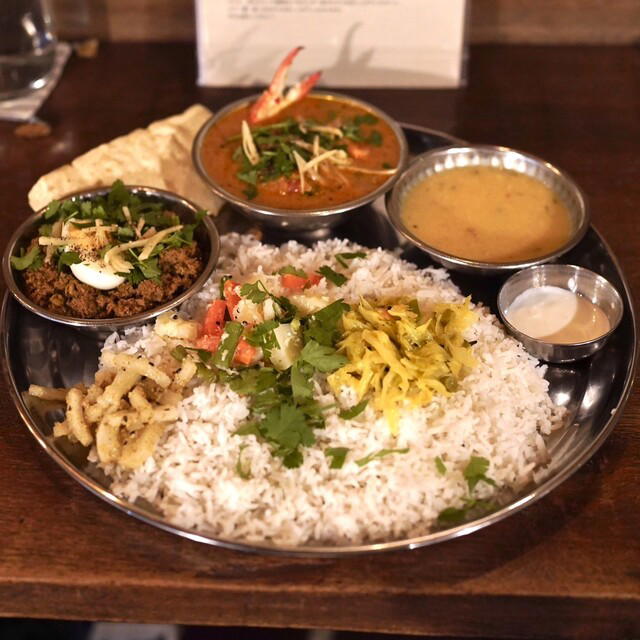
The menu
What to order
- Butter Chicken Curry
- Mutton Keema Curry with Nepal Pepper
- Shrimp and Crab Coconut Curry
- Homemade Kulfi
Approach curry in Zushi and the setting changes the argument. This is not central Tokyo’s neon station-front curry economy, nor a broader dining circuit nearby. The appeal is more local in scale: a focused restaurant that asks diners to pay attention to spice, rice, heat, and rhythm rather than spectacle. spice tree fits that reading: a Zushi curry address whose reputation is built around a clear category and a direct sense of purpose.
Zushi’s dining scene is shaped by proximity: coastal visitors, day-trip movement, commuters, and locals who do not need every meal to become an occasion. Smaller restaurants face pressure unlike Tokyo destination counters: precise enough for repeat locals, legible enough for time-limited visitors. Curry tests that balance because Japanese curry culture now runs on several tracks at once: nostalgic roux shops, South Asian-influenced spice curry, regional hybrids, and personal kitchens treating aromatics, rice, garnish, and heat as one integrated plate.
Zushi curry culture, seen through spice rather than ceremony
The serious end of Japan’s curry scene has moved far beyond the old binary of European-style curry rice and Indian restaurant lunch sets. In Tokyo and surrounding prefectures, stronger contemporary kitchens use layered spice blends, controlled oil, vegetable detail, and rice chosen for how it carries sauce. The better examples do not cleanly imitate one national tradition. They make a Japanese argument about balance: perfume without muddiness, heat without blunt force, and portions that keep the plate coherent.
spice tree’s Tabelog Hyakumeiten recognition for Curry in 2024 places it inside Japan’s competitive curry conversation. That recognition gives the listing more weight than casual local popularity alone. Tabelog’s curry category is useful because it catches specialist rooms that broader guides can miss: modest footprints, focused menus, and loyal regional followings rather than formal tasting-menu structures.
The ingredient-sourcing angle is not named farms or theatrical provenance. It is how focused curry shops survive scrutiny. Spice kitchens depend on repeatable procurement: fresh dry spices, rice that behaves under sauce, vegetables and proteins that hold seasoning, and a service model tight enough to prevent drift. In a focused curry format, inconsistency has less room to hide. The category-led model becomes part of the evidence: it can cook with control that larger casual operations often dilute, but asks diners to accept less flexibility.
Within Zushi, curry sits among several local dining modes. BOULANGERIE E.S., Panya Cotto, and moomoo's help show the everyday side of the city, while Celery broadens the casual dining picture. Sushi Nara, by contrast, points to a different kind of meal. That spread explains Zushi better than one genre label: neighborhood bakeries, modest curry specialists, and more occasion-driven dining coexist without sharing one dining expectation.
A focused format that rewards planning, not ceremony
The restaurant’s category-led format shapes the meal before a plate arrives. The point is not grand staging but attention to the kitchen’s rhythm and a short, practical decision tree: appetite, timing, and tolerance for a focused local setting. Travelers should read the venue correctly: not a long-form restaurant built around wine, pacing, or chef narration, but a focused curry address where the category itself is the reason to go.
The operating feel reinforces that local rhythm. Many independent Japanese restaurants work with direct, practical systems rather than elaborate hospitality architecture, and that is the right lens here. Policies and service details can change, so the safest assumption is to check current official information before building a day around the visit. The important editorial point is simpler: spice tree is best understood as a focused Zushi curry stop, not a flexible all-purpose dining room.
For visitors mapping a Zushi day, the restaurant works better as a precise anchor than an all-purpose fallback. The city is compact enough to combine a meal with coastal walking, rail connections, or a bakery stop, but the curry format should come first rather than after a long list of maybes. For a wider local edit, use Our full Zushi restaurants guide. The parallel city guides help shape the rest of the day: Our full Zushi hotels guide, Our full Zushi bars guide, Our full Zushi wineries guide, and Our full Zushi experiences guide.
Regional comparison sets expectations. Nearby dining destinations may draw visitors toward more polished set-piece meals, while Tokyo’s scale supports almost every niche from specialist counters to casual one-category rooms. Farther afield, Japan’s casual dining breadth shows how tightly format defines expectation across regions and price points. Zushi’s curry specialist sits at the local end of that spectrum: category-led, locally grounded, and judged by repeatability.
Why the recognition matters for a modest curry room
A Tabelog score of 3.82 in a specialist curry category signals sustained user confidence in a market where small differences matter. The number should not be read like a hotel star rating, but as a comparative pressure gauge: a curry restaurant in Zushi earning Tabelog Hyakumeiten recognition for Curry in 2024 has cleared a meaningful bar for consistency, identity, and demand.
The editorial case for spice tree is not that Zushi has a grand dining landmark hiding in plain sight. It is sharper: the city has a curry specialist whose category recognition, 3.82 score, and 2024 Tabelog Hyakumeiten selection make it a serious address for travelers who understand that Japan’s food culture is often strongest in tightly defined formats. Come for curry, not ceremony; read the focus as part of the discipline; and treat sourcing logic as embedded in the plate rather than announced through a farm list.
Frequently asked questions
Is spice tree suitable for children?
Public family and seating details should be checked through the venue's official channels before visiting. The safest planning assumption is that spice tree is a focused curry restaurant in Zushi.
What's the overall feel of spice tree?
It is a focused curry restaurant in Zushi rather than a formal dining room. The Tabelog Hyakumeiten recognition for Curry in 2024 gives it credibility, while the city setting keeps it firmly local.
What price level is spice tree?
Pricing at spice tree is listed as Dinner: JPY 1,000 - JPY 1,999; Lunch: JPY 2,000 - JPY 2,999.
What is spice tree known for?
spice tree is known as a curry restaurant in Zushi, with Tabelog Hyakumeiten recognition for Curry in 2024 and a listed score of 3.82.
Fast Comparison
Comparable venues by cuisine and price in the same metro.
| Venue | Cuisine | Price | Awards | Notes |
|---|---|---|---|---|
| spice treeThis venue (the venue you are viewing) | Indian-style Curry House | $10–20 | Tabelog 100 #68 | Not listed |
| moomoo's | Soft serve ice cream shop | $1–10 | Tabelog 100 #68 | Zushi |
| Panya Cotto | Dining | Not listed | Tabelog 100 #48 | Zushi |
| BOULANGERIE E.S. | French-style bakery | $1–10 | Tabelog 100 #30 | . Zushi |
| Celery | Vegetable-focused Chinese | Not listed | Tabelog 100 #92 | Zushi |
| Sushi Nara | Edomae Omakase Sushi | $150–200 | Tabelog 100 #10 | Zushi |
Recognition history
Dated appearances from independent guides and award organizations, with the underlying list record or original source where available.
Tabelog 100 #68 · No. 68
Tabelog · Tabelog 100 - Curry - EAST - 2024
Continue exploring
More in Zushi
Restaurants in Zushi
All restaurants in Zushi →


Bars in Zushi
Browse all →






Details
- Cozy
- Intimate
- Solo
- Date Night
- Casual Hangout
- Family
- Standalone
- Beer Program
- Set Menu
- Lassi
- Chai
- Craft Beer
- Pescatarian Friendly
A small, cozy curry shop with only nine seats, a relaxed and personal feel, and an atmosphere shaped by the slow, careful preparation of limited daily curries that often sell out by afternoon.