Our verdict
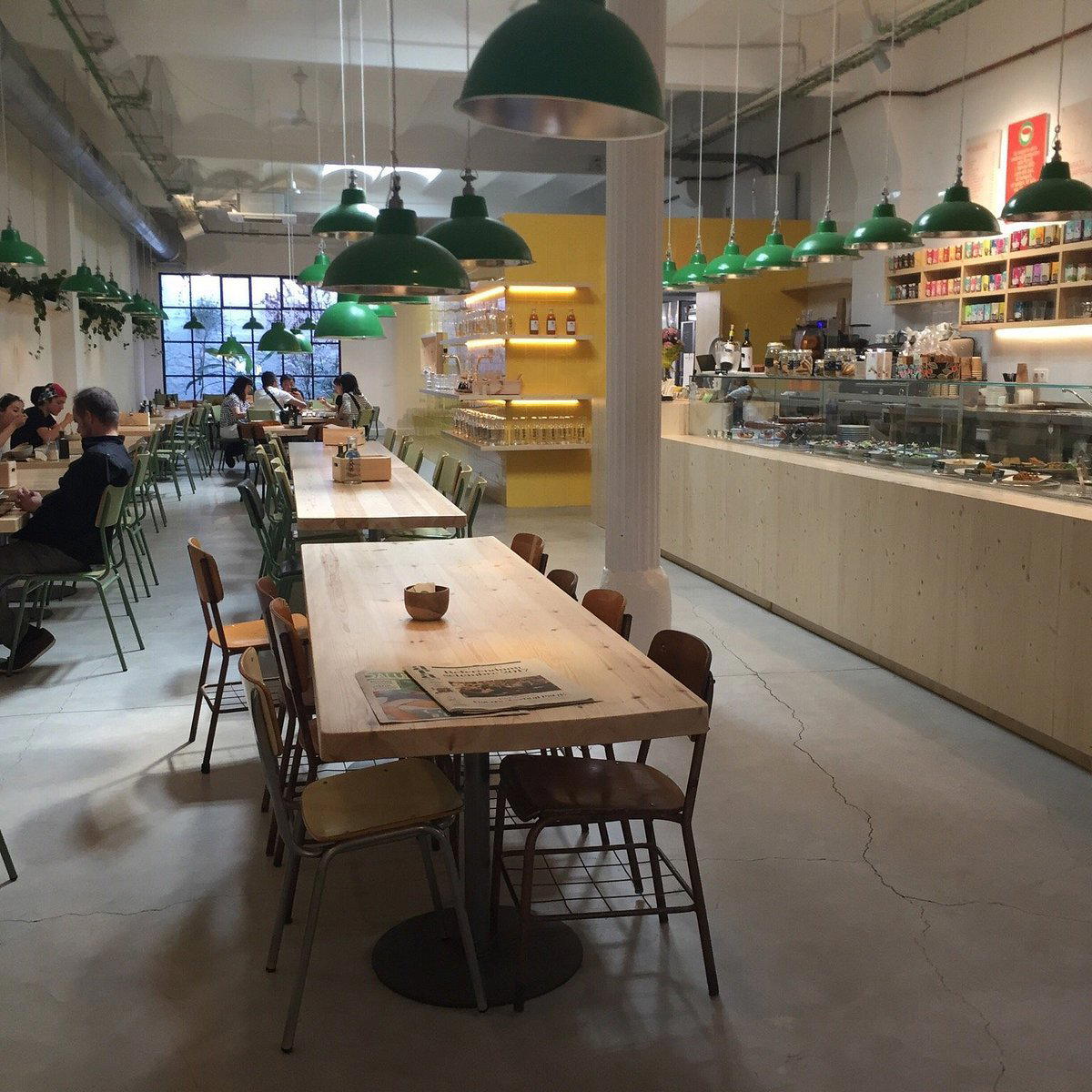
"Sopa, Poble Nou by Little Buddha. Just a stones-throw away from our offices, on the Carrer Roc Boronat, you’ll find Sopa. What we love about this place is how bright and airy it is thanks to its enormous windows and decoration. But the best thing has to be the amazing vegan and vegetarian meals it has on its varied menu that will cater to just about any taste (even non-vegetarians). Oh, and if you like Yoga they do that too!"

Pearl is the En Primeur Club membership app, where members save venues, book tables and use the concierge.
Sant Martí and the Question of What a Neighbourhood Restaurant Can Be
Carrer de Roc Boronat runs through the 22@ district of Sant Martí, a part of Barcelona that has spent the last two decades converting old industrial fabric into tech offices, design studios, and a residential population with money and appetite. The street itself sits close enough to the Rambla del Poblenou corridor to share its energy, yet far enough from the tourist circuits of the Eixample or the Gothic Quarter that the clientele arriving at Sopa Barcelona tends to be local in the most meaningful sense: people who chose to eat here rather than stumbled in. That distinction matters when reading the menu.
How the Menu Thinks
The name Sopa means soup in Catalan and Spanish, and it is worth taking that seriously as an architectural signal rather than a decoration. In the Spanish dining tradition, soup occupies a specific structural position: it is the opener that sets the register, the course that tells you whether a kitchen is working from instinct or from technique. A restaurant that names itself after that category is making a statement about warmth, about liquidity, about the idea that cooking can be both intellectually serious and genuinely comforting. Whether Sopa Barcelona follows through on that signal fully is something each diner calibrates for themselves, but the framing is deliberate.
Barcelona's mid-market creative dining scene has bifurcated over the past decade. At one end sit the tasting-menu houses that compete directly with peers like Disfrutar, Enigma, and Cocina Hermanos Torres, operating at price points and ambition levels that align them with the national conversation about Spanish cuisine alongside destinations like El Celler de Can Roca in Girona and Mugaritz in Errenteria. At the other end, neighbourhood restaurants in the outer barrios have increasingly claimed a space that is neither casual nor ceremonial, where the format is more flexible and the relationship between kitchen and diner is less transactional. Sopa Barcelona occupies territory closer to that second category, which positions it differently from the starred rooms of the Eixample.
The Sant Martí Dining Context
To understand what Sopa Barcelona is doing, it helps to understand what Sant Martí has become as a dining neighbourhood. The 22@ technology district brought a daytime population that eats seriously at lunch, and the residential regeneration of Poblenou brought an evening population that is not looking to perform wealth but does expect quality. This is not the Barcelona of hotel restaurant dining rooms or of the destination tasting-menu pilgrimage. It is closer to the Barcelona that locals actually inhabit on a Tuesday evening, and that context shapes the register a restaurant like this has to occupy to succeed in the long run.
Compared to the Eixample's premium corridor, where Lasarte and ABaC operate within the grammar of international fine dining, Sant Martí restaurants tend to work with less theatrical distance between kitchen and table. The physical environments are often converted industrial or simply utilitarian, and the cooking tends to express itself through product and seasoning rather than through elaborate plating architecture. That is not a limitation; it is a genre, and a demanding one in its own way.
Spanish Creative Cooking and Its Regional Counterweights
Barcelona does not exist in isolation as a creative cooking city. The Spanish restaurant conversation extends south to Quique Dacosta in Dénia and Aponiente in El Puerto de Santa María, north and west to Arzak in San Sebastián, Azurmendi in Larrabetzu, and Martin Berasategui in Lasarte-Oria, and across to DiverXO in Madrid. Restaurants operating below that tier in Barcelona are not lesser versions of those experiences; they are answering a different question about what cooking is for on any given evening. Ricard Camarena in València offers a useful reference point: a kitchen with serious technique and clear product loyalty that does not need to perform at spectacle scale to communicate ambition. The better neighbourhood restaurants in Barcelona's outer barrios operate with a similar logic.
Internationally, the shift toward format-flexible neighbourhood dining with serious cooking credentials is a broader pattern. Lazy Bear in San Francisco made a version of that argument in a different cultural register, and Le Bernardin in New York City demonstrates what happens when a kitchen maintains a single unwavering commitment to product at the expense of all other registers. The comparison is not direct, but the underlying question is the same: what does the menu's architecture reveal about what the kitchen actually values?
Reading a Menu as a Commitment
The editorial angle that matters most when assessing a place named Sopa is structural: does the menu build a coherent argument, or does it offer variety as a substitute for a point of view? In the leading cases, a menu that centres on broth-based, liquid, or warming preparations is making an implicit claim about restraint and about the difficulty of making simple things taste inevitable. That is a harder claim to sustain than novelty, because there is nowhere to hide. A consommé that is merely competent reads as a failure in a way that an ambitious but flawed molecular construction does not.
The Catalan cooking tradition that underpins Barcelona's restaurant culture has its own deep grammar for this: escudella, suquet, romesco-based preparations that thicken and concentrate. A kitchen engaging with that tradition, even loosely, is in conversation with a long history of cooking that prioritised depth over decoration. Whether Sopa Barcelona is making that conversation explicitly or simply using the name as atmosphere is something that only sustained engagement with the menu can answer.
Planning a Visit
Sopa Barcelona is at Carrer de Roc Boronat, 114, in the Sant Martí district, reachable from the Rambla del Poblenou via a short walk or from Llacuna metro station on Line 4. Sant Martí restaurants in this register typically operate leading at dinner, when the neighbourhood's evening rhythm settles in, though the 22@ lunch crowd means midday sessions at quality restaurants in the area are often well-supported and worth considering if you prefer a less formal pace. For a broader survey of where this restaurant sits within Barcelona's dining geography, the EP Club Barcelona guide maps the full scene across neighbourhoods and price tiers.
Frequently asked questions
What's the address for Sopa Barcelona?
Sopa Barcelona is located at Carrer de Roc Boronat, 114, Sant Martí, 08018 Barcelona, Spain, Barcelona.
Is Sopa Barcelona a good option for lunch in the 22@ technology district?
The restaurant's address at Carrer de Roc Boronat, 114 places it within walking distance of the main 22@ office clusters in Sant Martí, making it a practical midday option for the district's working population. Barcelona's 22@ has developed a real dining infrastructure over the past decade, and restaurants in this corridor tend to run efficient lunch services to match the professional crowd. Sopa's menu logic, built around soup-forward cooking, suits a focused lunch format better than venues with longer tasting progressions.
What's the best thing to order at Sopa Barcelona?
The restaurant's name is an architectural signal: the menu is built around broth-based and soup-anchored preparations, and following that logic is the most purposeful way to eat here. At a place named Sopa on Carrer de Roc Boronat in Sant Martí, ordering against the house concept misses the point. Start with whatever the kitchen is leading with in that category and work outward from there.
Should I book Sopa Barcelona in advance?
Sant Martí has become a well-patronised dining neighbourhood, particularly in the evenings when Poblenou's residential population and the 22@ tech district's working crowd converge. A restaurant at Carrer de Roc Boronat, 114 sits directly in that overlap zone. Booking ahead is the safer approach, especially for dinner sittings later in the week.
What makes Sopa Barcelona worth seeking out?
Barcelona's outer barrios have produced a tier of serious cooking that operates without Michelin recognition or tourist-circuit visibility, and Sopa sits in that category. Its position in the 22@ district of Sant Martí means it serves a genuine local population rather than a captive audience, which tends to sharpen a kitchen's focus. The menu's structural commitment to soup as a culinary frame gives it a point of view that most neighbourhood restaurants lack.
Reputation First
Comparable venues nearby, for context on price, style, and recognition.
| Venue | Cuisine | Price | Awards | Notes |
|---|---|---|---|---|
| Sopa BarcelonaThis venue (the venue you are viewing) | Vegetarian Mediterranean Soups and Salads | $10–20 | Not listed | Not listed |
| Colibri Brunch & Tapa Paellas | Mediterranean Brunch & Tapa Paellas | $20–30 | Not listed | la Barceloneta |
| Port Vela Barcelona | Mediterranean Seafood & Paella | $30–50 | Not listed | Port Vell |
| Cuines Santa Caterina | Modern Market Cuisine with Catalan, Mediterranean, Asian & Vegetarian | $20–30 | Macarfi 6.5 Food Rating | Sant Pere, Santa Caterina i la Ribera |
| Chandigarh Café | Mediterranean with French Influences | $30–50 | Macarfi 7.2 Food Rating | Pedralbes |
| 4Amb5 Mujades | Modern Vegetable-Centric Mediterranean | Not listed | Not listed | el Raval |
Continue exploring
More in Barcelona
Restaurants in Barcelona
All restaurants in Barcelona →
Bars in Barcelona
All bars in Barcelona →

Details
- Cozy
- Modern
- Casual Hangout
- Organic
- A La Carte
- Vegetarian Friendly
- Vegan Options
- Gluten Free Options
Current opening hours
- Monday
- 8 AM–7 PM
- Tuesday
- 8 AM–7 PM
- Wednesday
- 8 AM–7 PM
- Thursday
- 8 AM–7 PM
- Friday
- 8 AM–7 PM
- Saturday
- 10 AM–5 PM
- Sunday
- 10 AM–5 PM
Hours can change for holidays and private events. Hours as of .
Bright, clean, and modern space with a welcoming cafeteria atmosphere ideal for quick lunches or casual meetups.