


Michelin Plate · Macarfi 7.4 Food Rating
Our verdict
A few metres from the Gran Teatre del Liceu in Barcelona's Ciutat Vella, Bar Cañete operates as a serious counter-led tapas bar where market sourcing defines the menu. Cockles from local estuaries, anchovies from Santoña, and clams from Carril anchor a list built around minimum intervention. Ranked #164 in Opinionated About Dining's Casual Europe list for 2025 and holding a Michelin Plate, it draws both locals and visitors who understand what a well-edited tapas menu can achieve.

Pearl is the En Primeur Club membership app, where members save venues, book tables and use the concierge.
The menu
What to order
- Squid sandwich
- Paella Cañete
- Fried artichokes
The Counter, the Kitchen, and the Ingredients
Barcelona's tapas bar scene occupies a wide range of ambitions. At one end sit the tourist-facing operations near La Rambla, where quantity and convenience take precedence. At the other end, a smaller number of bars treat tapas as a discipline: sourcing tightly, editing the menu aggressively, and letting the ingredient carry the dish. Bar Cañete, on Carrer de la Unió in Ciutat Vella, sits firmly in the latter category. The address places it metres from the Gran Teatre del Liceu, in a neighbourhood dense with foot traffic, but the room operates at a remove from that noise.
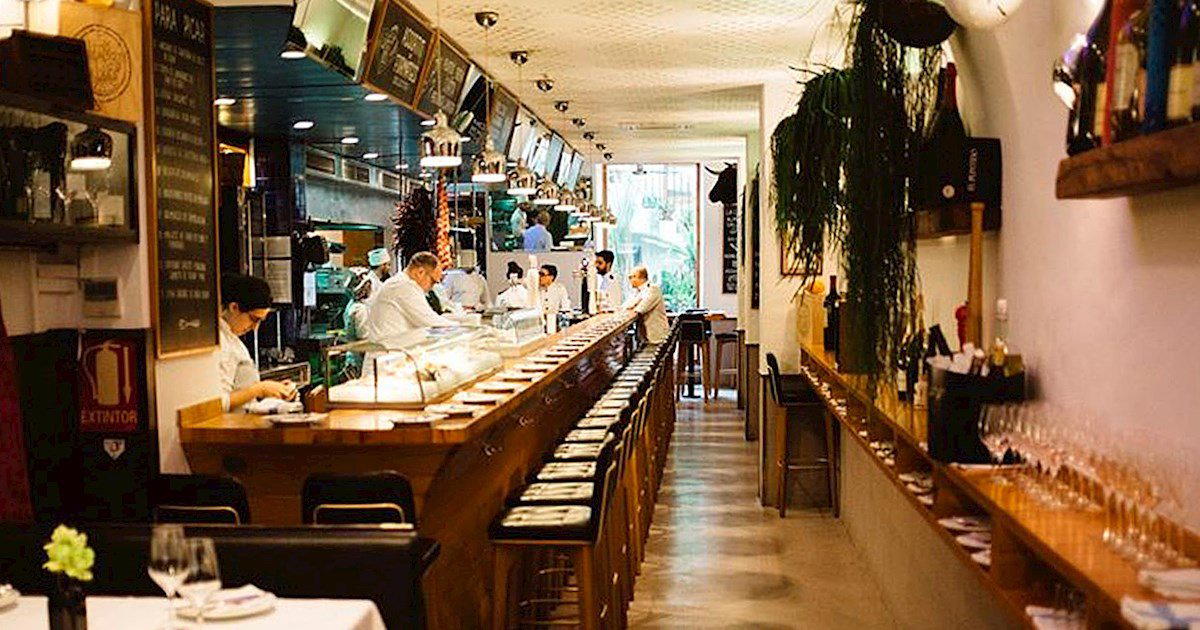
The physical layout tells you something about the priorities. A long counter runs through the space, and to reach the dining rooms beyond it, you pass through the kitchen. That sequencing is not accidental. It frames the production, not the décor, as the main event. The counter itself is the default position for solo diners and pairs, and in the tradition of Spain's better tapas bars, it is the right place to eat: proximity to the pass, sight lines to the preparation, the particular rhythm of orders arriving in sequence rather than all at once.
What the Menu Reveals
In tapas culture, a menu's architecture is a statement of intent. Bars that source carefully tend to keep their lists short and change them with the market. Bars that prioritise volume keep the list long, stable, and calibrated to safe expectations. Bar Cañete's menu organises itself around provenance: cockles from local estuaries prepared with citrus, clams from Carril on the Galician coast, anchovies from Santoña in Cantabria dressed in olive oil, fried artichokes from El Prat, a growing area just south of Barcelona long associated with the vegetable's cultivation. Each item is a named origin, not a generic category.
The logic here is comparable to what you find at the better pintxos bars in San Sebastián, where Antonio Bar and Bar Bergara similarly anchor their menus in specific regional sourcing. In that tradition, the menu functions as a map of Spain's producing regions, read through the lens of what is available and in condition. Minimum intervention is the stated approach at Bar Cañete, which in practice means classical preparation: the ingredient is the subject, and the cooking exists to present it correctly rather than to transform or complicate it.
One item has accumulated particular recognition over time: the toasted flatbread with tomato, the Catalan pa amb tomàquet in its most reduced form. In a city where this preparation appears on nearly every table, the version here is noted consistently as a reference point. The bread is the variable that most operations overlook, and the quality of the base matters as much as what goes on top of it. Ordering it alongside anything else on the menu is a reasonable default position.
Where Bar Cañete Sits in Barcelona's Dining Spectrum
Barcelona currently holds three restaurants at the three-Michelin-star level: El Celler de Can Roca in Girona is nearby, and within the city, Cocina Hermanos Torres, Disfrutar, and Lasarte represent the creative-progressive end of the spectrum. Cinc Sentits and Enoteca Paco Pérez hold two stars each. These are €€€€ operations built around tasting menus, long sittings, and a format that positions cooking as spectacle. Bar Cañete operates in a different register entirely: €€€ pricing, a walk-in and counter format, and a menu structured around the leading available market product rather than a composed narrative of courses.
This is not a compromise. It is a different culinary tradition with its own internal standards. Opinionated About Dining, which applies some of the most rigorous assessment criteria in European casual dining, ranked Bar Cañete at #164 in its Casual Europe list for 2025, up from #196 in 2024, having placed it as Highly Recommended in 2023. That upward trajectory over three consecutive years suggests consistent execution rather than a one-season high. A Michelin Plate in 2025 confirms recognition at the guide level.
Within Barcelona specifically, the comparison draws against bars in different neighbourhoods and price brackets. Cerveceria Catalana in the Eixample operates at higher volume and a broader demographic reach. El Xampanyet in El Born functions as a neighbourhood institution with decades of accumulated reputation. Bar Mut and La Cova Fumada occupy different positions in the city's tapas and snack culture. Bar Cañete's distinction lies in the combination of formal sourcing logic, a Liceu-adjacent address, and a counter format that retains the informality of the tapas tradition while operating at a more serious ingredient level.
Planning a Visit
Bar Cañete opens Monday through Saturday from 1pm to midnight, with Sunday closed. The hours reflect the Spanish dining rhythm: lunch service beginning at 1pm, with the kitchen running continuously through what would be, in most northern European cities, the gap between lunch and dinner. This matters for visitors who want to eat at 6 or 7pm, a time when many Barcelona kitchens are closed between services. The Carrer de la Unió address in Ciutat Vella puts it within easy reach of the Liceu metro stop on Line 3, and the Gran Teatre del Liceu itself is a few steps away, making a pre- or post-performance visit a logical combination.
At €€€ pricing, Bar Cañete sits above the neighbourhood tapas bar baseline but well below the tasting-menu tier. The format rewards grazing across several small dishes rather than anchoring on one or two. The sourcing logic, with its Galician clams, Cantabrian anchovies, and Catalan artichokes, gives the menu a geographic range that a single main course cannot replicate. Chef Josep Nicolau oversees a kitchen whose discipline shows in that consistency.
For broader context on eating and drinking in the city, see our full Barcelona restaurants guide, our full Barcelona bars guide, our full Barcelona hotels guide, our full Barcelona wineries guide, and our full Barcelona experiences guide. For the wider Spanish context, the country's creative end runs through addresses like DiverXO in Madrid, Arzak in San Sebastián, Martin Berasategui in Lasarte-Oria, Azurmendi in Larrabetzu, and Aponiente in El Puerto de Santa María. Bar Cañete sits at a different point on that spectrum, but it is no less seriously considered.
Frequently asked questions
What dish is Bar Cañete famous for?
The toasted flatbread with tomato (pa amb tomàquet) has the most consistent recognition among regular visitors and in the awards documentation attached to the venue. The broader menu draws its identity from provenance-led sourcing: cockles from local Catalan estuaries, anchovies from Santoña in Cantabria, and clams from Carril in Galicia. These sourcing anchors, prepared with minimum intervention, are the foundation of Bar Cañete's position in Barcelona's tapas scene, and the venue's back-to-back rankings in Opinionated About Dining's Casual Europe list confirm that the kitchen executes against that premise with consistency. Under chef Josep Nicolau, the kitchen's approach prioritises ingredient quality over technique complexity, which is itself the distinguishing characteristic.
Recognition Snapshot
| Venue | Cuisine | Price | Awards | Notes |
|---|---|---|---|---|
| Bar CañeteThis venue (the venue you are viewing) | Traditional Spanish Tapas | $20–30 | Michelin Plate · Macarfi 7.4 Food Rating | Not listed |
| Disfrutar | Avant-Garde Catalan Fine Dining | $300–500 | 3 Michelin Stars · World's 50 Best #1 | Progressive, Creative |
| Cocina Hermanos Torres | Modern Spanish Fine Dining | $300–500 | 3 Michelin Stars · World's 50 Best #78 | Creative |
| Lasarte | Modern Basque-Mediterranean Fine Dining | $300–500 | 3 Michelin Stars · La Liste Top Restaurants | Progressive Spanish, Creative |
| Cinc Sentits | Modern Catalan Fine Dining | $150–200 | 2 Michelin Stars · La Liste Top Restaurants | Modern Spanish, Creative |
| Enoteca Paco Pérez | Modern Mediterranean Seafood | $200–300 | 2 Michelin Stars · La Liste Top Restaurants | Modern Spanish, Modern Cuisine |
Recognition history
Dated appearances from independent guides and award organizations, with the underlying list record or original source where available.
Michelin Plate
Michelin
Macarfi 7.4 Food Rating
Macarfi
Opinionated About Dining Casual in Europe Recommended
Opinionated About Dining
Full recognition history (7 entries)
Michelin Plate
Michelin
Opinionated About Dining Casual in Europe Ranked #164
Opinionated About Dining
Opinionated About Dining Casual in Europe Ranked #196
Opinionated About Dining
Opinionated About Dining Casual in Europe Highly Recommended
Opinionated About Dining
Continue exploring
More in Barcelona
Restaurants in Barcelona
All restaurants in Barcelona →
Bars in Barcelona
All bars in Barcelona →

Details
- Lively
- Energetic
- Cozy
- Trendy
- Intimate
- Date Night
- Group Dining
- Special Occasion
- Casual Hangout
- Open Kitchen
- Extensive Wine List
- Local Sourcing
- Small Plates
- A La Carte
- Vegetarian Friendly
- Vegan Options
- Gluten Free Options
Current opening hours
- Monday
- 1 PM–12 AM
- Tuesday
- 1 PM–12 AM
- Wednesday
- 1 PM–12 AM
- Thursday
- 1 PM–12 AM
- Friday
- 1 PM–12 AM
- Saturday
- 1 PM–12 AM
- Sunday
- Closed
Hours can change for holidays and private events. Last verified .
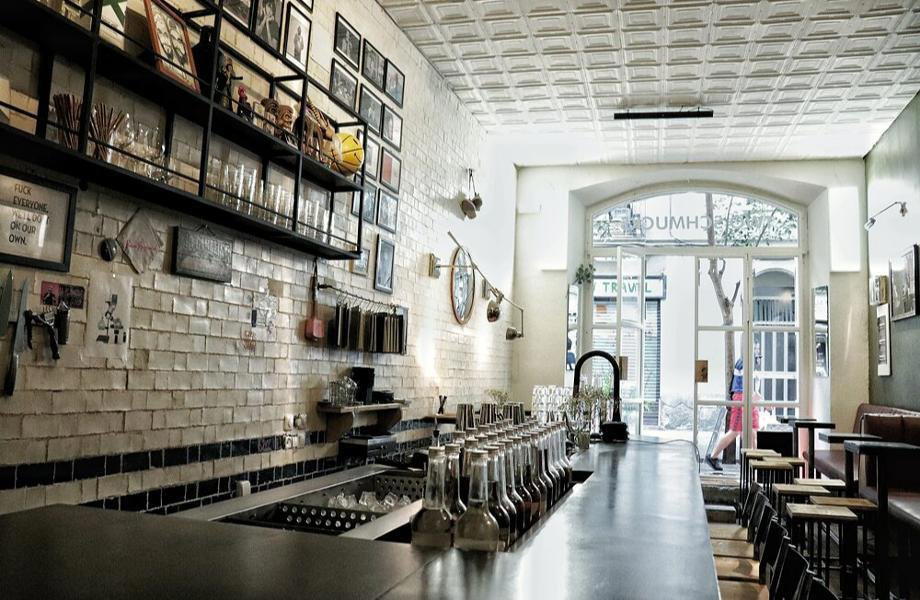
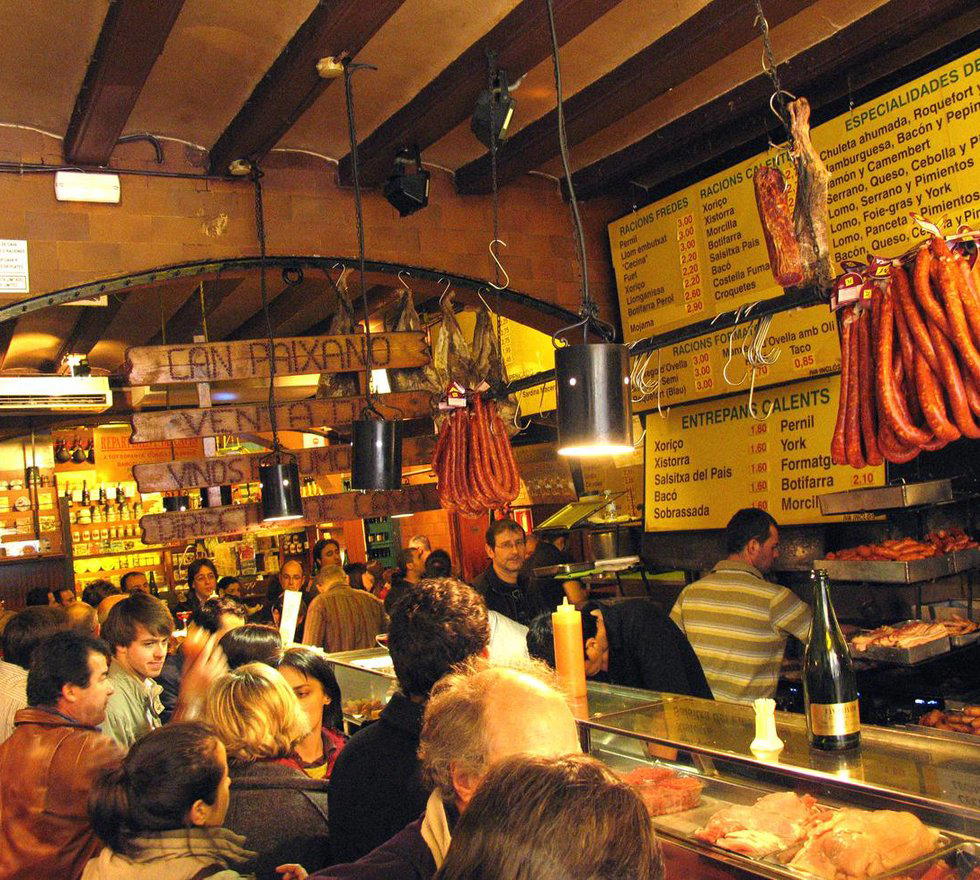
Convivial and bustling atmosphere with vintage decor, hanging lights, and high energy from entertaining staff and open kitchen action.