Somar
Somar sits on the Quai du Lenigo in Le Croisic, a fishing port on the Atlantic Loire coast where the supply chain between boat and kitchen is measured in minutes rather than miles. The restaurant occupies a position on one of Brittany's most productive stretches of coastline, making ingredient provenance the organizing principle of the menu rather than a marketing detail.
Pearl is the En Primeur Club membership app — saves, bookings, and concierge access live there. Same editors, same standards.
- Address
- 5 Quai du Lenigo, 44490 Le Croisic, France
- Phone
- +33240232850
- Website
- lestacade.fr
- Directions
- Get directions
 Saves & bookings on Pearl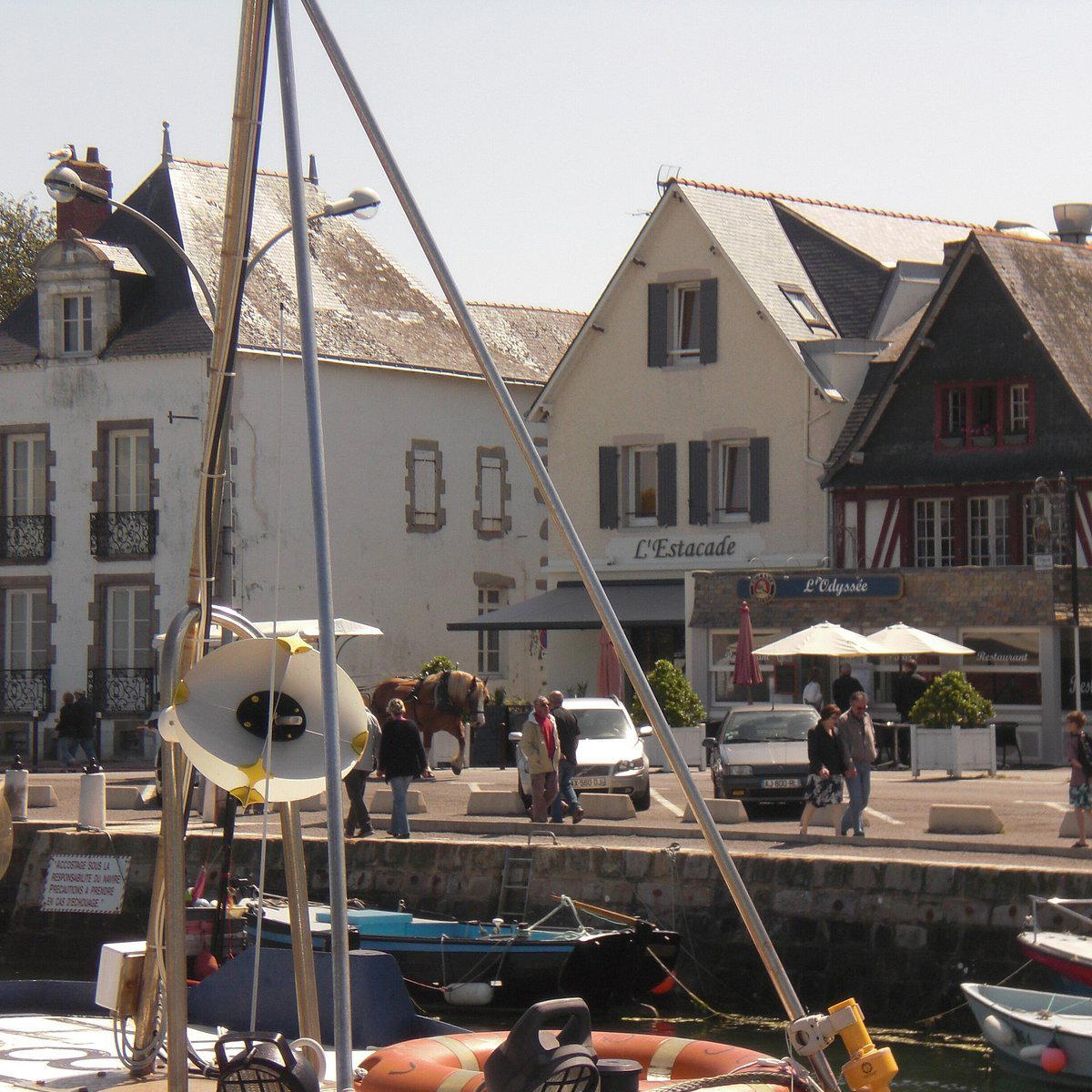
Where the Atlantic Supply Chain Ends
Le Croisic sits at the western tip of the Guérande peninsula, a granite finger pointing into the Bay of Biscay where the fishing fleet has operated without interruption for centuries. The town is small enough that its quayside restaurants receive catches from boats moored within sight of their dining rooms, and the Quai du Lenigo, where Somar holds its address at number 5, is precisely that kind of street: low buildings facing working water, the smell of brine arriving before any menu does. This is the physical context that shapes what kitchens here can offer, and Somar works within it.
The proximity to productive Atlantic waters matters beyond local colour. The Loire-Atlantique coast, including the waters around Le Croisic, supplies particularly sought-after shellfish and flat fish in western France. Sea bass, turbot, sole, and bivalves move through markets and quayside suppliers at a frequency that larger inland cities cannot replicate. For restaurants positioned on the quay, the argument for local sourcing is not philosophical, it is structural. The supply is there, the distance is negligible, and the quality differential over transported fish is significant enough to organise a kitchen around it.
Le Croisic's Dining Tier and Where Somar Sits
Le Croisic supports a compact but layered dining scene for a town of its size. L'Océan operates at the upper end of the local price range, its seafood format drawing visitors who plan meals around the destination. Le Lénigo and L'Estacade hold the middle tier, covering seafood and modern cuisine at accessible price points. Somar, with its quayside address on the Lenigo dock, operates in a neighbourhood where the positioning of a restaurant is inseparable from its access to the morning's catch. The full Le Croisic restaurants guide maps this tier structure clearly for visitors planning a longer stay.
The restaurant's address places it at the functional heart of the town's maritime economy rather than its tourist perimeter. That distinction matters when reading what a kitchen like this can consistently deliver: the sourcing radius is not a seasonal or special-occasion claim but an everyday operational reality.
The Atlantic Pantry: Why Provenance Structures the Menu
French coastal kitchens on the Atlantic seaboard have long operated on a different logic than their Mediterranean counterparts. The Bay of Biscay supplies a colder, harder-worked product: fish with firmer flesh, shellfish with pronounced mineral salinity, and crustaceans that benefit from the plankton-rich upwelling currents along this stretch of coast. For a restaurant on the Quai du Lenigo, these are the raw materials available at scale and at speed.
The Guérande salt marshes, which begin a few kilometres inland from Le Croisic, add another layer to the regional pantry. Fleur de sel from this area carries AOC protection and a reputation among French chefs that reaches well beyond the region. Kitchens in Le Croisic have access to this ingredient not as a luxury import but as a local staple, and the difference in a salt's mineral profile and moisture content between fleur de sel harvested days earlier and the commodity salt that arrives in restaurant supply trucks from distribution centres is measurable. It is the kind of detail that separates a kitchen serious about its terroir from one that lists provenance as decoration.
This regional sourcing logic connects Le Croisic to a broader French tradition of place-defined cooking. Restaurants like Mirazur in Menton and Bras in Laguiole have made the argument at the highest level that geography should determine a menu's structure, not merely its garnish. Christopher Coutanceau in La Rochelle, the Atlantic coast's most decorated seafood kitchen, has demonstrated what a fully committed local-sourcing discipline produces when applied at scale over time. Le Croisic operates at a different scale and register, but the underlying logic of proximity-as-quality is the same.
Elsewhere in France, the same argument plays out in different registers: Auberge du Vieux Puits in Fontjoncouse draws its identity from the Corbières landscape, Flocons de Sel in Megève from Alpine altitude and season. The common thread is that the menu's logic is geographic before it is personal, and the kitchen's authority derives from its position in that geography.
Atlantic Seafood Cooking in Context
Quayside restaurants along France's Atlantic coast have historically occupied a different market position than their counterparts in Brittany's larger port cities. Nantes and La Rochelle have the volume and the restaurant-week traffic to support multiple tiers of fine dining. Le Croisic, smaller and less trafficked, has always relied on a different draw: the credibility of direct access. Visitors who travel to the end of the Guérande peninsula do so with a specific appetite, and kitchens here compete less with each other than with the expectation that the fish on the plate is as close to the water as the setting implies.
The international reference points for serious Atlantic seafood cooking are instructive. Le Bernardin in New York City built its authority on the premise that French Atlantic seafood technique, applied with precision and without distraction, is sufficient to sustain a restaurant at the highest level for decades. AM par Alexandre Mazzia in Marseille takes the opposite approach, using Mediterranean seafood as a starting point for more formally complex compositions. Neither model is transferable wholesale to a small quayside kitchen, but both demonstrate that the material quality of the fish is the non-negotiable foundation on which any serious seafood cooking rests.
For the broader context of French fine dining, the reference set is deep: Alléno Paris au Pavillon Ledoyen, Troisgros - Le Bois sans Feuilles in Ouches, Auberge de l'Ill in Illhaeusern, Paul Bocuse - L'Auberge du Pont de Collonges, Assiette Champenoise in Reims, Au Crocodile in Strasbourg, and Atomix in New York City each represent how a kitchen's identity is shaped by its geographic and cultural position. Somar operates at a different scale entirely, but it sits within the same logic: place first, then technique, then everything else.
Planning a Visit
Somar's address at 5 Quai du Lenigo places it directly on Le Croisic's working harbour front, reachable on foot from the town centre in a few minutes.
How It Stacks Up
Comparable venues nearby, for context on price, style, and recognition.
| Venue | Cuisine | Price | Awards | Notes |
|---|---|---|---|---|
| SomarThis venue — the venue you are viewing | French Seafood Bistrot | $$ | Not listed | Not listed |
| L'Estacade | French Seafood Terroir | $$$ | Bib Gourmand | Port du Croisic |
| Le Lénigo | Modern Coastal French Seafood | $$$ | Michelin Plate | Le Croisic Port |
| L'Océan | Classic French Seafood Fine Dining | $$$$ | Michelin Plate | Port-Lin |
| Grain de Folie | French Coastal Brasserie | $$ | Not listed | Pornichet |
| Pilgrim | French Fusion Bistro with Global Street Food | $$ | Not listed | Graslin |
Continue exploring
More in Le Croisic
Restaurants in Le Croisic
Browse all →
Bars in Le Croisic
Browse all →
At a Glance
- Cozy
- Lively
- Family
- Casual Hangout
- Waterfront
- Terrace
- Natural Wine
- Local Sourcing
- Waterfront
Relaxed and convivial seaside atmosphere well-suited for family and friends gatherings.