Soi Gapao Soigapao Thai

Tabelog 100 #74
Our verdict
Soi Gapao Soigapao Thai gives Sagamihara’s Thai dining a source-driven reference point rather than a generic spice fix. Its Tabelog 100 selection for Asian and ethnic cuisine in EAST 2024, Thai and dining-bar format, 44-seat room, terrace, private-room option, and family-friendly setup make it a useful counterweight to the city’s ramen-heavy casual dining culture.

Pearl is the En Primeur Club membership app, where members save venues, book tables and use the concierge.
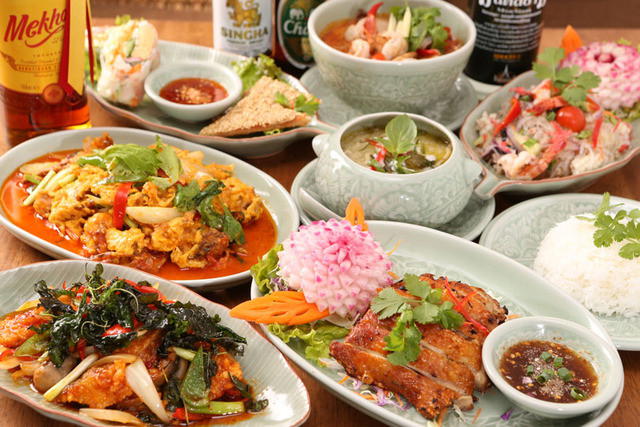
The menu
What to order
- Gapao rice (Thai basil stir-fry)
- Pad Thai
- Green curry
- Khao Man Gai
In Sagamihara’s restaurant landscape, the rhythm is less central Tokyo formality than commuter-city practicality: families, office groups, students, and regulars choosing ramen, curry, izakaya cooking, and regional Asian food. Here, Thai cooking must offer more than novelty; it has to prove balance, freshness, and a clear sense of flavour. Soi Gapao Soigapao Thai fits that lane, not as a one-off curiosity but as evidence that Sagamihara’s casual dining has widened beyond familiar Japanese comfort formats.
The distinction is dining logic. Thai food in Japan succeeds when seasoning, vegetables, rice, aromatics, acidity, heat, and sweetness are handled as part of the meal’s structure rather than as surface effects. The value is in contrast and balance: sharp against sweet, spice against richness, freshness against cooked elements, rice as anchor. Luxury pricing is not required; consistency and care in prep are.
Thai cooking as a counterpoint to Sagamihara's ramen-and-curry baseline
Sagamihara’s casual food identity is shaped by bowls: ramen, curry, soba, and other single-dish formats that reward speed, concentration, and repeat custom. Its restaurant map includes specialists such as Iekei Ramen Kukkura, Nikuniboshi Chuka Soba Suzuki Ramen Ten, Ramen Jiro Sagami oono ten, Rich na Curry no Mise Asano, and Sagamihara Keyaki. Against that, Thai cooking changes the meal’s grammar: a different flavour set, a broader casual-dining rhythm, and an easy bridge between eating and drinking.
The Tabelog Hyakumeiten 2024 recognition is a meaningful external signal in a category where regional consistency can be harder to judge than ramen. A 3.52 Tabelog score and inclusion in that 2024 recognition place it within a documented group, not merely a neighbourhood Thai option. For visitors using Sagamihara as a base, recognition at this level helps separate a serious address from a generic dining-bar listing in a city not usually treated as a Thai-dining destination.
The ramen comparison is also financial and social. Many Sagamihara noodle counters sit in everyday lunch patterns; Ramen Jiro Sagami oono ten and Sagamihara Keyaki help define that local, repeat-use bracket, while Iekei Ramen Kukkura is another point on the city’s casual map. Thai dining here runs differently, with listed budgets of Dinner: JPY 3,000 - JPY 3,999; Lunch: JPY 1,000 - JPY 1,999, making it useful for casual groups and everyday meals rather than only a solitary ten-minute bowl.
Herbs, heat, and the dining-bar format
Category is Thai and dining bar, which explains how the room is best understood. This is not only a quick-meal category; the dining-bar label points toward evening social use as well as everyday eating. In Japan, that hybrid can dilute a cuisine if cooking bends too far toward generic drinking snacks. Here, Thai food’s natural range makes the dining-bar model plausible.
Ingredient handling is the hinge. Thai cooking depends on balance, contrast, seasoning, freshness, and the relationship between rice and stronger flavours; careless simplification turns the food into one-note sweetness or heat. The test is how those relationships are handled plate by plate. In a city where ramen shops obsess over broth, noodle texture, and richness, Thai cooking asks a parallel question: are seasoning and freshness treated as primary architecture?
The format matters. Too narrow, and a Thai dining room can become a specialist-only curiosity; too unfocused, and prep loses precision. A dining-bar approach can suit office groups, families, couples, and regulars wanting Thai flavours without tasting-menu ceremony. The appeal is practical rather than ceremonial: a neighbourhood-friendly way to eat Thai food in Sagamihara without turning the meal into a special-occasion production.
Family and group use are part of the broader case. Rather than mainly adult spice-and-drinks dining, Thai food can join the everyday rotation for diners wanting more range than ramen, curry, and chain izakaya meals. That is the local value of Soi Gapao Soigapao Thai: it adds a different set of flavours to Sagamihara’s casual dining vocabulary.
How to read its place in a broader Japan dining itinerary
For travellers, Sagamihara often sits between larger dining magnets rather than at an itinerary’s centre, which can make its stronger local restaurants more revealing. They show how everyday Japanese cities absorb imported cuisines: not as museum pieces, but as usable formats adapted for families, city dinners, and moderate budgets. Soi Gapao Soigapao Thai belongs less to luxury-restaurant discourse than to the more useful question of how regional Japanese cities now eat.
The wider EP Club map sharpens that contrast. Tokyo, Osaka, and other major cities carry destination gravity, while regional addresses across Japan show how specific formats travel through different cities. Overseas examples reverse the lens, showing Japanese food abroad while Sagamihara shows Thai food inside Japan. In that context, Soi Gapao Soigapao Thai is most interesting as a local proof point rather than as a trophy stop.
For a fuller city read, place this meal within Our full Sagamihara restaurants guide rather than treating it as isolated. The surrounding planning picture sits in Our full Sagamihara hotels guide, Our full Sagamihara bars guide, Our full Sagamihara wineries guide, and Our full Sagamihara experiences guide. Choose it when the day calls for Thai cooking, casual dining, moderate listed budgets, and a room that can work beyond a quick solo meal.
Frequently asked questions
Is Soi Gapao Soigapao Thai okay with children?
Soi Gapao Soigapao Thai is best read as a casual Thai and dining-bar option in Sagamihara. For family-specific facilities or age policies, confirm directly with the restaurant before visiting.
What is the atmosphere like at Soi Gapao Soigapao Thai?
The venue is listed in the Thai and dining bar categories, so expect a casual format that can work for everyday meals as well as social dining. Its location should be stated simply as Sagamihara.
Is Soi Gapao Soigapao Thai more mid-range or high-end?
Pricing at Soi Gapao Soigapao Thai is listed as Dinner: JPY 3,000 - JPY 3,999; Lunch: JPY 1,000 - JPY 1,999.
When can I go to Soi Gapao Soigapao Thai?
Specific opening hours are not provided here. Check directly with Soi Gapao Soigapao Thai before making a trip to Sagamihara.
How It Stacks Up
Comparable venues by cuisine and price in the same metro.
| Venue | Cuisine | Price | Awards | Notes |
|---|---|---|---|---|
| Soi Gapao Soigapao ThaiThis venue (the venue you are viewing) | Authentic Thai Restaurant | $20–30 | Tabelog 100 #74 | Not listed |
| Sagamihara Keyaki | Modern Japanese Ramen | $10–20 | Tabelog 100 #85 | Minami-ku, Sagamihara |
| Yakiniku Hasegawa | Traditional Yakiniku (Japanese BBQ) | $30–50 | Tabelog 100 #78 | Minami-ku, Sagamihara |
| Nakamura Menzaburo Shoten | Ramen shop | $10–20 | Tabelog 100 #83 | Chuo Ward, Sagamihara |
| Ramen Jiro Sagami oono ten | Jiro-style Ramen | $1–10 | Tabelog 100 #71 | Sagami-Ono |
| 魚男 磨き | Fresh Seafood Sushi | $50–100 | Not listed | Hashimoto |
Recognition history
Dated appearances from independent guides and award organizations, with the underlying list record or original source where available.
Tabelog 100 #74 · No. 74
Tabelog · Tabelog 100 - Asian cuisine / Ethnic cuisine - EAST - 2024
Continue exploring
More in Sagamihara
Restaurants in Sagamihara
All restaurants in Sagamihara →



Bars in Sagamihara
Browse all →




Hotels in Sagamihara
Browse all →


Wineries in Sagamihara
Browse all →
Details
- Cozy
- Lively
- Modern
- Group Dining
- Casual Hangout
- Celebration
- After Work
- Solo
- Date Night
- Terrace
- Private Dining
- Standalone
- Beer Program
- Local Sourcing
- A La Carte
- Small Plates
- Beer
- Wine
- Spirits
Current opening hours
- Monday
- 11:30 AM–3 PM, 5:30–10 PM
- Tuesday
- 11:30 AM–3 PM, 5:30–10 PM
- Wednesday
- 11:30 AM–3 PM, 5:30–10 PM
- Thursday
- 11:30 AM–3 PM, 5:30–10 PM
- Friday
- 11:30 AM–3 PM, 5:30–10 PM
- Saturday
- 11:30 AM–3 PM, 5:30–10 PM
- Sunday
- 11:30 AM–3 PM, 5:30–10 PM
Hours can change for holidays and private events. Hours as of .
A spacious and stylish yet relaxed Thai restaurant with warm, casual izakaya-like vibes, comfortable table and semi-private tatami seating, and a welcoming atmosphere suited to everyday meals and parties.