Soï
Soï sits on Rue du Prieuré in Geneva's Pâquis district, a neighbourhood that has long absorbed the city's more restless dining energy. Where much of Geneva's restaurant scene skews toward formal European tradition, this address operates in a different register — one that suits the area's looser, more international character. Book ahead; Pâquis tables at this level fill faster than the city's grander rooms.
Pearl is the En Primeur Club membership app — saves, bookings, and concierge access live there. Same editors, same standards.
- Address
- Rue du Prieuré 6, 1202 Genève, Switzerland
- Phone
- +41225471920
- Website
- soisoi.ch
- Directions
- Get directions
 Saves & bookings on Pearl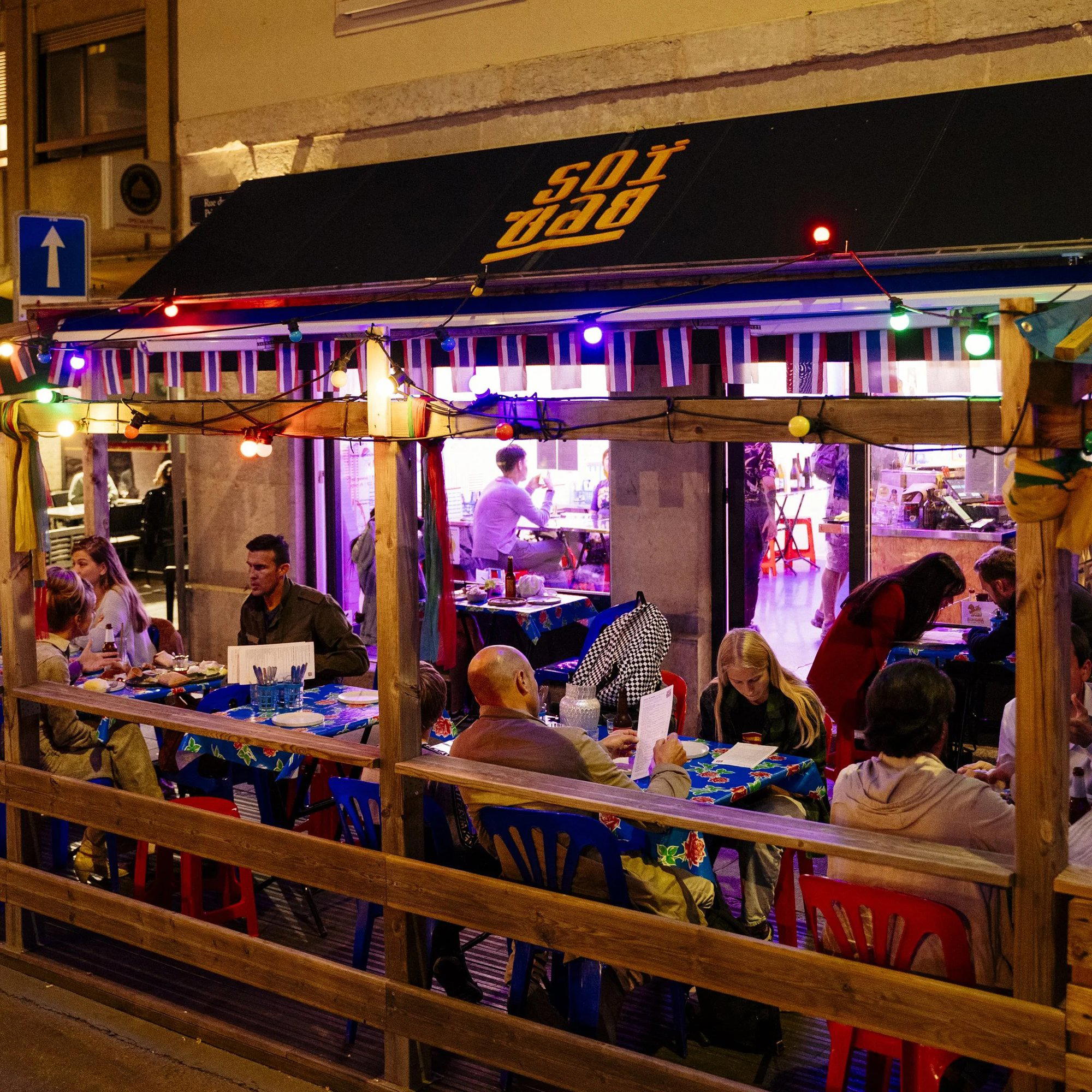
Pâquis and the Other Geneva
Geneva's dining identity is usually read through its lakeside hotel restaurants and the formal French rooms that have defined the city's table culture for decades. That reading is accurate, but partial. North of the Rhône, in the Pâquis neighbourhood bounded by the train station and the lake's right bank, a different kind of restaurant scene has been accumulating — one shaped less by white-tablecloth tradition and more by the district's density of international residents, late-night energy, and a noticeably lower tolerance for ceremony. Rue du Prieuré sits inside that zone. Soï, at number 6, is part of the cohort of addresses that have made Pâquis worth crossing the river for.
Pâquis has historically been Geneva's most porous neighbourhood: a place where the city's international workforce, diplomatic community, and younger residents overlap with a density unusual for a Swiss city of this scale. The restaurant offers that follow from that mix tend toward formats with strong culinary identities and less interest in formal presentation — the opposite of what you find at, say, L'Atelier Robuchon on the left bank, or the grand-hotel dining of Il Lago. The neighbourhood rewards guests who know what they're looking for rather than those expecting a maître d' to explain it to them.
What the Address Signals
In a city where restaurant geography tracks closely with price tier and formality, an address on Rue du Prieuré places a venue in a particular conversation. This is not the Geneva of set-menu luxury or the tasting-counter format that Swiss fine dining has increasingly borrowed from French and Nordic models. The kitchens in this part of the 1st arrondissement tend to be smaller, the formats more direct, and the relationship between kitchen and table noticeably less mediated. For a city where restaurants like Arakel and L'Aparté represent the modern French end of the mid-to-upper tier, Soï occupies a different axis altogether.
That distinction matters for how you plan the evening. Pâquis restaurants at this level generally work leading approached without the expectations you'd carry into a right-bank gastronomic room. The experience is more ambient, more contingent on who's in the room and what the kitchen is running that service, and less constructed around a fixed formal arc. If you want the arc, Geneva's Swiss fine dining scene extends well beyond the city: Hotel de Ville Crissier in Crissier and Schloss Schauenstein in Fürstenau represent the upper register of that tradition. Soï is doing something else.
The Neighbourhood After Dark
Pâquis shifts character after 9pm in ways that distinguish it from most of Geneva's other dining districts. The streets around the train station and along Rue de Berne carry a level of ambient activity that is unusual for Switzerland at that hour, and Rue du Prieuré in particular has the texture of a working restaurant street rather than a dining destination designed for occasion meals. Tables turn, groups arrive in stages, and the cadence of service reflects a room that expects its guests to already know what they want rather than one that builds toward a single climactic dish. That informality is not a liability, it is the point.
For context within Switzerland's broader dining scene, this positioning is worth mapping. The country's highest-recognition restaurants, from Cheval Blanc by Peter Knogl in Basel to Memories in Bad Ragaz and 7132 Silver in Vals, operate in remote or hotel contexts with elaborate formats and long booking leads. Urban neighbourhood restaurants in Geneva's Pâquis and comparable zones in Zurich, where IGNIV Zürich by Andreas Caminada represents the more composed end of sharing-format dining, compete on different terms: immediacy, atmosphere, and the ability to reward repeat visits rather than singular occasions.
Placing Soï in Geneva's Current Scene
Geneva's restaurant scene in the mid-2020s has been recalibrating. The city's traditional strength in French-inflected formal dining remains intact, La Micheline and comparable addresses continue to anchor that tradition, but the more active development has been in mid-register rooms with international culinary reference points and less interest in ceremony. Soï fits within that movement. Its Rue du Prieuré location puts it in direct competition with the neighbourhood's other strong independent tables rather than with the city's gastronomic tier, and that competition has made Pâquis one of Geneva's more interesting places to eat in recent years.
For guests building a broader Swiss itinerary, it is worth noting that Geneva's independent restaurant scene punches below its weight relative to the city's overall dining spend, much of which flows into hotel rooms and expense-account French restaurants. The more engaged eating happens in exactly these kinds of neighbourhood addresses, and in comparable rooms elsewhere in the country: Colonnade in Lucerne, focus ATELIER in Vitznau, and Einstein Gourmet in Sankt Gallen each represent the kind of address that rewards knowing where to look. In Geneva specifically, the equivalent attention belongs to Pâquis.
Internationally, the category Soï occupies, a neighbourhood-rooted restaurant with a distinct culinary personality operating outside the formal tasting-menu tier, is where some of the more interesting dining happens in any city. New York offers a useful comparison point: the gap between an institution like Le Bernardin and the kind of focused, identity-driven room represented by Atomix maps roughly to Geneva's own division between its gastronomic rooms and its Pâquis-district tables, with the latter increasingly commanding serious attention from guests who already know the city well. You can also find a parallel in Switzerland at Da Vittorio in St. Moritz, where a strong culinary identity operates somewhat apart from the surrounding formal resort context.
Planning Your Visit
Soï is at Rue du Prieuré 6 in the 1202 postal district, a short walk from Geneva Cornavin station, which makes it direct to reach from the city centre or directly from the main rail terminus. Pâquis tables at this level of attention fill on weekends, so booking in advance is the practical approach regardless of party size. The neighbourhood itself is walkable in the evening, with enough other bars and late-opening spots nearby that the meal can be one part of a longer Pâquis evening rather than a standalone occasion. For a wider view of Geneva's dining options across all districts and price tiers, the EP Club Geneva restaurants guide covers the full range.
How Soï Geneva compares with similar nearby venues.
| Venue | Cuisine | Price |
|---|---|---|
| L'Arabesque | Lebanese | €€ |
| L'Aparté | Modern French | €€€ |
Continue exploring
More in Geneva
Restaurants in Geneva
Browse all →
Bars in Geneva
Browse all →
Hotels in Geneva
Browse all →

At a Glance
- Trendy
- Lively
- Modern
- Energetic
- Casual Hangout
- Group Dining
- Open Kitchen
- Local Sourcing
Current opening hours
- Monday
- Closed
- Tuesday
- 12–2 PM, 6:30–10 PM
- Wednesday
- 12–2 PM, 6:30–10 PM
- Thursday
- 12–2 PM, 6:30–10 PM
- Friday
- 12–2 PM, 6:30–10 PM
- Saturday
- 6:30–10 PM
- Sunday
- Closed
Hours can change for holidays and private events. Last verified .
Canteen-like with metal tables, matching stools, fun wall murals, neon lights, and an electric, noisy neo-bobo-hipster atmosphere.
Know Before You Go
- Getting there
- Rue du Prieuré 6, 1202 Genève, Switzerland