
Michelin Plate
Our verdict
Snack Baby holds consecutive Michelin Plate recognition (2024 and 2025) while operating at the budget end of Sai Ying Pun's street food circuit.. For a neighbourhood built on working-class Cantonese eating, that combination of institutional recognition and street-level pricing positions it squarely in Hong Kong's most interesting dining tier.

Pearl is the En Primeur Club membership app — saves, bookings, and concierge access live there. Same editors, same standards.
- Address
- G/F, 26A Western St, Sai Ying Pun, Hong Kong
- Phone
- +852 8490 4789
- Hours
- Daily 5:30 PM–2:30 AM
- Directions
- Get directions
The menu
What to order
- Pistachio Crunch
- Sichuan Chili Mango
- Smokey Vanilla
Street Food Credibility in Sai Ying Pun
Western Street in Sai Ying Pun runs through one of Hong Kong Island's older residential grids, where dried seafood wholesalers, wet markets, and ground-floor eateries have operated alongside each other for generations. This stretch of the neighbourhood hasn't been repositioned by hotel lobbies or rooftop bars. The eating here is still largely functional and local, which makes it a more useful map for understanding how Hong Kong's street food tier actually works than the curated blocks of Sheung Wan two minutes east.
Snack Baby sits on the ground floor at 26A Western Street. The format signals are immediate: a single-dollar-sign price range, street food designation, and the kind of walk-in footprint that characterises this tier across the city.
What Michelin Plate Recognition Actually Means at This Level
The Michelin Plate sits below the star tier but above noise. In Hong Kong's guide, it functions as the inspectorate's way of flagging a kitchen that cooks with care and consistency, without necessarily applying the formalism that star assessment demands. For a street food address, it's a meaningful credential: it places Snack Baby in a peer group that includes some of the city's most focused single-discipline operations, where the standards are technical rather than theatrical.
The significance becomes clearer when you consider the wider context. Street food in Hong Kong competes within a city that has internationally recognised fine dining at every price ceiling. Venues like 8 1/2 Otto e Mezzo Bombana and Caprice occupy the three-star bracket, with tasting menus and wine programs that price against global peers. Snack Baby operates at the opposite end of that spectrum, but the Michelin Plate bridges the two worlds in a specific way: it is the guide's acknowledgment that execution standards matter regardless of format. That framing matters for visitors deciding how to allocate meals across a trip.
For regional comparison, the same dynamic appears across Southeast Asia's Michelin-recognised street food circuit. Operations like Hill Street Tai Hwa Pork Noodle and A Noodle Story in Singapore carry star or Bib Gourmand recognition while maintaining street-level pricing and walk-in formats. The Michelin organisation has, over the past decade, made a sustained editorial commitment to recognising this tier across Asian cities. Snack Baby's consecutive Plate awards fit that pattern.
The Occasion Argument for a Street Food Address
The editorial angle here is worth addressing directly, because it runs counter to the way most people think about occasion dining. Milestone meals in Hong Kong tend to default upward: a booking at Ta Vie, a table at Feuille, a reservation for the tasting menu at a hotel dining room. These are defensible choices, but they operate on a logic of formality and price as proxies for significance.
The counter-argument is that street food in Hong Kong carries its own form of occasion weight, particularly for visitors experiencing the city's food culture for the first time or for residents marking a return to a neighbourhood they grew up in. A Michelin-recognised street food address in a working residential district offers something a hotel dining room cannot: the actual texture of how the city eats. There are meals people remember because of the room and the wine list, and there are meals people remember because the context was specific and unrepeatable. Sai Ying Pun on a weekday afternoon, ground floor, street-level pricing, and a bowl that earned institutional recognition two years running, is a particular kind of occasion.
Comparable addresses in other cities have built durable reputations on exactly this logic. 545 Whampoa Prawn Noodles in Singapore and 888 Hokkien Mee in George Town draw visitors who have specifically structured their trip around eating at recognised street operations. The meal becomes the occasion precisely because of the format's directness.
Neighbourhood Peers and Where Snack Baby Fits
Sai Ying Pun and the broader western district of Hong Kong Island have developed a secondary dining circuit over the past decade, partly driven by residential spillover from Sheung Wan and Kennedy Town. The neighbourhood now supports a range of formats across price tiers. Banana Boy and Fat Boy operate nearby, as does Beanmountain, each occupying a different position in the area's expanding food map. Bánh Mì Nếm in Wan Chai represents the same street food value tier further east. Across the harbour, Cheung Hing Kee in Tsim Sha Tsui anchors a parallel conversation about Cantonese street eating at institutional quality.
That pairing is less common than it sounds. Many addresses in the street food tier earn a single year of notice and lose it; the 2024 and 2025 Plate awards suggest a kitchen operating with enough consistency to hold the standard across inspection cycles.
The George Town parallels are instructive here too. Ah Boy Koay Teow Th'ng and A Pong Mae Sunee in Phuket both demonstrate that street food operations with guide recognition tend to develop a loyal base that is harder to move than the novelty-driven traffic that cycles through trendier addresses. 91 Fried Kway Teow Mee and Adam Road Noo Cheng Big Prawn Noodle in Singapore follow the same pattern: regular queues drawn by consistency rather than marketing.
Planning a Visit
Sai Ying Pun is accessible from Central by MTR (Sai Ying Pun station on the Island Line) or by tram along the north shore. Western Street is a short walk from the station. At this price tier and format, the practical calculus is simple: arrive early or during off-peak hours to avoid waits, particularly given the likely limited seating of a ground-floor street food operation. Michelin Plate recognition in a walkable residential neighbourhood tends to accelerate local word-of-mouth, which means lunchtime and early evening trade at recognised addresses can build quickly.
No reservation infrastructure is listed, which is standard for this format. The single-dollar-sign price range means a meal will fall well inside any reasonable daily food budget, making it an easy addition to a longer day of eating across the district rather than a standalone commitment.
Quick reference: G/F, 26A Western St, Sai Ying Pun, Hong Kong. Street food, $ pricing. Michelin Plate 2024 and 2025. Walk-in format, no reservation data available.
Further Reading
For a broader view of where Snack Baby sits within Hong Kong's full dining spectrum, see our full Hong Kong restaurants guide. For hotels, bars, wineries, and experiences in the city, see our Hong Kong hotels guide, bars guide, wineries guide, and experiences guide.
Frequently asked questions
What price level is Snack Baby?
Pricing at Snack Baby is listed as $.
Does Snack Baby have a Michelin star or similar recognition?
Snack Baby has received recognition including: Michelin Plate (2025); Michelin Plate (2024).
What do people recommend at Snack Baby?
At the street food price tier, that consistency is the signal worth following.
Where exactly is Snack Baby?
Snack Baby is located at G/F, 26A Western St, Sai Ying Pun, Hong Kong, Hong Kong.
Do I need a reservation for Snack Baby?
No reservation method is listed, which aligns with the walk-in format standard at Hong Kong's street food addresses. Western Street in Sai Ying Pun is a residential strip rather than a tourist corridor, so timing your visit outside peak lunch and dinner windows is the practical move.
What do critics highlight about Snack Baby?
Michelin inspectors awarded the Plate designation in both 2024 and 2025, the guide's marker for a kitchen that cooks with care and consistency below the star tier. Two consecutive cycles of recognition at a single-dollar price point in Sai Ying Pun is the clearest editorial signal available.
Comparable options at a glance, pulled from our tracked venues.
| Venue | Cuisine | Price | Awards | Notes |
|---|---|---|---|---|
| Snack BabyThis venue — the venue you are viewing | Vegan Gelato & Drinks | $10–20 | Michelin Plate | Not listed |
| 8 1/2 Otto e Mezzo Bombana (Hong Kong) | 3 Michelin-Star Italian Fine Dining | $200–300 | 3 Michelin Stars · World's 50 Best #94 | Italian |
| Ta Vie | Modern French-Japanese Fine Dining | $300–500 | 3 Michelin Stars · World's 50 Best #68 | Japanese - French, Innovative |
| Caprice | Contemporary French Fine Dining | $200–300 | 3 Michelin Stars · World's 50 Best #35 | French, French Contemporary |
| Feuille | Modern Vegetable-Forward French | $200–300 | 1 Michelin Star · World's 50 Best #93 | French Contemporary |
| Neighborhood | Modern French with Asian Influences | $50–100 | 1 Michelin Star · World's 50 Best #24 | International, European Contemporary |
Recognition history
Dated appearances from independent guides and award organizations, with the underlying list record or original source where available.
Michelin Plate
Michelin
Full recognition history (2 entries)
Michelin Plate
Michelin
Continue exploring
More in Hong Kong
Restaurants in Hong Kong
Browse all →
Bars in Hong Kong
Browse all →
Hotels in Hong Kong
Browse all →
Wineries in Hong Kong
Browse all →
Details
- Retro
- Cozy
- Trendy
- Casual Hangout
- Open Kitchen
- Craft Cocktails
- Street Scene
- A La Carte
- Cocktails
- Vegan Options
- Vegetarian Friendly
- Gluten Free Options
Current opening hours
- Monday
- 5:30 PM–2:30 AM
- Tuesday
- 5:30 PM–2:30 AM
- Wednesday
- 5:30 PM–2:30 AM
- Thursday
- 5:30 PM–2:30 AM
- Friday
- 5:30 PM–2:30 AM
- Saturday
- 5:30 PM–2:30 AM
- Sunday
- 5:30 PM–2:30 AM
Hours can change for holidays and private events. Last verified .
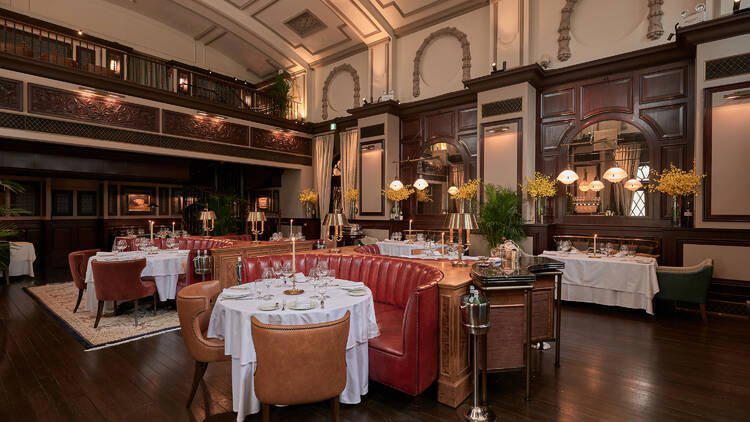
Retro mid-century Milan-inspired interior with cozy indoor and outdoor seating, busy yet relaxed atmosphere.