Our verdict
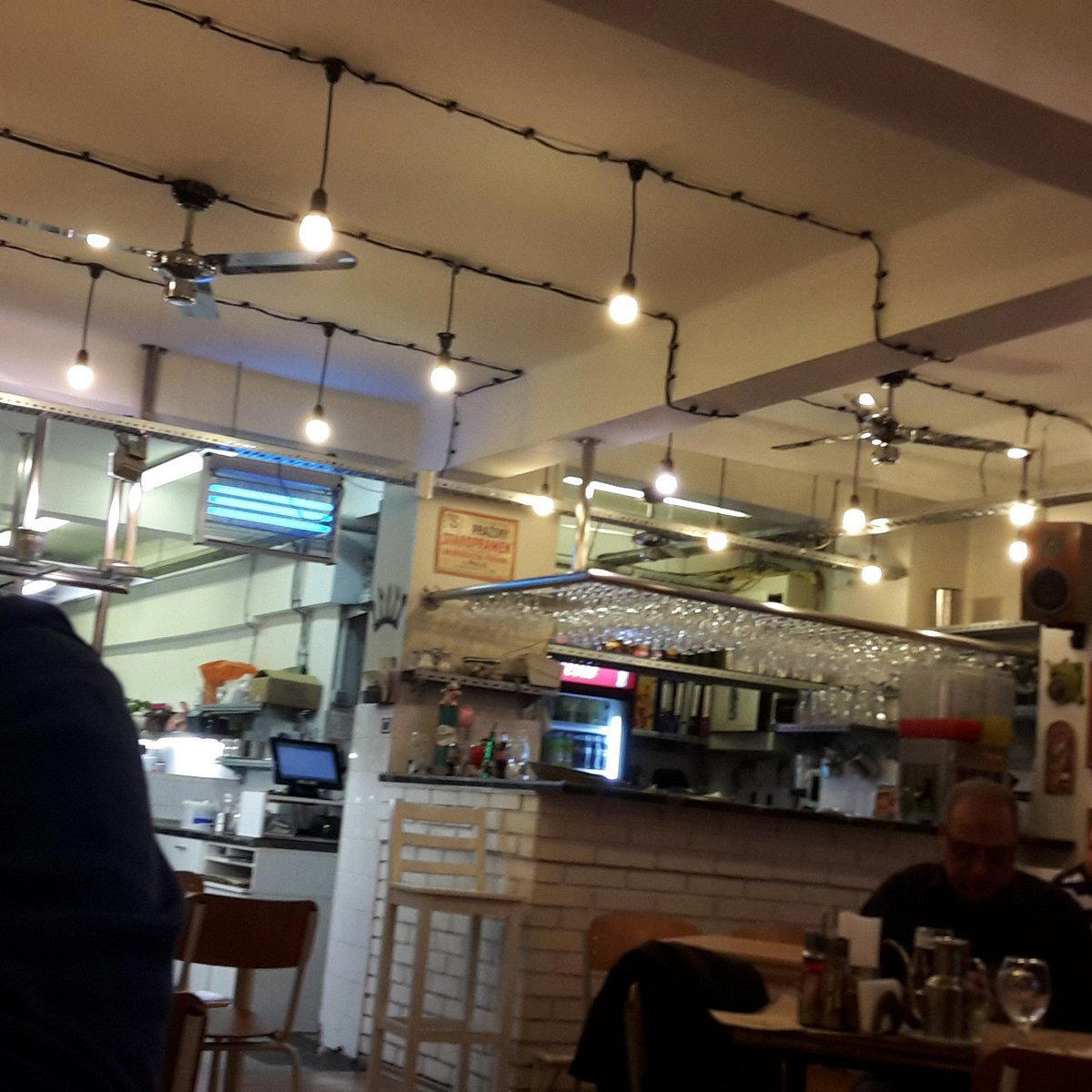
SkaraBar sits on Dimitar Grekov Street in Sofia's Zaimov quarter, a neighbourhood where the city's grilling culture finds one of its more grounded expressions. Positioned in a part of town that draws locals rather than tourists, it represents the kind of informal skara tradition that Sofia's dining scene has built its casual register around, distinct from the modern Bulgarian restaurants competing for international attention.

Pearl is the En Primeur Club membership app, where members save venues, book tables and use the concierge.
Zaimov and the Grammar of the Sofia Grill
Sofia's dining identity has long operated on two tracks running in parallel. One track carries the modernising ambition: contemporary Bulgarian kitchens reinterpreting heritage ingredients for audiences familiar with European fine dining, the kind of work visible at places like 33 Gastronauts or Art Club Museum. The other track is older, less photographed, and arguably more representative of how Sofians actually eat: the skara tradition, built around live fire, minimal intervention, and the kind of neighbourhood regularity that doesn't require a reservation platform or a tasting menu to sustain itself. SkaraBar on ul. Dimitar Grekov 2 belongs to the second track.
The Zaimov district, anchored by Zaimov Park to the north of the city centre, occupies a middle register in Sofia's geography. It is residential without being peripheral, close enough to the inner ring to draw visitors who know the city, far enough from the tourist axis around Vitosha Boulevard to remain functionally local. Restaurants that work in this part of Sofia are generally not positioning themselves for passing trade. They build on repeat custom, neighbourhood familiarity, and the kind of quiet word-of-mouth that doesn't translate into international press coverage but sustains a full room on a Tuesday evening.
What the Skara Format Means in This Context
Bulgarian grilling culture, the skara, carries specific expectations that distinguish it from generic barbecue. The format centres on cuts cooked directly over open coals or wood, kebapche, kyufte, pork neck, chicken wings, served with minimal accompaniment: a chopped salad, bread, possibly a cold beer or a glass of local rakia. Seasoning is direct, smoke does the complexity work, and the format is designed for speed and informality rather than the extended arc of a European restaurant meal. Across Sofia, this tradition persists alongside the newer wave of concept-driven openings, and the two categories increasingly occupy separate consumer moments rather than competing for the same table.
The Zaimov quarter has historically been a zone where this kind of direct cooking holds its ground against the drift toward more elaborate formats. Families, construction workers, office groups from the surrounding residential blocks: the skara restaurant in this part of the city serves a cross-section that few of the destination restaurants in the centre can claim. That breadth is itself a marker of category authenticity. When Boom! Burgers and similar concept formats have carved out younger-demographic business in other parts of the city, the neighbourhood grill has retained a demographic span that the trendier formats struggle to match.
Within Sofia's grilling category, the competitive field splits roughly between the large suburban operations with outdoor terraces and car-park capacity, and the smaller neighbourhood formats built into ground-floor spaces on residential streets. SkaraBar's address on Dimitar Grekov places it firmly in the latter group. This is not a destination with a beer garden visible from a main arterial road; it is the kind of place you find because someone local told you about it, or because you live in the area and it is already part of your mental map.
Compared to the modernising end of Sofia's restaurant scene, which increasingly draws reference points from Plovdiv's wine-adjacent dining culture (see Paşa Restaurant in Пловдив) or the estate restaurants operating in Bulgaria's wine country such as Aestivum in Melnik and Zornitza Family Estate, SkaraBar operates in a register that makes no reference to those conversations. The skara format predates them and will probably outlast whatever comes next in the city's fine-casual cycle. Internationally, the distinction maps loosely onto the difference between a destination tasting counter like Lazy Bear in San Francisco and the neighbourhood diner two blocks away that locals would never trade for it.
The Neighbourhood and How to Use It
Arriving at SkaraBar from the city centre, the walk through Zaimov Park is itself a calibration. The park is a working-class leisure zone rather than a decorative green space: older men play chess, children cycle, the weekend afternoon has a specific unhurried tempo. By the time you reach Dimitar Grekov, the register is already set. This is not a part of Sofia where you dress up, manage a reservation made three weeks in advance, or calculate a wine pairing. The meal is faster and more direct than that.
For visitors using Sofia as a base for broader Bulgarian exploration, Zaimov makes a reasonable point of re-entry after longer excursions. The contrast between a full day at a property like Cinecittà in Boyana or Koriata Restaurant in Kazichene and an evening on Dimitar Grekov with grilled meat and cold beer is a useful recalibration, a reminder that the city's gastronomic depth does not run exclusively through its more ambitious kitchens. Sofia's full dining picture also includes places like Chef's and Bamboo Flavor Factory, which occupy different format niches, and Secret by Chef Petrov in София and Bistro 55 in Zornitsa for those tracking the country's more formal dining output. The full Sofia restaurants guide maps the spread across categories. For reference across international benchmarks, the gap between a neighbourhood grill and a technically ambitious operation like Le Bernardin in New York City or Emeril's in New Orleans is self-evident, and not a comparison either side would seek.
Practical details at SkaraBar are lean by design. Phone and website information is not publicly listed, consistent with the walk-in model that the skara format generally operates on. Payment is typically cash-first at this tier in Sofia, though card acceptance has spread across the city's informal dining sector in recent years. The Zaimov neighbourhood is served by tram along the surrounding ring roads, and the park itself is a navigational landmark. Evening service in this category generally runs early by European standards, with peak seating between 7pm and 9pm and a correspondingly brisk turnaround. For more detail on dining hours and neighbourhood transport patterns, the EP Club Sofia city guide covers the practical layer.
For those tracking Bulgaria's dining development outward from Sofia, Dieci Boutique Restaurant in Devino and Sushi Box Vinitsa in Varna illustrate how different the national picture looks once you move beyond the capital's grilling tradition into coastal and wine-country formats.
Frequently asked questions
Is SkaraBar suitable for children?
SkaraBar sits in the Zaimov district, a neighbourhood with an everyday, unpretentious character rather than a late-night bar atmosphere, which makes it a reasonable option for families. The skara format, centred on grilled meats served directly, is food children typically accept without difficulty.
What's the vibe at SkaraBar?
The address on ul. Dimitar Grekov 2 places SkaraBar within Zaimov, one of Sofia's working-class residential zones rather than a tourist or gentrification corridor. Expect a grill-focused local operation: functional, direct, and oriented toward regulars rather than first-time visitors. There is no recorded awards profile or design-led concept to suggest otherwise.
How does SkaraBar's Zaimov location compare to Sofia's more central grill restaurants?
SkaraBar's address on ul. Dimitar Grekov 2 places it inside the Zaimov residential zone, north of Sofia's central axis and away from the tourist-facing dining concentration around Vitosha Boulevard and the city centre. This positions it as a neighbourhood-anchored operation serving a local catchment rather than a destination address, which typically shapes both pricing and atmosphere in Sofia's skara category. Zaimov Park borders the area, making the approach on foot a different register from arriving at a central Sofia restaurant.
What do regulars order at SkaraBar?
The skara format that defines venues of this type in Sofia centres on direct-heat grilled cuts, typically kebapche, kufte, and pork or chicken portions cooked over open flame. SkaraBar's name signals that the menu follows this grammar rather than deviating from it.
What part of town is SkaraBar in?
SkaraBar is located at Zaimov, ul. "Dimitar Grekov" 2, 1527 Sofia, Bulgaria, Sofia.
Is SkaraBar reservation-only?
Neighbourhood skara operations in Sofia's residential districts typically accommodate walk-ins by format, but this can change without direct contact. Arriving during off-peak hours is a reasonable hedge until booking details are clarified. Check the venue's official channels for the latest details.
What do critics highlight about SkaraBar?
No formal critical coverage, press recognition, or award record is documented for SkaraBar in the available record. Within Sofia's grill category, venues operating in neighbourhood contexts like Zaimov tend to attract attention for consistency and locality rather than innovation, but no named source has been recorded making that case specifically about SkaraBar.
The Minimal Set
Comparable venues nearby, for context on price, style, and recognition.
| Venue | Cuisine | Price | Awards | Notes |
|---|---|---|---|---|
| SkaraBarThis venue (the venue you are viewing) | Traditional Bulgarian BBQ | $10–20 | Not listed | Not listed |
| Корейски ресторант Юн | Authentic Korean BBQ | $20–30 | Not listed | Izgrev, Authentic Korean BBQ |
| The Happy Pig - Food & Cocktails | Modern Bulgarian-Asian Fusion | $10–20 | Not listed | Oborishte, Modern Bulgarian-Asian Fusion |
| 33 Gastronauts | Modern Mediterranean Fusion | Not listed | Not listed | Oborishte, Modern Mediterranean Fusion |
| Ahora by Sevda Dimitrova | Bulgarian Modern | Not listed | La Liste Top Restaurants · Wine Spectator Best of Award of Excellence | Dining |
| Shades of Red Restaurant | International with Royal Bulgarian Specialties | Not listed | Not listed | Sofia Center, International with Royal Bulgarian Specialties |
Continue exploring
More in Sofia
Restaurants in Sofia
All restaurants in Sofia →
Bars in Sofia
All bars in Sofia →
Hotels in Sofia
All hotels in Sofia →
Wineries in Sofia
All wineries in Sofia →
Details
- Lively
- Cozy
- Trendy
- Group Dining
- Casual Hangout
- Open Kitchen
- Terrace
- Extensive Wine List
- Local Sourcing
- Garden
- Street Scene
- A La Carte
- Small Plates
- Local Wine
- Rakia
- Vegetarian Friendly
Current opening hours
- Monday
- 12–10 PM
- Tuesday
- 12–10 PM
- Wednesday
- 12–10 PM
- Thursday
- 12–10 PM
- Friday
- 12–10 PM
- Saturday
- 12–10 PM
- Sunday
- 12–10 PM
Hours can change for holidays and private events. Hours as of .
Relaxed and inviting park-side atmosphere with open kitchen and lively greenery.