Shun Lee West

Shun Lee West has anchored the Upper West Side's Chinese dining scene since the 1970s, operating in a tier well above Chinatown canteens and below the city's tasting-menu circuit. Ranked among Opinionated About Dining's top North American restaurants in 2024, it draws a neighbourhood crowd that expects serious technique alongside familiar formats. The address on West 65th puts it steps from Lincoln Center.
Pearl is the En Primeur Club membership app — saves, bookings, and concierge access live there. Same editors, same standards.
- Address
- 43 W 65th St, New York, NY 10023
- Phone
- (212) 595-8895
- Website
- shunleeny.com
- Directions
- Get directions
 Saves & bookings on Pearl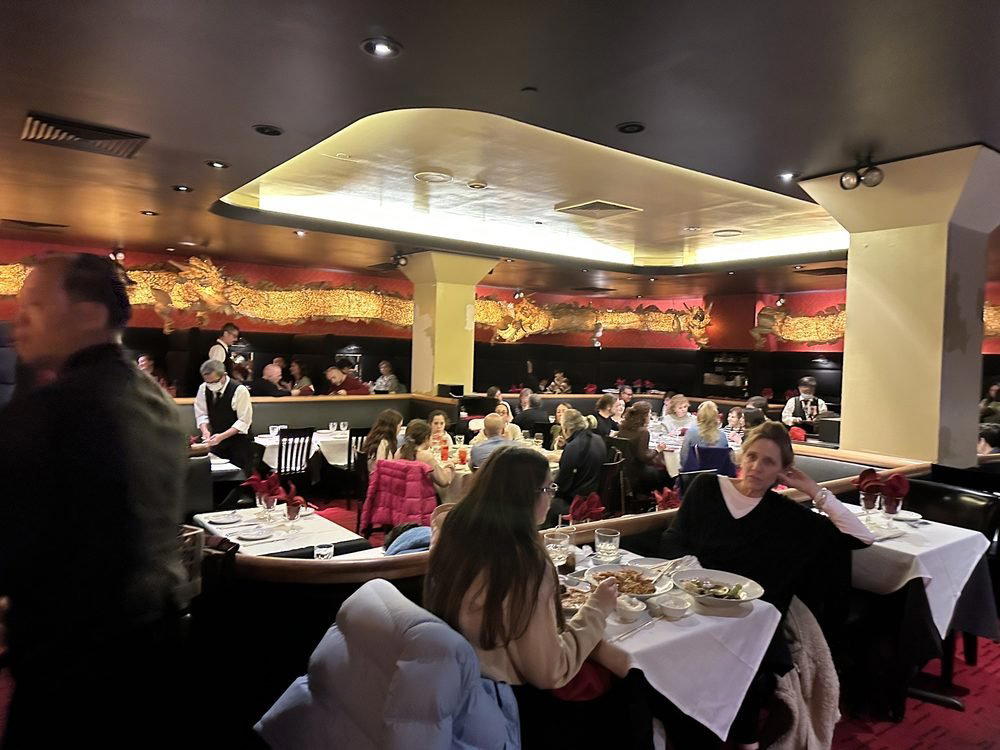
A Fixture on the Upper West Side Since the Pre-Lincoln Center Era
Chinese fine dining in New York has always occupied an awkward position in the city's restaurant hierarchy. Chinatown's downtown clusters handle volume and regional specificity; Midtown has courted the expense-account crowd; but the Upper West Side, with its resident intellectuals, Lincoln Center regulars, and a demographic that expects white tablecloths without irony, found its Chinese anchor in Shun Lee West. The restaurant has operated on West 65th Street for decades, long before the neighbourhood's current dining density, and its staying power across multiple decades places it in a peer group of New York institutions. Under Michael Tong, it has maintained a position in that small tier of Chinese restaurants where the dining room, the wine program, and the service format are calibrated to match the expectations of guests who also eat at The French Laundry or Alinea.
In 2024, Opinionated About Dining ranked Shun Lee West at number 590 among the leading restaurants in North America, a recognition that places it in the upper tier of Chinese restaurants tracked by that platform and confirms it is operating above the casual-dining bracket. That ranking matters more as a signal about category than as a precise score: OAD's methodology draws on frequent-diner votes, and a Chinese restaurant on the Upper West Side appearing in that list says something about the seriousness of its kitchen and the loyalty of its following.
Noodle Traditions and the Broader Architecture of the Menu
Chinese noodle work represents among the more technically demanding corners of the country's cuisine, and the divide between hand-pulled, knife-cut, and pressed-through formats is not merely textural but regional. Hand-pulled lamian, associated with northern and northwestern China, requires sustained dough conditioning and a specific pulling rhythm that produces the springy, uneven cross-sections that machine-cut pasta cannot replicate. Knife-cut biang biang-style noodles, flatter and wider, absorb braising liquids differently. Rice noodles from the south carry their own standards. A Chinese restaurant in the fine-dining register that takes noodle work seriously must navigate these distinctions rather than collapsing them into a single house style.
Shun Lee West's menu has historically spanned a range of Chinese regional influences rather than committing to a single province, which was the dominant model for Chinese fine dining in New York from the 1970s through the 1990s. That breadth, when handled well, requires a kitchen that can hold competency across multiple noodle and sauce traditions simultaneously. For comparison, newer Chinese fine-dining operations like Mister Jiu's in San Francisco have approached this by anchoring Cantonese technique while integrating California ingredients; Restaurant Tim Raue in Berlin takes Chinese flavour architecture and reframes it entirely within a European fine-dining structure. The restaurant occupies a different position: it holds to a format closer to the original New York Chinese dining template, which is neither fusion nor strict regionalism but a curated synthesis built for a specific city audience.
Other New York options across the Chinese dining spectrum include the dim sum-led rooms at Asian Jewel Seafood Restaurant, the Cantonese roast work at Big Wong, Sichuan-focused cooking at Chongqing Lao Zao, and the neighbourhood positioning of Blue Willow and Alley 41. None of those operate at the same price tier or service register as the restaurant, which positions it as the Upper West Side's primary Chinese option when the occasion calls for a formal dining room rather than a canteen or fast-casual format.
The Competitive Set and What the Neighbourhood Expects
The Upper West Side is not where New York's most adventurous restaurant concepts land first. The neighbourhood's dining character has been shaped by proximity to Lincoln Center, Columbia University further north, and a residential density that rewards consistency over novelty. Restaurants in this context earn longevity not through trend-chasing but through sustained execution across a regular crowd. The restaurant fits that dynamic precisely.
Its competitive set, when viewed by cuisine type alone, would include various midtown Chinese rooms and the more recent wave of downtown restaurants focused on specific regional Chinese cooking. But those comparisons miss the point. The real competitive frame for the restaurant is the broader category of Lincoln Center-adjacent dining institutions: restaurants where timing, tableside service, and wine lists matter as much as the food on the plate. In that frame, it sits alongside French and American contemporaries that have also survived by serving a repeat-visitor base with defined expectations rather than chasing the press cycle.
New York's Chinese fine-dining tier never matched the depth of its Japanese counterpart in critical recognition, and that asymmetry has consequences for restaurants like Shun Lee West. While Masa draws direct comparison to Lazy Bear, Providence, or Emeril's as a destination-dining experience, Chinese restaurants operating at a formal register have generally been evaluated against their own category rather than against the city's broader fine-dining field. The OAD ranking signals that at least some of that critical distance is narrowing.
Planning Your Visit
The restaurant is located at 43 West 65th Street, placing it one block from Lincoln Center, which has direct implications for timing. Reservations are recommended, particularly for pre-theatre slots. Dress: Smart casual is the neighbourhood standard. Budget: Expect about $80 per person before drinks.
At-a-Glance Comparison
Comparable venues nearby, for context on price, style, and recognition.
| Venue | Cuisine | Price | Notes |
|---|---|---|---|
| Shun Lee WestThis venue — the venue you are viewing | Upscale Regional Chinese | $$$$ | Not listed |
| Hutong New York | Modern Northern Chinese | $$$$ | East Midtown-Turtle Bay |
| Decoy | Modern Peking Duck Chinese | $$$$ | West Village |
| Philippe Downtown | Upscale Beijing Chinese | $$$$ | Chelsea-Hudson Yards |
| Mr. Chow | Authentic Beijing Chinese | $$$$ | East Midtown-Turtle Bay |
| Antidote | Modern Sichuan Chinese | $$$ | Williamsburg |
Recognition history
Dated appearances from independent guides and award organizations, with the underlying list record or original source where available.
Opinionated About Dining Top Restaurants in North America Ranked #590
Opinionated About Dining
Continue exploring
More in New York City
More from Chef Michael Tong
Browse all →
Restaurants in New York City
Browse all →
Bars in New York City
Browse all →
Hotels in New York City
Browse all →
Wineries in New York City
Browse all →


At a Glance
- Elegant
- Sophisticated
- Classic
- Special Occasion
- Business Dinner
- Date Night
- Historic Building
- Extensive Wine List
Current opening hours
- Monday
- 12–10 PM
- Tuesday
- 12–10 PM
- Wednesday
- 12–10 PM
- Thursday
- 12–10 PM
- Friday
- 12–10 PM
- Saturday
- 12–10 PM
- Sunday
- 12–10 PM
Hours can change for holidays and private events. Last verified .
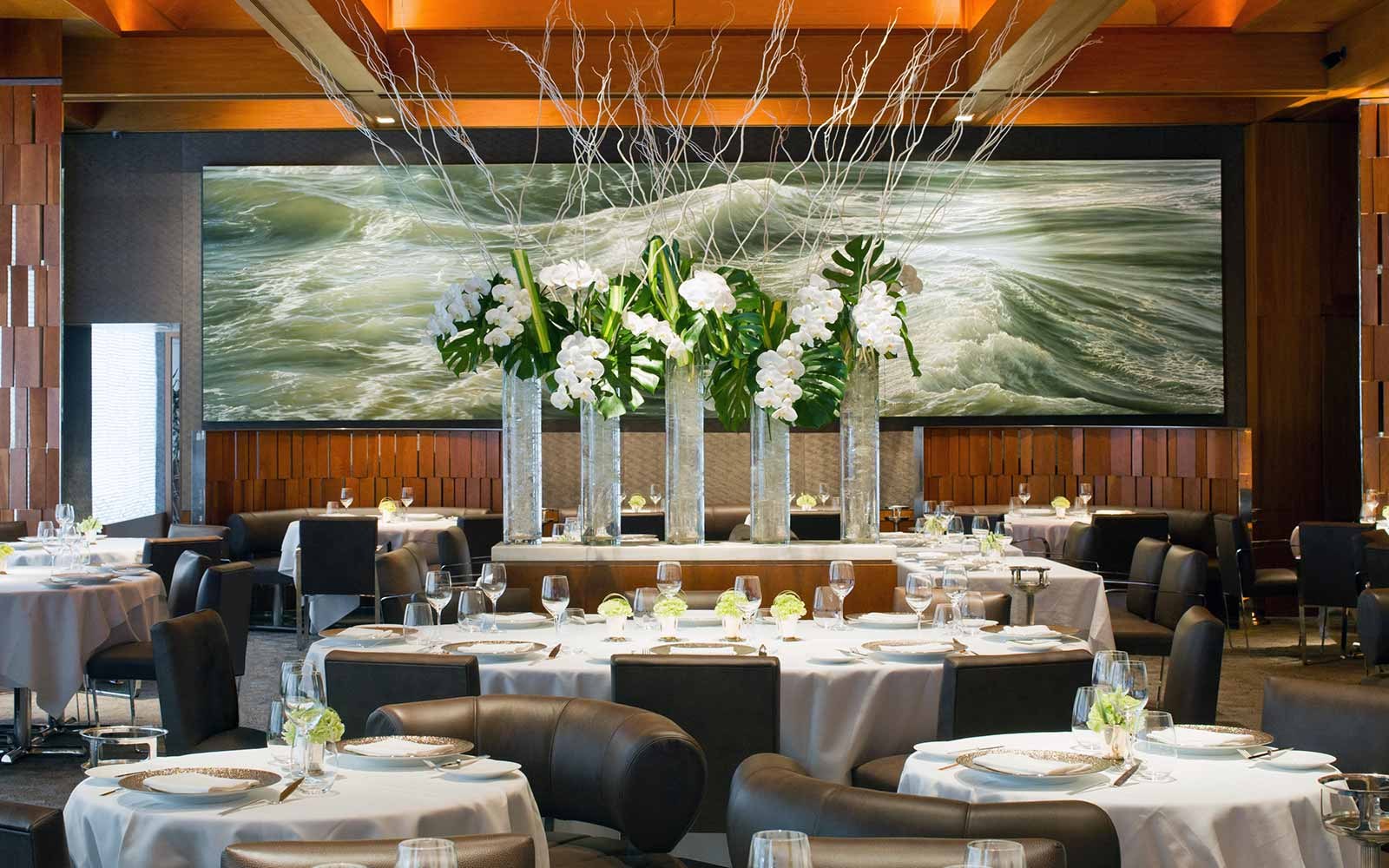
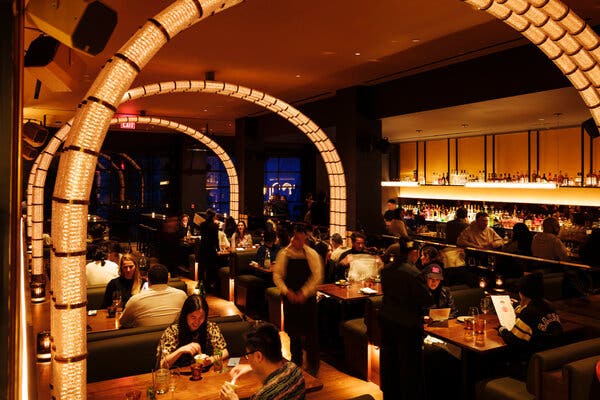
Dramatic Asian chic with shiny black lacquer, dragons slithering near the ceiling, hanging Zodiac symbols, and grand authority.