Decoy
A Pearl-recommended Chinese duck specialist on Hudson Street in the West Village, Decoy draws on a kitchen team with credentials across Portland's acclaimed Pok Pok lineage. The focus is duck prepared with precision, set inside a downtown New York room that rewards repeat visits.
Pearl is the En Primeur Club membership app — saves, bookings, and concierge access live there. Same editors, same standards.
- Address
- 529 Hudson St, New York, NY 10014
- Phone
- (212) 691-9700
- Website
- decoynyc.com
- Directions
- Get directions
 Saves & bookings on Pearl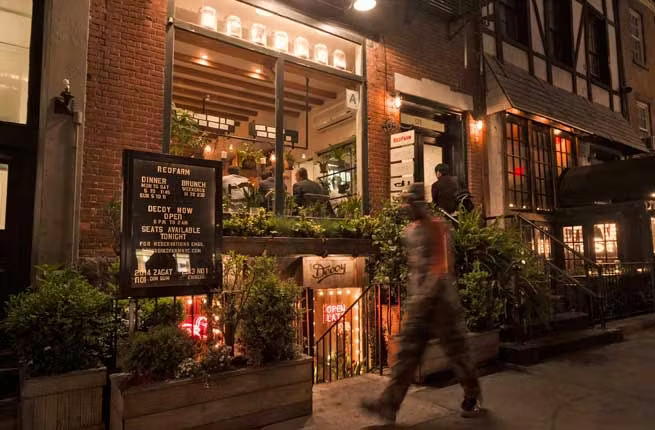
Hudson Street and the Case for Serious Duck
West Village dining operates in a competitive register. The stretch of Hudson Street running through the neighbourhood sits within walking distance of some of New York's most-referenced rooms, and the blocks around it hold a higher concentration of award-tracked restaurants per square metre than most American cities manage in entire districts.
The neighbourhood itself shapes expectations. West Village diners tend to be regulars rather than tourists, the room turnover is lower than Midtown, and the culinary references are drawn from across the globe. A focused duck concept fits that character better than it would on a different street, this is not a food-hall pitch or a trend-chasing menu, but a specific argument about one ingredient handled with depth.
What Focused Protein Cookery Looks Like at This Level
The editorial angle worth setting before any venue-specific detail: New York's Chinese restaurant conversation has historically centred on Flushing and the outer boroughs, where regional specificity runs deep. Manhattan's contribution to that conversation has been patchier, often tilting toward either high-concept fusion or tourist-facing approximation. The restaurants that have carved lasting positions in the Manhattan Chinese category tend to do so by anchoring to a single tradition and executing it with the discipline usually associated with the city's French or Japanese fine dining tier. Think of the way Masa treats its subject with absolute material focus, or how Atomix positions Korean cooking inside an architectural framework that demands the same critical attention as any tasting-menu room on the upper east side. Decoy's proposition follows the same logic at a different price point and with a different protein at its centre.
Duck is one of the more technically demanding birds in a professional kitchen. Unlike the forgiving fat layers of heritage pork or the quick thermal responses of fish, duck requires a command of rendering, resting, and timing that separates casual from considered execution. In Chinese culinary tradition specifically, roast duck carries a lineage that traces back through centuries of court cookery, and the regional variations, Peking versus Cantonese roast versus tea-smoked Sichuan preparations, each demand distinct technique. The kitchen team at Decoy, which includes Akkapong Ninsom, Eric Nelson, and Matt Vicedomini, brings credentials with documented crossover between American regional cooking and Asian protein-forward traditions, most visibly through the Pok Pok network, which built its reputation on exactly this kind of methodological seriousness applied to Southeast and East Asian cookery.
Where Decoy Sits in the New York Dining Map
New York's upper-tier restaurant recognition clusters heavily around a specific profile: French-lineage tasting menus, high-end Japanese omakase, and contemporary American formats with fine-dining price points. Le Bernardin, Eleven Madison Park, and Per Se each hold three Michelin stars and sit in the $$$$ bracket, where the competitive set is small and the format is largely fixed.
Pearl functions as a curation layer for restaurants below Michelin's star threshold but above the level where a food-literate traveller would simply search Yelp. Being included in that cohort places Decoy in a peer group that rewards specific expertise over volume or spectacle.
| Venue | Cuisine Focus | Recognition | Price Signal | Neighbourhood |
|---|---|---|---|---|
| Decoy | Chinese Duck | Not published | West Village | |
| Atomix | Modern Korean | Michelin 2 Stars | $$$$ | Flatiron |
| Le Bernardin | French Seafood | Michelin 3 Stars | $$$$ | Midtown |
| Eleven Madison Park | French / Vegan | Michelin 3 Stars | $$$$ | Flatiron |
| Per Se | French Contemporary | Michelin 3 Stars | $$$$ | Columbus Circle |
The Noodle and Starch Question in Duck-Forward Menus
Any serious duck menu in the Chinese tradition eventually confronts the same structural question: what carries the rendered fat and the sauce? In Beijing-style service, it is the thin pancake and scallion. In broader Cantonese contexts, noodle preparations absorb braising liquids with more textural variation. Hand-pulled and knife-cut noodle formats, which are among the more technique-intensive preparations in Chinese cookery, offer a medium that interacts with duck differently than pasta or rice, the uneven surface of a knife-cut noodle catches liquid in a way that a machine-extruded strand does not. Decoy's cuisine suggests that starch and noodle support likely matter, alongside duck itself. It is a combination that rewards kitchens willing to maintain two demanding skill sets simultaneously rather than simplifying the supporting cast.
For comparison, particularly-discussed regional Chinese rooms in cities like San Francisco, Los Angeles, and across the American west have built sustained reputations on exactly this pairing. The approachability of the format, shared plates, protein-and-starch structure, also makes it more accessible than the omakase model while still leaving room for technical depth.
Planning Your Visit
Decoy is located at 529 Hudson Street in the West Village. Reservations are essential, and the restaurant runs Monday to Wednesday and Sunday from 5 to 10 PM, with Thursday to Saturday service from 5 PM to midnight.
For readers planning wider US itineraries, related reference points include The French Laundry in Napa, Single Thread Farm in Healdsburg, Providence in Los Angeles, and Emeril's in New Orleans. For international framing of where serious Chinese and Asian protein cooking sits globally, 8½ Otto e Mezzo Bombana in Hong Kong and Alain Ducasse at Louis XV in Monte Carlo offer reference points at the upper end of the global dining conversation.
City Peers
Comparable venues nearby, for context on price, style, and recognition.
| Venue | Cuisine | Price | Notes |
|---|---|---|---|
| DecoyThis venue — the venue you are viewing | Modern Peking Duck Chinese | $$$$ | Not listed |
| Buddakan | Pan-Asian Fusion | $$$$ | Chelsea-Hudson Yards |
| Peking Duck House | Traditional Peking Duck House | $$$ | Chinatown-Two Bridges |
| Mission Chinese Food | Sichuan Fusion Chinese | $$ | Chinatown-Two Bridges |
| Nin Hao | Modern Fujianese | $$ | Prospect Heights |
| The Nines | French Supper Club | $$$$ | Greenwich Village |
Continue exploring
More in New York City
Restaurants in New York City
Browse all →
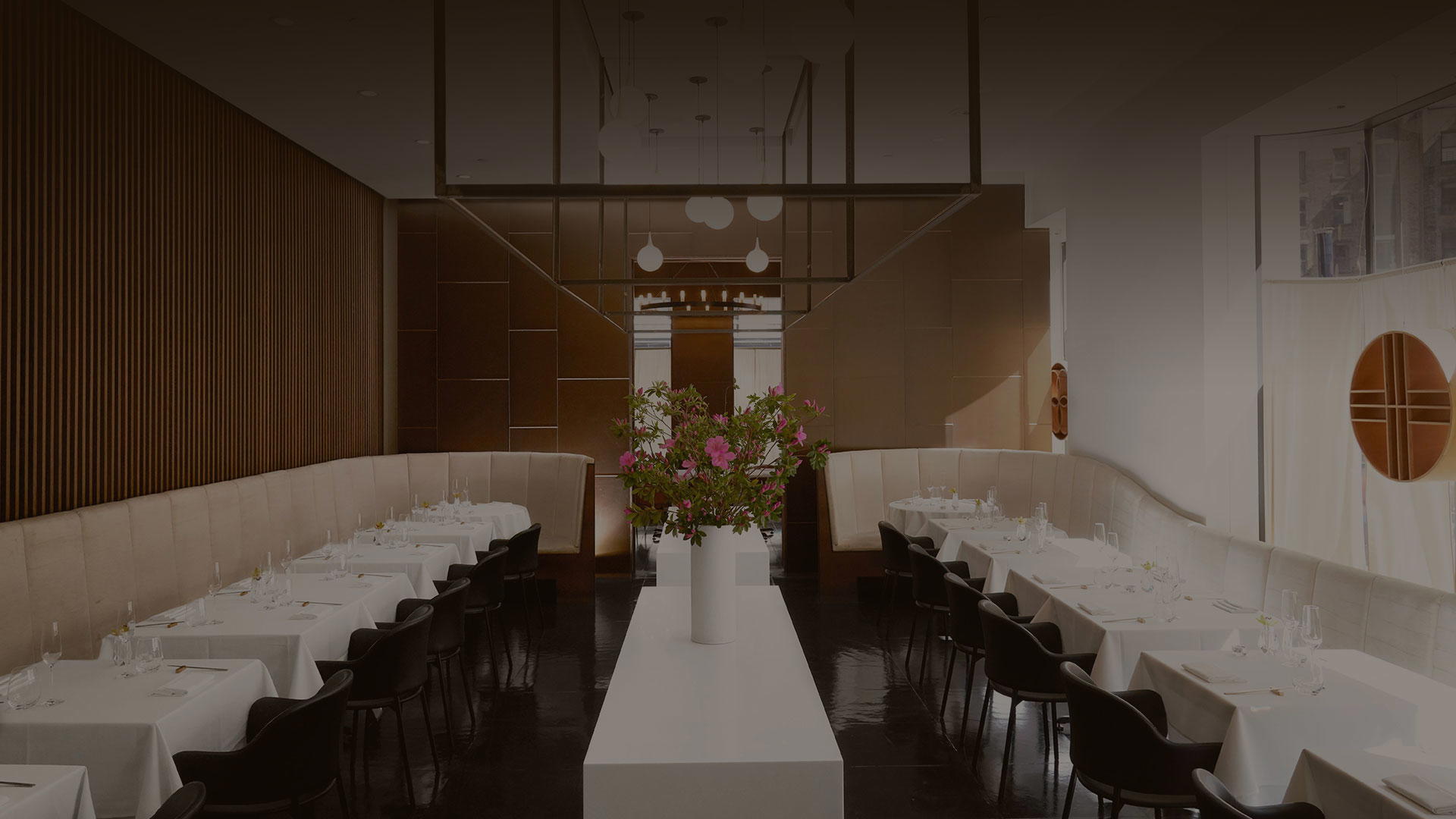
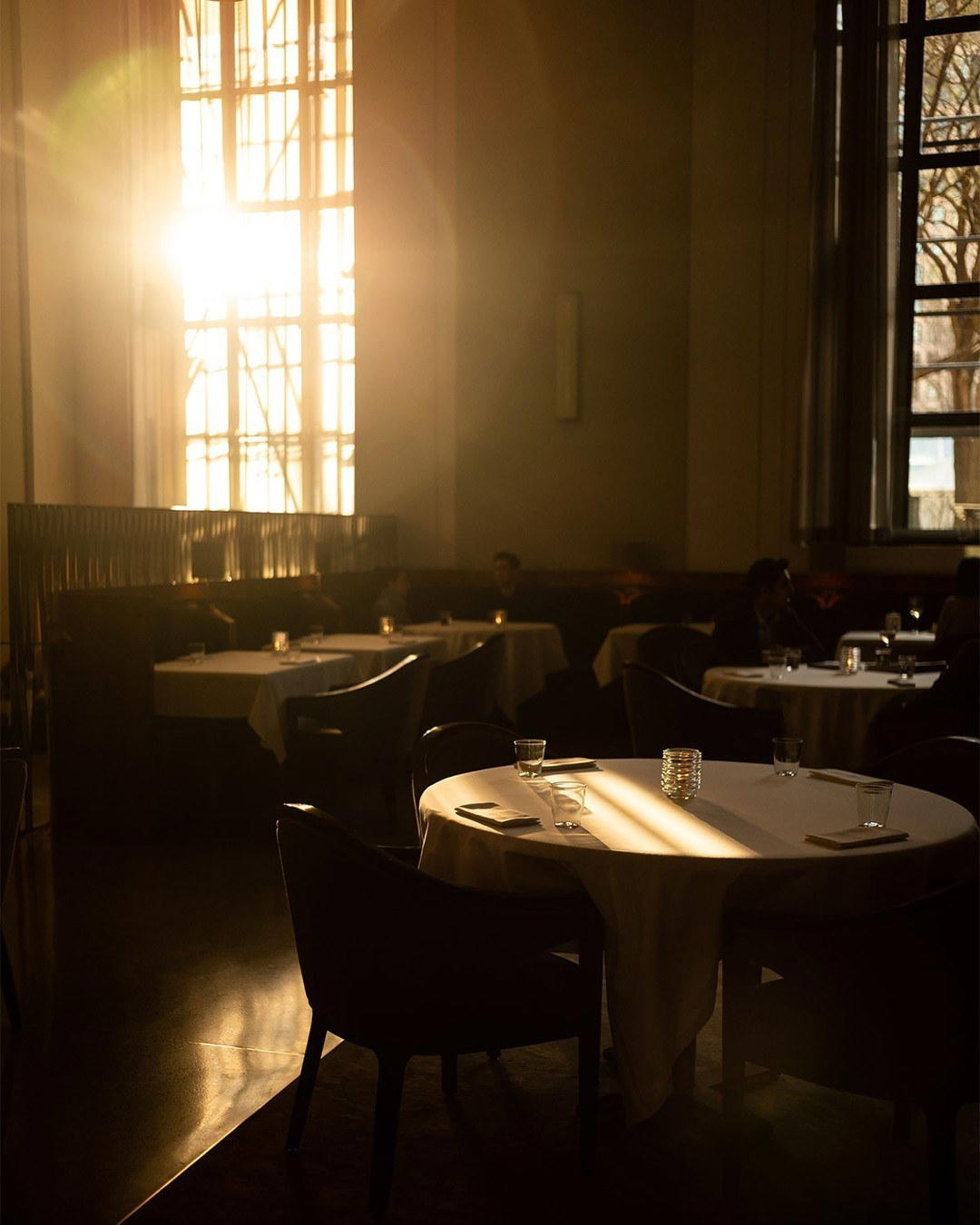
Bars in New York City
Browse all →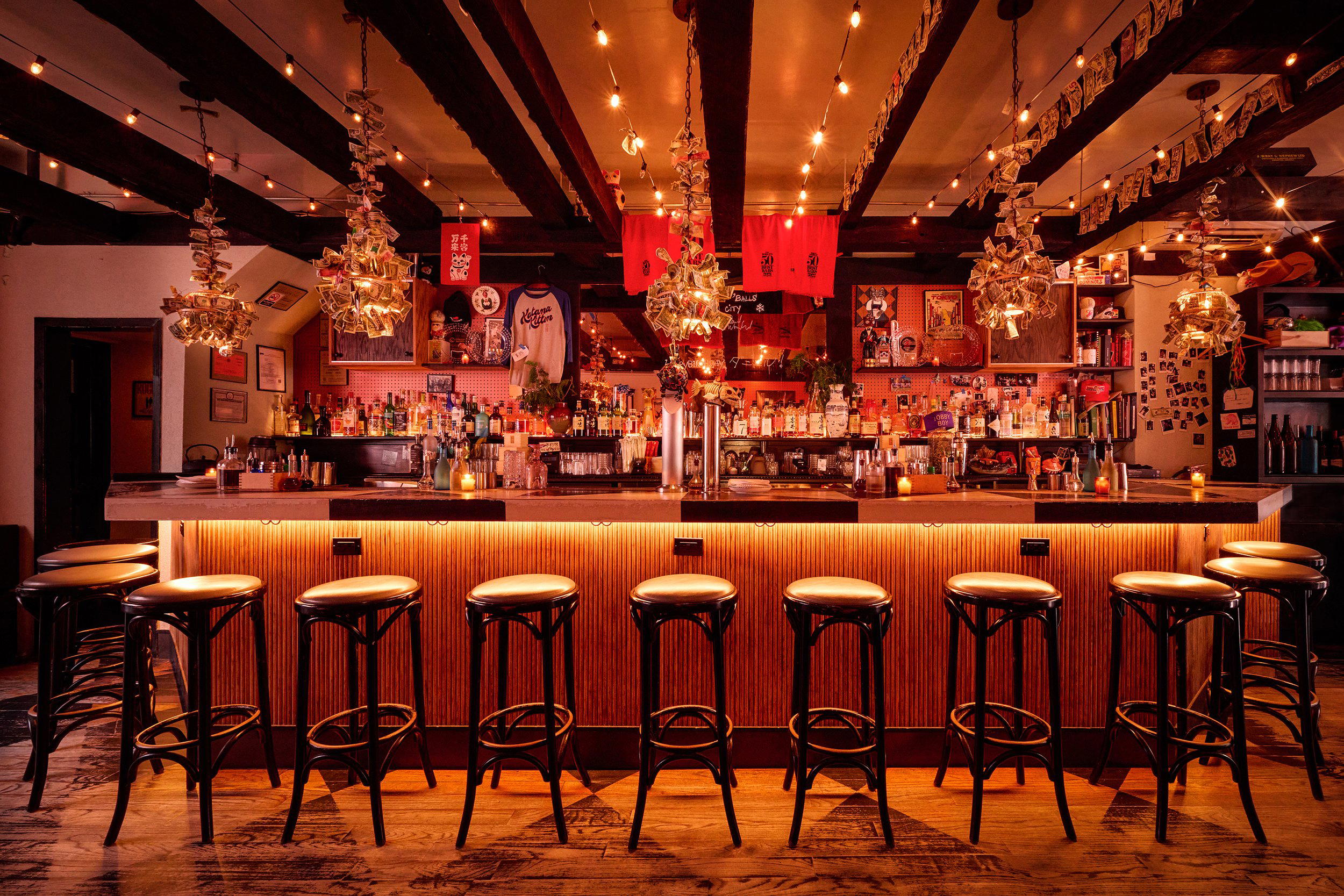
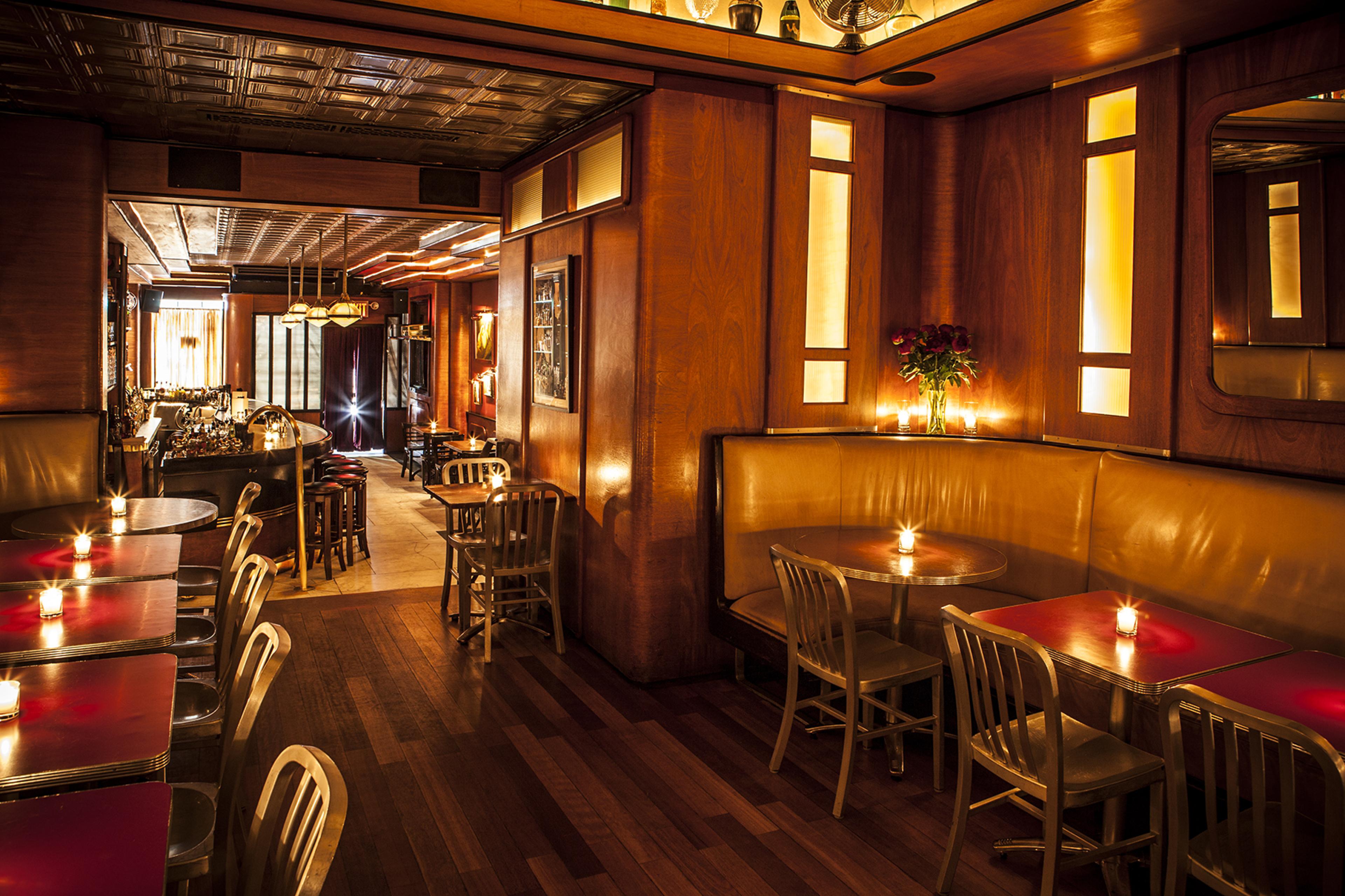

Hotels in New York City
Browse all →


Wineries in New York City
Browse all →


At a Glance
- Trendy
- Intimate
- Energetic
- Date Night
- Special Occasion
- Group Dining
- Craft Cocktails
Current opening hours
- Monday
- 5–10 PM
- Tuesday
- 5–10 PM
- Wednesday
- 5–10 PM
- Thursday
- 5 PM–12 AM
- Friday
- 5 PM–12 AM
- Saturday
- 5 PM–12 AM
- Sunday
- 5–10 PM
Hours can change for holidays and private events. Last verified .
Intimate basement space with communal long tables, lively atmosphere, and piped-in music.