Scotts Seafood & Grill
Our verdict
It sits within easy reach of Stillorgan's growing dining circuit, offering a grounded alternative to the city-centre fine-dining tier for those who want serious cooking without the commute.

Pearl is the En Primeur Club membership app, where members save venues, book tables and use the concierge.
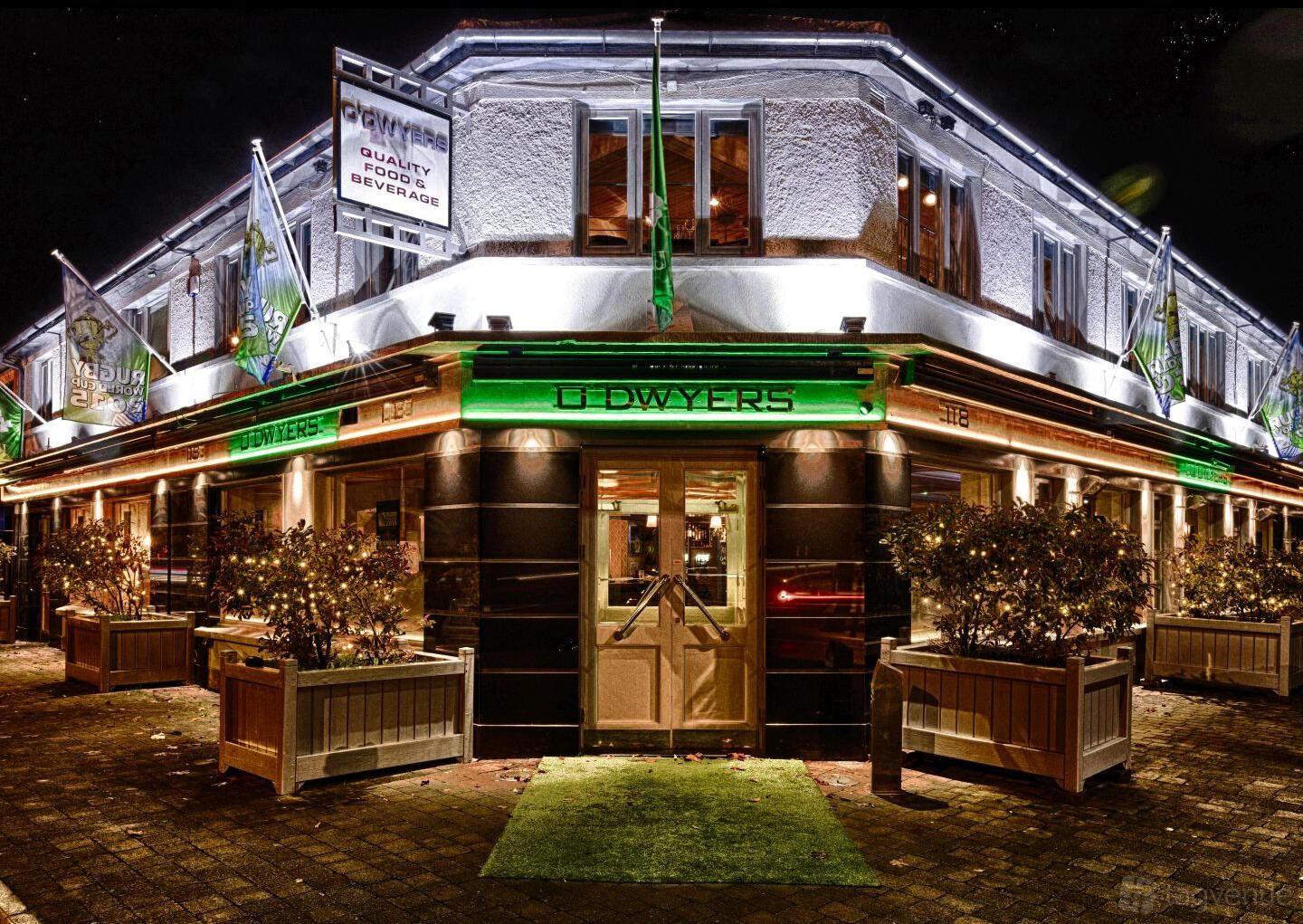
Seafood on the South Dublin Suburban Circuit
The road south from Dublin city towards Stillorgan carries a particular kind of dining expectation. This is not the Michelin trail of central Dublin, where Chapter One by Mickael Viljanen sets the benchmark for formal tasting menus, nor the destination-rural model of places like Aniar in Galway or Liath in Blackrock. Scotts Seafood & Grill at number 116 occupies that space. It addresses a local appetite for properly sourced fish and grill-led plates without asking diners to cross the canal for the privilege. The surrounding streets carry a comfortable, settled quality, and the dining room reflects that register rather than fighting against it. You are not arriving at a scene engineered for social media performance. The draw is the plate. The Atlantic coastline, running from Donegal to Cork, produces shellfish, white fish, and oily fish of a quality that has supported a serious export trade for decades. The better Irish seafood restaurants have, in recent years, moved from treating provenance as a marketing footnote to treating it as the organising principle of their menus. You see this across the country: at dede in Baltimore, where the West Cork fishing community is essentially part of the kitchen's supply chain, or at House in Ardmore, where the Waterford coastline informs the menu's character. The question for any seafood restaurant in suburban Dublin is whether it can maintain that supply discipline when it sits forty minutes from the ports and fish markets rather than on their doorstep.
A grill-led seafood format, which is what the name signals, has its own logic in this context. Grilling is an honest technique: it amplifies the quality of good fish and exposes the shortcomings of indifferent sourcing. A wood-fired or charcoal grill leaves nowhere to hide behind complex sauce work. When an Irish seafood kitchen commits to this format, it is implicitly making a claim about the quality of its raw material. That claim is either earned by the supply chain or exposed by the cooking. Diners in this part of south Dublin, many of whom eat out regularly and travel enough to calibrate their expectations, tend to notice the difference.
Situating Scotts in the Wider Irish Dining Picture
The Irish restaurant scene has diversified significantly over the past decade. At the formal end, Michelin-recognised rooms and ambitious tasting-menu formats have expanded well beyond Dublin, as the records of Bastion in Kinsale, Campagne in Kilkenny, Chestnut in Ballydehob, and Terre in Castlemartyr confirm. Scotts operates in the middle register of that spectrum: a neighbourhood restaurant with a specific category focus, serving a local market that does not need to travel into the city to eat well.
For international reference points, the model is less Le Bernardin in New York City, where the tasting menu format and four-star precision define the offer, and more the kind of confident, ingredient-focused seafood house that city-adjacent suburbs in coastal countries tend to support when the market is sophisticated enough to demand it. Atomix in New York City represents a different pole entirely, one defined by multicourse precision and Korean creative cooking. Scotts signals something more direct: a grill, good fish, and a room that works for a weeknight dinner as readily as a weekend occasion.
Nearby on the Stillorgan dining circuit, Aoshima Sushi & Grill covers overlapping seafood territory from a Japanese technique angle, which illustrates how the area's dining offer has matured. Two serious seafood addresses within the same suburb reflects a local market that expects quality rather than accepting whatever is available. See our full Stillorgan restaurants guide for the broader picture of how this suburb's dining has developed.
Grill Cooking and the Sourcing Argument
The pairing of seafood with grill cooking is not incidental. Across the better Irish dining rooms, from the open-fire traditions visible at places like LIGNUM in Bullaun to the technique-forward kitchens at Homestead Cottage in Doolin, direct heat applied to quality ingredients has emerged as a consistent throughline in Irish cooking's current identity. Atlantic salmon, wild sea bass, Dingle Bay scallops, Castletownbere crab: these are ingredients that grill techniques serve honestly. The format also suits the grill-and-seafood restaurant's natural audience, which tends to want clear flavours and recognisable plates rather than deconstructed presentations.
For restaurants in this category, the supply relationship matters more than the kitchen's technical showmanship. A direct line to a Dunmore East landing or a Howth fish market, even an indirect one through a quality Dublin supplier, will do more for a plate of grilled fish than any amount of technique applied to mediocre raw material. Irish diners at the more attentive end of the market have internalised this logic, which is why provenance language has become a marker of seriousness rather than a novelty in Irish restaurant communication. The Stillorgan area is served by several bus routes running along the N11 corridor, and the LUAS Green Line at Stillorgan provides an additional option for those coming from the city centre or further south. For specific hours, current menu details, and booking availability, checking directly with the restaurant is advised, as these details are subject to change. Those exploring the wider south Dublin dining offer will find useful reference points in our Stillorgan restaurant guide, alongside coverage of comparable Irish dining rooms at Lady Helen in Thomastown, The Morrison Room in Maynooth, and The Oak Room in Adare.
Frequently asked questions
Is Scotts Seafood & Grill child-friendly?
Scotts Seafood & Grill is a neighbourhood restaurant on Lower Kilmacud Road in Stillorgan, which tends to draw a local, family-oriented crowd rather than a strictly adult dining room. The suburban setting on the south Dublin circuit generally supports relaxed family visits, though contacting the venue directly before booking with young children is advisable to confirm seating arrangements.
What kind of setting is Scotts Seafood & Grill?
Scotts occupies a site on Lower Kilmacud Road in Kilmacud, Dublin, placing it firmly in the south suburban dining circuit rather than the city-centre restaurant corridor. The format, seafood and grill cooking, points toward a mid-register room where the focus is on produce and cooking method rather than theatrical presentation. It functions as a local anchor rather than a destination fine-dining address.
How does Scotts Seafood & Grill compare to other seafood restaurants on the south Dublin dining circuit?
Scotts Seafood & Grill on Lower Kilmacud Road, Stillorgan, operates in a distinct tier from the Michelin-recognised rooms in central Dublin, positioning itself as a neighbourhood-focused seafood and grill option for south Dublin's suburban catchment. That positioning is not a limitation, south Dublin has a concentration of local diners with consistent expectations for sourcing quality, and a dedicated seafood-and-grill format in Kilmacud fills a gap that city-centre restaurants don't serve by geography alone.
What do regulars order at Scotts Seafood & Grill?
Given the dual seafood-and-grill format at Scotts, returning diners typically anchor their orders around the core of the menu: grilled fish and shellfish preparations where Irish coastal sourcing has the most direct impact on quality. Ireland's Atlantic-facing geography means the raw material available to kitchens in this category is structurally strong, and grill cooking is the format most likely to showcase it directly.
How It Stacks Up
Comparable venues nearby, for context on price, style, and recognition.
| Venue | Cuisine | Price | Awards | Notes |
|---|---|---|---|---|
| Scotts Seafood & GrillThis venue (the venue you are viewing) | Modern Irish Seafood Grill | $50–100 | Not listed | Not listed |
| Aoshima Sushi & Grill | Japanese Sushi & Grill | $20–30 | Not listed | Stillorgan |
| The Dunmore | Modern Irish Seafood & Grill | $50–100 | Not listed | Rathmines West A |
| 30 Church Street Howth | Irish Seafood, Wood-Fired Pizza & Steakhouse | $30–50 | Not listed | Howth |
| The Seafood Café | Irish Seafood Café | $50–100 | The Sunday Times Ireland’s 100 Best Restaurants | Royal Exchange A |
| Matt The Thresher | Irish Seafood Gastro Pub | Not listed | Not listed | Mansion House B |


Continue exploring
More in Stillorgan
Restaurants in Stillorgan
All restaurants in Stillorgan →
Bars in Stillorgan
Browse all →
Hotels in Stillorgan
Browse all →


Wineries in Stillorgan
Browse all →
Details
- Cozy
- Classic
- Special Occasion
- Craft Cocktails
- Local Sourcing
- A La Carte
Current opening hours
- Monday
- Closed
- Tuesday
- Closed
- Wednesday
- 5–11:30 PM
- Thursday
- 5–11:30 PM
- Friday
- 5–11:30 PM
- Saturday
- 5–11:30 PM
- Sunday
- 5–11:30 PM
Hours can change for holidays and private events. Hours as of .
Cozy and inviting with a relaxed, welcoming atmosphere and attentive service.