← Guides
At 29, Aloïs Houeto takes the reins of Château-Grillet — a 3.5-hectare Viognier amphitheatre with its own AOC and nearly four centuries of winemaking history.
At 29, Aloïs Houeto takes the reins of Château-Grillet — a 3.5-hectare Viognier amphitheatre with its own AOC and nearly four centuries of winemaking history.
During the 2024 harvest, a 29-year-old named Aloïs Houeto walked into the cellar of Château-Grillet as its new technical manager.
The estate he inherited, 3.5 hectares of Viognier vines arranged in a natural granite amphitheatre above the Rhône, is one of France's smallest appellations, and the only property in the country that constitutes an entire AOC on its own. Winemaking on this site dates to at least 1648. The appellation itself turns 90 in 2026.
And the person now charged with its direction had, three years earlier, been working on research and development at Château Latour. This is a story about how a career in viticultural science led to among the more singular stewardships in French wine.
Houeto's appointment came at the request of Frédéric Engerer, managing director of Artémis Domaines, the Pinault family's wine group, which acquired Château-Grillet in 2011 and also holds Château Latour, Clos de Tart, and Domaine d'Eugénie. According to Decanter, Houeto was surprised by the offer. It wasn't something he had sought out. "I'm feeling lucky," he said. "I'm grateful" to be asked.
The role opened when previous technical director Jaeok Cramette moved across the Artémis portfolio to manage Domaine d'Eugénie in Vosne-Romanée in 2024. That transfer, a South Korean-born winemaker stepping from the northern Rhône into the heart of Burgundy, itself speaks to the fluidity with which Artémis Domaines moves talent between its estates. For Houeto, the path to Château-Grillet was less lateral and more vertical: a rapid ascent through the group's R&D infrastructure that landed him, at 29, in charge of one of France's most historically layered white wine properties.
He is young for the position, just three years into his career at Artémis Domaines. But his background suggests the appointment was deliberate rather than expedient. Artémis Domaines didn't hand him the keys to a 3.5-hectare monopole on a whim. They handed them to someone who had spent three years inside the group's scientific apparatus, studying how vines and soils interact at the highest level of French winemaking.
Houeto joined Artémis Domaines in 2021, as Decanter reports, after studying agricultural engineering and completing a diploma in winemaking. His first assignment was a research and development project at Château Latour, the Pauillac first growth where viticultural precision has long been a point of institutional pride. By 2023, his remit had expanded: Engerer gave him an R&D role covering the group as a whole, meaning Houeto was working across the soils, climates, and grape varieties of estates stretching from Bordeaux to Burgundy to the northern Rhône.
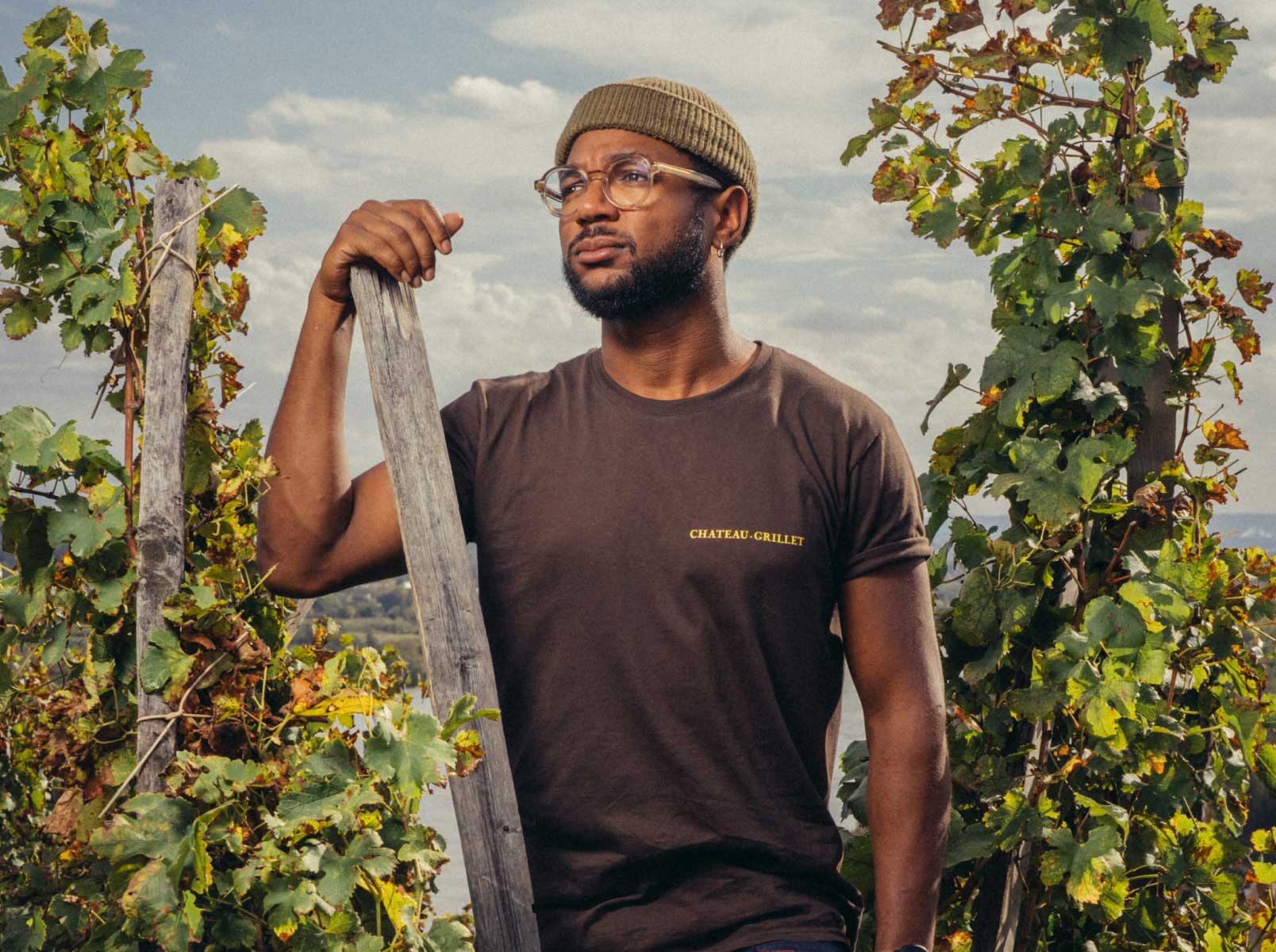
That trajectory matters. A technical manager who arrives at Château-Grillet with a purely oenological background, cellar-trained, palate-driven, would bring one kind of perspective. Houeto brings another. His formation is rooted in agricultural science, in the systematic study of how plants respond to their environment. The R&D work at Latour would have immersed him in the granular details of soil mapping, canopy management, and the kind of long-term data collection that informs decisions across decades, not just vintages.
For a property like Château-Grillet, where the entire production comes from a single 3.5-hectare parcel of Viognier, that scientific orientation could prove consequential. There is no blending across appellations here, no second wine to absorb a weaker lot, no diversification of varieties. Every decision in the vineyard lands directly in the bottle. The margin for error is essentially zero, and the margin for improvement, however incremental, is the whole game.
Decanter's Matt Walls, who visited the estate and met Houeto in person, noted that the new technical manager is making "some small but consequential changes" to the property. The specifics of those changes remain to be fully detailed, but the phrase itself, small but consequential, captures the kind of intervention you'd expect from someone trained in R&D rather than grand gestures.
To understand what Houeto has inherited, you need to understand the site. Château-Grillet sits within the larger Condrieu appellation in the northern Rhône, but it has held its own AOC since 1936, one of the earliest appellations granted in France. The first five French AOCs were Châteauneuf-du-Pape, Tavel, Arbois, Cassis, and Monbazillac, all established in May of that year. Château-Grillet followed shortly after, according to Decanter, under a rule that allowed a château, defined at the time as a building with at least two turrets, with a vineyard in a single block around the property to apply for its own appellation.
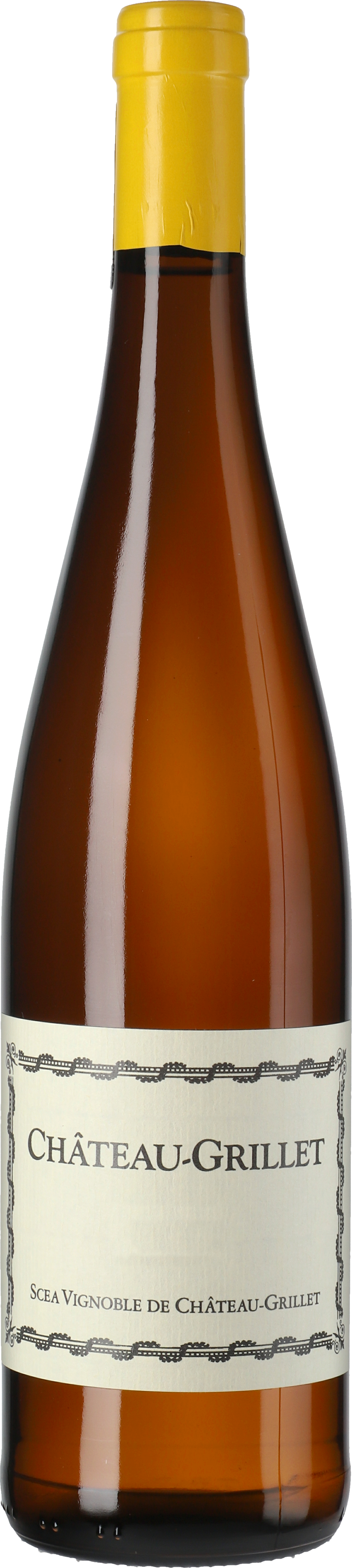
The estate's turrets still stand. So does its claim to singularity. At 3.5 hectares, Château-Grillet is planted entirely to Viognier and produces wine under an AOC that belongs to it alone. No other estate in France operates under quite the same arrangement, a monopole appellation for a single white wine from a single grape variety on a single hillside.
The winemaking history here predates the appellation by centuries. Girard Desargues, an architect and adviser to Cardinal Richelieu, moved into the property and made wine in 1648, as Decanter reports. That date anchors the estate's claim to nearly four centuries of continuous viticulture. In 2048, Château-Grillet will mark its 400th anniversary from that reference point.
Between Desargues and the present, one consequential period of ownership belonged to the Neyret-Gachet family, who purchased the estate in 1827. They ran it for generations, secured its appellation, and shaped its identity as a singular expression of Viognier. In 2011, the family sold the property to Artémis Domaines. That sale, ending nearly 200 years of family stewardship, with 2027 marking the exact bicentenary, placed Château-Grillet inside a portfolio that includes some of France's most tightly managed estates.
The Pinault family's Artémis Domaines operates a portfolio model that is unusual in French wine. Château Latour in Pauillac, Clos de Tart in Morey-Saint-Denis, Domaine d'Eugénie in Vosne-Romanée, and Château-Grillet in the northern Rhône, these are not properties that share a region, a grape variety, or a winemaking tradition. What they share is an owner and, increasingly, a pipeline of human capital.
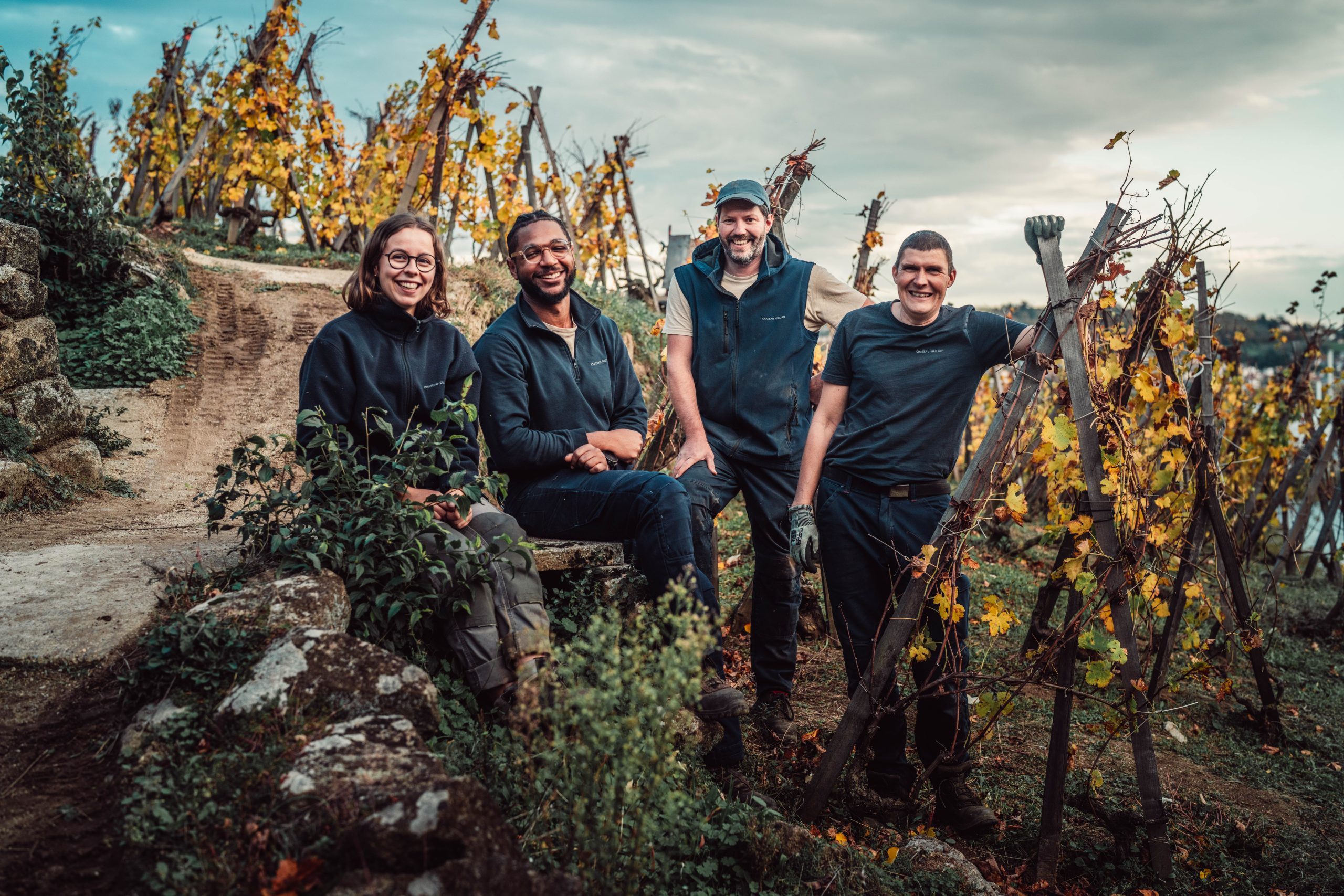
Jaeok Cramette's move from Château-Grillet to Domaine d'Eugénie in 2024 is one example. Houeto's progression from R&D at Latour to a group-wide scientific role to the technical management of Château-Grillet is another. The pattern suggests that Artémis Domaines treats its estates not as isolated fiefdoms but as nodes in a network, each with its own terroir and identity, but connected by shared resources, shared knowledge, and a shared bench of talent.
For Château-Grillet specifically, this model offers something that the Neyret-Gachet family, for all their centuries of stewardship, could not easily replicate: access to the kind of viticultural research infrastructure that a first-growth Bordeaux estate can fund.
Houeto's R&D work at Latour, and then across the entire group, means he arrives at Château-Grillet with a comparative understanding of how different soils, microclimates, and viticultural practices interact at the highest level. He has seen how Merlot and Cabernet Sauvignon behave on Pauillac gravel. He has studied Pinot Noir in Burgundy's limestone.
Now he turns that lens on Viognier in a granite amphitheatre above the Rhône.
Whether that cross-pollination of knowledge translates into perceptible changes in the glass is the question that collectors and sommeliers will be tracking over the coming vintages. The 2024 harvest, Houeto's first, will be the initial data point.
When Houeto talks about what makes Château-Grillet distinct, he reaches for a word that you don't often hear in discussions of Viognier: salinity. "Salinity is the signature of Château-Grillet," he told Decanter. He believes that quality becomes more apparent as the wine ages, "but the texture is different from the start."
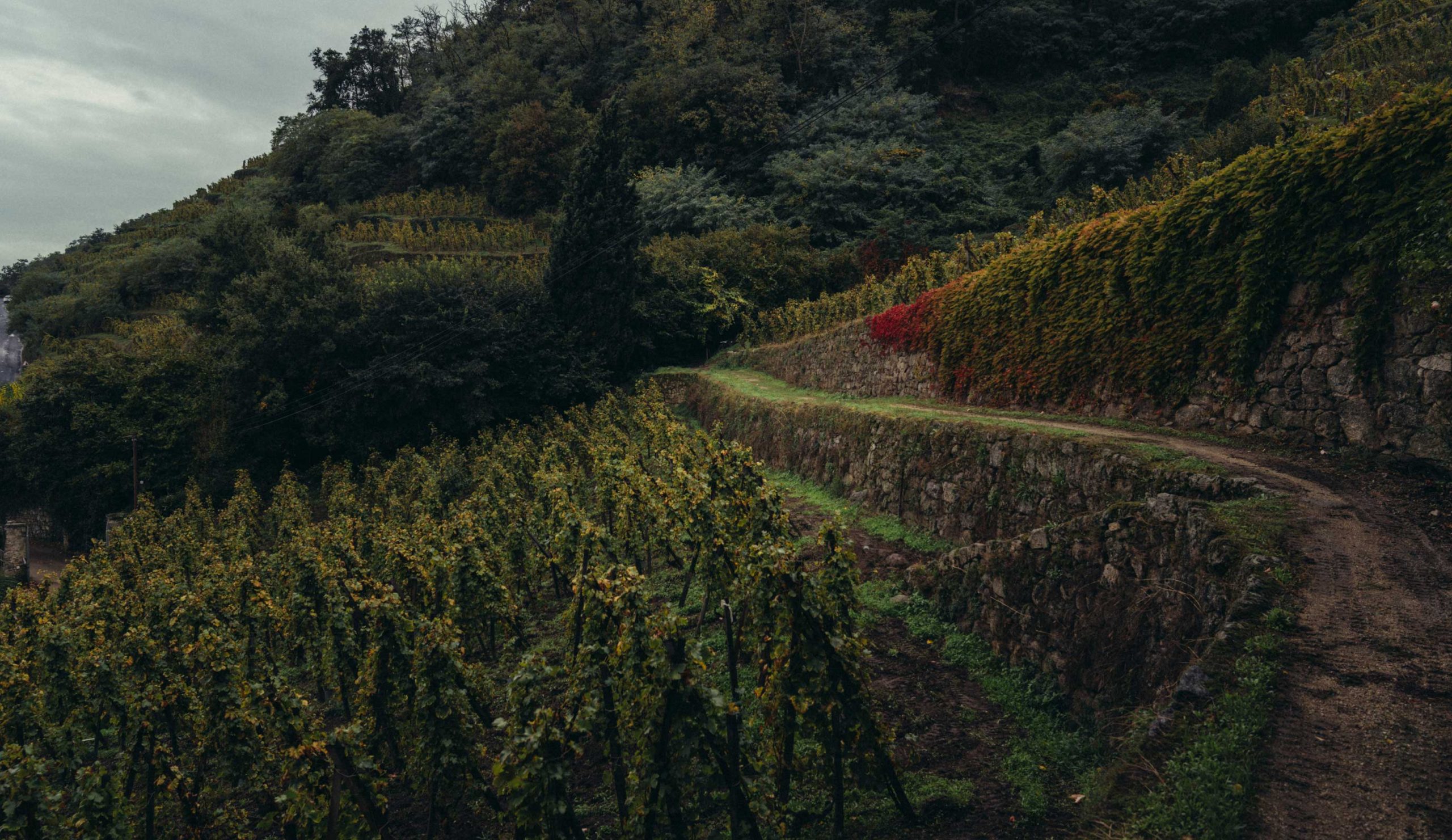
That emphasis on texture and mineral character, rather than the apricot-and-blossom aromatics that typically dominate Viognier conversations, is telling. It positions Château-Grillet not as a richer or more ornate version of Condrieu, but as something structurally different. "It can be rich, but it's always ethereal," Houeto said.
The tension between richness and ethereality is, in many ways, the central challenge of Viognier as a grape. Left to its own devices in a warm site, Viognier can produce wines of almost overwhelming aromatic intensity and textural weight, gorgeous in youth, but sometimes lacking the tension needed for long aging.
Strong Condrieu producers manage that balance through careful harvest timing, restrained use of oak, and site-specific knowledge accumulated over years. Château-Grillet, with its south-facing granite amphitheatre and its own microclimate, has always had the raw material to achieve something different from its neighbors.
The question has been whether the winemaking matched the site's potential.
Houeto's stated goal cuts to the heart of this: "That's the goal," he told Decanter, "to make a wine that's distinctive, not like other terroirs in Condrieu." It's a statement that simultaneously justifies the estate's separate appellation and sets the bar for his own tenure. If Château-Grillet tastes like Condrieu, the AOC is a historical curiosity. If it tastes like nothing else, saline, ethereal, textured in a way that no neighboring vineyard can replicate, the appellation earns its existence with every vintage.
The 90th anniversary of Château-Grillet's appellation in 2026 is, as Decanter's Walls observed on his visit, not being marked with any particular fanfare at the estate itself. No balloons. No bunting. The serious business of making wine continues regardless of calendar milestones.
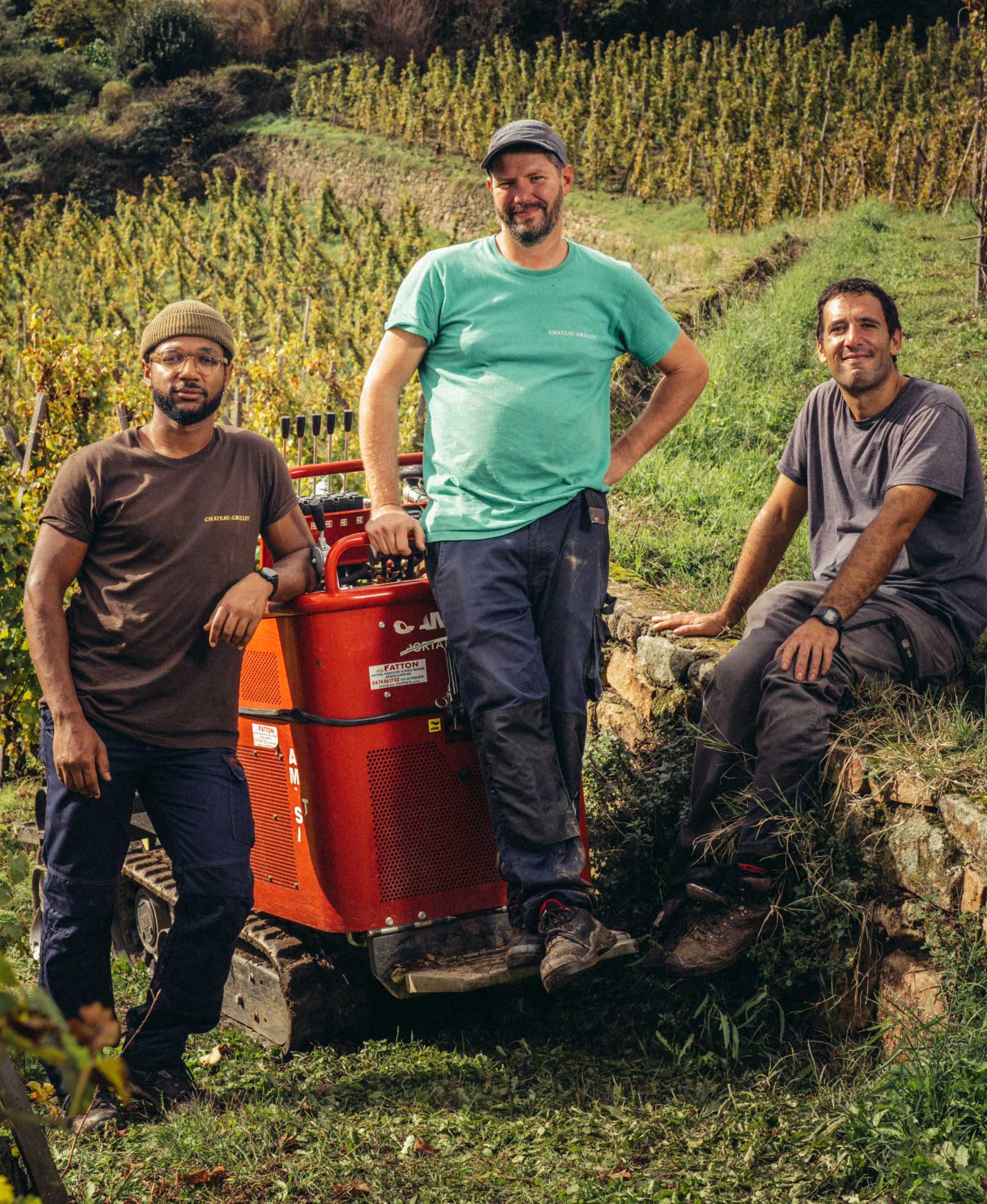
But for collectors, the convergence of dates is hard to ignore. The appellation turns 90 in 2026. The Neyret-Gachet family's purchase of the estate reaches its bicentenary in 2027. And a new technical manager, the youngest in recent memory, armed with an R&D background drawn from across Artémis Domaines' portfolio, is now shaping the wine.
Château-Grillet has always been a collector's wine by default: the production from 3.5 hectares of a single variety under a monopole appellation is, by definition, limited. There is no expanding the vineyard. There is no adding a second label. What comes off that hillside each year is all there is. That scarcity has historically supported the estate's pricing and its place on the lists of serious white Burgundy and Rhône collectors, though the wines, under the Neyret-Gachet family's later years, sometimes drew criticism for inconsistency.
The Artémis Domaines era, beginning in 2011, brought investment and a more rigorous approach. Cramette's tenure as technical director was part of that recalibration. Houeto's appointment represents the next phase, one informed by systematic research rather than purely empirical winemaking tradition. For collectors who follow the northern Rhône closely, the 2024 and 2025 vintages from Château-Grillet will be the first real test of this new direction.
Houeto is 29. If he remains at Château-Grillet for a full career, he could still be making wine there in 2048, the year the estate marks 400 years since Girard Desargues first produced wine on the property. That is a span of time that few winemakers anywhere in the world get to contemplate. It connects a 17th-century architect who advised Cardinal Richelieu to a 21st-century agricultural engineer who cut his teeth on R&D at a Bordeaux first growth.
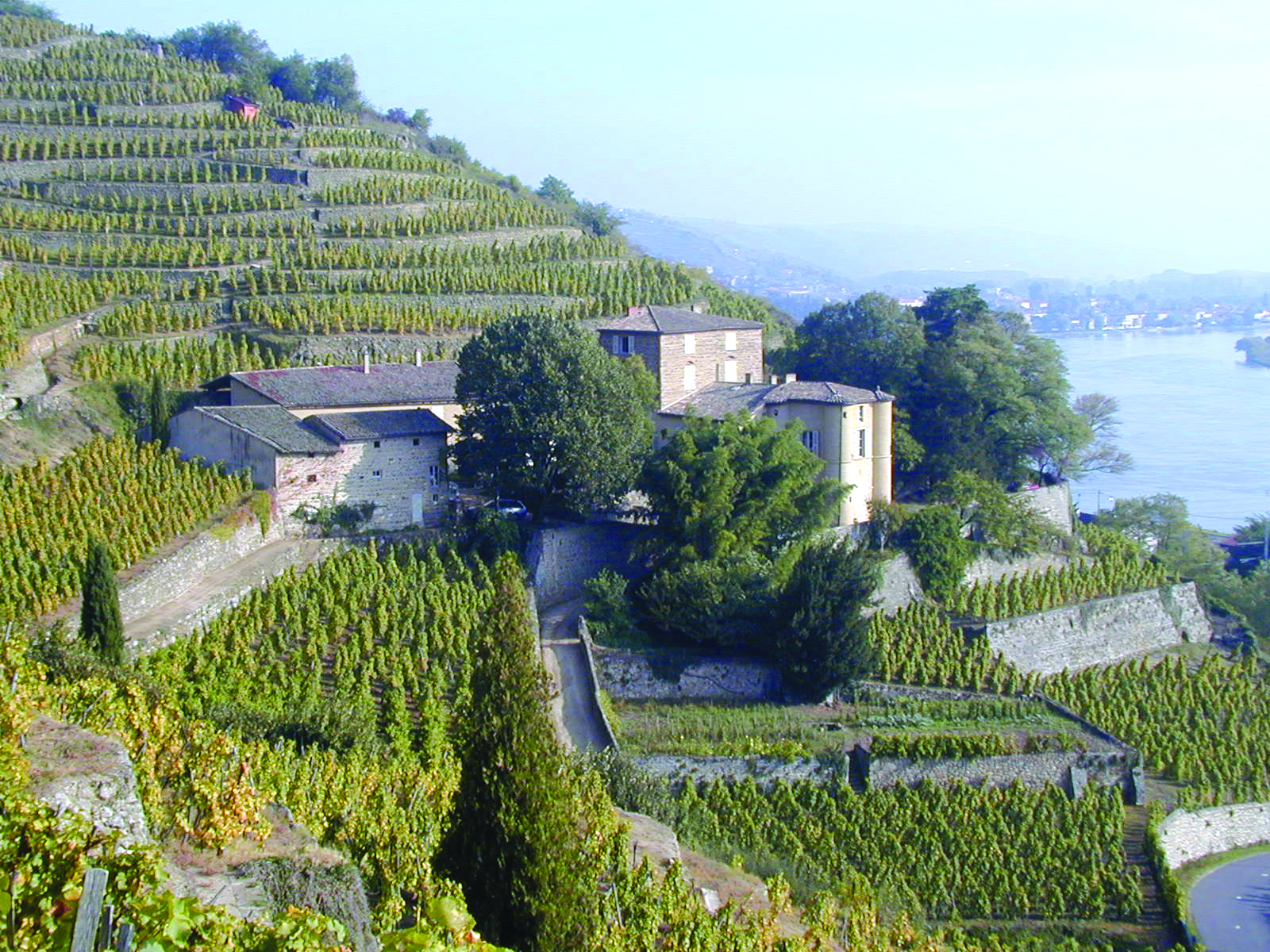
The continuity of the site itself is the constant. The granite amphitheatre, the south-facing exposure, the Viognier vines, these don't change with ownership or personnel. What changes is the human interpretation. The Neyret-Gachet family interpreted this site for nearly 200 years. Artémis Domaines has been interpreting it since 2011. Now Houeto adds his own reading.
His emphasis on salinity, on ethereality, on differentiation from Condrieu, these are not abstract aspirations. They are a technical program, grounded in the kind of soil-and-vine research that defined his early career at Latour. Whether that program produces wines that justify the estate's singular status is something that only time and the glass will reveal. But the intent is clear, and the tools are in place.
Château-Grillet enters its 90th year as an appellation with a new voice at the helm, young, scientifically trained, and focused on the one quality that no neighboring vineyard can replicate. The next decade of vintages from this 3.5-hectare amphitheatre will tell us whether salinity and ethereality are merely words, or whether they become the defining character of a new era for one of France's most irreplaceable white wines.
Get the App
Take the shortlist into the En Primeur Club app for concierge access, saved places, and the next step after discovery.
Get Exclusive AccessMore from the editors