SaSa Japanese Restaurant
SaSa Japanese Restaurant brings focused Japanese sushi craft to the Japantown neighborhood of San Francisco, operating from Peace Plaza in the Western Addition. It occupies a different register than the city's $$$$ omakase tier, making it a practical entry point into serious Japanese cooking.
Pearl is the En Primeur Club membership app — saves, bookings, and concierge access live there. Same editors, same standards.
- Address
- 22 Peace Plaza Suite 530, San Francisco, CA 94115
- Phone
- (628) 600-6945
- Website
- sasasf.com
- Directions
- Get directions
 Saves & bookings on Pearl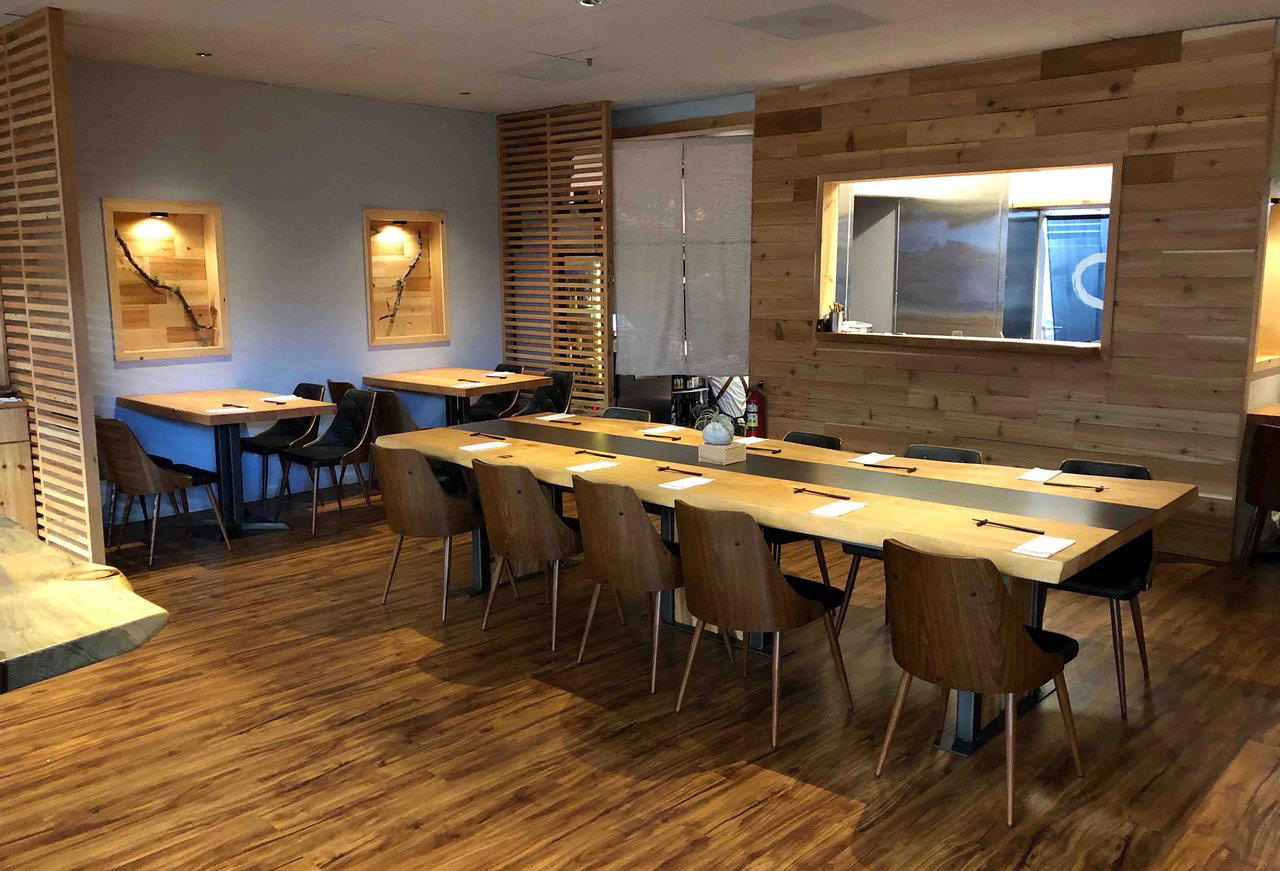
Japantown and the Geometry of a Good Sushi Counter
Peace Plaza sits at the center of San Francisco's Japantown, a district that has held its identity through decades of demographic pressure and real-estate churn. The plaza's pagoda fountain and low-rise Japan Center mall may read as understated compared to the Ferry Building's tourist-facing food market, but that understatement is the point. The neighborhood's restaurants are not performing for walk-by traffic. They are serving a community, and SaSa Japanese Restaurant at Suite 530 belongs to that pattern: a room that asks you to pay attention rather than be impressed before you sit down.
That framing matters because San Francisco's Japanese dining conversation tends to collapse into two poles, the high-ticket omakase counter and the fast-casual roll shop. The territory between them, where craft is present but the format is direct and the price is accessible, is less often discussed. SaSa occupies that middle ground, carrying, both of which suggest consistent execution rather than occasional brilliance.
Why Simplicity Demands More, Not Less
The editorial angle here is worth stating plainly: one demanding test of a Japanese kitchen is not the elaborate omakase sequence but the bowl, the cut, the basic preparation repeated hundreds of times a week. In ramen culture, a broth may cook for eighteen hours to produce something that tastes, in the mouth, like nothing was added at all. The same logic applies to sushi rice, which requires precise temperature, acid calibration, and timing that varies with the fish. When a dish has nowhere to hide, the kitchen's skill is either visible or it isn't.
This is the tradition SaSa operates in, Japanese cooking where the discipline is invisible and the result appears effortless. The cuisine category is Japanese sushi, which in San Francisco exists across a spectrum from supermarket counters to Michelin-observed omakase rooms. That is a specific and defensible position in a city with significant competition for the Japanese dining dollar.
Chef Scott Kim and the Western Addition Context
Chef Scott Kim leads the kitchen. In a neighborhood where Japanese-American culinary history runs deep, Japantown was one of the few Japanese enclaves to survive postwar dispersal on the West Coast, running a Japanese sushi restaurant carries a degree of cultural accountability that a fusion concept elsewhere in the city might not. The 4.4 rating across 323 reviews is a reasonable indicator that the kitchen is meeting that accountability with some regularity.
Japantown's dining scene is not the same as the Mission's, the Richmond's, or the SoMa restaurant corridor that runs toward Benu and the city's French-Chinese fine dining tier. It operates at a different pace and for a different audience. That context shapes what SaSa is doing: neighborhood-anchored Japanese craft, not a destination project aimed at the same visitor who books Atelier Crenn or Lazy Bear months in advance.
San Francisco's Japanese Sushi in a Broader Frame
Serious Japanese sushi in American cities tends to cluster around two models. The first is the counter omakase, a format where the chef controls sequence, pace, and portion in an intimate setting with a fixed price and a months-long reservation queue. Venues in this tier compete against peers like Ginza Sushiko in Los Angeles and the emerging European sushi canon, represented by places like Edomae Sushi Matsuki in Bratislava, both of which speak to how far the edomae tradition has traveled from Tokyo. The second model is the à la carte counter or table service format, where guests direct their own meal and the kitchen's skill shows in individual pieces rather than a curated arc.
SaSa works within the second model. This is not a lesser form, it requires the kitchen to perform without the narrative scaffolding of an omakase sequence, and it places the quality of each individual piece under more direct scrutiny. In cities where $$$$ tasting menus dominate the conversation (San Francisco's highest-profile addresses, Quince, Saison, all operate in that format), restaurants that compete on individual dish quality rather than experience architecture occupy a genuinely different critical category.
For context on how the city's dining tier compares nationally: San Francisco's $$$$ tier draws comparisons to Le Bernardin in New York, Alinea in Chicago, The French Laundry in Napa, and Providence in Los Angeles.
Nearby Dining Reference Points
Japantown's immediate dining context is distinct from the rest of San Francisco. Single Thread Farm in Healdsburg and Emeril's in New Orleans both illustrate how chef-driven restaurants can anchor neighborhoods; Japantown's equivalent dynamic operates at a more local register, with restaurants serving regulars rather than destination seekers.
Planning Your Visit
SaSa is located at 22 Peace Plaza, Suite 530, San Francisco, CA 94115, inside the Japan Center mall complex. The Japan Center is walkable from multiple Muni lines and is a ten-minute ride from Union Square. Japantown's parking situation is more manageable than the downtown core, with structured parking beneath the mall.
| Venue | Cuisine | Price Tier | Format | Recognition |
|---|---|---|---|---|
| SaSa Japanese Restaurant | Japanese Sushi | Not published | À la carte / sushi counter | |
| Lazy Bear | Progressive American | $$$$ | Ticketed tasting menu | Michelin-observed |
| Benu | French-Chinese | $$$$ | Omakase-style tasting | 3 Michelin Stars |
| Quince | Contemporary Italian | $$$$ | Tasting menu | Michelin-starred |
| Saison | Progressive Californian | $$$$ | Tasting menu | Michelin-starred |
What Should I Eat at SaSa Japanese Restaurant?
The kitchen operates in the Japanese sushi tradition, where rice, fish quality, and knife work carry the weight of the meal. The 2025 recognition and the 4.4 rating across more than 300 reviews suggest that the kitchen has identified what it does well and executes it with consistency. Defer to the chef or counter staff for current recommendations.
Side-by-Side Snapshot
Comparable venues nearby, for context on price, style, and recognition.
| Venue | Cuisine | Price | Notes |
|---|---|---|---|
| SaSa Japanese RestaurantThis venue — the venue you are viewing | Modern Japanese Sushi | $$ | Not listed |
| Sanraku | Authentic Japanese Sushi | $$ | Nob Hill |
| Ebisu Restaurant | Authentic Japanese Sushi | $$ | Inner Sunset |
| Tokyo Express Restaurant | Japanese Sushi & Teriyaki | $$ | Chinatown |
| Kiraku | Modern Japanese Izakaya | $$ | Berkeley |
| Suzu | Japanese Ramen | $$ | Japantown |
Continue exploring
More in San Francisco
Restaurants in San Francisco
Browse all →
Bars in San Francisco
Browse all →
Hotels in San Francisco
Browse all →
At a Glance
- Intimate
- Modern
- Cozy
- Date Night
- Solo
- Open Kitchen
- Sake Program
Current opening hours
- Monday
- 5:30–9 PM
- Tuesday
- 12–2 PM, 5:30–9 PM
- Wednesday
- 12–2 PM, 5:30–9 PM
- Thursday
- 12–2 PM, 5:30–9 PM
- Friday
- 12–2 PM, 5:30–9 PM
- Saturday
- 12–2 PM, 5:30–9 PM
- Sunday
- 12–2 PM, 5:30–9 PM
Hours can change for holidays and private events. Last verified .
Modern interior with beautiful wood tables and walls creating an inviting, warm, and quiet atmosphere.