Santa Cecilia Mexican Food

LA Taco Best Tacos in LA #18
Our verdict
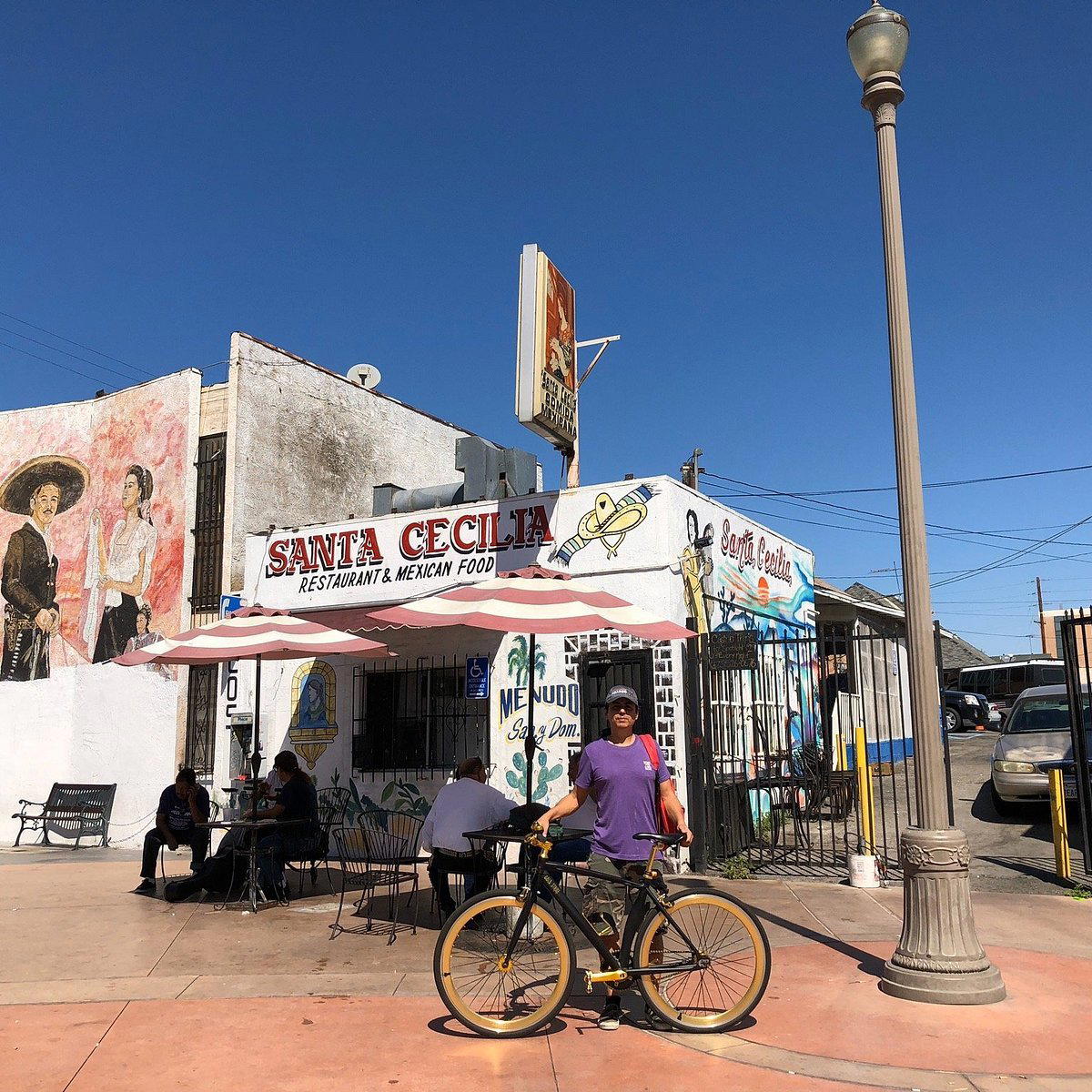
Operating from Mariachi Plaza in Boyle Heights since 1995, Santa Cecilia Mexican Food has built a reputation around one dish above all others: the taco de tripa bien doradita, a crispy tripe taco that LA Taco has called the city's best. The storefront is unassuming; the cooking is not. For anyone mapping East LA's Mexican street food tradition, this address matters.

Pearl is the En Primeur Club membership app, where members save venues, book tables and use the concierge.
The menu
What to order
- Taco de Tripa Bien Doradita
- Carne_asada_tacos
Boyle Heights and the Grammar of the Street Taco
East Los Angeles has always operated on different terms from the city's more photographed dining districts. While tasting menus at venues like Somni or multi-course Japanese kaiseki at Hayato define one tier of the LA food conversation, the city's most durable cooking traditions run through neighborhoods like Boyle Heights, where longevity is measured not in Michelin cycles but in decades of consistent foot traffic and community trust. Santa Cecilia Mexican Food has been at Mariachi Plaza since 1995, which places it in a category that most new openings never reach: a genuine institutional presence in a neighborhood that demands it.
Mariachi Plaza itself provides context. The plaza is one of East LA's defining cultural anchors, a gathering point where working musicians have assembled for generations, where the rhythms of the neighborhood play out in public. Food stalls and storefronts clustered around spaces like this do not survive on novelty. They survive because the cooking earns return visits, because the price-to-quality ratio holds across years, and because the sourcing and preparation behind even the simplest dishes reflects accumulated knowledge rather than trend-chasing.
The Taco de Tripa and What It Represents
The editorial angle around Santa Cecilia is inseparable from one specific preparation: the taco de tripa bien doradita. Tripa, the small intestine of beef, is among the more technically demanding taco fillings in the Mexican street food canon. The fat content is high, the texture is unforgiving if handled incorrectly, and the line between properly rendered and merely cooked is narrow. Getting it right requires sourcing clean, quality offal and applying sustained heat over the right duration to achieve the exterior crispness implied by "bien doradita", well gilded, properly caramelized, without drying out the interior.
LA Taco, which functions as one of the city's most credible and granular sources for street-level Mexican food criticism, named Santa Cecilia's taco de tripas the city's leading. That is a specific, sourced claim in a city with no shortage of serious tripa preparations, where Mexican regional cooking traditions from Oaxaca, Jalisco, Michoacán, Sinaloa, and the Mexico City street food tradition all have deep roots. Being identified as the reference point for a single preparation in that environment carries real weight.
The sourcing question matters here. Offal-forward cooking is dependent on supply chain integrity in ways that protein-forward or produce-forward cooking is not. The condition of tripa at point of purchase, its handling between sourcing and preparation, and the fat rendering process are all variables that explain why the same dish can vary dramatically between kitchens. Operations that have been executing one preparation since 1995 tend to have those variables locked down in ways that newer entrants cannot replicate quickly.
East LA's Mexican Food Tradition in the City's Broader Context
Los Angeles has one of the most complex Mexican food ecosystems of any city outside Mexico. The range runs from Oaxacan tlayudas in Koreatown to Sonoran-style carne asada in the San Fernando Valley, from the birria taco wave that spread across the country from LA-area trucks to the Yucatecan preparations that have quietly anchored certain neighborhoods for decades. Within that range, Boyle Heights represents a specific tradition: working-class East LA cooking that traces its lineage to Mexican immigrant communities that arrived in the early and mid twentieth century, with a particular emphasis on tacos, street classics, and the kind of whole-animal cooking that treats offal not as a novelty item but as a standard part of the menu.
That context matters when placing Santa Cecilia in the broader LA dining picture. The city's food media often gravitates toward the same reference points: the Michelin-starred counters, the high-ticket tasting menus, the openings that generate press cycles. Providence and Kato represent the formal fine dining side of what Los Angeles produces; Osteria Mozza anchors the Italian tradition at a different price point. But the city's actual food identity is distributed across price tiers and neighborhoods in ways that those names alone do not capture. A complete account of Los Angeles eating requires Boyle Heights, and Boyle Heights requires knowing where the tripa is done correctly.
For reference against the national fine dining picture, the contrast is instructive. Operations like Le Bernardin in New York City, Alinea in Chicago, or The French Laundry in Napa represent formal culinary architecture. Santa Cecilia represents something structurally different but no less rigorous: the mastery of a single preparation, executed for a community audience over thirty years, at a price point that makes daily visits possible. These are not competing categories; they are different expressions of cooking seriousness.
What to Order and How to Approach the Visit
The taco de tripa bien doradita is the reference point. Beyond that, the menu covers the classics of Mexican street food: the kind of rotating daily offerings that characterize storefronts operating in this tradition. Arriving with knowledge of the tripa preparation is useful; arriving expecting a curated tasting experience is not the right frame. This is street food in the structural sense, where the quality is in the execution of fundamentals rather than in presentation or progression.
Ordering directly is standard. The format is counter service in the tradition of Mexican taquerias operating in this neighborhood and price tier, which means the interaction is efficient and the food arrives quickly. The storefront setting is spare; the experience is calibrated around the food itself, not the room.
For anyone building a serious East LA eating itinerary, pairing this with other Boyle Heights addresses gives the fullest picture of what the neighborhood produces. The full Los Angeles restaurants guide covers the wider city range, and the experiences guide covers Mariachi Plaza and the surrounding cultural context if the neighborhood visit warrants more time.
Planning Your Visit
Location: 1707 Pleasant Ave, Los Angeles, CA 90033, at Mariachi Plaza in Boyle Heights. Getting There: The Gold Line Metro stop at Mariachi Plaza (now the A Line) makes this accessible by public transit from downtown LA, which is the most practical approach given parking constraints around the plaza. Timing: Street food operations in this tradition typically run heaviest at lunch and early afternoon; arriving mid-morning to early afternoon aligns with peak preparation quality. Reservations: Not applicable for counter-service street food format. Dress: No requirements. Budget: Street taco pricing, consistent with the Boyle Heights market. Further Reading: The Los Angeles bars guide, hotels guide, and wineries guide cover the broader LA stay.
Frequently asked questions
What do people recommend at Santa Cecilia Mexican Food?
How hard is it to get a table at Santa Cecilia Mexican Food?
What's the standout thing about Santa Cecilia Mexican Food?
At-a-Glance Comparison
A compact comparison to help you place this venue among nearby peers.
| Venue | Cuisine | Price | Awards | Notes |
|---|---|---|---|---|
| Santa Cecilia Mexican FoodThis venue (the venue you are viewing) | Authentic Mexican Street Food | $10–20 | LA Taco Best Tacos in LA #18 | Not listed |
| Kato | Modern Taiwanese Fine Dining | $300–500 | 2 Michelin Stars · World's 50 Best #49 | New Taiwanese, Asian |
| Hayato | Traditional Japanese Kaiseki | $300–500 | 2 Michelin Stars · La Liste Top Restaurants | Japanese |
| Vespertine | Avant-Garde Tasting Menu | $200–300 | 2 Michelin Stars · La Liste Top Restaurants | Progressive, Contemporary |
| Camphor | Modern French with Southeast Asian influences | $150–200 | Michelin Plate · World Best Burgers World's 101 Best Burgers #15 | French-Asian, French |
| Gwen | Contemporary American Steakhouse | $50–100 | Michelin Plate · Wine Spectator Best of Award of Excellence | New American, Steakhouse |
Recognition history
Dated appearances from independent guides and award organizations, with the underlying list record or original source where available.
LA Taco Best Tacos in LA #18
LA Taco
Continue exploring
More in Los Angeles
Restaurants in Los Angeles
All restaurants in Los Angeles →
Bars in Los Angeles
All bars in Los Angeles →
Hotels in Los Angeles
All hotels in Los Angeles →

Wineries in Los Angeles
All wineries in Los Angeles →
Details
- Casual
- Cozy
- Lively
- Casual Hangout
- Family
- Brunch
- Open Kitchen
- A La Carte
- Small Plates
- Vegetarian Friendly
Current opening hours
- Monday
- 8 AM–6 PM
- Tuesday
- 8 AM–6 PM
- Wednesday
- 8 AM–6 PM
- Thursday
- 8 AM–6 PM
- Friday
- 8 AM–6 PM
- Saturday
- 8 AM–6 PM
- Sunday
- 8 AM–6 PM
Hours can change for holidays and private events. Hours as of .
Casual and practical with linoleum counters, simple tables, visible kitchen, and an energetic atmosphere fitting the busy Mariachi Plaza location.