
Tabelog 100 #35
Our verdict
Tokyo’s ramen culture rewards discipline as much as novelty, and Sanmalo Toukyou ten belongs to the compact counter tier where waste, pacing, and portion logic are part of the appeal. The Kanda shop has seven counter seats, Tabelog Ramen TOKYO 100 selections in 2024 and 2025, and a price band that keeps the experience closer to everyday craft than luxury dining.

Pearl is the En Primeur Club membership app, where members save venues, book tables and use the concierge.
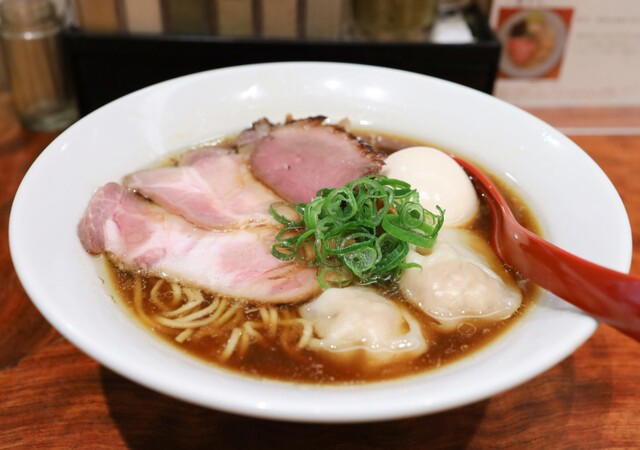
The menu
What to order
- Special Shoyu Ramen
- Special Niboshi Ramen
- Kombu-water Cold Ramen (Shio/Shoyu/Niboshi)
- Kamo Tsukemen (duck dipping noodles)
- Seasonal hiyashi shio soba
Approaching Sanmalo Toukyou ten in Tokyo, the dining rhythm shifts toward the focused quiet of a ramen shop. Tokyo’s serious ramen rooms often compress the transaction into a compact ritual: an order, a bowl, a timed handoff, and little tolerance for waste in food or motion. Sanmalo Toukyou ten fits that grammar. It belongs to the city’s ramen culture, where environmental restraint is often built into the model rather than advertised: short, purposeful meals, tight prep, and a menu culture that prizes broth management over abundance.
That matters because ramen is one of Tokyo’s clearest tests of casual precision. A bowl can cost less than a cocktail, yet better shops compete on technical decisions associated with higher-ticket dining: stock clarity, noodle timing, tare balance, heat retention, and inventory prepared without compromising service. Sanmalo Toukyou ten was selected for Tabelog Ramen TOKYO 100 in 2025, a useful signal in a category where local diners punish inconsistency quickly. Its Tabelog score of 3.77 places it in a competitive public-review tier for ramen, especially within a format that depends on repeatable execution.
A focused ramen shop in Tokyo's everyday dining economy
Tokyo is revealing ramen territory. Unlike more theatrical dining rooms, the city’s lunch and dinner culture can be practical, fast, and unforgiving. Office workers, students, and rail commuters form a natural audience for focused ramen shops, but they also create pressure: a venue must move cleanly, price sensibly, and deliver enough distinction to justify a wait when alternatives sit nearby. Peer choices range from budget-minded meals at Kagawa Ippuku Kanda ten to old-school coffee culture at Coffee Senmonten Ace and yoshoku at Loup de Mer. The city’s strength is not glamour; it is density, repetition, and the daily vote of regulars.
Focused ramen formats also change the sustainability conversation. In fine dining, environmental claims often arrive through sourcing manifestos. In ramen, the evidence is operational. A streamlined service model leaves less tolerance for overproduction, fewer idle table turns, and a closer link between prep volume and demand. The rhythm common to ramen culture reduces mismatch between expectation and execution: diners come for the bowl, not for a long, staged evening. That spareness is part of the category’s ethic: the bowl carries the argument.
Tokyo visitors often underestimate ramen specialization because the price band remains accessible. Sanmalo Toukyou ten sits at JPY 1,000 to JPY 1,999 for both lunch and dinner, far from tasting-menu economics and close to the city’s democratic craft tradition. Affordability does not mean casual execution. In ramen, the gap between ordinary and serious work is measured in repeatable technique, not tablecloths. The Tabelog 100 recognition gives the shop a credentialed place in that conversation without turning it into a luxury ritual.
The sustainability angle is discipline, not branding
Ramen is resource-intensive by nature: stock, noodles, aromatics, proteins, and condiments all demand planning. The more responsible shops need not announce virtue if the format itself limits excess. A focused ramen operation can calibrate portions, prep, and turnover with unusual accuracy. The trade-off is reduced diner flexibility. Larger groups, lingering, and special-event dining may be poor matches for a venue built around ramen pacing. For a solo diner or pair, the format has rare clarity: the kitchen’s choices are concentrated, service is direct, and the meal does not sprawl into unnecessary consumption.
The absence of a named chef in the provided public-facing information is not a weakness here; it keeps attention where ramen culture often places it, on repeatable house method rather than personality narrative. Tokyo has plenty of dining rooms where biography becomes the sell. Its ramen scene is often more transactional and, at its better addresses, more honest. Sanmalo Toukyou ten’s 2025 recognition shows the shop has held attention in a crowded category, while its accessible budget keeps the focus on controlled execution rather than special-occasion theater.
For readers mapping a broader Tokyo food day, the shop belongs in a practical cluster rather than a grand itinerary. Casual options such as Atsunko Pan and Andhra Dhaba Katana show how Tokyo mixes quick meals with specialist cooking, while broader city planning can branch through Our full Tokyo restaurants guide, Our full Tokyo bars guide, Our full Tokyo hotels guide, Our full Tokyo wineries guide, and Our full Tokyo experiences guide. The better comparison is not with long-form dining, but with other compact Tokyo choices where a narrow format carries the editorial point: quick meals, specialist lunch rooms, coffee stops, and other everyday dining rooms.
Who should choose this counter
This is a sharp fit for diners who value format over ceremony. Ramen culture, narrow focus, and an accessible budget suit people comfortable with Tokyo’s queue-and-eat dining rhythm. It is less suited to travelers seeking a slow dinner, large-party table, or drinks-led evening. The reward is a concise version of the city’s ramen intelligence: a recognized bowl category and a price point grounded in daily Tokyo rather than special-occasion spending.
Beyond this address, the useful parallel is Japan’s wider affection for specialized, modestly scaled food rooms: tightly defined menus and casual formats that rely on repetition rather than spectacle. For readers comparing Japanese casual formats abroad, the broader lesson is that tightly defined concepts travel differently once they leave the urban routines that make Tokyo ramen feel so natural. Sanmalo Toukyou ten is best understood within that local rhythm: focused, affordable, and judged by the bowl.
Frequently asked questions
What price level is Sanmalo Toukyou ten?
Pricing at Sanmalo Toukyou ten is listed as JPY 1,000 - JPY 1,999 JPY 1,000 - JPY 1,999 View spending breakdown.
What days is Sanmalo Toukyou ten closed?
Specific opening days and closing days are not included in the provided venue facts for Sanmalo Toukyou ten. Check the venue's official channels for the latest details.
Where is Sanmalo Toukyou ten located?
Tokyo.
What's the defining dish or idea at Sanmalo Toukyou ten?
The defining idea is ramen served in a focused Tokyo format, rather than a broad menu or formal dining room. Its inclusion in Tabelog Ramen TOKYO 2025’s Tabelog 100 points to a shop judged on consistency and execution.
Do they accommodate allergies at Sanmalo Toukyou ten?
No allergy policy is included in the provided venue facts for Sanmalo Toukyou ten. For strict allergies, the safest approach is to check before heading to the venue in Tokyo. Check the venue's official channels for the latest details.
Can I bring kids to Sanmalo Toukyou ten?
No child policy is included in the provided venue facts, so the clearest facts to weigh are the ramen category and the focused dining style. That format fits a quick Tokyo ramen stop more naturally than a long family meal.
Peers in This Market
Side-by-side context: comparable cuisine and price.
| Venue | Cuisine | Price | Awards | Notes |
|---|---|---|---|---|
| Sanmalo Toukyou tenThis venue (the venue you are viewing) | Specialty ramen (shoyu, niboshi & seasonal chilled bowls) | $10–20 | Tabelog 100 #35 | Not listed |
| Coffee Senmonten Ace | Not listed | Not listed | Tabelog 100 #44 | JPY 999 |
| Loup de Mer | Yoshoku (Japanese-style Western) | $10–20 | Tabelog 100 #72 | Yoshoku (Western) |
| Kagawa Ippuku Kanda ten | Sanuki udon & curry udon | $10–20 | Tabelog 100 #45 | JPY 999 - JPY 999 |
| Atsunko Pan | Artisan bread and bagel bakery | $1–10 | Tabelog 100 #49 | JPY 999 - JPY 999 |
| Andhra Dhaba Katana | Authentic Andhra Indian | $20–30 | Tabelog 100 #42 | Not listed |
Recognition history
Dated appearances from independent guides and award organizations, with the underlying list record or original source where available.
Tabelog 100 #35 · No. 35
Tabelog · Tabelog 100 - Ramen - TOKYO - 2025
Continue exploring
More in Tokyo
Restaurants in Tokyo
All restaurants in Tokyo →

Bars in Tokyo
All bars in Tokyo →

Details
- Modern
- Cozy
- Solo
- After Work
- Casual Hangout
- Chefs Counter
- Standalone
- Local Sourcing
- Sustainable Seafood
- A La Carte
- Counter Dining
- Pescatarian Friendly
Current opening hours
- Monday
- 11:30 AM–2:45 PM, 6–8:45 PM
- Tuesday
- 11:30 AM–2:45 PM, 6–8:45 PM
- Wednesday
- 11:30 AM–2:45 PM, 6–8:45 PM
- Thursday
- 11:30 AM–2:45 PM, 6–8:45 PM
- Friday
- 11:30 AM–2:45 PM, 6–8:45 PM
- Saturday
- Closed
- Sunday
- Closed
Hours can change for holidays and private events. Hours as of .
A small, stylish counter-only space with a relaxed but energetic ramen-shop atmosphere, focused on meticulous bowl preparation rather than lingering.