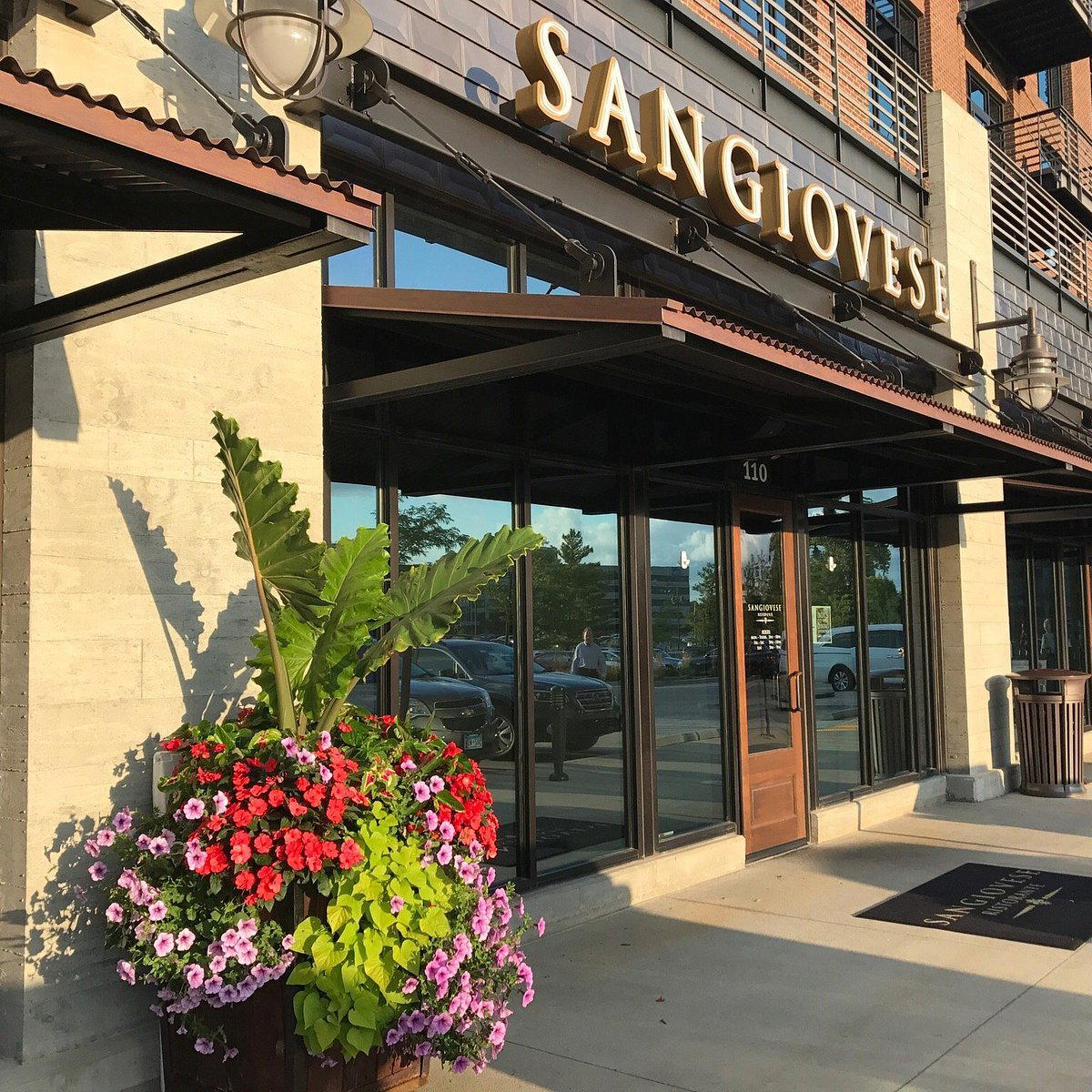
Sangiovese Ristorante
Our verdict
Sangiovese Ristorante operates from a strip-mall address on Indianapolis's north side that underplays what happens inside: Italian-influenced dining set within a city that has quietly built one of the Midwest's more considered restaurant scenes. The name signals the grape, the tradition, and an orientation toward the Italian table that positions it distinctly within Indianapolis's evolving dining conversation.

Pearl is the En Primeur Club membership app — saves, bookings, and concierge access live there. Same editors, same standards.
- Address
- 2727 E 86th St #110, Indianapolis, IN 46240
- Phone
- (317) 757-5913
- Hours
- Mon–Thu 5–9 PMFri–Sat 5–9:30 PMSun 5–8:30 PM
- Website
- sangioveseristorante.com
- Directions
- Get directions
- Booking
- Book on OpenTable
The menu
What to order
- Linguini Frutti Di Mare
- Penne Alla Medici
- Spaghetti Fra Diavolo
Italian Ambition on the North Side
Indianapolis's north corridor along 86th Street is not where most food writers plant their flags. Strip-mall addresses and suburban geometry dominate the stretch, and the city's more celebrated restaurant energy tends to cluster downtown or along Mass Ave. That context matters when reading Sangiovese Ristorante, which occupies suite 110 at 2727 E 86th Street — a location that, on paper, signals neighborhood convenience rather than destination dining. What the address underplays is the seriousness of intent that a name like Sangiovese projects. That grape, the backbone of Chianti and Brunello di Montalcino, is not a casual naming choice. It announces an orientation toward the Italian table rooted in the central Italian tradition, where wine and food are designed to meet each other halfway.
Italian restaurants in American cities occupy a wide spectrum, from red-sauce institutions that trade on nostalgia to ingredient-driven trattorias operating closer to the contemporary Italian model. Indianapolis has examples across that range. Balena Cucina Italiana and Ambrosia each represent distinct points on that spectrum within the city. Sangiovese's positioning on the north side places it in a different competitive geography entirely, serving a residential catchment that skews toward regulars rather than tourists or downtown explorers.
The Italian Table and the Question of Sourcing
The Italian culinary tradition has always carried an implicit sustainability argument, even before that word entered restaurant marketing. Cucina povera, the cooking of using what is available and wasting as little as possible, underpins much of what makes the Italian table compelling. Offal preparations, bread-based dishes, the careful use of cured meats stretched across multiple applications — these are not trendy gestures but structural features of a cuisine that developed under genuine resource constraint. An Italian restaurant that takes its name from a specific grape variety is, at least in aspiration, aligning with that tradition of deliberate, ingredient-respecting cooking.
Across the United States, the Italian-American dining scene has split between those operating as nostalgia delivery systems and those attempting to reconnect with the sourcing logic of the Italian original. Restaurants at the more considered end of that split tend to think carefully about where produce comes from, whether pasta is made in-house, and how proteins are treated before they reach the plate. Indiana's agricultural output, particularly in the growing season, gives north-side Indianapolis restaurants access to local supply chains that downtown venues sometimes overlook. The 86th Street corridor sits close enough to the suburban-rural fringe that local sourcing is logistically plausible in a way it isn't for venues in denser urban cores.
This wider trend toward sourcing transparency is visible at the national level across Italian-format dining. Single Thread Farm in Healdsburg and Blue Hill at Stone Barns in Tarrytown have each demonstrated, in different registers, that farm-to-table discipline and fine-dining ambition can coexist. Closer to Sangiovese's price tier and format, the more grounded approach to Italian sourcing plays out in quieter ways: the provenance of the flour in the pasta, the seasonality of what appears on the menu, the decision to rotate dishes rather than anchor them permanently to a printed card.
Indianapolis as a Dining City
The broader Indianapolis restaurant scene has matured considerably over the past decade. The city's food press has grown more critical, the dining public more demanding, and the chef community more interconnected. Aberdeen Social House and ATHENS ON 86th, the latter notably also on 86th Street, represent the neighborhood-dining character of that northern corridor, where the emphasis is on return visits and community anchoring rather than special-occasion spectacle. Bakersfield Mass Ave and institutions like Goose the Market speak to the city's appetite for produce-driven, ingredient-led eating that doesn't require a downtown address or a tasting menu format.
Within this context, an Italian restaurant named for a specific grape operates in a register that implies some wine seriousness alongside the food. Sangiovese-based wines demand food that can meet their acidity and structure, braised preparations, tomato-forward sauces, cured meats with enough fat to balance the grape's lean profile. A restaurant that announces its identity through that grape is making a claim about what happens at the table, not just what appears on the menu.
For reference against the national Italian dining conversation, the gap between Indianapolis's Italian restaurants and venues like Alinea in Chicago or the Italian-influenced programs at Le Bernardin in New York City is one of format and investment rather than intent. Midwestern Italian dining at its more serious end, think the neighborhood trattoria model rather than the tasting-menu format, shares more DNA with the Italian original than the white-tablecloth American-Italian tradition that defined the category through the 1990s. 8 1/2 Otto e Mezzo Bombana in Hong Kong demonstrates how far Italian fine dining can travel geographically while retaining structural integrity; the question for mid-market Italian in American cities is whether that integrity survives format simplification.
Planning a Visit
Sangiovese Ristorante is located at 2727 E 86th Street, suite 110, in Indianapolis's north side, a direct drive from the city center and directly accessible from the northern suburbs. The strip-mall setting means parking is not a consideration, which distinguishes it from the downtown and Mass Ave venues where street parking and garages add friction to the evening. For those building a broader Indianapolis itinerary, our full Indianapolis restaurants guide covers the range of the city's dining options across neighborhoods and price tiers. Specific hours, reservation policy, and current pricing are best confirmed directly with the restaurant before visiting, as those details vary and were not available at time of publication.
Frequently asked questions
Where is Sangiovese Ristorante in Indianapolis?
Sangiovese Ristorante is located at 2727 E 86th St #110, Indianapolis, IN 46240, Indianapolis.
Is Sangiovese Ristorante a good option for an Italian-focused dinner on Indianapolis's north side?
Sangiovese Ristorante is one of the few north-Indianapolis addresses that takes Italian cuisine as its central, rather than incidental, identity — the name itself references the grape behind Chianti and Brunello di Montalcino, suggesting a kitchen and room with Italian tradition as the organizing principle. Indianapolis's dining scene has grown more critical over the past decade, and venues with a clear culinary identity have found a durable audience.
What do people recommend at Sangiovese Ristorante?
Sangiovese Ristorante takes its name from one of Italy's most planted red grape varieties, which signals a kitchen oriented around the Italian canon rather than hybrid menus. Given the Italian focus and the north Indianapolis address at 2727 E 86th Street, regulars tend to gravitate toward pasta-forward dishes and whatever the kitchen runs as a daily special. For the most current picture of what's drawing repeat visits, checking recent local reviews from Indianapolis food press will give you the clearest read.
Can I walk in to Sangiovese Ristorante?
Sangiovese Ristorante sits in a suite at 2727 E 86th Street, a strip-mall format that typically supports walk-in traffic on weeknights, though weekend service at Italian restaurants in Indianapolis's north corridor tends to fill quickly. Calling ahead is the safer move if you're planning a Friday or Saturday visit. Reservation policy specifics are best confirmed directly with the restaurant.
Cuisine-First Comparison
Comparable venues nearby, for context on price, style, and recognition.
| Venue | Cuisine | Price | Awards | Notes |
|---|---|---|---|---|
| Sangiovese RistoranteThis venue — the venue you are viewing | Authentic Italian | $30–50 | Not listed | Not listed |
| Capri Ristorante | Classic Italian Trattoria | $30–50 | Not listed | Washington |
| Rosemary & Olive Restaurant | Modern Italian Trattoria | $30–50 | Not listed | Mass Ave |
| Iozzo's Garden of Italy | Traditional Southern Italian | $30–50 | Not listed | Pogue's Run |
| Bluebeard | Contemporary American Farm-to-Table | $50–100 | James Beard Award Semi Finalist | Fletcher Place |
| Ambrosia | Traditional Italian Trattoria | $30–50 | Not listed | Broad Ripple |