Samosa House
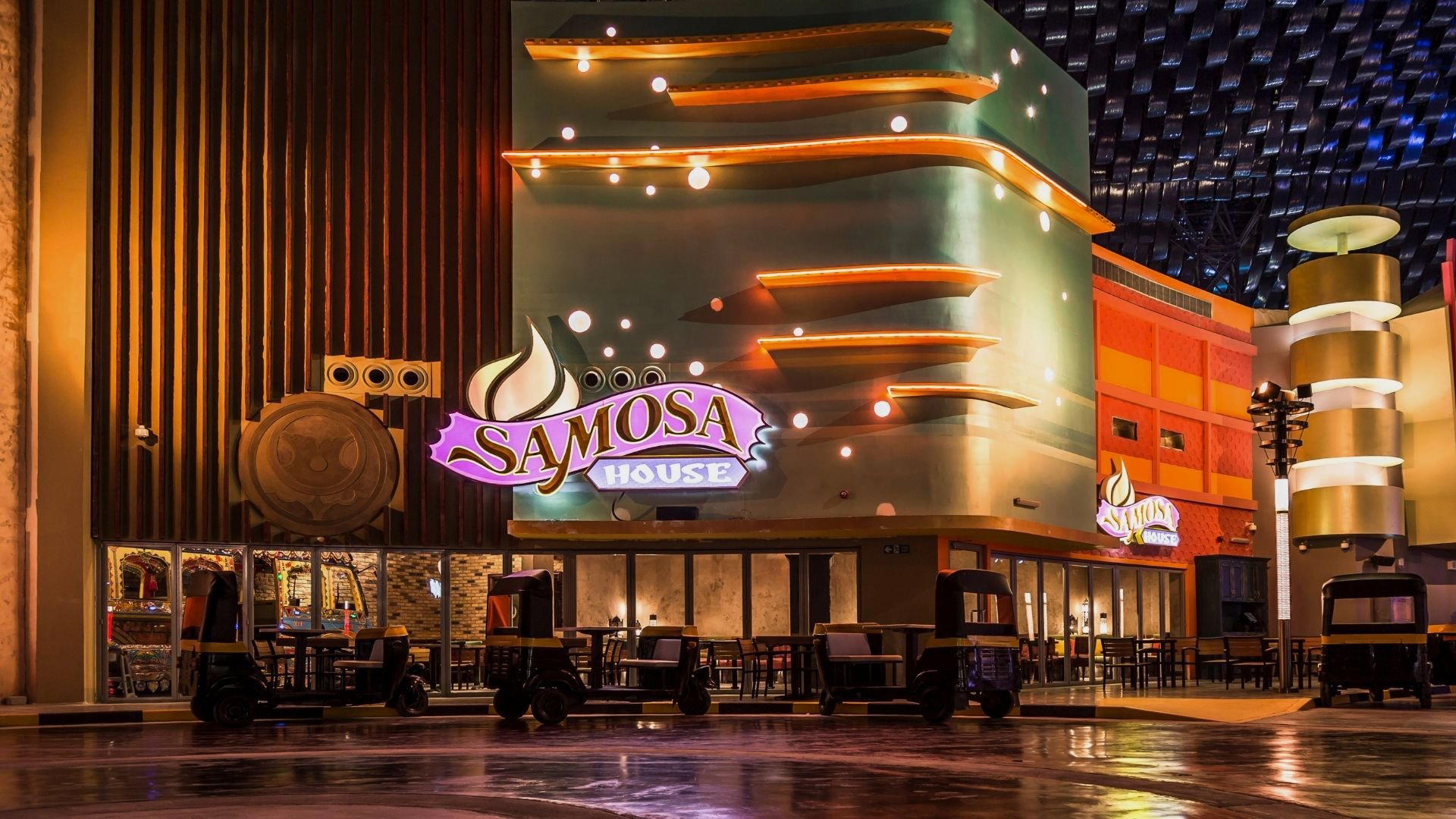
Samosa House sits in Dubai's City of Arabia district, where South Asian street food traditions meet a residential suburban setting far from the waterfront dining circuit. The venue draws on the samosa's deep roots across the Indian subcontinent and its diaspora, offering a format that prioritises casual, community-oriented eating over spectacle or ceremony.
 Discover on Pearl
Pearl is the En Primeur Club membership app — saves, bookings, and concierge access live there. Same editors, same standards.
- Address
- 38J9+GQP - Wadi Al Safa 4 - City of Arabia - Dubai - United Arab Emirates
City of Arabia and the Case for Neighbourhood Eating
Samosa House is a casual restaurant in Dubai serving Indian street food samosas in Wadi Al Safa 4, City of Arabia. Dubai's dining conversation defaults to the waterfront and the hotel tower. The addresses that dominate international coverage, Trèsind Studio for progressive Indian tasting menus, FZN by Björn Frantzén for Scandinavian technique, Row on 45 for creative formats with altitude, occupy a tier defined by ceremony and price. But Dubai's South Asian population, which accounts for a substantial share of the city's residents, has built a parallel infrastructure of casual eating that operates on entirely different logic. Samosa House, located in Wadi Al Safa 4 within the City of Arabia development, is part of that infrastructure: a neighbourhood venue serving a format rooted in subcontinental street food tradition rather than hotel dining theatre.
City of Arabia sits in the outer eastern reaches of Dubai, a planned district that lacks the density of Deira or the polished visibility of Downtown. That positioning matters for understanding what Samosa House is and who it serves. Venues in this part of the city are built around resident communities rather than tourist itineraries, which tends to produce a different calibration of authenticity, price, and repetition tolerance. When a restaurant depends on the same people coming back weekly rather than once in a lifetime, the food has to hold up under familiarity.
The Samosa as Cultural Object
The samosa is one of the most widely distributed foods in the world, having travelled from Central Asian origins across the Middle East and into the Indian subcontinent sometime in the medieval period. By the time it reached the Mughal courts, it had taken on the triangular pastry form now associated with South Asian cuisine. From there, it dispersed further: into East Africa through trade routes, into the UK and Canada through diaspora migration, into Dubai through one of the largest South Asian labour and professional migrations of the twentieth century.
In its subcontinental form, the samosa is street food in the most precise sense: high-calorie, portable, designed for consumption standing up, priced for daily access. The filling variations track regional identity closely, spiced potato and pea in the north, keema (minced meat) in parts of Punjab and Sindh, lentil fillings in other regions. A samosa vendor's repertoire is, in compressed form, a map of subcontinental cooking geography. That cultural density is what a venue named after the dish is implicitly invoking, and it sets up a particular kind of expectation: the food should taste like it comes from somewhere specific, not from a generic register of "Indian food."
Dubai has seen a sharp expansion in this kind of culturally grounded casual eating, particularly in areas with high South Asian residential density. The format sits in a different competitive set from venues like moonrise or 11 Woodfire, which are destination restaurants with deliberate occasion-dining positioning. The comparison set for Samosa House is neighbourhood dhabas, community canteens, and the informal lunch trade that keeps working Dubai fed between shifts.
South Asian Street Food in the Gulf Context
The Gulf's relationship with South Asian food is long and specific. Indian, Pakistani, and Bangladeshi workers have been present in the UAE in large numbers since the oil boom decades of the 1970s, and the food infrastructure that developed to serve them runs parallel to, and largely invisible from, the international tourism economy. Sharjah, Dubai's northern neighbour, maintains some of the most concentrated South Asian dining in the region; AL NAWAB RESTAURANT LLC in Sharjah is one reference point for the kind of subcontinental cooking that operates in that register. Dubai itself has pockets of similar character, particularly in Deira and Bur Dubai on the older creek side, and increasingly in suburban residential zones like City of Arabia as the population has dispersed.
What distinguishes Gulf-context South Asian cooking from its diaspora equivalents in London or New York is the proximity to the source. The clientele often includes people who grew up eating the regional originals, which compresses tolerance for adaptation. A samosa that drifts from its regional template in a London street market might pass without comment; the same drift in a Dubai neighbourhood canteen will be noticed immediately by the people the venue depends on. That accountability dynamic tends to produce food that is more disciplined about regional accuracy, even when the setting is informal.
For comparison, consider how the most precisely calibrated Indian fine dining in Dubai, Trèsind Studio still draws on subcontinental flavour logic as its foundation. The distance between a Michelin-starred tasting menu and a neighbourhood samosa house is enormous in terms of format and occasion, but both exist because Dubai's population creates genuine demand across that entire range. For the broader picture of where each venue type fits into the city's dining map, see our full Dubai restaurants guide.
Planning a Visit
Samosa House is located at the 38J9+GQP plus code in Wadi Al Safa 4, City of Arabia, a district that requires a car or rideshare, as public transport access is limited compared to central Dubai. The venue sits outside the hotel dining circuit entirely, which means no concierge-assisted booking channel and no online reservation infrastructure. Walk-in is the expected mode of arrival for a venue in this category and location. The surrounding City of Arabia area is still developing, so the dining context is primarily residential rather than destination-driven.
For travellers cross-referencing across the Gulf, Erth in Abu Dhabi represents a different point on the regional food spectrum, Emirati heritage cooking at higher formality, while the South Asian casual register that Samosa House occupies has its closest regional parallels in Sharjah's older commercial districts. For those whose Dubai trip includes fine dining at the higher end of the market, the contrast between venues like Row on 45 or moonrise and a neighbourhood spot in City of Arabia is precisely what makes Dubai's dining range worth understanding.
Comparable Venues
Comparable venues nearby, for context on price, style, and recognition.
| Venue | Cuisine | Price | Awards | Notes |
|---|---|---|---|---|
| Samosa HouseThis venue — the venue you are viewing | Indian Street Food Samosas | $ | , | |
| Ashiana | Dining | , | , | Nadd Al Shiba |
| Moon Slice Pizza | Modern Neapolitan Pizza | $$ | , | Jumeira |
| Askim Restaurant and Cafe | Mediterranean & Turkish Grill | $$ | , | Downtown Dubai |
| Café du Port | French‑Mediterranean Café & Breakfast Spot | $$ | , | Palm Jumeirah |
| 3 Fils Counter | Contemporary Asian with Japanese influence | $$$ | , | Jumeirah Fishing Harbour |
At a Glance
- Casual
- Casual Hangout
- Standalone
Casual cafeteria atmosphere focused on quick street food service.