Saltie Girl London
The London outpost of Boston's celebrated raw bar brings an Atlantic-sourced seafood program to the capital, where the emphasis falls on provenance, precision, and the kind of ingredient-led restraint that separates serious fish cooking from routine shellfish platters. Saltie Girl London sits in a narrow tier of London restaurants where what's on the plate is determined as much by the fishing vessel as the kitchen.

Pearl is the En Primeur Club membership app — saves, bookings, and concierge access live there. Same editors, same standards.
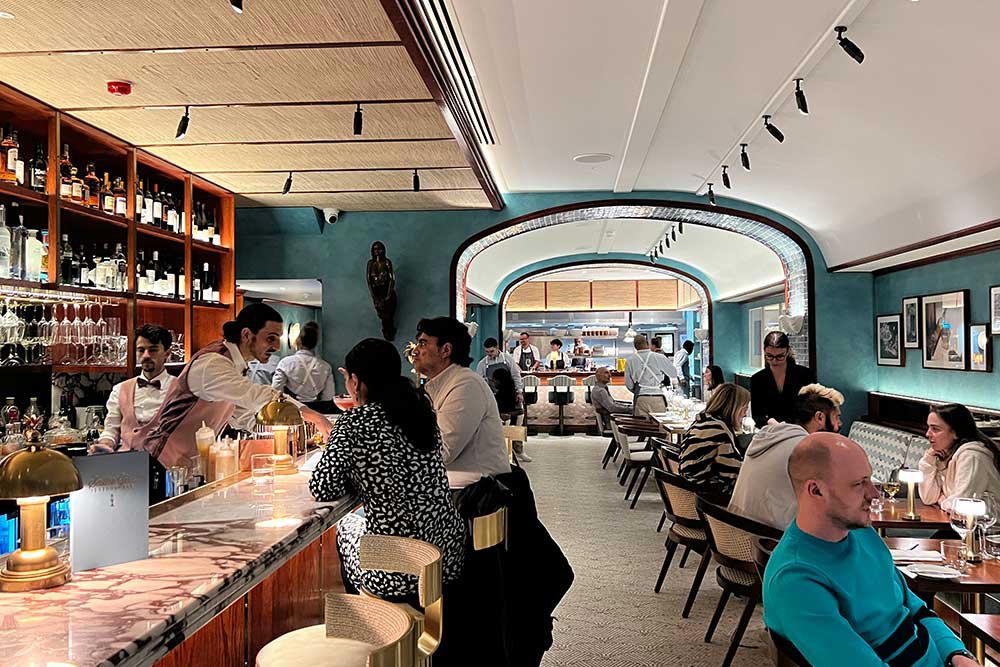
The Atlantic Supply Chain That Defines the Plate
London's serious seafood restaurants have spent the last decade splitting into two recognisable camps: the grand brasserie tradition, where plateau de fruits de mer arrives on ice towers with ceremony and fanfare, and a younger, more ingredient-obsessed school where the sourcing conversation precedes the service. Saltie Girl London is a restaurant in London serving premium tinned fish and New England seafood. Saltie Girl belongs squarely to the second group. Its Boston original built a reputation not on spectacle but on the quality and traceability of what it sources, and that philosophy travels across the Atlantic with the London address.
The Boston outpost became a reference point for the American east-coast seafood bar format precisely because its raw bar selection treated provenance as the primary editorial decision. In a city like London, where Billingsgate still anchors a serious wholesale trade and Scottish, Cornish, and Irish day-boat landings reach restaurant kitchens overnight, that emphasis on sourcing finds fertile ground. The question London diners will reasonably ask is whether the supply chain holds its integrity at this distance from the original context. Based on the format's track record, the answer hinges on sourcing relationships, not geography.
Where Saltie Girl Sits in London's Seafood Scene
London's premium seafood dining has a clear tier structure. At the formal end, establishments like Restaurant Gordon Ramsay or Sketch, The Lecture Room and Library will feature fish and shellfish within broader tasting menus, where the ingredient is one component of a composed, technique-driven dish. At the other end, neighbourhood fish-and-chip shops and brasserie-style oyster bars cover mass-market demand. Saltie Girl occupies a different position: a dedicated seafood counter format where the raw bar is the primary event and sourcing is the principal credential, not the cooking style.
That puts it in closer conversation with the ingredient-led Modern British contingent than with the classical French-influenced brigade. CORE by Clare Smyth and The Ledbury both operate on the premise that the quality of sourcing is the foundation of the dining experience; Saltie Girl applies that logic to a seafood-specialist format rather than a broader Modern British frame. Dinner by Heston Blumenthal, by contrast, represents the technique-forward pole of the capital's prestige dining, where the cooking transformation matters as much as the raw ingredient. Saltie Girl's register is the opposite: minimum transformation, maximum ingredient transparency.
The Sourcing Logic Behind a Raw Bar Format
The raw bar format is among the more demanding disciplines in ingredient-led cooking, precisely because there is nowhere to hide. An oyster arrives as it was harvested; a slice of crudo is judged entirely by the freshness and fat content of the fish at the moment it was caught. Cooking technique cannot correct a mediocre landing. This is why the Boston original's reputation rested so heavily on its tin fish program and its relationships with specific producers and fisheries, a model that the London address is expected to replicate in a European sourcing context.
British waters produce some of the North Atlantic's most sought-after shellfish. Native oysters from the Duchy of Cornwall and from the Thames Estuary carry protected designation status; Scottish langoustines and hand-dived scallops from the Orkney Islands have established international export markets. An ingredient-focused seafood bar in London has access to a supply network that, in raw material terms, is competitive with anything on the American east coast. The editorial interest of Saltie Girl London is how a Boston-born format adapts its sourcing philosophy to engage with these specifically British and Irish supply lines.
For comparative context, Le Bernardin in New York City demonstrates how an imported culinary tradition, in that case French technique applied to American seafood, can evolve into something that defines the destination rather than simply replicating an origin. The trajectory of Saltie Girl London will be worth watching for similar reasons.
Boston Influence and the Transatlantic Seafood Counter
The American seafood bar tradition that Saltie Girl's Boston location helped define is distinct from its European equivalents. Where the French plateau tradition is formal and architectural, and the British fish restaurant leans toward the brasserie model, the American east-coast raw bar developed as something more casual and encyclopaedic, with tin fish culture, regional oyster varieties, and crudo programs sitting alongside each other without hierarchy. That format, when transplanted to London, arrives as a genuine alternative to the local conventions rather than a direct imitation of them.
Comparable transatlantic transplants in the broader dining landscape, Atomix in New York City for Korean fine dining, or Lazy Bear in San Francisco for American tasting menu formats, show that particularly successful cross-cultural restaurant exports tend to carry a strong identity rather than trying to localise completely. The restaurant's long-term position in the market will depend on whether it maintains the specificity of the Boston sourcing philosophy or pivots toward a more generic London seafood vernacular.
Planning a Visit
Given the venue's Boston provenance and the profile of its original location, the restaurant is likely to attract a combination of American visitors already familiar with the brand and London diners drawn to the ingredient-focused format. The raw bar format generally suits lunch and early evening visits, when the day's deliveries are at their freshest and the pace allows for extended selection across multiple courses of shellfish, crudo, and tinned fish.
Those extending their travel beyond the capital will find contrasting seafood and ingredient-led dining at Corner Shop in Glasgow, which operates in proximity to Scotland's notable shellfish supply chains, and Franc in Canterbury for a different register of ingredient-led cooking in the southeast. Further afield, Alain Ducasse at Louis XV in Monte Carlo and Emeril's in New Orleans offer contrasting reference points for how European and American culinary traditions handle premium seafood at a formal register. The Highland Laddie in Leeds rounds out the UK options for those tracing a northern itinerary.
Credentials Lens
Comparable venues nearby, for context on price, style, and recognition.
| Venue | Cuisine | Price | Notes |
|---|---|---|---|
| Saltie Girl LondonThis venue — the venue you are viewing | Premium Tinned Fish & New England Seafood | $$$ | Not listed |
| Melusine | Modern Mediterranean Seafood | $$$ | Wapping |
| Pearly Queen | Modern Seafood & Oyster Bar | $$$ | Spitalfields |
| Fishworks - Marylebone | Fresh Seafood with British Influences | $$$ | Marylebone |
| fish | Classic British Seafood | $$$ | Borough |
| Smith's of Wapping | Classic British Seafood Brasserie | $$$ | Wapping |
Continue exploring
More in London
Restaurants in London
Browse all →

Bars in London
Browse all →
Hotels in London
Browse all →






At a Glance
- Trendy
- Elegant
- Lively
- Sophisticated
- Date Night
- Special Occasion
- Casual Hangout
- Open Kitchen
- Craft Cocktails
- Natural Wine
- Sustainable Seafood
Iridescent interiors in turquoise, cream, and gold with sparkling walls, glimmering tables, and twinkling tiles, creating a chic nautical atmosphere.