
A South African concept inside Doha's Andaz hotel, Salt Road frames its menu around curing, pickling, and preservation traditions imported directly from the Cape. Shelves of global salts signal the kitchen's sourcing logic before a plate arrives. The steaks and Josper-roasted vegetables hold the menu together, with South African wines available by the glass to complete the picture.
Pearl is the En Primeur Club membership app — saves, bookings, and concierge access live there. Same editors, same standards.
- Address
- Andaz Doha Hotel, 23 Diplomatic Street, Zone 61, West Bay, Doha, Qatar
- Website
- hyattrestaurants.com
- Directions
- Get directions
 Saves & bookings on Pearl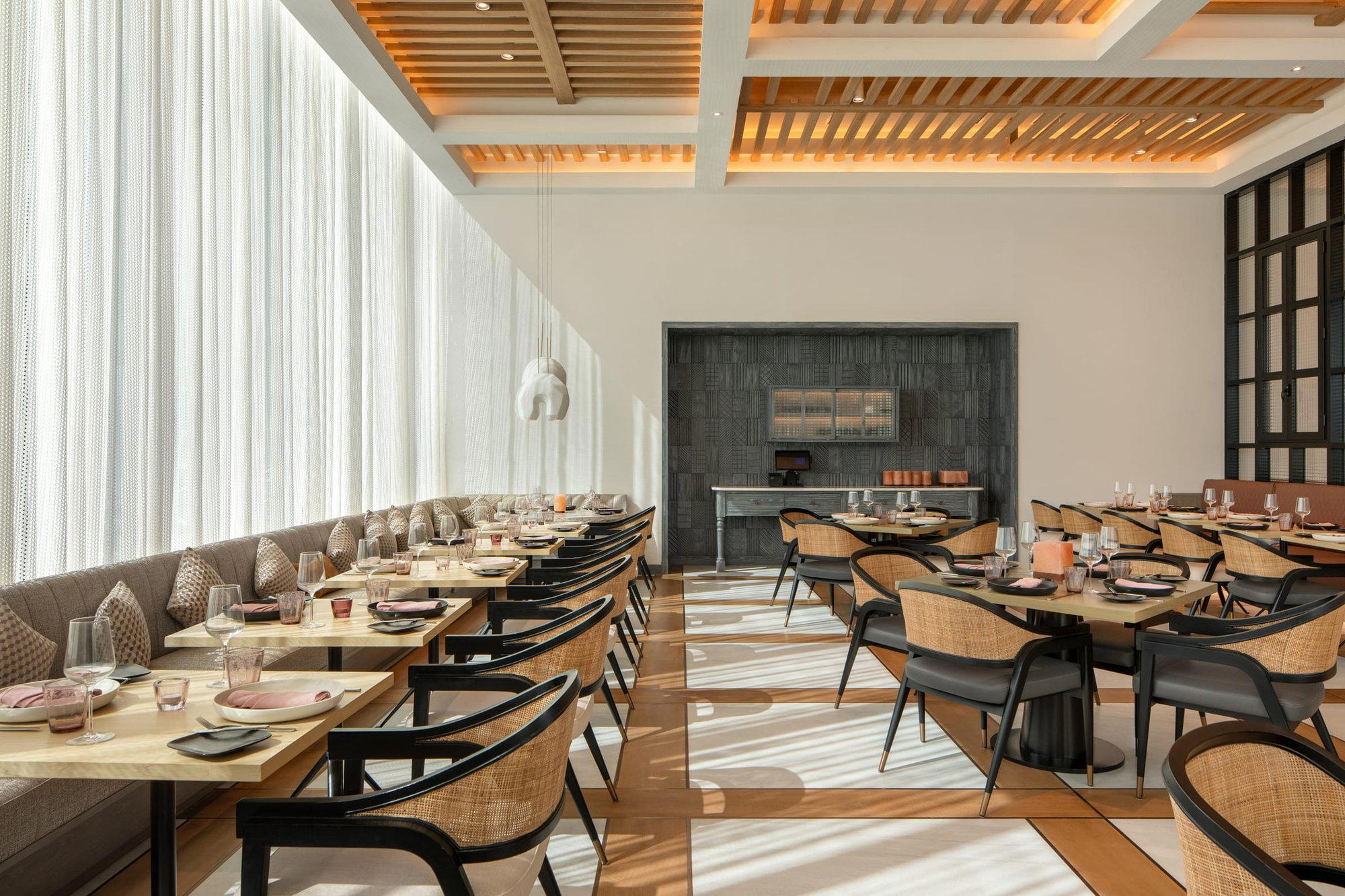
Preservation as a Menu Philosophy
In West Bay's hotel dining corridor, where most menus read as international aggregations, Salt Road takes a narrower and more committed position: South African cuisine built around the logic of curing, pickling, and preservation. The concept travels directly from the Cape, where preserving food through salt was not a stylistic flourish but a practical necessity that shaped an entire culinary tradition. That backstory is made legible the moment you enter the dining room at the Andaz Doha, where shelves stacked with salts sourced from around the world serve as both décor and declaration of intent.
It is worth comparing this approach to what is happening elsewhere in Doha's dining scene. IDAM by Alain Ducasse frames its menu through classical French technique with a regional lens; Argan anchors its cooking in Moroccan tradition. Salt Road occupies a different niche entirely, importing a culinary identity from the southern tip of Africa rather than drawing on the region's own heritage. In Doha's current dining environment, that kind of single-origin specificity is less common than the hybrid formats that dominate hotel menus.
What the Shelves Are Telling You
The salt collection displayed throughout the room is not decoration for its own sake. South African food culture has long made salt-based preservation central to its pantry: biltong, boerewors, pickled fish, and cured meats are products of a tradition that predates refrigeration and shaped domestic cooking across generations. By staging that history visually, the restaurant gives the menu a frame that makes individual dishes more legible.
Globally, preservation-led cooking has gained significant traction at restaurants working in a different register. Aponiente in El Puerto de Santa María has built a three-Michelin-star program partly around marine preservation and fermentation. Lazy Bear in San Francisco integrates curing and fermentation into a communal tasting format. Salt Road is not operating in that fine-dining register, but the underlying sourcing logic connects to a broader shift in how serious kitchens think about ingredient preparation: where a product comes from matters less if you do not understand how to extend and transform it through salt, acid, and time.
The Menu in Practice
The format is built around sharing, which suits the preservation-driven kitchen well. Cured and pickled preparations lend themselves to grazing rather than individual plates, and the brisket that has been through a curing process arrives as a result of that approach. The Josper-roasted mushrooms reflect a different but complementary technique: the Josper oven, a Spanish-made charcoal-and-gas hybrid used by restaurants ranging from Le Bernardin to mid-market steakhouses, produces high-heat roasting with smoke character that suits strong vegetables and proteins alike.
The steaks are the menu's most prominent category and the dishes that most directly connect to South African braai culture, where fire-cooked meat holds social and culinary significance well beyond what a standard steakhouse format would suggest. At Atomix in New York or 8½ Otto e Mezzo Bombana in Hong Kong, the cultural specificity of a cuisine is often carried by technique and provenance narratives. At the restaurant, it is carried by fire and salt in more direct terms.
Team's fluency with the menu is worth noting as a practical point. South African cuisine is not widely documented in international food media and carries none of the shorthand recognition that French or Japanese cooking does in Doha. Asking the front-of-house for guidance is a reasonable strategy rather than a concession, and the staff's ability to explain the preservation logic behind individual dishes reportedly makes the menu more navigable for first-time visitors.
The Wine Angle
South African wine is available by the glass and bottle, which completes the sourcing coherence of the concept. The Cape's wine industry produces Chenin Blanc and Pinotage at a range of quality levels, and the better examples from Stellenbosch and Swartland have gained real recognition in international markets over the past decade. Offering those wines alongside South African food in a Doha hotel context is not merely thematic consistency; it gives diners who are unfamiliar with either the food or the wine an opportunity to experience both in context, which is a more useful introduction than encountering either in isolation.
Where Salt Road Sits in West Bay's Hotel Dining
West Bay's hotel restaurants cover a wide range. At one end, IDAM by Alain Ducasse operates at the highest price tier with formal French technique. At the other, more casual regional formats serve the district's business and diplomatic population. The restaurant sits in a middle band where the food has genuine conceptual grounding and cultural specificity, but the sharing format and hotel-restaurant context keep it accessible rather than ceremonial.
Nearby alternatives for different moods include Baron for Middle Eastern cooking, Alba for Italian, and Bayt Sharq for another take on the region's own culinary traditions. See also our full Doha experiences guide for non-dining programming in the city.
The restaurant is located inside the Andaz Doha at 23 Diplomatic Street, Zone 61, West Bay. The hotel-restaurant format means walk-in access is generally possible, though booking ahead avoids uncertainty during peak evening service. For full planning context across the city's accommodation options, see our full Doha hotels guide.
Quick Comparison
Comparable venues nearby, for context on price, style, and recognition.
| Venue | Cuisine | Price | Awards | Notes |
|---|---|---|---|---|
| Salt RoadThis venue — the venue you are viewing | Modern South African-Inspired | $$$$ | Michelin Plate | Not listed |
| Curiosa by Jean-Georges | Modern Latin American | $$$$ | Michelin Plate | West Bay |
| Kai’s Songbird | Modern Nanyang Chinese | $$$$ | Michelin Plate | The Pearl |
| Sora Restaurant | Modern Japanese Rooftop | $$$$ | Not listed | Msheireb Downtown |
| Dalchini | Progressive Indian | $$$ | Michelin Plate | West Bay |
| Zuma | Modern Japanese Robata | $$$$ | Michelin Plate | Al Maha Island |
Recognition history
Dated appearances from independent guides and award organizations, with the underlying list record or original source where available.
Michelin Plate
Michelin
Continue exploring
More in Doha
Bars in Doha
Browse all →
At a Glance
- Modern
- Cozy
- Elegant
- Trendy
- Date Night
- Brunch
- Business Dinner
- Open Kitchen
- Extensive Wine List
- Farm To Table
Warm lighting and cozy accents by night, sociable open seating by day with an interactive open kitchen.