A salsamenteria by name and Italian deli tradition by DNA, this Rue Saint-Georges address in Paris's 9th arrondissement brings cured-meat and charcuterie culture from Parma into a neighbourhood already stacked with independent food destinations. The menu architecture follows the logic of the Italian salumeria: preserved, cured, and aged products as the primary lens, not the garnish. For those tracking where the 9th's food scene is moving, it belongs on the list.
Pearl is the En Primeur Club membership app — saves, bookings, and concierge access live there. Same editors, same standards.
- Address
- 40 Rue Saint-Georges, 75009 Paris, France
- Phone
- +33148245894
- Website
- salsamenteriadiparma.com
- Directions
- Get directions
 Saves & bookings on Pearl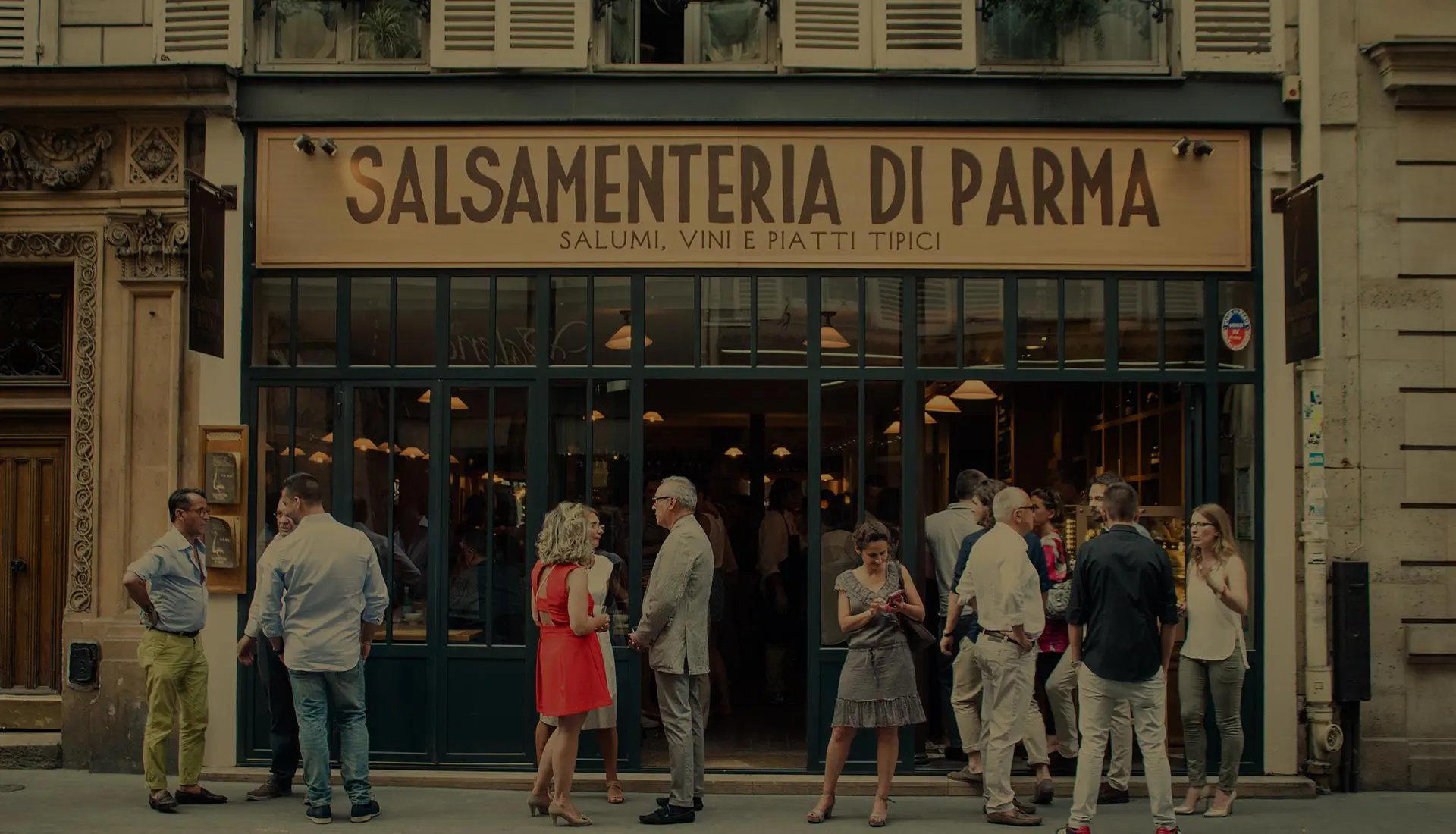
Where Italian Salumeria Culture Lands in Paris's 9th
The salsamenteria is a particular Italian institution: a shop, a counter, sometimes a seated room, organised entirely around the logic of preserved and cured products. Prosciutto di Parma, culatello, coppa, salami under various regional designations, these are not accompaniments to a main event but the main event itself. The format has deep roots in Emilia-Romagna, where the city of Parma lent its name to some of Italy's most protected and geographically specific food products. That tradition arriving at 40 Rue Saint-Georges in Paris's 9th arrondissement is not incidental: the 9th has developed into one of the more interesting corridors for independent, produce-led food addresses outside the obvious arrondissements that attract most critical attention.
Salsamenteria di Parma occupies that intersection, an Italian cured-meat and preserved-food identity transplanted into a Paris neighbourhood that has accumulated enough serious independent operators to form a genuine character of its own. The address sits in a stretch of the 9th that runs between the Grands Boulevards energy to the south and the quieter domestic grid around Pigalle and Notre-Dame-de-Lorette to the north. It is a practical location for residents, but also one that has attracted the kind of food businesses that rely on regulars rather than tourist foot traffic.
Menu Architecture: The Salumeria as Editorial Structure
What a menu organised around the salsamenteria model actually does is impose a discipline that most Paris restaurant menus resist. In the conventional French or Italian restaurant, the menu reads as a hierarchy: amuse-bouche, starter, main, cheese, dessert. The salumeria format inverts that hierarchy, or more precisely, it flattens it. Cured meats, aged cheeses, preserved vegetables, and the breads and condiments that serve them are not organised into courses so much as into families, by product type, by region of origin, or by the particular producer or aging method that distinguishes them.
That structure tells the reader something specific: the quality argument here rests on sourcing and selection rather than on kitchen transformation. A sliced culatello stagionato needs almost nothing done to it; the work happened in the curing room over months, not on the pass in the last four minutes before service. This is a fundamentally different quality signal than what you find at, say, Arpège, where the kitchen's treatment of seasonal produce is the argument, or at Alléno Paris au Pavillon Ledoyen, where technical elaboration across a long tasting format defines the proposition. The salumeria model says: the product is already the finished thing. The kitchen's job is selection, temperature, and restraint.
In practice, a well-run address in this format should anchor its selection around DOP and IGP-protected products from Parma and the broader Emilia-Romagna region, supplemented by a curated wine list that complements rather than competes. The pairing logic is regional rather than aspirational: Lambrusco against fatty salumi, a Malvasia dei Colli di Parma against more delicate aged meats. That regional coherence is the mark of a menu that has been built with an argument in mind rather than assembled for surface variety.
The 9th's Independent Food Identity
Paris's 9th arrondissement has built a food identity that is distinct from the highly awarded rooms that dominate critical conversation. Where L'Ambroisie on the Place des Vosges and Le Cinq at the Four Seasons George V represent the formal summit of classical Paris dining, the 9th operates in a different register: smaller, less formal, more likely to be built around a specific product category or regional identity rather than a comprehensive French service format.
This is not a lesser tier so much as a different one. The 9th's leading addresses tend to attract a clientele that knows what it is coming for, a particular producer's cheese, a specific Italian region's cured meats, a natural wine selection that rewards revisiting. That relationship between a specific, knowledgeable audience and a focused product identity is exactly the context in which a salsamenteria format functions well. It requires customers who understand what they are being offered and why the sourcing argument matters.
That kind of granular product focus connects the 9th's independent food scene to something happening more broadly in French dining: a growing interest in the product itself as the story, not just the technical execution of it. You see a version of this argument in regional France too, at Bras in Laguiole, where the terroir of the Aubrac plateau is the foundational premise, or at Auberge du Vieux Puits in Fontjoncouse, where a remote location and local producer relationships define the menu's credibility. The salsamenteria model is a more compressed version of the same logic.
Where This Address Fits Among Italian-Leaning Paris Destinations
Paris has a range of addresses where Italian food culture intersects with French urban eating habits, but the salsamenteria format is genuinely scarce compared to the volume of Italian restaurants that follow conventional trattoria or osteria structures. Most Italian restaurants in Paris import the format as much as the ingredients: pasta courses, secondi, the familiar rhythm of a seated Italian meal. An address organised around the salumeria counter and the preserved-product selection represents a smaller cohort, and one that requires a more specific supply chain to do credibly.
The protected designation credentials that matter here, Prosciutto di Parma DOP and Parmigiano-Reggiano DOP being the internationally recognised, carry real sourcing obligations. An address that takes those designations seriously as a foundation rather than a marketing shorthand is making a claim that can be verified at the counter: the correct fat-to-lean ratio in a properly aged prosciutto, the crystalline texture of a 24-month Parmigiano, the particular floral depth of a culatello from the fog-prone banks of the Po near Zibello. These are not aesthetic preferences but the result of specific geographic conditions and production protocols. For comparison, the kind of sourcing rigour applied to French-origin produce at places like Mirazur in Menton or Flocons de Sel in Megève applies just as directly to Italian cured meats when the sourcing argument is taken seriously.
For a broader map of where this address sits within Paris dining, see our full Paris restaurants guide.
Planning Your Visit
The following table positions Salsamenteria di Parma against comparable Paris dining formats on the dimensions most relevant to planning:
| Venue | Format | Price Tier | Booking Lead Time | Leading For |
|---|---|---|---|---|
| Salsamenteria di Parma | Italian salumeria / counter | €€ | Recommended | Cured meats, Italian preserved products |
| Kei | Contemporary French-Japanese | €€€€ | Several weeks ahead | Technical fusion tasting menus |
| L'Ambroisie | Classic French haute cuisine | €€€€ | Weeks to months ahead | Formal classical French service |
| Le Cinq | Grand hotel French modern | €€€€ | Weeks ahead | Occasion dining, hotel setting |
Price per person is about $20, and reservations are recommended. The 9th arrondissement is served by the Saint-Georges metro station (line 12), which places the address within easy reach from most central Paris points.
Comparable Options
Comparable venues nearby, for context on price, style, and recognition.
| Venue | Cuisine | Price | Notes |
|---|---|---|---|
| Salsamenteria di ParmaThis venue — the venue you are viewing | Traditional Parma Trattoria | $$ | Not listed |
| Fimmina - Pizzeria Paris 9 | Artisanal Italian Pizzeria & Wine Bar | $$ | 9th arrondissement |
| Zola | Italian Trattoria & Pizza | $$ | Vivienne (Passage des Panoramas) |
| DICE Caffè | Seasonal Italian Bistro | $$ | Le Marais |
| Signorvino Paris | Italian trattoria & wine bar | $$ | Latin Quarter |
| Il Cuoco Galante | Modern Italian Trattoria | $$ | 9th Arr. |
At a Glance
- Cozy
- Rustic
- Intimate
- Casual Hangout
- Date Night
- Standalone
- Extensive Wine List
Current opening hours
- Monday
- 12–3 PM, 6:15–11:15 PM
- Tuesday
- 12–3 PM, 6:15–11:15 PM
- Wednesday
- 12–3 PM, 6:15–11:15 PM
- Thursday
- 12–3 PM, 6:15–11:15 PM
- Friday
- 12–3 PM, 6:15–11:15 PM
- Saturday
- 12–4 PM, 6 PM–12 AM
- Sunday
- 12–4 PM, 6:30–10:30 PM
Hours can change for holidays and private events. Last verified .
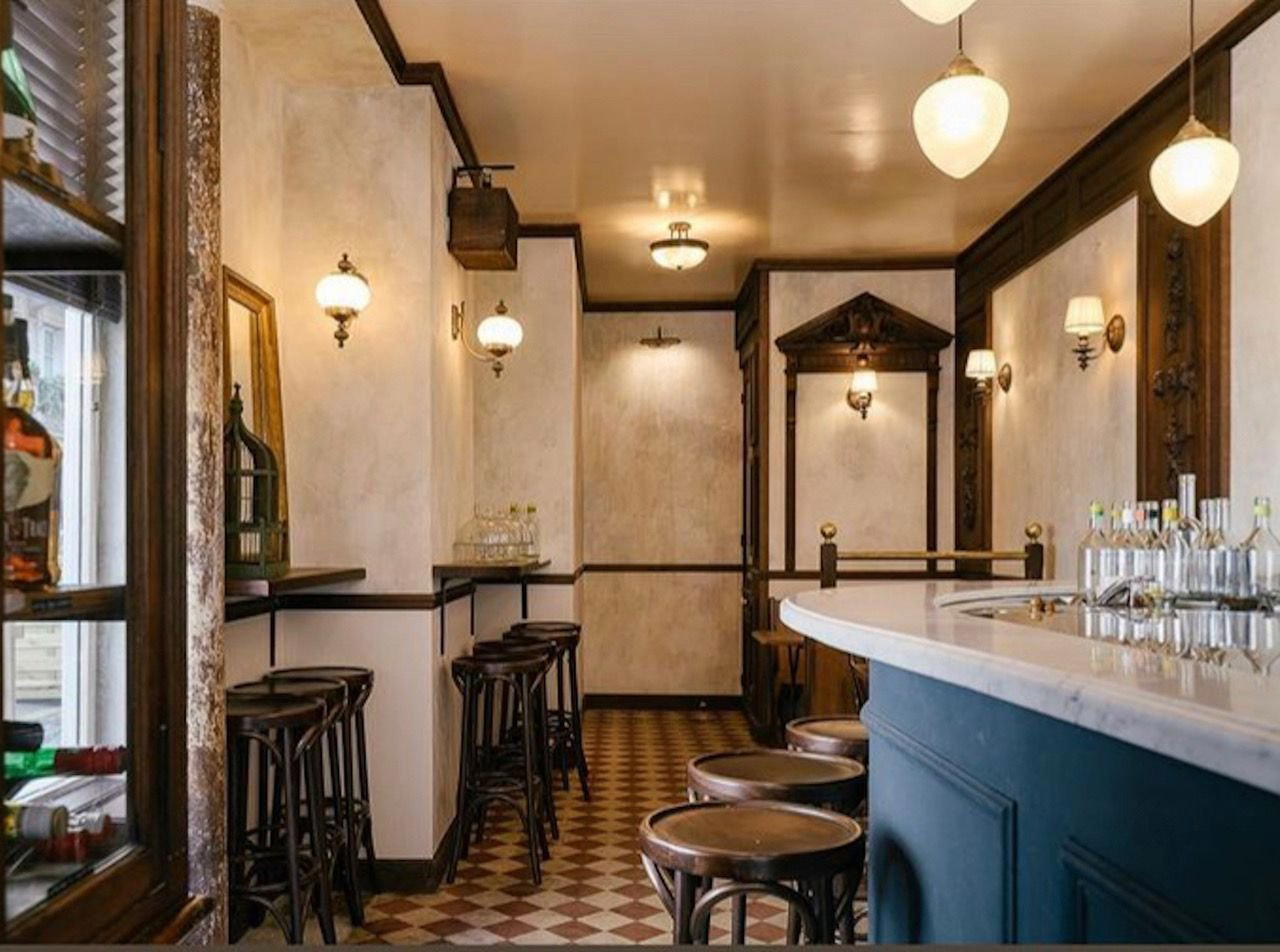
Warm and friendly with a cozy, rustic atmosphere evoking northern Italy.