In the Lika highland village of Sinac, Ruspante operates at the intersection of Croatian countryside tradition and ingredient-led cooking, drawing on the agricultural rhythms of one of Croatia's least-visited interior regions. The address alone, a working village rather than a coastal resort, signals a different set of priorities from the Adriatic dining circuit.
Pearl is the En Primeur Club membership app — saves, bookings, and concierge access live there. Same editors, same standards.
- Address
- Sinac 135, 53224, Sinac, Croatia
- Phone
- +38553787787
- Website
- facebook.com
- Directions
- Get directions
 Saves & bookings on Pearl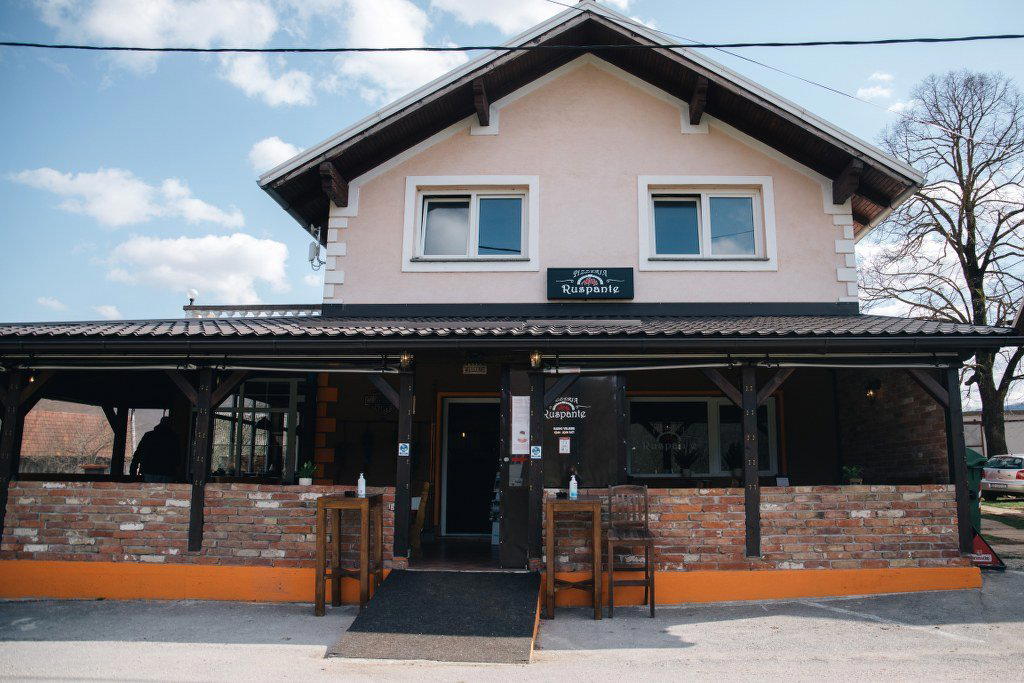
Where the Interior Sets Its Own Terms
Croatia's dining conversation runs almost entirely along the coast. Dubrovnik, Split, Rovinj, Sibenik, the Adriatic strip concentrates the awards, the press attention, and the international visitor flow. Venues like Pelegrini in Sibenik and Restaurant 360 in Dubrovnik operate in a well-mapped premium tier, priced against international tourism demand and positioned for guests who arrive by ferry or charter. The Lika region, inland and refined, runs on a different calendar and a different economy entirely. Sinac sits in that landscape at roughly 500 metres above sea level, framed by the Munjava river valley and close to Plitvice Lakes National Park, a geography that defines what grows, what grazes, and what reaches the kitchen.
Ruspante, at Sinac 135, is a casual Croatian Neapolitan Pizza restaurant in Sinac, Croatia. The village format places it outside the coastal hospitality apparatus and inside something older: the kind of Croatian interior cooking that predates tourism as an organising principle. In Lika, that means lamb, game, river fish, dairy from highland pasture, and foraged ingredients whose availability follows altitude and season rather than supply chain. For a reader calibrated on Croatian food media, Sinac offers a different idea of a dining destination.
The Sourcing Logic of Highland Lika
The editorial angle that matters most at a place like Ruspante is its supply geography. Lika's agricultural character is shaped by elevation, a short growing season, and a pastoral tradition that kept the region economically distinct from the coast even during the Yugoslav period. The lamb here carries the mineral quality of high-altitude grazing on thin limestone soils, a profile that recurs in other European highland cuisines, Castilian lechazo, Pyrenean agneau de lait, and that depends entirely on proximity. It does not travel into the coastal kitchen economy without losing the argument.
Game is a similar case. Wild boar and deer from the Velebit mountain range, which frames the eastern edge of Lika, reach local tables through a hunting and butchery culture that has no equivalent in Dalmatia. River fish from the Gacka, one of Croatia's cleanest chalk-stream systems, represents the kind of protein source that appears rarely on Croatian menus outside this zone. The Gacka's brown trout in particular has a regional reputation among people who follow freshwater fishing in the Balkans. At the broader category level, dining in Croatia's interior is defined by this kind of hyper-local supply specificity, ingredients that exist in the restaurant because they exist in the surrounding countryside, not because a distributor brings them from elsewhere.
This sourcing logic places Ruspante in a different comparative set from coastal Croatian fine dining. The relevant peer frame is not Agli Amici Rovinj or Nebo by Deni Srdoč in Rijeka, both of which operate within coastal or port-city culinary traditions. It is closer, conceptually, to inland Croatian restaurants like Korak in Jastrebarsko or Dubravkin Put in Zagreb, where the kitchen's relationship to the continental interior determines the menu's character. The difference is that Sinac is more rural and more remote than either of those addresses.
The Physical Setting and What It Tells You
Arriving in Sinac means driving through the Lika plateau, past a sequence of small villages, karst outcrops, and working farms that give no indication of proximity to a dining destination in any conventional sense. That approach is itself informative. The restaurants that operate in this context are not built around destination dining in the international sense, they are built around place, and the reader who finds them is usually either local, returning, or specifically seeking this kind of removal from the coastal circuit.
The physical setting of a highland Croatian village in Lika tends toward stone construction, low ceilings, and interiors organised for warmth rather than spectacle, functional architecture shaped by a climate that takes winter seriously. The surrounding terrain, particularly with Plitvice Lakes National Park nearby, draws visitors with a specific orientation: outdoor activity, national park access, and Croatian interior culture rather than beach holidays. That visitor profile tends to spend differently and prioritise differently from the Adriatic tourist. It also tends to eat earlier and with greater appetite after a day on trails.
How Ruspante Fits the Broader Croatian Interior Picture
Croatia's interior dining scene is less consolidated than its coastal equivalent and less well-documented in international food media. The Adriatic tier, from LD Restaurant in Korčula to Krug in Split, has a recognisable premium identity built around seafood, wine from Dalmatian varieties, and a price architecture that reflects coastal real estate and international demand. The interior has no equivalent organising logic. Places like Ruspante operate in a more dispersed market, serving a mix of regional visitors, travellers passing through to or from Plitvice, and guests from Zagreb who make the drive for a specific kind of meal.
That dispersal means interior Croatian restaurants often carry more of the local agricultural economy than their coastal peers. An island restaurant can source broadly from the Adriatic; a Lika restaurant is more dependent on what surrounds it, which is both a constraint and a form of authenticity that is difficult to manufacture. The parallel exists elsewhere in Europe, the Auvergne in France, the Asturian interior in Spain, highland Umbria in Italy, where remoteness and agricultural tradition produce a cooking identity that is resistant to trend because it is tied to supply rather than fashion.
Other interior and island-adjacent addresses worth cross-referencing include Boskinac in Novalja, which represents the island-agriculture model on Pag, Bodulo in Pag, and BioMania Bistro Bol in Bol, which applies an ingredient-focused approach in a Dalmatian island context.
Planning a Visit
Sinac is accessible by road from Otočac, which sits on the main route between the coast and Zagreb. The drive from Zagreb runs approximately two hours via the A1 motorway, with a turn toward Otočac before the descent to the Dalmatian coast. From Zadar or Split, the journey inverts that route. Plitvice Lakes National Park sits roughly 30 kilometres south, which makes the area viable as a one-night or two-night stop on a Zagreb-to-coast itinerary. Seasonality matters here more than on the coast: summer brings the national park visitor peak, while autumn is when game and foraged produce are most available. Spring, when the Gacka runs cold and clear, is favoured by those who come for the river.
For reference points on how Croatian coastal fine dining structures itself by comparison, Alfred Keller in Mali Lošinj, Cantilly Garden Restaurant in Samobor, Cubo in Opatija, and Burin in Crikvenica each illustrate how the Kvarner and northern Adriatic tier operates at a different register from the Lika interior. At the international end of the spectrum, Le Bernardin in New York City and Atomix in New York City represent the benchmark for what sourcing-led and produce-driven cooking looks like at its most formalised, a useful calibration point for understanding how much the Lika approach relies on informality and proximity rather than technique as a selling argument.
How It Stacks Up
Comparable venues nearby, for context on price, style, and recognition.
| Venue | Cuisine | Price | Notes |
|---|---|---|---|
| RuspanteThis venue — the venue you are viewing | Croatian Neapolitan Pizza | $ | Not listed |
| Amfora | Fresh Seafood Bistro | $ | Dolac |
| Antiqua Osteria da Ugo | Italian Osteria with Croatian Influences | $$ | Opatija |
| Maki | Traditional Croatian Barbecue | $$ | Gospic |
| Kuća Rabske Torte | Traditional Croatian Rab Cake (Rapska Torta) | $$ | Old Town |
| Bistro Noir | Modern Italian | $$ | city center |
Continue exploring
More in Sinac
Restaurants in Sinac
Browse all →
Hotels in Sinac
Browse all →
Wineries in Sinac
Browse all →
At a Glance
- Rustic
- Cozy
- Scenic
- Family
- Casual Hangout
- Waterfront
- Local Sourcing
- Waterfront
Current opening hours
- Monday
- 1–11 PM
- Tuesday
- 1–11 PM
- Wednesday
- 1–11 PM
- Thursday
- 1–11 PM
- Friday
- 1–11 PM
- Saturday
- 1–11 PM
- Sunday
- 1–11 PM
Hours can change for holidays and private events. Last verified .
Lovely rustic interior in a former blacksmith shop with window views of the scenic Gacka River springs and historic mills.