Rumba Cubana
Our verdict
Rumba Cubana sits at 1807 45th Street in North Bergen, NJ, representing the Cuban dining tradition that has quietly taken root on the Hudson County side of the New York metro. The address puts it well outside Manhattan's dining circuit, which is precisely where Cuban cooking in New Jersey tends to find its most grounded expression, closer to community than to culinary theater.

Pearl is the En Primeur Club membership app — saves, bookings, and concierge access live there. Same editors, same standards.
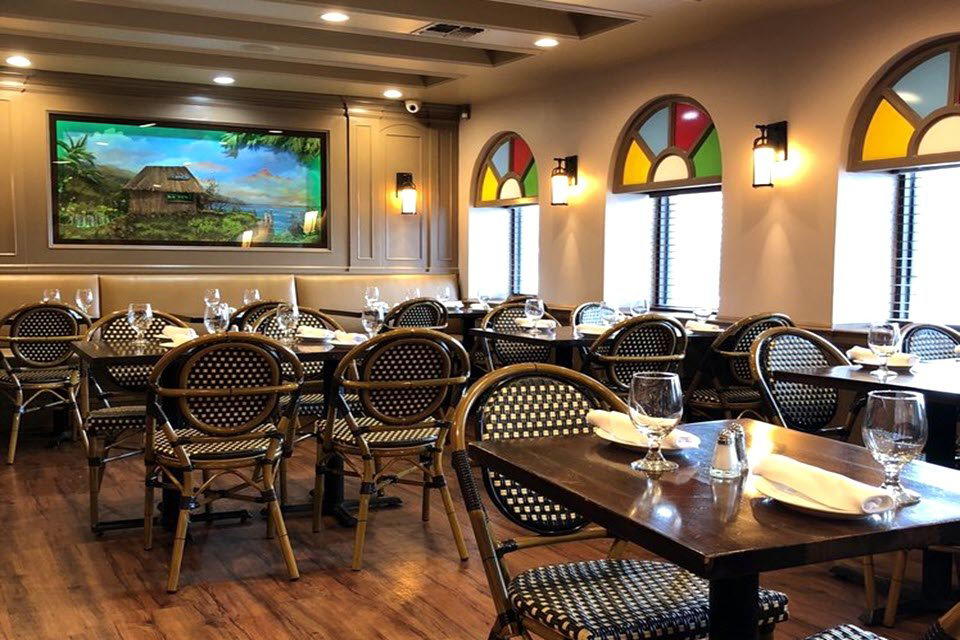
The menu
What to order
- Cuban sandwich
- Mofongos
- Empanadas
- Ham croquettes
- Corn fritters
- Ropa vieja
- Paella
Cuban Dining in Hudson County: Where the Ritual Begins Before You Sit Down
There is a particular cadence to a Cuban meal in the New York metro area that distinguishes it from the island's cooking as interpreted further south in Miami or further inland in central Florida. In Hudson County, New Jersey — a corridor dense with Latin American communities and decades of immigration patterns — Cuban restaurants tend to operate less like destination dining rooms and more like extensions of neighborhood life. The meal is unhurried. The portions are calibrated for the table, not the plate. The ritual begins before anyone orders: coffee arrives early, conversation settles in, and the pace of service follows the pace of the room rather than the kitchen's ticket times.
Rumba Cubana, at 1807 45th Street in North Bergen, sits inside that tradition. North Bergen itself occupies a stretch of Hudson County that sits directly across from Manhattan's upper reaches, close enough to the city to draw comparisons but far enough removed to operate on its own dining logic. The Cuban presence here is not a trend imported from a hipper borough, it reflects decades of community geography, and restaurants like Rumba Cubana are part of that longer story.
The Architecture of a Cuban Meal
Cuban dining customs reward readers who understand the structure. Unlike tasting-menu formats at, say, Lazy Bear in San Francisco or Alinea in Chicago, where the kitchen controls pacing entirely, Cuban restaurants are organized around the guest's own rhythm. Appetizers, known as entremeses, often circulate communally. Main courses, roast pork, ropa vieja, fried plantains alongside black beans and rice, arrive as a spread rather than a sequence. The meal is meant to be negotiated at the table, not consumed in a prescribed order.
That format places Rumba Cubana in a category that has little in common with the tasting-counter model that defines many of the country's most decorated dining rooms, from The French Laundry in Napa to Atomix in New York City. The Cuban communal table operates on a different logic entirely: abundance is the point, sharing is the default, and the presence of rice, beans, plantains, and protein on the same plate is not a composition problem to solve but a tradition to honor.
North Bergen's Dining Position
North Bergen's restaurant scene occupies an interesting position relative to both Manhattan and the broader Hudson County dining circuit. It is not a neighborhood that generates much food media coverage, which means its restaurants are assessed primarily by the communities that actually eat in them rather than by the critical apparatus that tracks Michelin recognition or 50 Best placements. That dynamic is not a disadvantage. It means a restaurant like Rumba Cubana earns its standing through repeat business and word-of-mouth rather than through award cycles.
For context on North Bergen's wider dining range, La Fusta represents the Argentine steakhouse tradition in the same zip code, and Waterside Restaurant & Catering anchors a more event-focused segment. Rumba Cubana occupies the Cuban and Caribbean corner of that local map. Our full North Bergen restaurants guide maps out how these dining categories relate to one another across the municipality.
Cuban Cooking in National Context
Cuban cuisine does not receive the kind of fine-dining institutional attention that, say, Modern Korean cooking has earned at Atomix, or that progressive American formats have found at Blue Hill at Stone Barns in Tarrytown or Single Thread Farm in Healdsburg. Cuban cooking in the United States exists largely outside the fine-dining recognition system, which has both a practical and a cultural explanation. The cuisine's structure, built around slow-braised proteins, rice-and-bean combinations, and fried preparations, does not map easily onto the tasting-menu format that Michelin and similar bodies tend to reward.
That absence from the awards circuit does not indicate a deficit in craft or depth. It reflects a different set of values: Cuban cooking prizes generosity over precision, warmth over restraint, and communal ritual over individual plating. Those values are legible in the dining room long before the food arrives. The way tables are set, the tempo at which servers check in, and the decision to offer large-format dishes for sharing all communicate a set of hospitality priorities that diverge from the high-control environments at, for instance, Addison in San Diego or The Inn at Little Washington.
Across the country, Cuban and Caribbean dining rooms occupy a similar position: important to their communities, embedded in neighborhood life, and largely evaluated outside the formal critical structure. Emeril's in New Orleans and Bacchanalia in Atlanta show how regional American cooking can earn institutional recognition when it enters the tasting-menu format; Cuban cooking has, on the whole, not made that translation, and most of its leading practitioners have not sought to.
How to Approach Rumba Cubana
Rumba Cubana is located at 1807 45th Street in North Bergen, NJ 07047, accessible from central Hudson County and a reasonable journey from upper Manhattan via the Lincoln Tunnel corridor. Because the venue data does not include confirmed hours, booking policies, or current pricing, prospective diners should verify those details directly before visiting. The address itself places it in a commercial strip typical of North Bergen's mixed residential and retail character, rather than in a dedicated dining district.
The practical approach to a Cuban restaurant in this mold is to arrive without agenda. Order broadly. The meal is not designed to be edited down to one or two dishes, it is designed to fill the table. Restaurants like this one reward groups over solo diners, and they reward guests who allow the meal to take its natural duration rather than fitting it into a tight schedule. That is not a criticism of efficiency; it is a description of what the format is built to deliver.
For broader context on high-investment dining in the region, Le Bernardin in New York City and Providence in Los Angeles represent the opposite end of the format spectrum from Rumba Cubana. Understanding where Cuban dining sits relative to those reference points clarifies what Rumba Cubana is and is not trying to do. Restaurants anchored in tradition and community are not competing with Causa in Washington, D.C. or Brutø in Denver for the same reader. They are serving a different kind of meal for a different kind of occasion, and that distinction is worth making plainly.
Frequently asked questions
Where exactly is Rumba Cubana?
Rumba Cubana is located at 1807 45th St, North Bergen, NJ 07047, North Bergen.
Is Rumba Cubana a good option for Cuban food near Manhattan from New Jersey?
North Bergen sits directly across the Hudson from upper Manhattan, making Rumba Cubana at 1807 45th Street one of the more geographically accessible Cuban options for diners crossing from New York. Hudson County's Cuban dining scene draws from a different community base than Miami or even parts of Queens, giving restaurants here a distinct regional character. It is a practical and locally grounded choice for the cuisine in this part of the metro area.
What dish is Rumba Cubana famous for?
Cuban restaurants in the Hudson County tradition typically anchor menus around slow-roasted pork, black beans and rice, and pressed sandwiches — the structural pillars of the cuisine as it has evolved in the New York metro area. For the most current menu specifics, visiting the restaurant at 1807 45th St, North Bergen is the direct route.
How hard is it to get a table at Rumba Cubana?
Cuban dining rooms in Hudson County generally operate on a walk-in basis rather than the weeks-out booking windows common to Manhattan tasting-menu counters. Visiting or calling ahead during peak dinner hours is the practical approach.
What makes Rumba Cubana worth seeking out?
Rumba Cubana occupies a specific gap in the Hudson County dining circuit: Cuban cooking at North Bergen's 1807 45th Street address, positioned between the density of Jersey City's restaurant scene and upper Manhattan. Cuban cuisine in this corridor does not receive the institutional fine-dining attention that other immigrant traditions have earned nationally, which means practitioners here tend to operate on the strength of regulars rather than review cycles. That dynamic often produces more consistent, less performative cooking.
Cuisine and Awards Snapshot
Comparable venues nearby, for context on price, style, and recognition.
| Venue | Cuisine | Price | Notes |
|---|---|---|---|
| Rumba CubanaThis venue — the venue you are viewing | Authentic Cuban Cuisine | $20–30 | Not listed |
| La Fusta | Argentine Steakhouse | $50–100 | North Bergen |
| Waterside Restaurant & Catering | Seafood & Steakhouse with Mediterranean Influences | $50–100 | North Bergen |
| Rumba Cubana | Authentic Cuban | $20–30 | Hamilton Park |
| Copper Canyon | Southwestern Mexican | $30–50 | Atlantic Highlands |
| House of Que - American Dream Mall | Austin-Style Barbecue | $20–30 | American Dream Mall |
Continue exploring
More in North Bergen
Restaurants in North Bergen
All restaurants in North Bergen →
Bars in North Bergen
Browse all →








Details
- Romantic
- Lively
- Casual
- Family
- Casual Hangout
- Date Night
- Group Dining
- Standalone
- Courtyard
- Beer Program
- A La Carte
- Family Style
- Mojitos
- Beer
- Vegetarian Friendly
Current opening hours
- Monday
- 11:30 AM–10 PM
- Tuesday
- 11:30 AM–10 PM
- Wednesday
- 11:30 AM–10 PM
- Thursday
- 11:30 AM–10 PM
- Friday
- 11:30 AM–11 PM
- Saturday
- 11:30 AM–11 PM
- Sunday
- 11:30 AM–10 PM
Hours can change for holidays and private events. Last verified .
Casual and welcoming with a fun, lively atmosphere that balances family-friendly comfort with romantic appeal; decorated to evoke a Cuban getaway experience.