Roji Sushi
Our verdict
On North Vermont Avenue in Los Feliz, Roji Sushi occupies a quiet position in a city whose omakase scene has grown considerably more competitive over the past decade. The address places it away from the concentrated sushi corridors of the Westside, signalling a neighbourhood-rooted approach to a format that often gravitates toward high-visibility locations. For those planning ahead, understanding what Roji represents within Los Angeles's broader Japanese dining tier is the right starting point.

Pearl is the En Primeur Club membership app — saves, bookings, and concierge access live there. Same editors, same standards.
- Address
- 1816 N Vermont Ave, Los Angeles, CA 90027
- Phone
- (323) 284-8607
- Hours
- Mon–Thu 11:30 AM–9:45 PMFri 11:30 AM–10:45 PMSat 5–10:45 PMSun 5–9:45 PM
- Website
- rojilosfeliz.com
- Directions
- Get directions
- Booking
- Book on OpenTable
Los Feliz, Omakase, and the Question of Where to Book
Los Angeles's sushi scene has reorganised itself over the past ten years into recognisable tiers. At the upper end sit counters with Michelin recognition and multi-month booking windows, venues like Hayato in the Arts District, where kaiseki-influenced Japanese precision commands the $$$$ price bracket. Below that, a second tier of neighbourhood-anchored counters has grown steadily, serving diners who want the omakase format without the infrastructure — and the wait — that attaches to the city's most decorated rooms. Roji Sushi, at 1816 N Vermont Avenue in Los Feliz, sits within that geography: a residential-commercial stretch that runs through one of the Eastside's more food-literate neighbourhoods.
The address is worth noting before anything else. North Vermont Avenue is not where Los Angeles's sushi tourism concentrates. That corridor runs mostly through the Westside, from Santa Monica to Beverly Hills and into West Hollywood. Choosing Los Feliz as a sushi destination means either a neighbourhood preference or a deliberate departure from the predictable reservation circuit. For diners already familiar with the compressed booking dynamics at spots like Kato or Somni, a counter on Vermont Avenue can look like a pressure release, the same format logic, a different atmosphere around it.
Planning the Booking: What the Format Demands
Omakase, as a format, imposes specific planning requirements regardless of where a counter sits in the city's hierarchy. Fixed seatings, limited covers, and chef-paced progression mean that last-minute availability is structurally unlikely at any serious counter. The counters that have built reputations, through word of mouth, press coverage, or award recognition, tend to fill weeks or months ahead. The counters that haven't yet reached that visibility sometimes offer more accessible windows, but the calculus shifts as reputation accumulates.
For Roji Sushi specifically, the booking channel and lead time should be confirmed directly before planning. Contact information and reservation systems for venues at this tier can change, and the details available at time of writing are limited. What applies broadly to Los Angeles omakase still applies here: arrive with a plan, not an assumption. The city's dining scene rewards preparation at every price point, whether you're securing seats at Providence months ahead or navigating the release schedule for a neighbourhood counter with a smaller public footprint.
Dietary restrictions in the omakase format require early communication. The format's structure, built around the chef's selection and sequencing, does not accommodate late requests the way an à la carte menu does. Severe shellfish allergies, vegetarian requirements, or other significant restrictions typically need to be declared at the time of booking.
The Los Angeles Sushi Context
Los Angeles has a stronger claim than almost any American city outside New York to a serious omakase culture, and a stronger claim than New York to Japanese-American culinary depth specifically. The city's Japanese American community, concentrated historically in the Sawtelle corridor and Little Tokyo, created a base of ingredient supply chains, trained palates, and practitioner lineages that supported the growth of counter-style sushi well before the format became a national dining trend. That foundation is visible in how Los Angeles sushi counters source fish, in the relationships between chefs and Japanese seafood importers, and in the density of skilled itamae working across price tiers throughout the city.
That context matters when evaluating a counter like Roji Sushi, because the neighbourhood position does not necessarily signal a compromise in sourcing or technique. Los Angeles's Japanese dining ecosystem is deep enough that a counter on the Eastside can draw on the same supply networks as a counter in Beverly Hills. What differs is the room, the price signal, and the kind of clientele that builds the regulars base. Restaurants like Osteria Mozza demonstrate how a neighbourhood address in Los Angeles can coexist with serious culinary ambition; the same logic applies across formats.
How Roji Compares Within the City's Broader Dining Circuit
For visitors building an itinerary around Los Angeles's serious dining options, Roji Sushi occupies a different position than the city's most decorated rooms. The counters at the top of the Los Angeles hierarchy compete with reference-point restaurants nationally: the preparation and cost required to eat at Hayato or at the upper tier of Providence puts those experiences in conversation with venues like The French Laundry in Napa, Le Bernardin in New York City, or Alinea in Chicago. A neighbourhood sushi counter operates at a different register: more local, more accessible, and more representative of how the city's dining scene actually functions day to day rather than as a trophy circuit.
That is not a demotion. Some of the most instructive meals in any serious food city happen at counters that haven't accumulated awards infrastructure yet, or that choose not to pursue it. The Eastside's dining character, shaped by venues like Kato and a cluster of precision-focused independents, supports the argument that Los Angeles's culinary credibility increasingly lives away from the Westside's traditional fine-dining corridor.
For those building a wider California itinerary, the state's sushi and Japanese dining options extend significantly beyond Los Angeles. Lazy Bear in San Francisco demonstrates a different approach to tasting-menu format in the Bay Area. Single Thread Farm in Healdsburg represents the Northern California intersection of Japanese kaiseki influence and local agriculture. For national scope, Atomix in New York City provides the clearest benchmark for how Korean fine dining engages with similar counter-format logic. The full range of what the EP Club tracks across the United States is available in our full Los Angeles restaurants guide.
What to Order, and What to Expect
The omakase format removes the menu decision from the diner's hands by design, so asking what to order at a counter like Roji Sushi is partly a category question rather than a venue-specific one. The chef's selection drives the meal; the diner's role is to communicate constraints ahead of arrival and trust the progression. Where counters distinguish themselves is in the sourcing emphasis, the ratio of cooked to raw preparation, and the supplemental decisions, whether to add uni, whether to accept premium fish upgrades, whether to pair with sake or wine.
What the omakase format reliably delivers, at any competent counter, is a meal structured around seasonal availability and the chef's current sourcing relationships. Arriving with dietary restrictions already communicated, with no fixed time pressure, and with a willingness to follow the sequence as designed is the baseline for getting the most from the format.
Planning Reference
Roji Sushi is located at 1816 N Vermont Avenue, Los Angeles, CA 90027, in the Los Feliz neighbourhood. Booking channels, current hours, and pricing should be confirmed directly with the venue before planning. Dietary restrictions should be declared at first contact.
Frequently asked questions
Where is Roji Sushi in Los Angeles?
Roji Sushi is located at 1816 N Vermont Ave, Los Angeles, CA 90027, Los Angeles.
Is Roji Sushi a good option for sushi in the Los Feliz neighbourhood specifically?
Roji Sushi sits at 1816 N Vermont Avenue in Los Feliz, a neighbourhood that has limited omakase options compared to West Hollywood or the Westside, which makes its presence notable for east-side diners. Los Angeles's broader sushi circuit skews toward Beverly Hills and the SGV, so a counter operating in Los Feliz draws from a different local demographic and dining context. For visitors staying in or near Los Feliz, it removes a significant commute that the city's most decorated counters would otherwise require.
What should I eat at Roji Sushi?
At an omakase counter like Roji Sushi on N Vermont Avenue, the kitchen sets the sequence rather than the diner. The practical move is to communicate any dietary restrictions or strong aversions before the meal begins, not at the table. Beyond that, the format is designed to be followed rather than directed.
How far ahead should I plan for Roji Sushi?
Los Feliz omakase counters with limited seating typically fill on a reservation window of two to four weeks at a minimum, and counters that have built a local following can stretch further. Contact Roji Sushi at 1816 N Vermont Ave directly to confirm current availability. Booking the same week is unlikely to work for weekend seatings.
What's the signature at Roji Sushi?
In an omakase format, the meal progresses as a chef-led sequence rather than around a single dish, so the counter's overall sourcing and pacing define the experience more than any single item.
Can Roji Sushi accommodate dietary restrictions?
Omakase counters depend on advance notice for any dietary restriction, and Roji Sushi at 1816 N Vermont Ave, Los Angeles operates within that same constraint. Contact the counter directly before booking to confirm whether specific restrictions can be accommodated. Last-minute requests at a fixed-menu counter are rarely workable.
How It Stacks Up
Comparable venues nearby, for context on price, style, and recognition.
| Venue | Cuisine | Price | Notes |
|---|---|---|---|
| Roji SushiThis venue — the venue you are viewing | Traditional Japanese Sushi | $30–50 | Not listed |
| Yuko Kitchen | Japanese Comfort Food | $20–30 | Miracle Mile |
| Hokkaido Ramen Santouka | Hokkaido-Style Tonkotsu Ramen | $20–30 | Mar Vista |
| En Sushi | Contemporary Japanese Sushi | $30–50 | Sawtelle |
| Sushi Go 55 | Traditional Japanese Sushi | $30–50 | Little Tokyo |
| Niko Niko Sushi | Japanese Sushi | $20–30 | Rancho Park |
Continue exploring
More in Los Angeles
Restaurants in Los Angeles
Browse all →
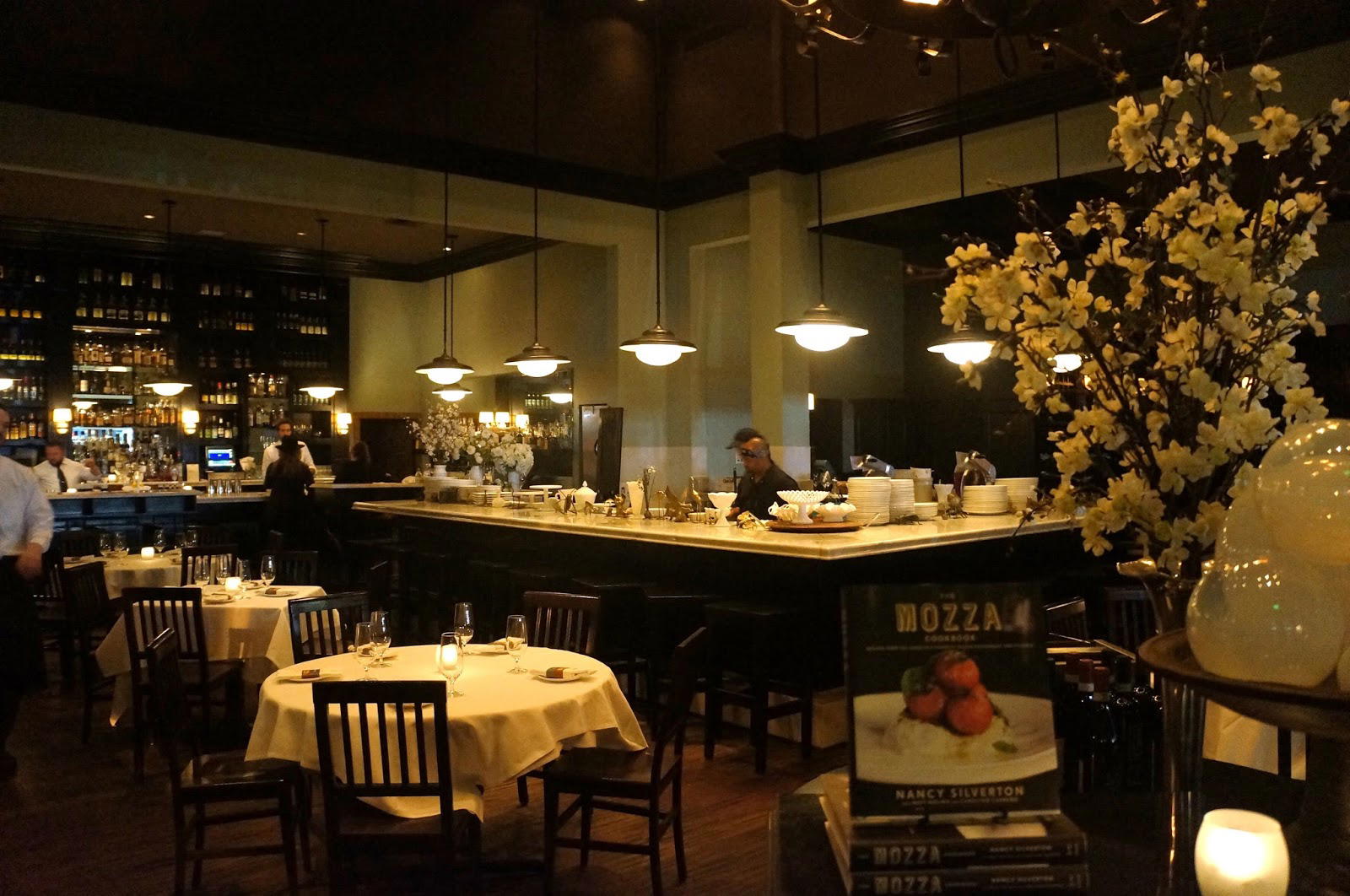
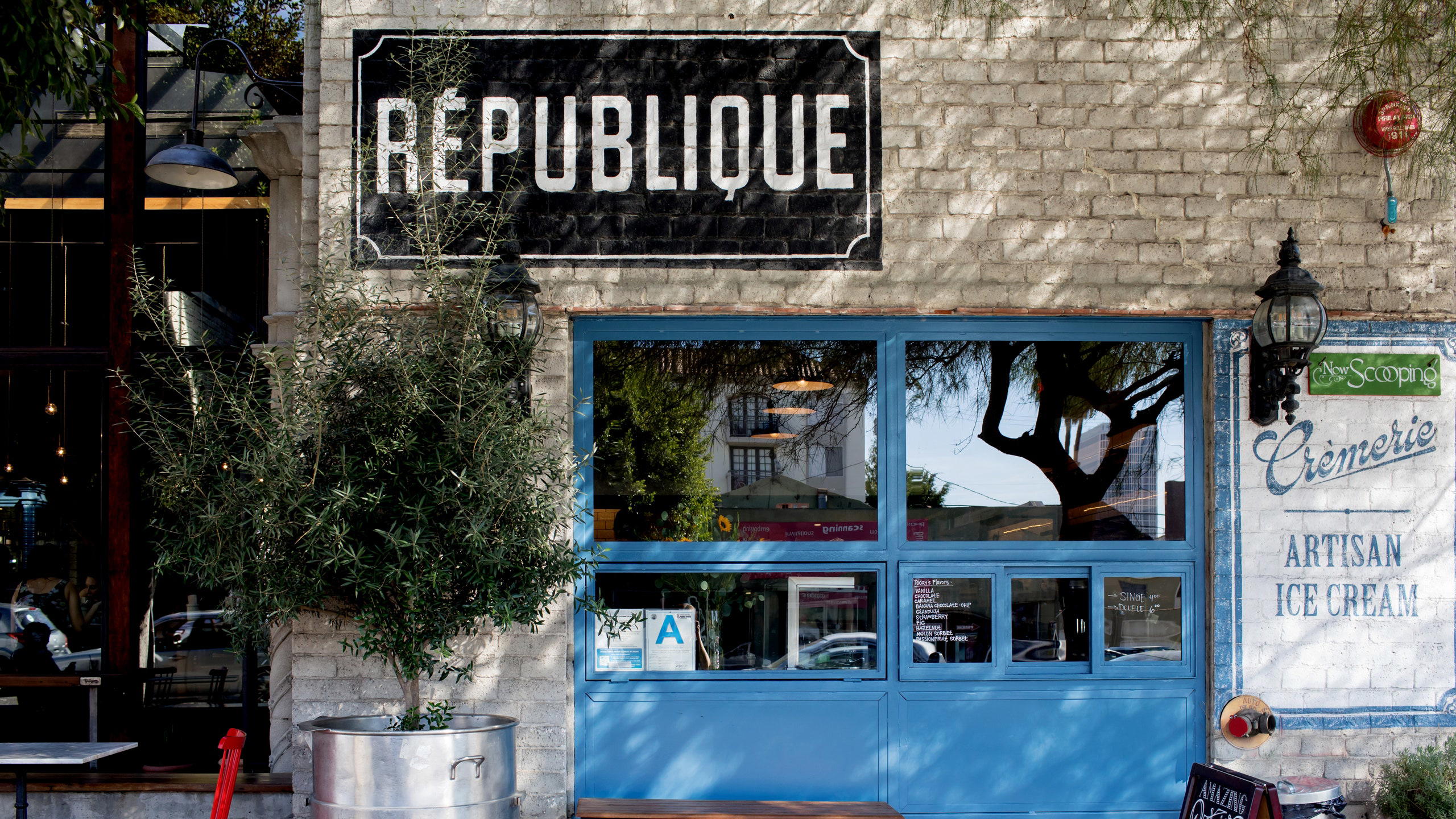
Bars in Los Angeles
Browse all →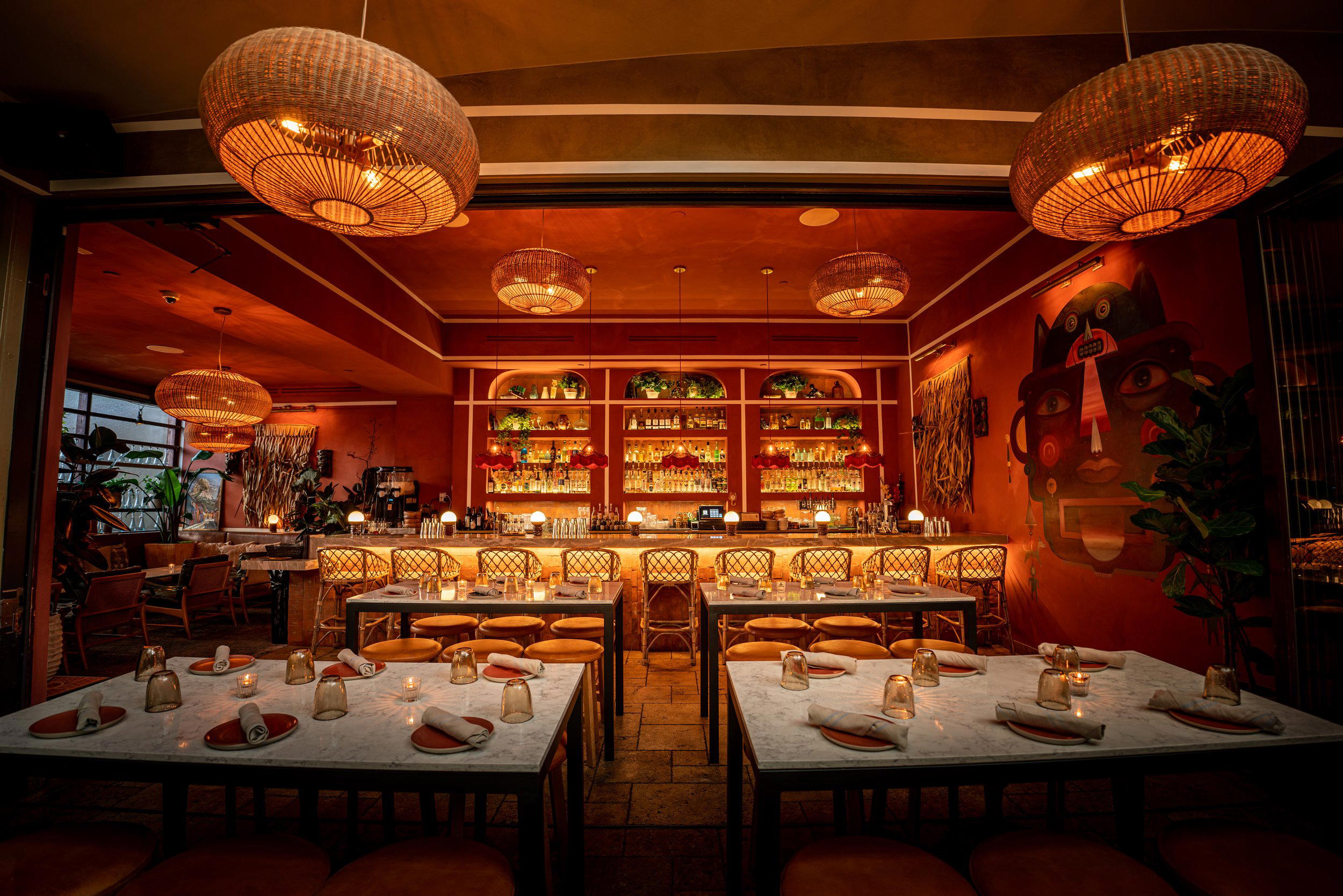
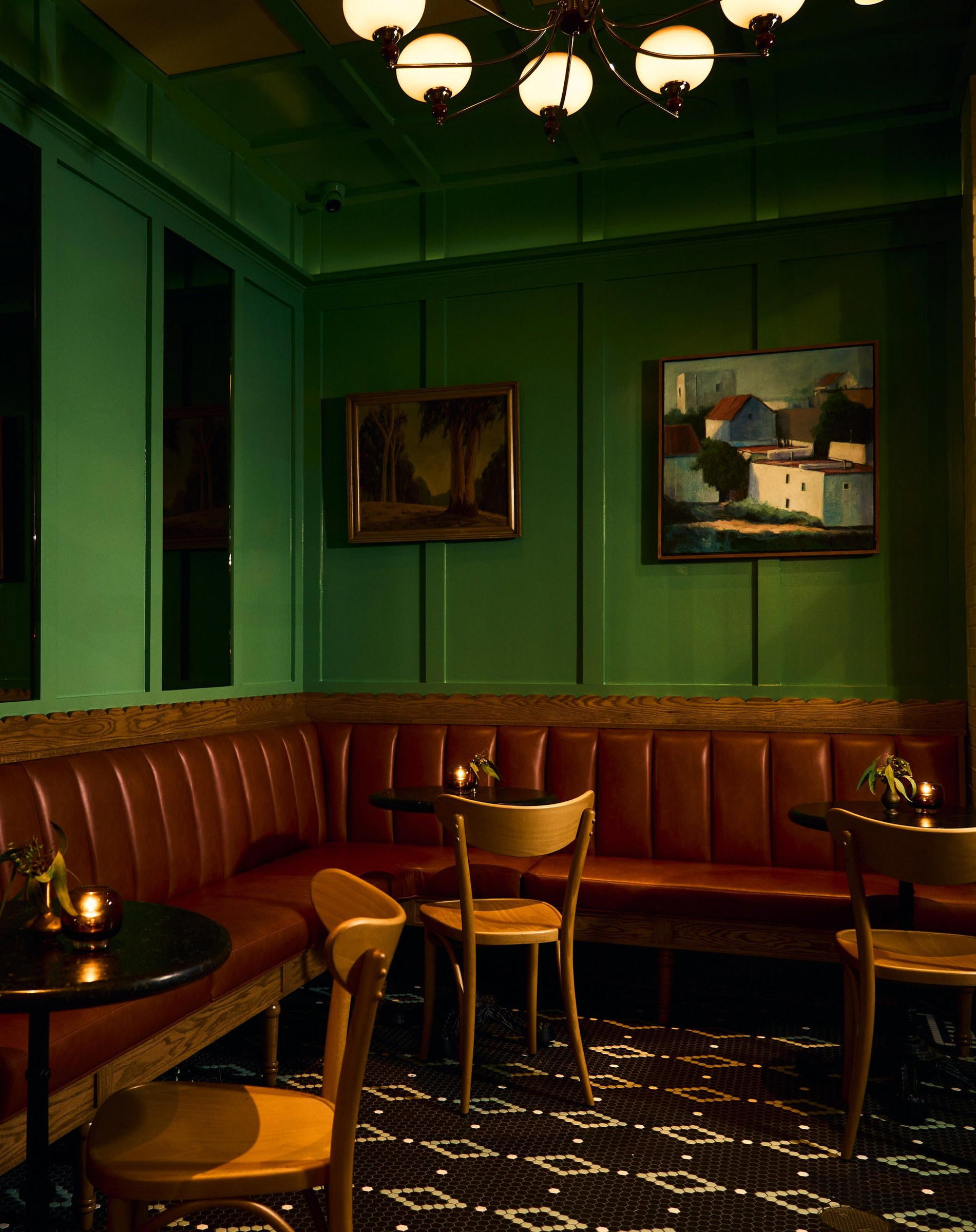

Hotels in Los Angeles
Browse all →

Wineries in Los Angeles
Browse all →
Details
- Cozy
- Modern
- Quiet
- Date Night
- Casual Hangout
- Open Kitchen
- Sake Program
- A La Carte
- Omakase
- Vegetarian Friendly
Current opening hours
- Monday
- 11:30 AM–9:45 PM
- Tuesday
- 11:30 AM–9:45 PM
- Wednesday
- 11:30 AM–9:45 PM
- Thursday
- 11:30 AM–9:45 PM
- Friday
- 11:30 AM–10:45 PM
- Saturday
- 5–10:45 PM
- Sunday
- 5–9:45 PM
Hours can change for holidays and private events. Last verified .
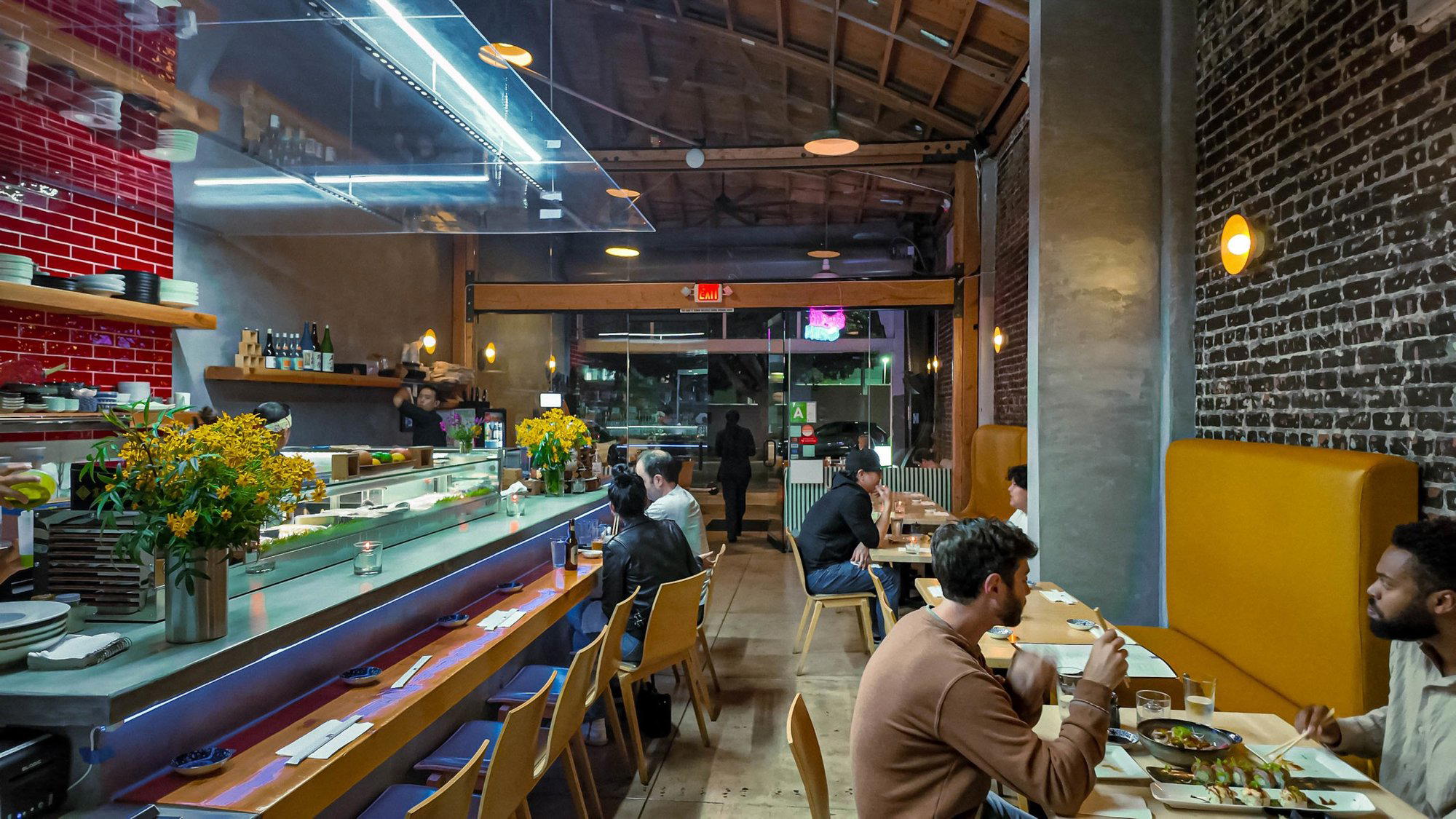
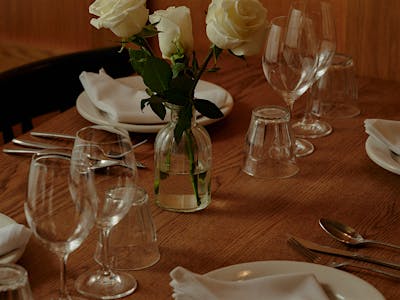
Cozy and modern interior with soft lighting, clean lines, and a welcoming sushi bar atmosphere.