Ristorante Santucci
Our verdict
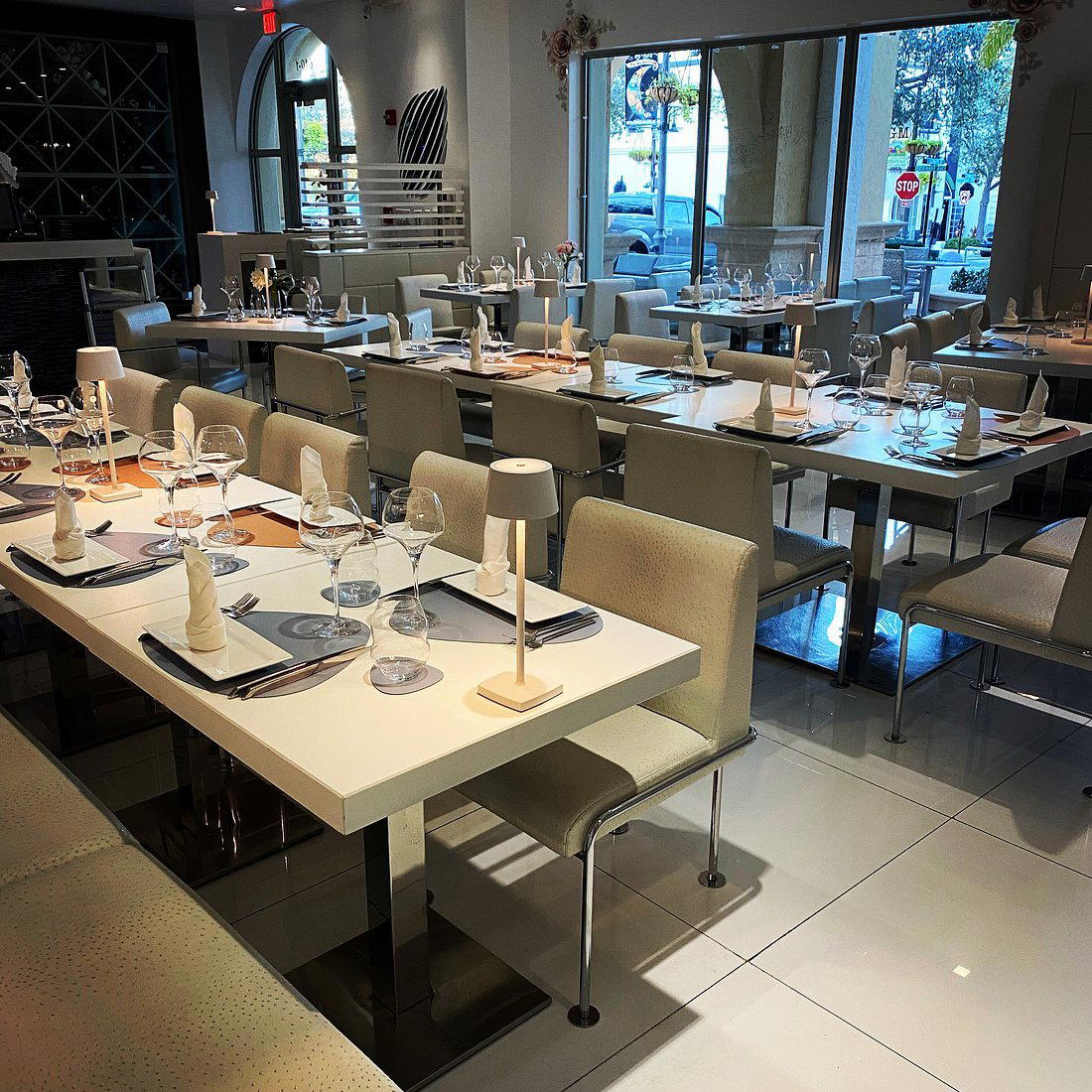
On Clematis Street, West Palm Beach's main dining corridor, Ristorante Santucci represents the Italian-American tradition that has quietly anchored Florida's coastal dining scene for decades. The restaurant sits within a stretch that now includes everything from Korean barbecue to Mediterranean small plates, making it one of the more focused addresses in a diversifying neighbourhood. Guests looking for a grounded Italian option in downtown West Palm Beach will find it here.

Pearl is the En Primeur Club membership app, where members save venues, book tables and use the concierge.
The menu
What to order
- Bucatini all'Amatriciana
- Fettucini Alle Vongole
- Grilled Veal Chop
Clematis Street and the Italian Table in South Florida
Clematis Street has spent the better part of two decades pulling West Palm Beach's dining scene away from the Palm Beach island side of the Intracoastal, and the shift has produced a corridor that now reads more like a mid-sized American city's restaurant row than a resort town's overflow strip. Korean barbecue joints sit a few doors from Mediterranean small-plate concepts; the American gastropub format shows up in several variations. Against that backdrop, the Italian-American trattoria occupies a particular position: familiar enough to anchor a neighbourhood, particular enough in its tradition to resist easy substitution. Ristorante Santucci, at 610 Clematis St, holds that position in the West Palm Beach dining mix.
Italian-American cooking in Florida has always carried a specific cultural logic. The cuisine that travelled from Naples, Sicily, and the Amalfi coast through Ellis Island and then southward through New York and New Jersey dinner tables arrived in Florida partly through snowbird migration patterns, partly through a broader American appetite for red-sauce comfort. What that means in practice is that the leading versions of the tradition in cities like West Palm Beach are less about innovation and more about fidelity: the right weight of a Sunday gravy, the correct texture in a hand-rolled pasta, the discipline not to over-complicate what the tradition already solved centuries ago. Italy itself, of course, operates this way. The trattoria format that has survived in Rome and Bologna for generations works because it refuses to reinvent seasonally what it has already mastered permanently.
Where Ristorante Santucci Sits in the West Palm Beach Dining Field
West Palm Beach's dining field has grown considerably more international in its reference points over the past five years. 8 Pot Korean BBQ & HotPot now draws a consistent crowd for communal table-side cooking; A-1 Thai Restaurant handles Southeast Asian demand with a degree of seriousness that a resort-oriented market doesn't always sustain; Agora Mediterranean Kitchen pulls from the broader Levantine and Greek pantry. On the American side, aioli and Avocado Grill occupy different registers of the farm-to-table format that has become a baseline expectation in cities of this size.
Within this field, the Italian address holds a different kind of appeal. It is not competing on novelty or on produce-sourcing narrative. It is competing on the reliability of execution within a tradition that diners already know how to read. That is a harder position than it sounds. Italian-American cooking is a cuisine that most diners in Florida have encountered dozens of times, which means that any restaurant working in that tradition is being benchmarked continuously against memory as much as against other restaurants. The margin for mediocrity is thin.
Compared to the national Italian-American fine dining conversation, which now includes operators like 8½ Otto e Mezzo Bombana pushing the cuisine toward globally decorated territory, a Clematis Street trattoria operates at a fundamentally different register. That framing matters when considering what to expect from a visit.
The Tradition Behind the Menu
Italian cuisine is often discussed as if it were a single thing, but regionally it fractures into dozens of distinct cooking cultures that share language and not much else. The Italian-American canon that arrived in the United States consolidated those regional differences into something more unified: pasta with tomato, braised meats, salt-heavy cured products, and olive oil used as a finishing element rather than a cooking medium. The leading Italian-American kitchens in Florida operate from this consolidated tradition, selecting dishes that the format has proven over generations rather than chasing the rotating seasonal menu structures that define fine dining elsewhere.
The comparison with Clematis Street's broader scene is instructive here. Restaurants like Avocado Grill are built around a rotating produce logic, where the menu changes as sourcing does. The Italian-American kitchen works from the opposite premise: the menu changes slowly if at all, because consistency is the product. A diner who comes back six times should find the same dish in the same form, reliably. That is not a lower ambition; it is a different one, and it demands a different kind of kitchen discipline.
Italian Dining in Context: What Florida's Geography Adds
South Florida's Italian restaurants have benefited historically from the same demographic patterns that shaped the cuisine in the Northeast. The snowbird corridor, which has brought northern US and Canadian winter residents to Palm Beach County for generations, created consistent demand for Italian-American cooking that never required much cultural translation. That demand has also meant that Florida has developed a layer of Italian restaurants with real longevity, places where the neighbourhood familiarity with the menu runs deep and where the regulars exert a kind of quality control simply by returning.
That context places Ristorante Santucci in a longer lineage than its Clematis Street address might suggest. The street itself is relatively recent as a dining destination, but the Italian-American appetite it serves is decades older. For a broader picture of how the West Palm Beach scene has developed across all its cuisine types, the full West Palm Beach restaurants guide maps the field more completely.
For reference against the national fine dining tier, the range that runs from Le Bernardin in New York City and The French Laundry in Napa through Alinea in Chicago, Lazy Bear in San Francisco, Providence in Los Angeles, Addison in San Diego, Blue Hill at Stone Barns in Tarrytown, Single Thread Farm in Healdsburg, Atomix in New York City, Emeril's in New Orleans, and The Inn at Little Washington represents the decorated tier against which American restaurant culture measures itself. A neighbourhood trattoria on Clematis Street is not competing in that tier and is not trying to. Its competitive set is the local one, and within that set, the question is simply whether the tradition is being executed with respect for what the tradition demands.
Planning a Visit
Ristorante Santucci sits at 610 Clematis St in downtown West Palm Beach, walkable from the Brightline station that connects the city to Miami and Fort Lauderdale, which makes it a practical stop for visitors arriving by rail. Clematis Street parking is available in the city's garage structures and on metered street spots, though weekend evenings draw enough foot traffic that arriving early or using the garages makes more sense than circling. Current hours, booking procedures, and menu details are best confirmed directly with the restaurant, as the venue's operational specifics are not held centrally in third-party databases.
Frequently asked questions
Where do I go for Ristorante Santucci?
Ristorante Santucci is located at 610 Clematis St, West Palm Beach, FL 33401, West Palm Beach.
Is Ristorante Santucci a good option for dining before or after catching the Brightline train in West Palm Beach?
The restaurant's address at 610 Clematis St places it within easy walking distance of the West Palm Beach Brightline station, which connects the city directly to Fort Lauderdale and Miami. That proximity makes it a practical choice for travellers using the rail corridor, particularly for an early dinner before a southbound departure. Checking current service hours directly with the restaurant before planning around a train schedule is advisable.
What should I order at Ristorante Santucci?
The menu draws on regional Italian cooking traditions rather than a single national template, so the approach shifts depending on what the kitchen emphasizes that season. At 610 Clematis St in downtown West Palm Beach, the most reliable strategy is to ask your server what the kitchen is running as a nightly special, Italian restaurants operating at this level typically reserve their best sourcing for dishes that rotate. Pasta and secondi built around Italian technique tend to anchor the menu.
What's the best way to book Ristorante Santucci?
Ristorante Santucci is located at 610 Clematis St in downtown West Palm Beach, which puts it within walking distance of the Brightline rail station, convenient if you're arriving from Miami or Fort Lauderdale. For reservations, check the restaurant's current booking channel directly, as availability on Clematis Street tightens considerably on weekend evenings when the corridor draws significant foot traffic. Booking a few days in advance is advisable for Friday and Saturday seatings.
What has Ristorante Santucci built its reputation on?
The restaurant operates within West Palm Beach's increasingly international dining field, where Italian remains one of the most consistently patronized cuisines in South Florida given the region's long ties to Northeastern Italian-American dining culture. Ristorante Santucci's position on Clematis Street places it at the centre of downtown West Palm Beach's most active dining corridor, a street that has drawn the city's dining activity away from the Palm Beach island side over the past two decades. Its standing rests on consistent delivery of Italian cooking in a market that knows the cuisine well.
Can Ristorante Santucci handle vegetarian requests?
Italian regional cooking has always carried a strong vegetable tradition, from antipasti through pasta courses built around legumes, greens, and aged cheeses, which gives kitchens working in that idiom genuine flexibility for guests who don't eat meat. At Ristorante Santucci on Clematis St, it is worth calling ahead or noting dietary requirements at the time of booking to confirm what the kitchen can offer on a given evening. Most Italian restaurants operating at a sit-down level can accommodate vegetarian diners across multiple courses.
Comparable Venues
Comparable venues nearby, for context on price, style, and recognition.
| Venue | Cuisine | Price | Notes |
|---|---|---|---|
| Ristorante SantucciThis venue (the venue you are viewing) | Authentic Sicilian Italian | $50–100 | Not listed |
| Cafe Centro | Northern Italian Trattoria | $30–50 | Northwood |
| Osteria by Capri | Authentic Italian Osteria | $50–100 | Downtown West Palm Beach |
| Cafe Sapori | Traditional and Modern Italian | $30–50 | Palm Beach |
| Grato | Modern Italian with Wood-Fired Pizzas | $50–100 | El Cid |
| Cafe Med West Palm Beach | Authentic Italian with Mediterranean Twist | $20–30 | West Palm Beach |