Tabelog 100 #14
Our verdict
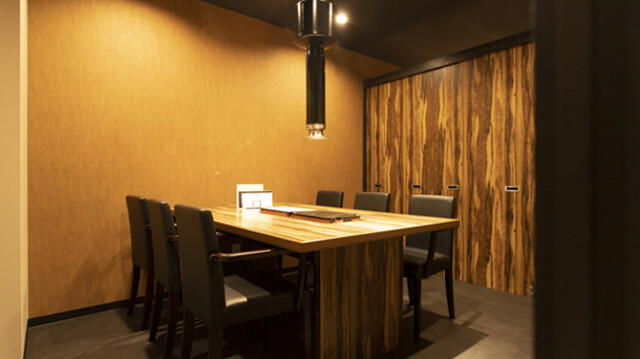
Kitahama’s yakiniku culture sits between Osaka’s expense-account dining and its appetite for precise beef cookery. RIKIchan Kitahama ten belongs to the higher-spend end of that scene, with Tabelog 100 Yakiniku WEST 2025 recognition, a 36-seat room, private-room options, and a wine-forward drinking profile that shifts the meal away from casual grill-house shorthand.

Pearl is the En Primeur Club membership app, where members save venues, book tables and use the concierge.
The menu
What to order
- Charcoal-grilled Kuroge Wagyu Chateaubriand
- Charcoal-grilled Kuroge Wagyu tenderloin (fillet)
- Assorted kimchi and namul
- Rice and soup set
Osaka dining has its own rhythm: office towers, riverfront commerce, and restaurants built for longer conversations and higher tabs. Here, yakiniku is not just late-night grilling; it is sourcing, cut selection, smoke management, and how much control a table wants over expensive beef.
RIKIchan Kitahama ten sits inside that argument. Osaka has cafés, bakeries, curry shops, izakaya counters, and Italian rooms across the city, but premium yakiniku slows the pace. It asks diners to watch marbling, thickness, heat, pacing, and the difference between a volume room and one built around fewer, more deliberate servings of beef.
Osaka yakiniku with a sourcing-first bias
Osaka has never needed help selling grilled beef. Its food identity is often reduced to batter, sauce, and street-side speed, yet its higher-spend culture has long made room for premium grilling and counter-level precision. Yakiniku occupies a useful middle ground: less formal than some set-course Japanese dining, more participatory than sushi, and often more revealing about ingredient quality than heavily sauced cuisine.
The defining signal is focus. RIKIchan Kitahama ten is listed in the yakiniku category, which matters because premium beef grilling depends on details that are hard to disguise. Without careful sourcing, trimming, and heat control, the meal quickly becomes ordinary. In Osaka, where diners judge value across casual counters and luxury rooms, that narrower beef proposition is a serious claim.
Tabelog recognition in 2025 places the restaurant inside a scrutinized Japanese dining context rather than a generic city guide. Yakiniku is a category where local judgment is severe: diners know celebratory beef from routine grill work. The Tabelog score of 3.66 also points to a restaurant operating in a review culture where incremental differences matter.
The price band is another clue. Osaka yakiniku can be casual, quick, and built around beer or highballs, but a dinner and lunch budget listed at JPY 20,000 - JPY 29,999 pushes the meal toward slower ordering and richer expectations. It also changes the audience: not only groups chasing smoke and sizzle, but diners treating beef as the center of a structured evening.
A room built for controlled beef rather than spectacle
Premium yakiniku succeeds or fails on format discipline. Too much theatre makes the beef secondary; too little guidance leaves diners paying luxury prices to manage timing alone. The relevant question is not whether the room is flashy, but whether it gives diners enough calm to pay attention to cuts, heat, texture, and pacing.
The Osaka setting sharpens that reading. Citywide comparison venues show the spread: Gokan Kitahama honkan and ELMERS GREEN CAFE sit in the lower-spend café-and-sweets lane; TAVERNETTA da KITAYAMA gives Osaka an Italian option; Kakomo Kitahama ten covers casual drinking; Madam Curry handles the everyday lunch register. RIKIchan Kitahama ten occupies the special-occasion beef tier, not the neighborhood refuel tier.
That price and format shape expectations. This is not the yakiniku choice for a spontaneous grill session after drinks. The value case depends on beef quality, pacing, and whether the room’s restraint suits the occasion. For a couple, it reads as a controlled dinner built around sourcing. For a family or business party, the appeal is a generous beef-focused format that does not require everyone to follow a chef’s counter script.
There is a useful distinction between Osaka’s everyday abundance and its specialist rooms. The city rewards appetite, but also obsession. Yakiniku houses that earn attention in a recognized category tend to narrow the proposition: beef, cuts, cooking style, and a room that lets diners notice those differences. Here, the Tabelog recognition and premium budget put the restaurant closer to beef specialist than general grill house.
Where it fits in an Osaka dining itinerary
For travelers building an Osaka schedule, RIKIchan Kitahama ten works as a calmer counterpoint to heavier tourist circuits. It is an Osaka dinner choice that can sit alongside daytime coffee, bakeries, and architecture rather than another maximalist night out. The point is not checklist sightseeing; it is using a beef-focused meal to read a different side of the city.
Readers comparing categories should understand the trade. Sushi and kappo often place technique entirely in the chef’s hands; yakiniku gives the table more agency, which can be pleasure or pressure. The reward is immediacy: the diner sees the cut, controls the grill moment, and quickly understands whether sourcing justifies the spend. Ingredient quality matters more than menu breadth.
For broader planning, EP Club’s Osaka coverage maps the city beyond a single dinner: Our full Osaka restaurants guide, Our full Osaka hotels guide, Our full Osaka bars guide, Our full Osaka wineries guide, and Our full Osaka experiences guide. For nearby and adjacent dining research, compare it with other Osaka dining rooms across cafés, bakeries, casual counters, pizzerias, and Italian restaurants.
For readers comparing Japanese beef and grill traditions across cities, it is better to treat RIKIchan Kitahama ten as part of a broader national conversation rather than force one-to-one comparisons with unrelated named venues. Wider Japan and overseas dining context can be useful, but the relevant lens here is Osaka yakiniku: budget, category, recognition, and whether the meal makes beef quality legible.
The editorial case is precise: choose RIKIchan Kitahama ten when the evening is about beef provenance and measured grilling, not breadth for its own sake. Osaka has cheaper meals with more noise and spontaneity. This belongs to the narrower lane where yakiniku, premium pricing, and a contained sense of occasion define the experience.
Frequently asked questions
Is RIKIchan Kitahama ten formal or casual?
It sits closer to polished casual than formal dining. The public record points to a premium Osaka yakiniku restaurant, so the tone is best read as controlled and occasion-minded rather than loose.
What price level is RIKIchan Kitahama ten?
Pricing at RIKIchan Kitahama ten is listed as JPY 20,000 - JPY 29,999 JPY 20,000 - JPY 29,999.
What's the address for RIKIchan Kitahama ten?
Osaka.
Do I need a reservation for RIKIchan Kitahama ten?
For a restaurant in this price band, planning ahead is sensible. The listed budget is JPY 20,000 - JPY 29,999 for dinner and lunch, so confirm current booking requirements directly before arranging a meal in Osaka.
What's the signature at RIKIchan Kitahama ten?
The public record points to yakiniku rather than a named signature dish. Its 2025 Tabelog recognition is the clearest trust signal on the page. Check the venue's official channels for the latest details.
How does RIKIchan Kitahama ten handle allergies?
No allergy policy is listed in the public record, so the practical approach is to confirm directly before booking. Use the restaurant’s listed phone contact or official channels for the latest details before visiting Osaka.
Budget and Context
Comparable venues to calibrate price, style, and recognition.
| Venue | Cuisine | Price | Awards | Notes |
|---|---|---|---|---|
| RIKIchan Kitahama tenThis venue (the venue you are viewing) | Premium Kuroge Wagyu Yakiniku | $150–200 | Tabelog 100 #14 | Not listed |
| Kurosugi | Edomae Sushi Omakase | $150–200 | Tabelog 100 #21 | Kita, Edomae Sushi Omakase |
| Tenpura Brand Matsuba Kani Matsuyamachi Seiten | Seasonal Japanese Tempura | $500+ | Tabelog 100 #64 | Chūō, Seasonal Japanese Tempura |
| Kitan-in | Dry-Aged Wagyu Yakiniku and Steakhouse | Not listed | World Best Burgers World's 101 Best Burgers #59 · Tabelog 100 #80 | Chūō, Modern Dry-Aged Wagyu Omakase Yakiniku |
| Sushi Noguchi | Traditional Edomae Sushi Omakase | $200–300 | Tabelog 100 #62 | Kita, Traditional Edomae Sushi Omakase |
| Noguchi Jiro | Members-only Osaka Izakaya with Elevated Chicken Wings | $150–200 | Tabelog 100 #26 | Kita, Members-only Osaka Izakaya with Polished Chicken Wings |
Recognition history
Dated appearances from independent guides and award organizations, with the underlying list record or original source where available.
Tabelog 100 #14 · No. 14
Tabelog · Tabelog 100 - Yakiniku - WEST - 2025