Rice x Beans
Rice x Beans sits on 10th Avenue in Hell's Kitchen, a neighbourhood where Caribbean and Latin American cooking traditions have shaped the dining culture for decades. The restaurant's name signals a culinary pairing that underpins cuisines from Puerto Rico to Brazil, making it a useful entry point into a broader conversation about how immigrant food cultures define New York's midtown west side.
Pearl is the En Primeur Club membership app — saves, bookings, and concierge access live there. Same editors, same standards.
- Address
- 688 10th Ave, New York, NY 10019
- Phone
- +16464846796
- Website
- ricexbeans.com
- Directions
- Get directions
 Saves & bookings on Pearl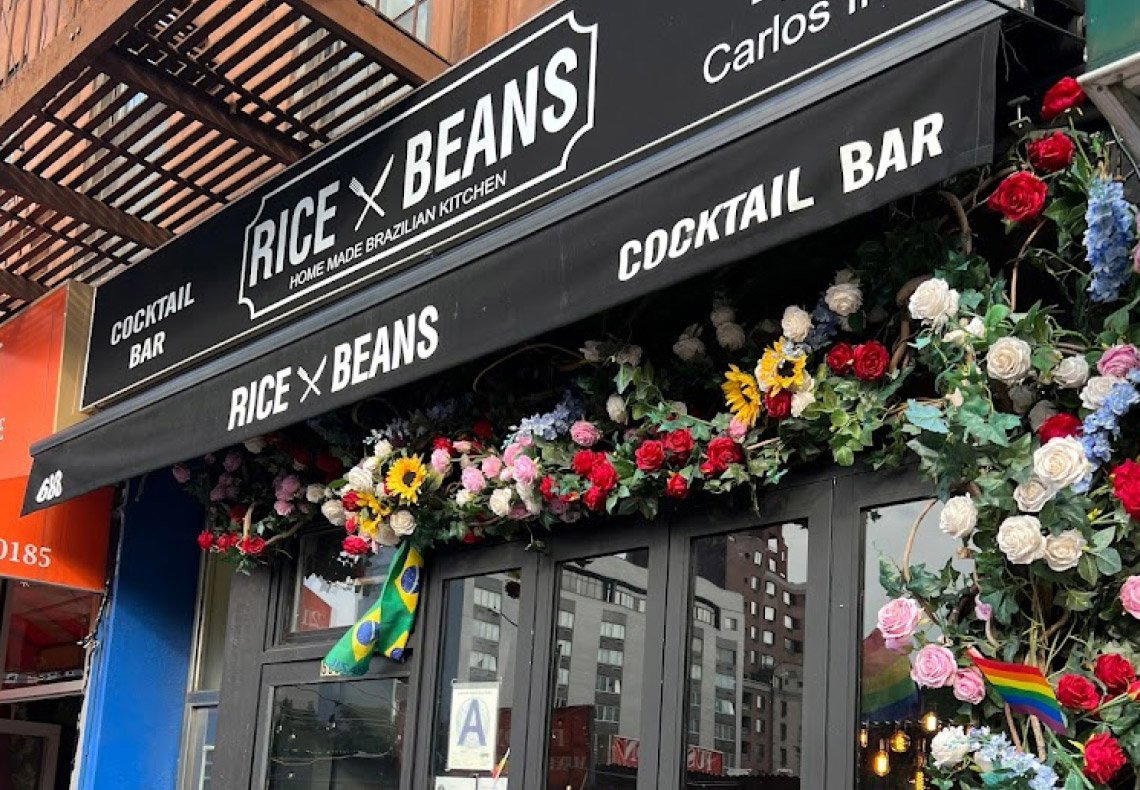
10th Avenue and the Latin Kitchen Tradition
Hell's Kitchen has long been one of New York's more honest eating neighbourhoods. While the far west side of midtown lacks the critical mass of destination restaurants found at addresses like Le Bernardin or Per Se, it compensates with a ground-level consistency rooted in working-class immigrant cooking. 10th Avenue, in particular, has retained a Latin American and Caribbean dining character that predates the neighbourhood's ongoing gentrification. Rice x Beans at 688 10th Ave sits squarely inside that tradition.
The dish pairing in the restaurant's name is not incidental. Rice and beans, in combination, constitute one of the most nutritionally complete and culturally significant pairings in the Americas. From the arroz con gandules of Puerto Rico to the gallo pinto of Costa Rica and Nicaragua, the moros y cristianos of Cuba to the feijoada accompaniments of Brazil, the specific ratio, seasoning, and variety of bean used functions as a kind of regional fingerprint. A restaurant anchoring its identity to that pairing is making a statement about cultural continuity, not just about the menu.
What the Name Signals About the Kitchen
In New York's broader restaurant ecosystem, the Latin American and Caribbean category spans an enormous range, from the tasting-menu ambition of progressive Korean and French fine dining at addresses like Atomix and Jungsik New York to the neighbourhood casual registers that have always defined much of the city's actual eating life. Rice x Beans positions itself in that second camp, where the measure of quality is execution against a deeply familiar template rather than novelty or technical spectacle.
That is a harder bar to clear than it might appear. When a dish is eaten in every Latin American household in multiple variations, the audience for it in a restaurant setting has strong and specific opinions. A version of arroz con pollo or pernil that fails to hit certain textural and aromatic markers will not survive long in a neighbourhood with this demographic history. The restaurants that do survive represent a genuine form of culinary intelligence, even when they operate outside award systems designed around fine dining formats.
For context on how differently the city's restaurant awards and recognition systems are distributed, note that the Michelin-starred tier on the Manhattan fine dining circuit, represented by venues like Masa, operates in an almost entirely separate economy of price, format, and expectation. The conversation around places like Rice x Beans happens in a different register, but it is no less serious among the communities these restaurants actually serve.
Hell's Kitchen as a Dining Neighbourhood
Understanding Rice x Beans requires understanding 10th Avenue's position within Hell's Kitchen's dining geography. The neighbourhood's western edge has historically functioned as a low-overhead corridor where rents permitted the kind of thin-margin, high-volume cooking that sustains immigrant restaurant culture. That dynamic has shifted considerably as the area has attracted more market-rate residential development, but the culinary DNA of blocks like this one has proven more durable than some gentrification narratives suggest.
For visitors approaching the neighbourhood from the restaurant and bar districts further east or from the Theater District to the south, 10th Avenue requires a deliberate detour. That self-selection filters the clientele toward people who already know what they are looking for, which tends to shape the atmosphere inside. There is a neighbourhood-dinner quality to restaurants in this corridor that is harder to find at addresses where the room fills with out-of-towners. For a broader view of where Rice x Beans sits within New York's eating geography, our full New York City restaurants guide maps the city's dining tiers from fine dining through to neighbourhood institutions.
Cultural Roots and Why They Matter to the Menu
The rice-and-beans combination as a menu anchor reflects a specific culinary philosophy: that the foundations of a cuisine are worth taking seriously on their own terms rather than using as a backdrop for fusion experimentation. Across the Americas, these staples have been subject to extensive regional refinement over centuries, and the variations between a Haitian riz et pois and a Dominican arroz con habichuelas, or between a Colombian bandeja paisa and a Venezuelan pabellón criollo, are specific enough to carry genuine identity.
New York's position as a receiving city for migrants from across the Caribbean and Latin America has produced a dining scene where these distinctions are preserved, contested, and sometimes playfully blurred within a single block. Hell's Kitchen, along with parts of the Bronx, upper Manhattan, and outer-borough neighbourhoods like Jackson Heights and Flatbush, functions as a living archive of those regional variations. A restaurant on 10th Avenue draws from and responds to that archive whether it intends to or not.
For readers who track how regional American cooking traditions develop beyond New York, comparable conversations about culinary identity and neighbourhood context play out at places like Emeril's in New Orleans and Bacchanalia in Atlanta, where local food cultures carry significant weight in how restaurants position themselves. At the farm-to-table end of the American spectrum, the sourcing-driven approach visible at Blue Hill at Stone Barns in Tarrytown and Single Thread Farm in Healdsburg represents a parallel seriousness about ingredient provenance that Latin Caribbean cooking applies to recipe tradition instead.
Planning a Visit
Rice x Beans is located at 688 10th Ave in Hell's Kitchen, accessible from the A, C, and E trains at 42nd Street-Port Authority and a short walk west along 44th or 45th Street. The 10th Avenue location places it outside the Theater District foot-traffic zone, which typically means pre-theatre crowds are not a factor. For visitors combining dinner here with a broader evening on the west side, the restaurant fits naturally into a neighbourhood-first itinerary rather than a destination-dining one. Given that specific hours, booking requirements, and price details are not currently listed, confirming those details directly with the restaurant before visiting is advisable.
How Rice x Beans New York City compares with similar nearby venues.
| Venue | Cuisine |
|---|---|
| HaSalon | Israeli |
| Totto Ramen Hells Kitchen | Japanese |
| Totto Ramen | Ramen |
| Sullivan street bakery | Bakery |
Continue exploring
More in New York City
Restaurants in New York City
Browse all →
Bars in New York City
Browse all →

Hotels in New York City
Browse all →









At a Glance
- Cozy
- Modern
- Rustic
- Casual Hangout
- Group Dining
- Open Kitchen
- Craft Cocktails
Current opening hours
- Monday
- Closed
- Tuesday
- 12–9:30 PM
- Wednesday
- 12–9:30 PM
- Thursday
- 12–9:30 PM
- Friday
- 12–10:30 PM
- Saturday
- 12–10:30 PM
- Sunday
- 12–9:30 PM
Hours can change for holidays and private events. Last verified .
Cozy and welcoming with a modern feel featuring exposed brick and Edison bulbs.
Know Before You Go
- Getting there
- 688 10th Ave, New York, NY 10019