Reuter

Reuter holds a Michelin star earned in both 2024 and 2025, placing it among Germany's small tier of serious Modern French kitchens operating outside a major city. Chef Sebastian Cihlars runs a €€€€ format on Bleichstraße in Rheda-Wiedenbrück, a provincial address that makes the kitchen's ambition all the more striking. Rated 4.6 from 322 Google reviews.
 Discover on Pearl
Pearl is the En Primeur Club membership app — saves, bookings, and concierge access live there. Same editors, same standards.
- Address
- Bleichstraße 3, 33378 Rheda-Wiedenbrück, Germany
- Phone
- +49 5242 94520
- Website
- hotelreuter.de
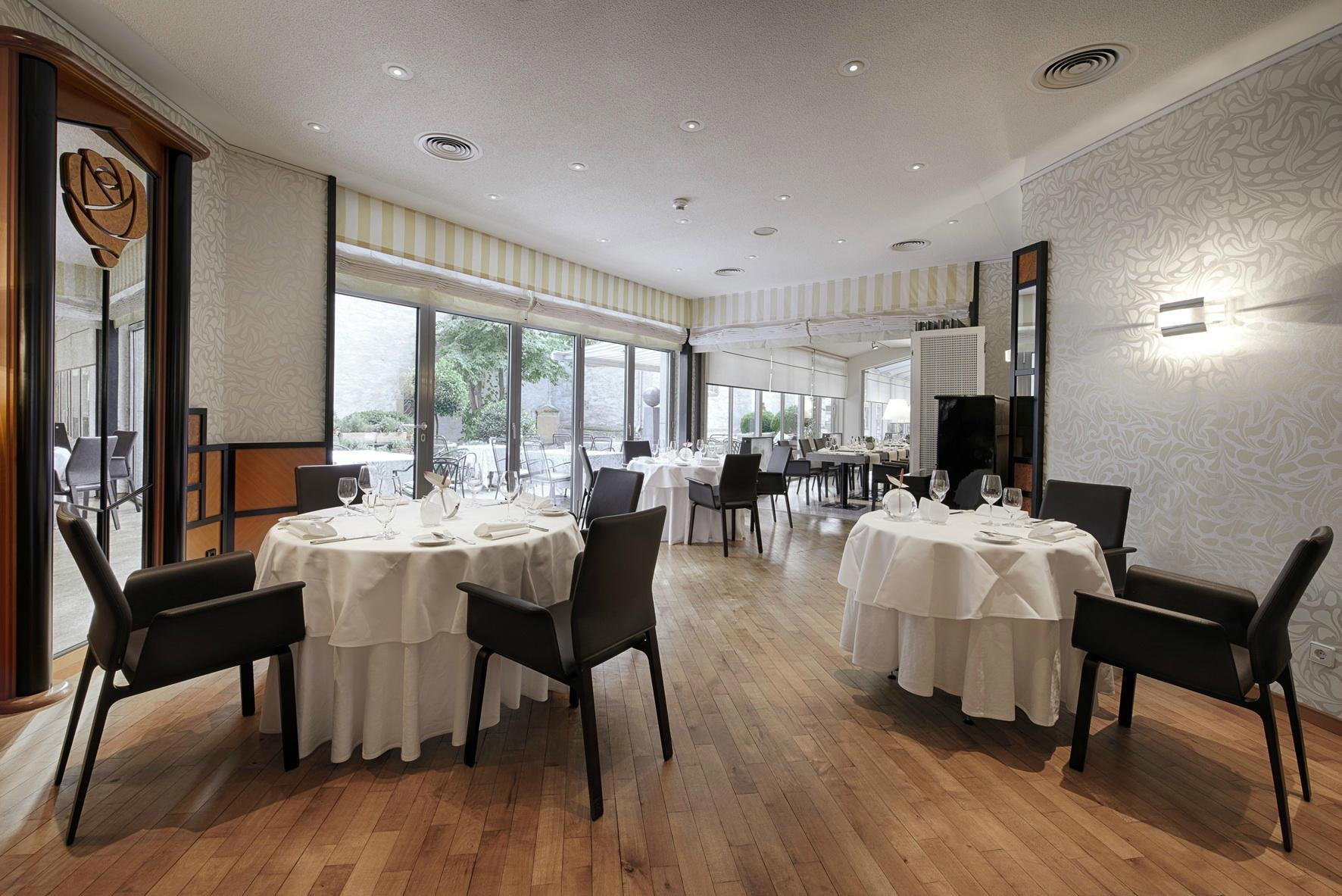
A French Kitchen in an Unexpected Postcode
Germany's Michelin-starred Modern French restaurants cluster, predictably, around Munich, Hamburg, and the Rhine corridor. The starred kitchens in smaller cities, Wolfsburg's Aqua, Bergisch Gladbach's Vendôme, tend to carry institutional weight or hotel infrastructure behind them. Reuter, on Bleichstraße in Rheda-Wiedenbrück, fits neither mould. It sits in a mid-sized town in the Gütersloh district of North Rhine-Westphalia, a region not associated with destination dining, and it has held its Michelin star in consecutive guides, 2024 and 2025, with a 4.6 rating across 328 Google reviews. That combination of provincial address and sustained Michelin recognition is the first signal worth paying attention to.
What the Bistro Tradition Actually Demands
The phrase "Modern French" in a German context often signals a kitchen that has absorbed French technique without fully committing to the culture that produced it, all the precision, none of the ease. The bistro tradition at its core is not about complexity; it is about a particular discipline with ingredients, a willingness to let fat and acid do structural work, and a relationship with the guest that is warmer than the white-tablecloth register suggests. That tradition has been as influential in Germany as anywhere. The classic French houses that shaped German fine dining, Schwarzwaldstube in Baiersbronn, with its decades-long grip on the Black Forest dining conversation, or Waldhotel Sonnora in Dreis, built their reputations on exactly that fidelity to French cooking as a living discipline rather than a reference style. Reuter, under Chef Sebastian Cihlars, operates in that same current, though at a different scale and in a very different postcode.
Bistro cooking at its most coherent is defined less by format and more by a philosophy of sufficiency: the right amount of technique applied to the right ingredient, nothing redundant. That discipline becomes harder to sustain at the €€€€ price tier, where guests arrive with different expectations and kitchen ambition can tip into over-elaboration. The kitchens that hold this balance, and keep their Michelin recognition across multiple editions, tend to develop a house rhythm that is identifiable from the first course. Whether Cihlars has built that at Reuter is a question the Michelin committee has answered twice in the same direction.
Where Reuter Sits in the German Fine Dining Picture
Germany's Modern French category at the €€€€ level is a smaller competitive set than it might appear. JAN in Munich operates in a different register, more personal, more ingredient-led. Victor's Fine Dining by Christian Bau in Perl sits at three stars and represents a more maximalist French-Japanese synthesis. Schanz in Piesport anchors itself in the Moselle landscape. ES:SENZ in Grassau and Restaurant Haerlin in Hamburg occupy their own regional niches. Reuter's position in this map is defined by geography more than anything else: it is the only entry-point for serious Modern French cooking in its immediate region, which is both a commercial reality and an editorial one. For a diner based in the Gütersloh, Bielefeld, or Paderborn area, the alternative to Reuter is a significant journey.
That regional monopoly does not explain the Michelin recognition on its own. Stars are awarded on kitchen performance, not catchment area. What the consecutive awards confirm is that the cooking at Reuter holds up against the national comparable set, not just the local one. For context on how French technique translates differently in other European cities, Sketch, The Lecture Room and Library in London and Alex Dilling at Hotel Café Royal represent the London pole of Modern French ambition at similar price positioning, a useful reference for how much the same culinary tradition can vary in expression across markets.
The Address and What It Tells You
Bleichstraße is a central street in Rheda-Wiedenbrück, a twin town of around 48,000 people. The town has a defined old centre, and the address places Reuter within a walkable commercial core rather than on a rural edge. That matters for the dining experience in ways that go beyond navigation: a town-centre restaurant in a provincial German city tends to build its clientele from a tight, loyal base of regulars rather than from tourist footfall or corporate accounts. The resulting atmosphere, assuming the room is well-managed, often carries more warmth than an equivalently priced urban dining room, where anonymity is the default. Rheda-Wiedenbrück also sits on the rail line between Bielefeld and Hamm, which extends the realistic catchment area significantly beyond the immediate town.
Creative Comparisons Worth Making
For diners accustomed to Berlin's more experimental end of the spectrum, CODA Dessert Dining being the obvious outlier in the German starred conversation, Reuter's Modern French positioning will read as more classical in its underlying structure. That is not a limitation. The French bistro tradition and its fine dining derivatives have produced a toolkit that rewards repetition and mastery as much as novelty. Consistency across two Michelin editions suggests the kitchen has found a house style that is reproducible at a high level, which is a harder achievement than a single exceptional night.
Cost and Credentials
Comparable venues nearby, for context on price, style, and recognition.
| Venue | Cuisine | Price | Awards | Notes |
|---|---|---|---|---|
| Reuter | $$$$ | Michelin 1 Star | Rheda-Wiedenbrück, Modern French Creative | |
| Gastwirtschaft Ferdinand Reuter | $$ | Michelin Plate | Rheda-Wiedenbrück, Regional German Gastwirtschaft | |
| Abrahams Restaurant & Eventlocation | Rheda, Mediterranean Fine Dining | $$$$ | , | |
| HILMAR | Aerzen, Contemporary French Fine Dining | $$$$ | Michelin 1 Star | |
| DiVa | Scharbeutz, Modern French Fine Dining | $$$$ | Michelin 1 Star | |
| Philipp Soldan | $$$$ | Michelin 1 Star | Frankenberg Old Town, Modern French Fine Dining |
Continue exploring
More in Rheda-Wiedenbrück
Restaurants in Rheda-Wiedenbrück
Browse all →
Bars in Rheda-Wiedenbrück
Browse all →
Hotels in Rheda-Wiedenbrück
Browse all →
At a Glance
- Elegant
- Sophisticated
- Cozy
- Classic
- Special Occasion
- Date Night
- Business Dinner
- Hotel Restaurant
- Extensive Wine List
- Sommelier Led
- Local Sourcing
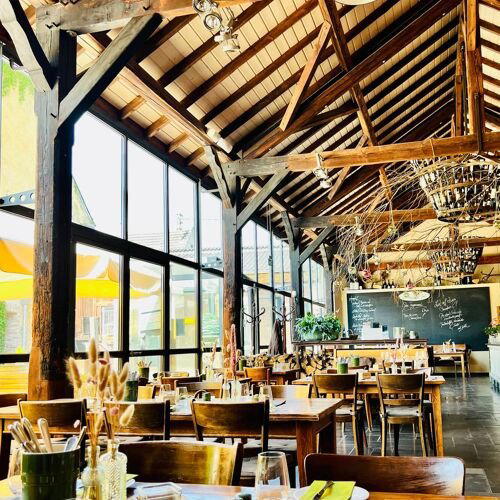
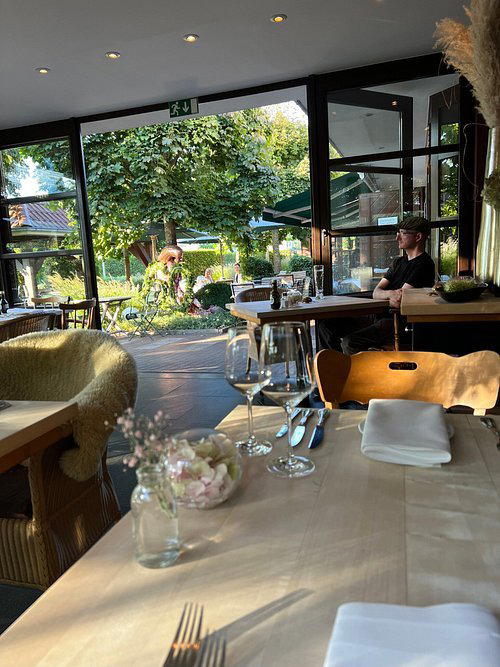
Beautifully refined and elegant atmosphere with soothingly calm and relaxed setting, professional service, and modern classy design.