



A Tabelog Silver Award winner operating from a house restaurant in Sanjo, Niigata, Restaurant UOZEN under chef Kazuhiro Inoue has built a consistent track record across seven consecutive Tabelog awards since 2020. The menu draws on Niigata's exceptional agricultural and marine produce through a French framework, with dinner running JPY 15,000–19,999 and reservations required via Pocket Concierge.
 Discover on Pearl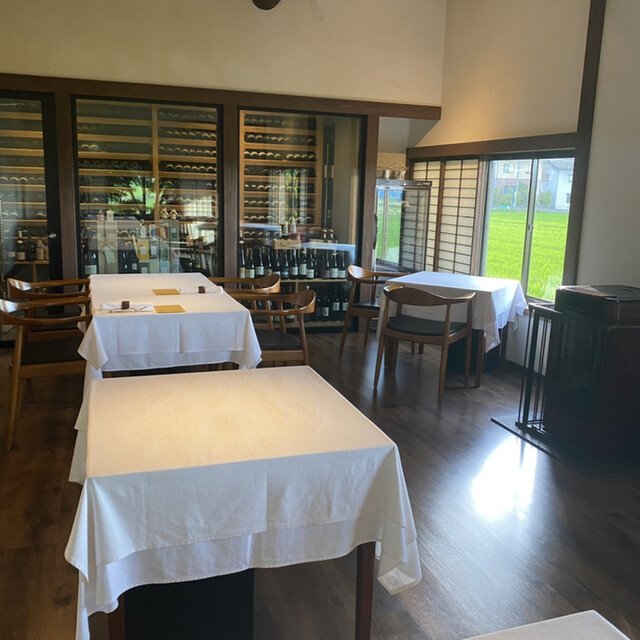
French Cooking Rooted in Niigata's Terroir
Japan's regional French scene has a particular character that separates it from the country's metropolitan fine dining circuit. Away from Tokyo and Osaka, chefs working in the French tradition tend to operate with smaller supplier networks and tighter seasonal constraints, which forces a more rigorous engagement with local ingredients than the city equivalents can always claim. Sanjo, a city in Niigata Prefecture better known for its precision metalworking industry than its restaurant culture, has produced one such example in Restaurant UOZEN. Since opening in November 2013, the restaurant has earned a Tabelog score of 4.50 and a 2026 Silver Award, placing it in the top tier of the platform's French East rankings and ranking 180th among all restaurants in Japan on the Opinionated About Dining list for 2025.
That kind of recognition, sustained across seven consecutive Tabelog awards from 2020 through 2026 (five at Bronze, two at Silver), is not typical of a provincial address. It reflects a kitchen that has found a consistent voice rather than one chasing the next trend. The We're Smart Green Guide has also noted UOZEN's approach to produce, citing chef Kazuhiro Inoue's focus on the primary ingredient and the way vegetables and herbs carry flavour rather than simply supporting meat or fish. For a French restaurant to earn that kind of attention from a guide focused on plant intelligence is a signal worth registering.
The shortlist, unlocked.
Hard-to-book tables, cellar releases, and concierge-planned trips.
Get Exclusive Access →What the Bistro Tradition Looks Like Outside France
The bistro as a form has always been about proximity: the chef close to the source, the room close to the neighbourhood, the food close to the season. When French cooking took root in Japan in the 1970s and 1980s, many of the most durable expressions of it were built on that same logic rather than on the grand restaurant model. UOZEN's classification on Tabelog as a house restaurant, operating from a residential-scale building in Higashi-Osaki with parking on site, fits that tradition precisely. Private rooms are available, the service is non-smoking, and the format runs on simultaneous-start seatings rather than an open-door policy, which gives the kitchen control over pacing in a way that a bistro in Lyon or Paris would recognise.
The pricing bracket also places UOZEN in an interesting position within the Japanese regional French category. The listed budget runs JPY 15,000–19,999 for both lunch and dinner, though reviewer data on Tabelog suggests actual spend tends toward JPY 20,000–29,999, a gap that typically indicates supplement items or beverage pairings pushing the total higher. That range sits comfortably below the Tokyo luxury tier represented by counters like Sézanne in Tokyo, but it sits at a premium relative to the broader Niigata dining market, where strong Japanese cuisine addresses like Shintaku and destination sushi at Kyodaizushi define much of the category competition. UOZEN operates in its own lane within that landscape, the only address in the prefecture consistently recognised at this level for French cooking.
The Sanjo Setting and What It Means for the Food
Niigata Prefecture is among Japan's most agriculturally significant regions. The prefecture's rice is among the most sought-after domestically, its snow-fed water supply supports some of the country's most respected sake production, and its coastal access delivers seafood with a cold-water quality that chefs from Tokyo regularly seek out. Sanjo itself sits in the Kambara plain, an area shaped by the Shinano River, with farmland and food producers at close range. For a French kitchen working in the bistro tradition, that kind of proximity to primary producers is a structural advantage.
Regional French restaurants in Japan that succeed at the level UOZEN has reached almost always share one characteristic: they make the local ingredient the centre of the plate rather than an addition to a French technical framework. The We're Smart Green Guide's assessment of Inoue's kitchen, noting that flavour leads and technique supports it, points in that direction. This is not a kitchen translating French recipes with Japanese ingredients; it is a kitchen using French method to articulate what Niigata's seasons produce. That distinction matters both for the diner and for understanding why this address has held its Tabelog score at 4.50 while many regional French restaurants drift below 4.0 after their initial recognition.
For visitors building a Niigata itinerary, the restaurant fits naturally alongside other regionally anchored addresses. Satoyama Jujo approaches Niigata's produce from a kaiseki direction, while Tokiwa and Tokiwa Sushi Nigata Ten anchor the sushi end of the premium market. UOZEN occupies the French tier of that ecosystem, which in Niigata means it has no direct local competition at the same award level.
How UOZEN Sits in Japan's Wider Regional French Scene
Japan's regional French scene has produced a number of addresses that draw dedicated travelers willing to leave the Shinkansen cities. Akordu in Nara applies European technique to Yamato ingredients. Goh in Fukuoka has built an international profile from a regional base. HAJIME in Osaka operates at the conceptual extreme of what French cooking in Japan can become. UOZEN's position is different: it is not a destination restaurant seeking international recognition on its own terms, but a deeply localised address that has earned consistent national-level recognition precisely because it has not tried to be anything other than what Sanjo and Niigata allow it to be.
That comparison holds when you consider the award trajectory. Seven years of Tabelog recognition, with a clear upward movement from Bronze to Silver across the 2025 and 2026 cycles, indicates a kitchen that is not static. Whether that momentum continues toward Gold-level recognition is an open question, but the progression is notable for a restaurant operating outside Japan's three major food cities. For context, the Tabelog French East Hyakumeiten (Top 100) list for 2025 includes UOZEN, a selection that covers all of eastern Japan and positions the restaurant alongside the most recognised French addresses in the region. The Swiss parallel in terms of rigorous, terroir-led French cooking at a house-scale is perhaps leading illustrated by references like Hotel de Ville Crissier in Crissier, where the finest French cooking has long operated at a remove from major urban centres.
Planning a Visit
UOZEN operates Wednesday through Friday for dinner only, with entry between 18:00 and 18:30 and a simultaneous start for all guests. On Saturdays and Sundays, lunch seatings run from 11:30 to 11:45, followed by an evening seating on the same schedule as weekdays. The restaurant is closed Mondays and Tuesdays. Reservations are essential and the kitchen explicitly notes that phone calls during service hours are difficult; the online booking system via Pocket Concierge operates 24 hours and is the practical route in. Major credit cards are accepted (Visa, Mastercard, JCB, Amex, Diners), but electronic money and QR code payments are not. Private rooms are available for groups seeking separation from the main dining area.
For visitors arriving from outside Niigata, the address is most directly reached from JR Tsubame-Sanjo Station or Higashi-Sanjo Station. From either stop, an Echigo Kotsu South Course bus to the Sunfarm Sanjo stop puts the restaurant approximately 400 metres on foot from the terminus. The restaurant provides parking for those arriving by car. Budget for the evening at the upper end of the JPY 20,000–29,999 range once wine is included; the kitchen's noted attention to its wine program means the beverage pairing is worth considering rather than treating as an add-on.
For a fuller picture of where to eat, stay, and drink in the region, see our full Niigata restaurants guide, along with guides to Niigata hotels, Niigata bars, Niigata wineries, and Niigata experiences.
The shortlist, unlocked.
Hard-to-book tables, cellar releases, and concierge-planned trips.
Get Exclusive Access →Frequently Asked Questions
Cost and Credentials
A short peer set to help you calibrate price, style, and recognition.
| Venue | Price | Awards | Notes |
|---|---|---|---|
| Restaurant UOZEN | {"Year":"2026","Award Source":"Tabelog",… | This venue | |
| Kyodaizushi | Sushi | ||
| Shintaku | Japanese Cuisine | ||
| Tokiwa | |||
| Tokiwa Sushi Nigata Ten | JPY 30,000 - JPY 39,999 JPY 15,000 - JPY 19,999 | Sushi, JPY 30,000 - JPY 39,999 JPY 15,000 - JPY 19,999 | |
| Satoyama Jujo |
Need a table?
Our members enjoy priority alerts and concierge-led booking support for the world's most difficult tables.
Get Exclusive AccessThe shortlist, unlocked.
Hard-to-book tables, cellar releases, and concierge-planned trips.
Get Exclusive Access →